
Manuell og automatisk retting er ikke kvalitetsmerker. Begge rutene kan være uegnet når arbeidsstykkets nullpunkt, målemetode, kontaktsoner, akseptregel eller håndteringsprosess er udefinert. Det nyttige spørsmålet er hvilke trinn som trenger repeterbar kontroll for en definert delfamilie - og hvilke trinn som fortsatt krever dyktig oppsett, ingeniørgodkjenning eller kundemåleverifisering.
Denne veiledningen er et utvalgsrammeverk, ikke en påstand om at StraighteningTech leverer en bestemt automatiseringskonfigurasjon eller at automatisering garanterer en nøyaktighet, syklus tid, arbeidsreduksjon eller ROI. Disse resultatene krever verifisert utstyrsomfang og representativ produksjonsbevis.
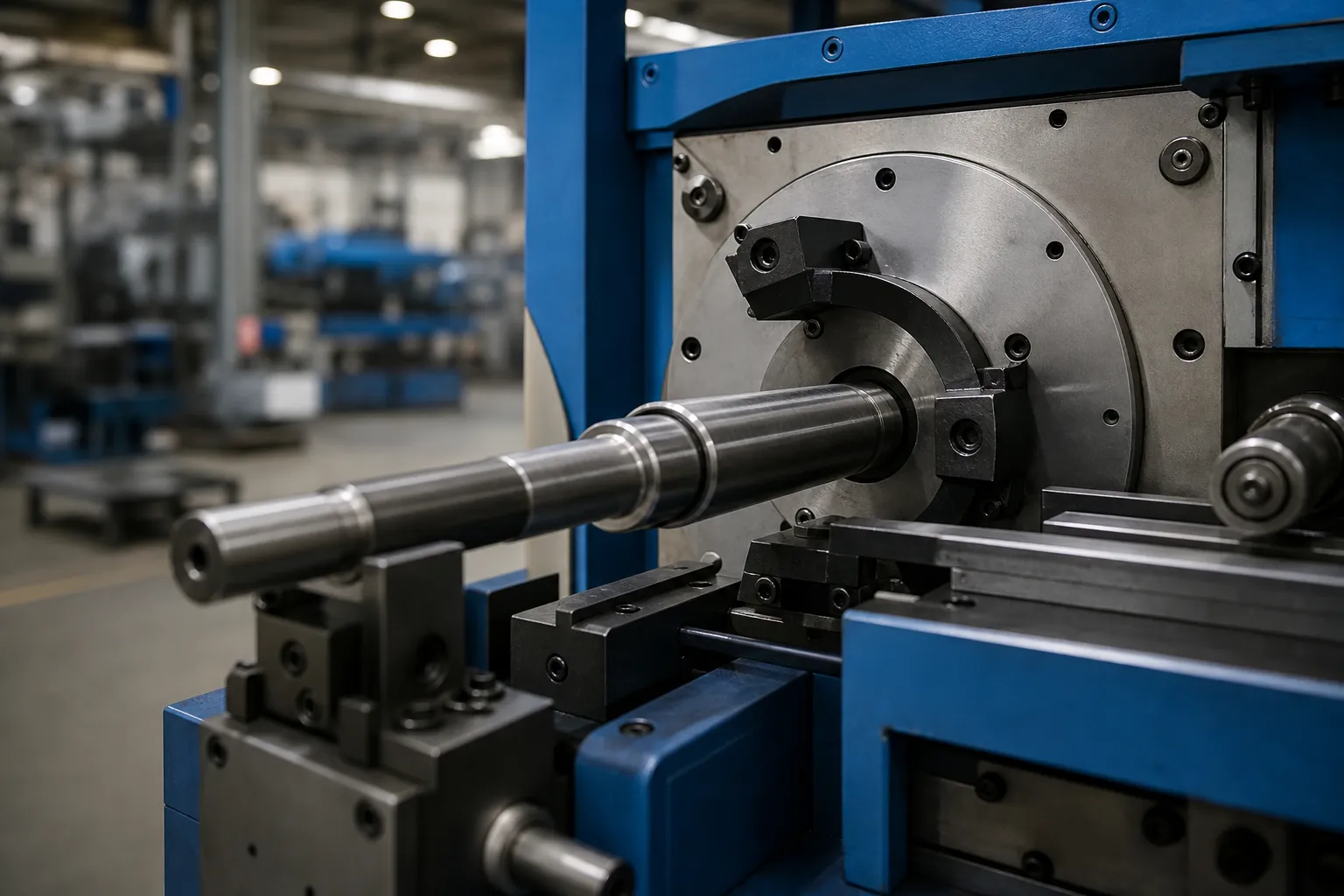
*Engineering konsept illustrasjon. Den viser en mulig automatisert håndteringskontekst, ikke bevis på en tilgjengelig lokal konfigurasjon eller produksjonsresultat.*
Definer automatiseringsgrensen
"Automatisk" kan beskrive en eller flere forskjellige funksjoner. Laster, del identifikasjon, orientering, datum sitteplasser, mål, korreksjon, lossing, valg av oppskrift, sporbarhet og kr-sortering bør vurderes separat.
| Funksjon | Manuell rute for å evaluere | Automatisert rute for å evaluere |
|---|---|---|
| Lasting og orientering | Operatørhåndtering, armaturbekreftelse og sikker ergonomi | Familieidentifikasjon, kontrollert presentasjon og håndteringsvalidering |
| Mål | Operatøroppsett, måleavlesning og repeterbarhet | Kontrollert sekvens, datafangst og måler korrelasjon |
| Korreksjon | Dyktig dømmekraft og inkrementell respons | Oppskriftskontrollerte sløyfe- og unntaksterskler |
| Bytte | Inventar/innstillingsdisiplin og førstegangsgjennomgang | Versjonskontroll, verktøyidentitet og første del bekreftelse |
| Disposisjon | Fysisk segregering og dokumentert gjennomgang | Definert PASS/NOK/rework ruting med menneskelig autoritet |
En automatisk linje kan fortsatt kreve manuell godkjenning på et kritisk trinn. En manuell arbeidsstasjon kan fortsatt bruke kontrollerte målere og sporbare poster. Utvalget bør beskrive den virkelige prosessen i stedet for å bruke en bred etikett.
Start med arbeidsstykkeblanding og aksept
Høy variasjon, usikker dato, kompleks håndtering eller hyppige tekniske endringer kan gjøre en fleksibel manuell eller halvautomatisk rute passende under utvikling. En stabil familie med repeterbar belastning, definert måling og en validert korreksjonsrespons kan rettferdiggjøre mer automatisering. Ingen av konklusjonene kan trekkes fra produksjonsvolum alene.
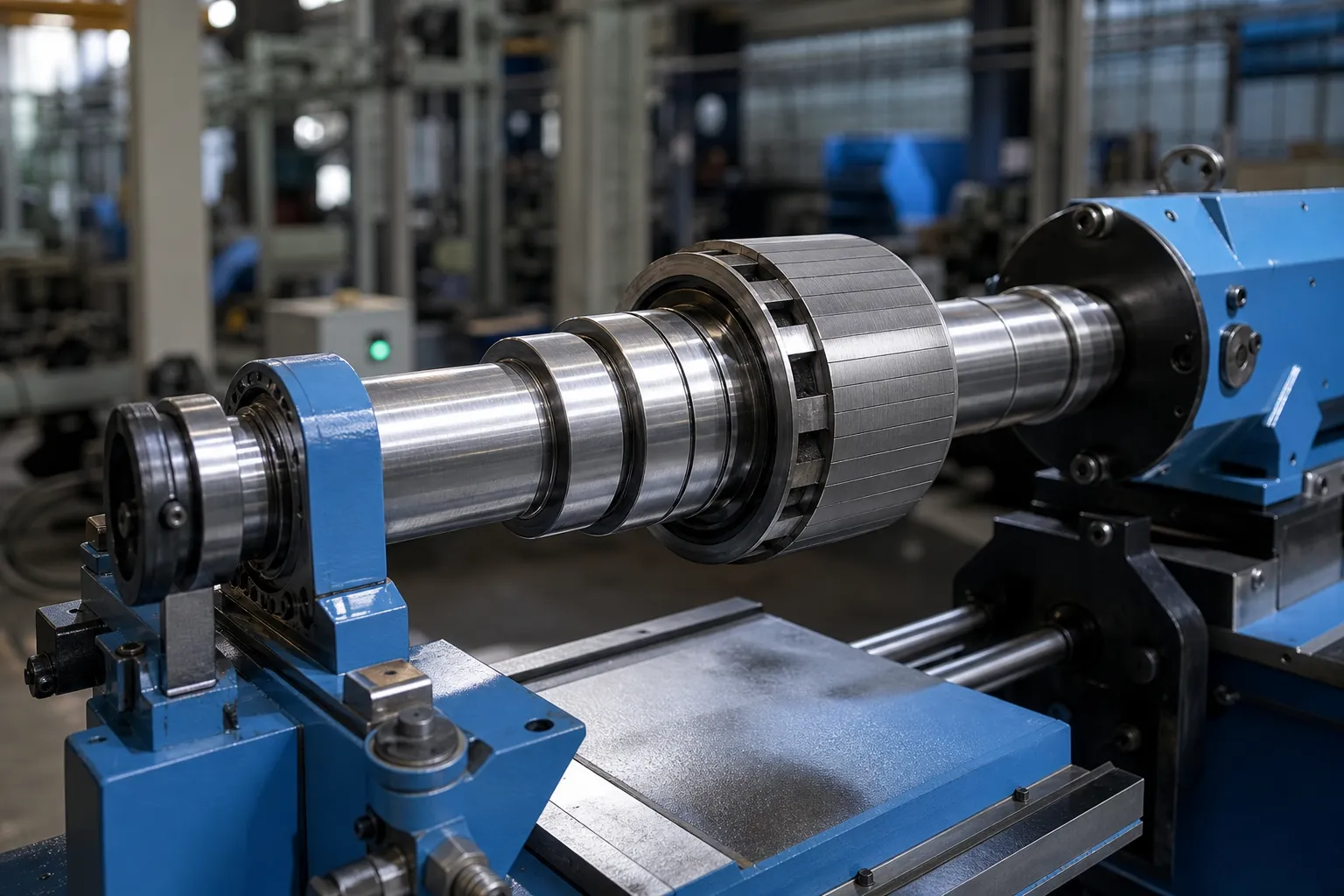
*Engineering konsept illustrasjon. Det representerer et korrigeringskonsept med lukket sløyfe; den hevder ikke at en gitt motoraksel eller automatiseringsfunksjon støttes.*
RFQ bør spesifisere arbeidsstykkevarianter, materiale/prosessstadium, innkommende feilfordeling, datum, beskyttede soner, kundemåler, målblanding og håndteringsbegrensninger. Bruk aksel, valg av rør og profil rettetang før du sammenligner automatiseringsetiketter.
What Automation Actually Repeats
Strip away the robotics and an automatic straightening machine is a device for repeating a validated sequence: identify the family, seat the part, measure against a stored rule, apply a stored correction response, måle på nytt, route. Every one of those verbs was originally written by a person — an engineer who qualified the datum, an operator who proved the correction response on samples, a quality function that approved the acceptance rule. Automation does not create that knowledge; it preserves and executes it. This framing explains both the strength and the boundary. The strength: once validated, the sequence runs identically at hour eight of a shift as at hour one, unaffected by fatigue, and every part carries its data. The boundary: everything upstream of validation — developing the correction concept for a new family, diagnosing an unfamiliar signal, deciding whether an anomaly is a setup fault or a part problem — remains engineering and skilled work, no matter how automatic the cell. A factory that automates before validating automates its confusion at line rate.
The Cost Structures Are Different, Not Just the Labels
Comparing routes on purchase price or headcount misses where each route actually spends money. The manual route spends it continuously: skilled operators take time to develop and are hard to replace, throughput varies with the person on shift, and consistency between operators is a permanent supervision task — the reproducibility component of measurement studies exists largely because of this. The automated route spends it front-loaded and in lumps: engineering effort to validate each family before the cell can run it, fixture and tooling per family, and a maintenance and calibration discipline that the cell depends on but the production schedule rarely celebrates. Changeover economics invert between the routes — cheap in skill and slow in minutes on a manual bench, fast in minutes but expensive in preparation on an automatic line. None of this makes either route cheaper in the abstract; it means the part mix, changeover frequency and available skills decide which cost structure fits. De machine cost structure discussion treats these drivers without pretending at universal payback numbers.
Sammenlign måle- og korrigeringsløkker
Manuell retting kan være avhengig av at en operatør laster, måle, velg korrigeringspunktet og mål på nytt. Automatisk retting kan gjenta en lagret sekvens. I begge tilfeller, det endelige resultatet avhenger av datoplasseringen, målekorrelasjon, tillatt kontakt, inkrementell korreksjon og verifisering av frigitt tilstand.
| Spørsmål | Hvorfor det endrer vedtaket |
|---|---|
| Er det innkommende geometrikartet repeterbart? | Automatisering kan ikke kompensere for et udefinert eller ustabilt signal |
| Er støtte og korrigeringspunkter fastsatt av familien? | En høyblandingsdel kan trenge teknisk gjennomgang i stedet for en generisk oppskrift |
| Er kundemåleren korrelert? | Maskinavlesninger erstatter ikke automatisk sluttkontroll |
| Er unntak definert? | Ukontrollert gjenforsøk kan skjule et prosessproblem |
For prosessgrensen, se pek-press retting og retting prøve test og aksept.
Evaluer overgang, Data og unntak
Automatisering kan være nyttig bare når delen identitet, armatur, oppskriftsversjon, første del bekreftelse, datafelt og unntaksruter er kontrollert. Gjennomgangen bør spesifisere hvem som kan endre en innstilling, hvor gamle versjoner forhindres fra å kjøre, hvordan en armatur identifiseres, og hva som skjer etter en måling eller et prosesssignalvarsel.
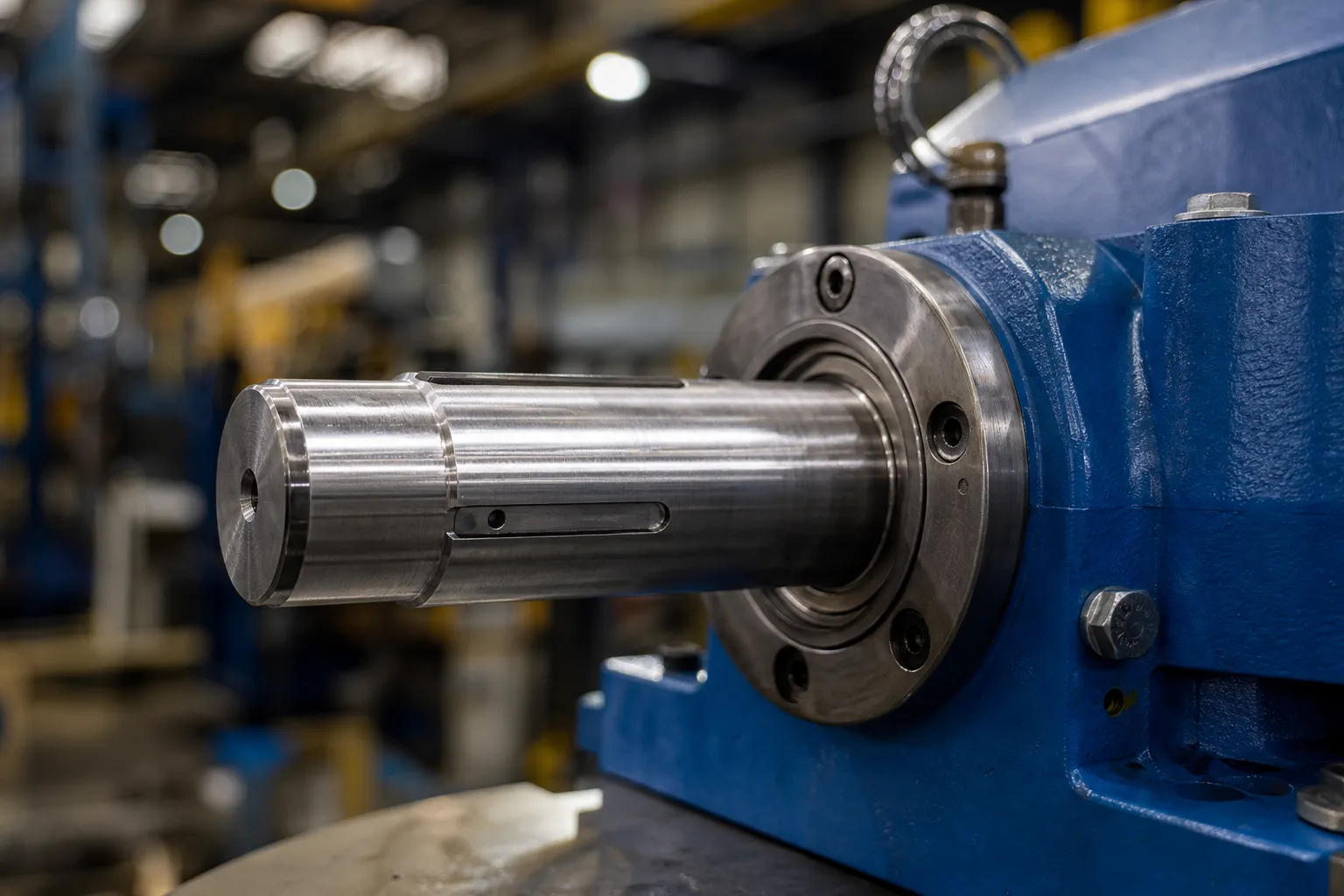
*Engineering konsept illustrasjon. Den legger vekt på bekreftelse av frigitt tilstand og sporbar disposisjon, ikke en lovet automatisert inspeksjonsfunksjon.*
The Migration Path Nobody Regrets
The manual-versus-automatic decision is rarely binary in practice, and the most common successful pattern is staged: automate the steps whose validation is complete and whose failure modes are understood, keep human hands and judgment on the steps that are not. A frequent first stage automates measurement and disposition — the machine gauges the part, the operator still loads and corrects — because measurement repeatability is usually the first bottleneck and its automation risk is low. A second stage adds automatic loading and part identification once the family presentation is stable, the domain covered for robot tending of straightening machines. Full closed-loop correction comes last, after the correction response has been validated across the incoming error distribution. Each stage is justified by the same evidence rule: a sample test on the specific step, run on representative and worst-case parts, with disposition routing demonstrated per the NOK discipline. Factories that follow this sequence buy automation where it is proven and keep flexibility where it is needed; factories that buy the last stage first spend their commissioning period discovering what they skipped.
Skills Each Route Consumes
Neither route is skill-free, and planning the wrong skill set starves the line quietly. The manual route concentrates skill in the operator: reading the error map, choosing correction points, judging incremental response — expertise that takes real time to build, lives in few people, and walks out the door with them. The automated route distributes skill across the organization: process engineers who validate families and maintain recipes, maintenance staff who can diagnose a sensor or fixture fault before it becomes scrap, and quality staff who own the correlation studies that keep the machine’s readings meaningful at acceptance. A buyer moving from manual to automatic who staffs only for operation — and not for engineering and maintenance — typically finds the cell’s recipes frozen, its correlation stale and its exceptions unowned within the first year. The automation boundary on paper should therefore be matched by a staffing plan for the skills each side of that boundary consumes.
Ta avgjørelsen med en prøvetest
Sammenlign kandidatruter ved å bruke representative normal- og verstefallsdeler. Registrer lasting/oppsett repeterbarhet, geometri før og etter, utgitte avlesninger, overflatetilstand, håndtering, overgang, datafangst og unntaksruting. Ikke anta årlige arbeidsbesparelser, gjennomstrømning eller tilbakebetaling fra en konkurrentartikkel eller en hypotetisk syklustid.
FAQ
Er automatisk retting alltid mer nøyaktig?
Ingen. Nøyaktigheten avhenger av arbeidsstykket, datum, mål, korreksjonssvar og akseptmetode. Automatisering kan forbedre repeterbarheten bare når disse fundamentene er validert.
Når er manuell retting det beste valget?
Det kan være hensiktsmessig for utvikling, ustabile eller svært variable delfamilier, lavvolum arbeid, komplekst oppsett, eller situasjoner der korrigeringsruten fortsatt er under kvalifisering.
Kan et manuelt system ha sporbarhet?
Ja. Kontrollert identifikasjon, måleposter, resept-/armaturdisiplin og disposisjonsposter kan implementeres uavhengig av automatiseringsnivået.
Is semi-automatic straightening a compromise or a strategy?
A strategy, when it is staged deliberately. Automating measurement and disposition first, loading second, and closed-loop correction last matches automation investment to validated knowledge — each stage carries a sample test, and flexibility is retained where families are still developing.
What skills does an automatic line still need?
Process engineering to validate families and control recipes, maintenance able to diagnose sensor and fixture faults, and quality ownership of the gauge correlation. Operation labor drops; engineering and maintenance skill does not — it usually rises.
Does automation reduce the number of quality decisions?
It relocates them. Routine dispositions become automatic, but the definition of the routing rules, the approval of recipes and the response to exceptions remain human decisions with named authority. The boundary is between executing decisions and making them.