
En linje bør ikke behandle hver ikke-bestått lesing på samme måte. En del kan ha et oppsettsproblem, en målealarm, en korrigerbar geometritilstand, et svar uten fremgang, et mistenkt vesentlig problem eller en bekreftet avvik. Uten distinkte ruter, Gjentatt korreksjon kan skjule et måleproblem, skade delen, blande partier eller lage en usporbar kvalitetsbeslutning.
Denne artikkelen er et rammeverk for kvalitetsruting. Det hevdes ikke at StraighteningTech i dag leverer automatisk sortering, spesifikke sensorer, avslagsterskler, sporbarhetsprogramvare eller autoriserte omarbeidsregler. Disse funksjonene krever verifisert lokalt omfang og kvalitetsgodkjenning.
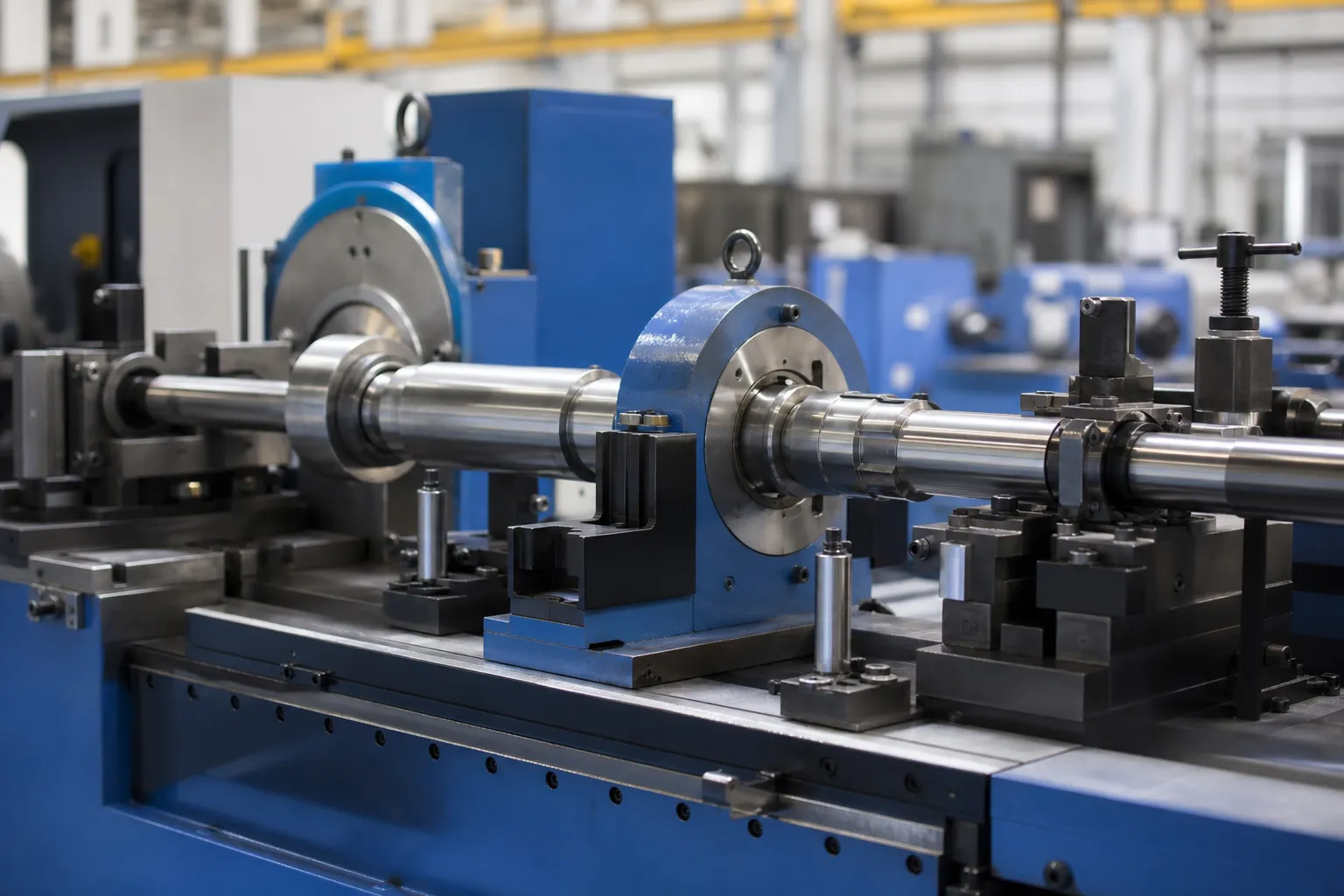
*Engineering konsept illustrasjon. Den viser en kandidatproduksjonscelle, ikke et installert automatisk sorteringssystem eller en definert evne til å oppdage feil.*
Definer disposisjonsstatene
Minst, skille PASS, NOK, berettiget omarbeid, stopp/hold og ingeniør/kvalitetsgjennomgang. Definisjonene må referere til den kontrollerte tegningen, målemetode, prosesstilstand og myndighet til å frigi. En prosessalarm er ikke automatisk en avvisning; det kan være et eskaleringssignal som krever verifisering.
| Tilstand | Nødvendig definisjon |
|---|---|
| PASS | Oppfyller det avtalte kravet om frigitt tilstand med nødvendige poster |
| NOK | Oppfyller ikke det definerte kravet eller har bekreftet avvik |
| Rework-kvalifisert | Oppfyller dokumenterte betingelser for et nytt godkjent forsøk |
| Stoppe / holde | Krever oppsett, prosess-signal, kvalitets- eller ingeniørgjennomgang før videre behandling |
| Ingeniørgjennomgang | Trenger en kontrollert avgjørelse utenfor normal automatisk rute |
Hold oppsettsproblemer atskilt fra delavvik
Før ruting av en del som kr, vurder om signalet kan være et resultat av datoplassering, armaturvariasjon, sensorens tilstand, del identitet, feil oppskrift eller en ikke-godkjent støttetilstand. Prosedyren bør definere de tillatte kontrollene for rengjøring/gjenplassering/gjentakelse og forhindre ubegrensede forsøk.
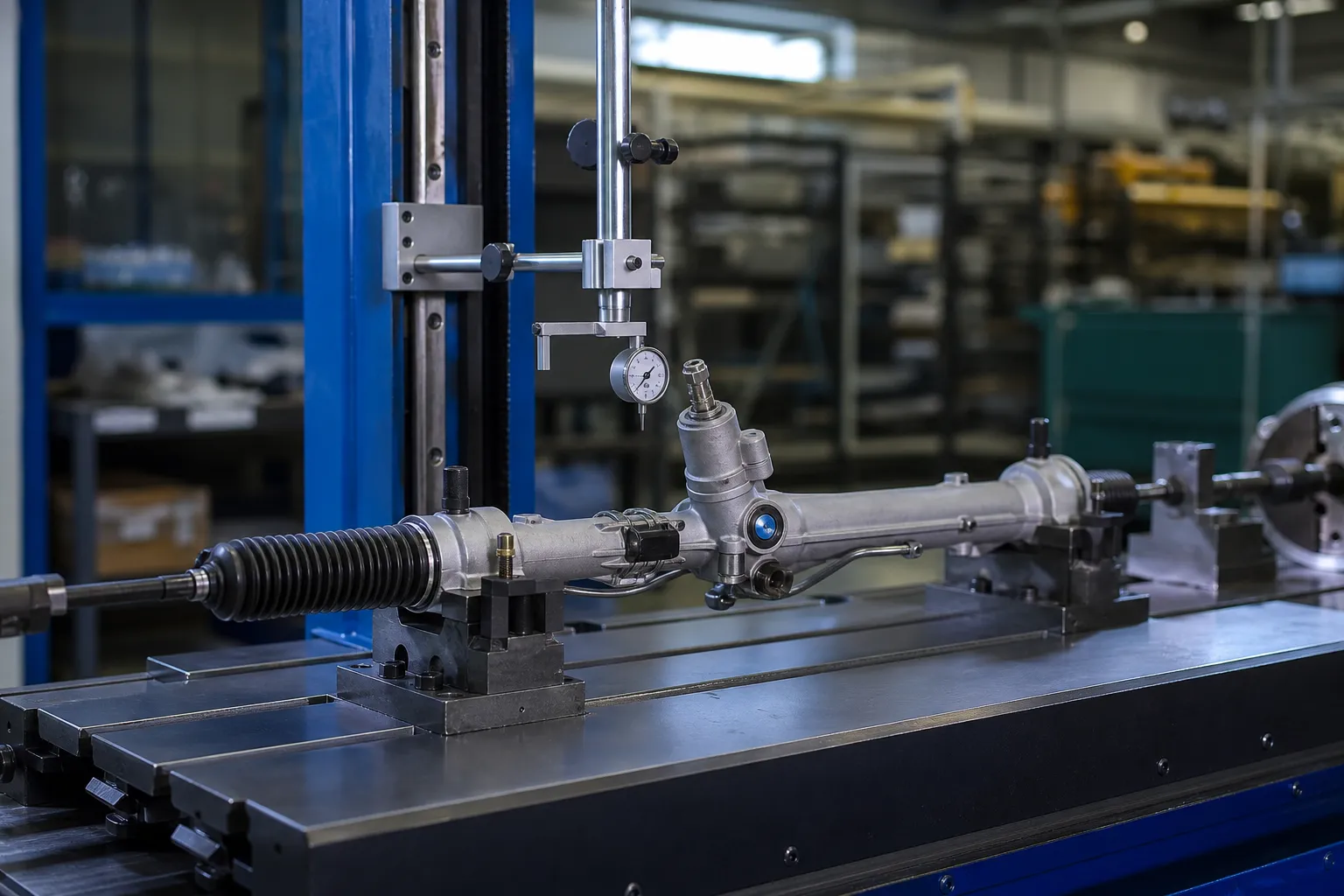
*Engineering konsept illustrasjon. Den viser et målingsbeslutningspunkt, ikke bevis for en automatisk klassifisering eller en spesifikk alarmregel.*
Se fixtur repeterbarhet og datum-sete og sprekkdeteksjon under automatisk retting for separasjonen mellom et signal og dets bekreftede årsak.
Angi en grense for omarbeiding før den første korrigeringen
Etterarbeid bør være en godkjent rute med et definert maksimalt antall forsøk, tillatte kontakt/støttebetingelser, krav om ny måling, overflate-/funksjonskontroller og fullmakt til å fortsette eller stoppe. Grensen er ikke et universelt tall; det avhenger av materiale, prosessstadiet, funksjonsrisiko, kundekrav og validert svar. Når en del ikke svarer som forventet, the appropriate action may be hold or reject rather than additional force.
Why Unlimited Retries Corrupt the Line
Allowing a line to re-correct a part until the gauge finally passes feels productive and quietly destroys two things. The first is the part itself: every plastic bending cycle consumes a share of the section’s low-cycle fatigue life, and the reverse-loading behavior described for reverse loading in straightening means later cycles move the material more per unit force than earlier ones did. A part that reaches tolerance on its sixth attempt is not equivalent to one that reached it on the first, even though both read PASS.
The second casualty is the line’s own information. When retries are unlimited, the gauge sees only eventual outcomes: parts that converge, slowly, under repeated force. A drifting correction setup, a worn anvil, a bad lot of stock and a genuinely struggling part family all produce the same visible symptom — more attempts per part — and none of them generates a stop condition. The retry count is one of the cheapest and most informative process signals a straightening line produces, and it only exists as data if the line is required to stop and route the part at a defined limit instead of looping.
Thinking of the Rework Limit as a Budget
A more useful mental model than “three strikes” is a budget of deformation that each part may spend. The budget is set by the material’s condition and the consequence of failure in service, and it is spent by every correction stroke — forward or reverse. A hardened safety-critical shaft and a soft structural bar may carry very different budgets, which is why no universal rework number is defensible and why the limit belongs to the part family’s validated process, reviewed by quality. The same budget concept explains a rule that otherwise looks arbitrary: a part that has consumed its budget and still fails is rejected even though one more attempt might conceivably pass, because the part that would emerge is no longer the part the drawing specifies in any meaningful sense.
Budgets also need edges. Two conditions that stop rework regardless of remaining attempts are no-progress — corrections that stop changing the geometry, indicating the process is no longer engaging the error — and overshoot oscillation, where each attempt moves the part from one side of tolerance to the other. Both are stop signals, not tuning opportunities, and both feed the integrity-review concerns that repeated plastic cycling raises.
Maintain Isolation and Traceability
Each disposition must preserve part/lot identity, drawing/recipe version, measurement condition, correction attempts, result, operator/automation event, time, review decision and physical location. Isolation must prevent a held or NOK part from returning to the PASS flow without explicit authorization.
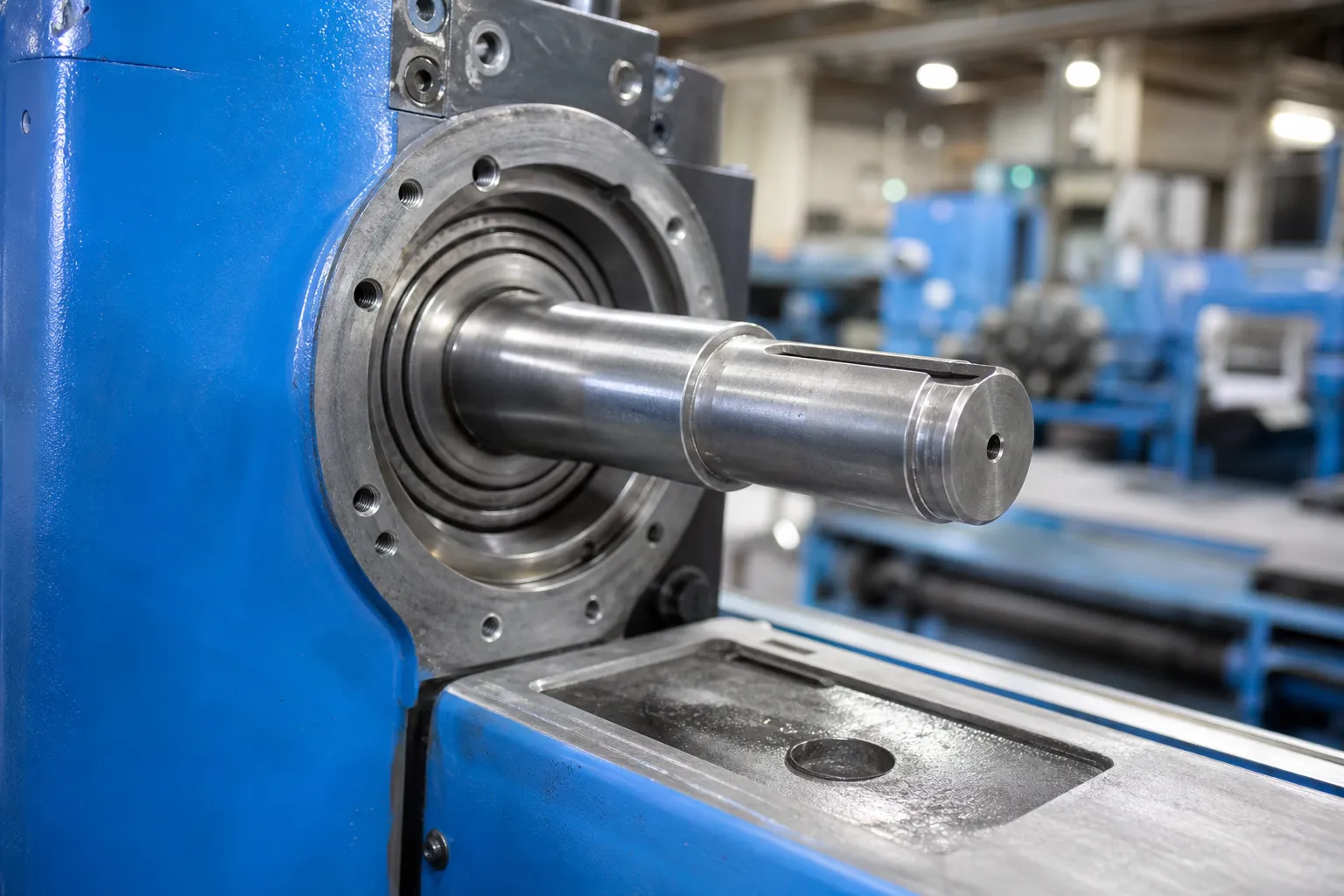
*Engineering konsept illustrasjon. It emphasizes released-state verification and recorded disposition, not a promise of a DMC/MES interface or automatic sorter.*
Designing Segregation That Cannot Be Defeated
Disposition states only work if the physical line enforces them. The failure mode is always the same: a held or NOK part re-enters the good flow during a busy shift, through an operator judgment call, a shared conveyor or an unlabeled tote. Effective segregation design follows mistake-proofing logic rather than instruction signs. Good and rejected parts take different physical paths with no shared section where a part can be redirected by hand. Hold locations lock or require an access step that itself creates a record. Labels and bins are part-specific, not generic scrap tags, so a held-for-review part cannot decay into anonymous scrap or anonymous stock. Where volume justifies it, diverters and gates make the routing decision the machine’s, not the operator’s — the automation boundary discussed in manuell versus automatisk retting applies to disposition as much as to correction.
The record side has the same anti-defeat requirement. A disposition that lives only in an operator’s memory, or in a spreadsheet anyone may edit, does not survive an audit or a containment event. The minimum durable record is the tuple — part identity, mye, drawing and recipe version, measurement condition, attempt count, result, decision, decision-maker, time — retained long enough to answer the customer question that eventually comes: which parts from that week, from that machine, from that shift.
What the Disposition Data Buys Later
A line that routes honestly accumulates, as a by-product, the dataset that every improvement program wishes it had. Attempt-count trends flag tooling wear and setup drift while they are still cheap to fix. Lot-to-lot shifts in incoming geometry point upstream to suppliers with evidence instead of complaints. The ratio of setup-issue holds to true part nonconformances measures how much of the line’s apparent quality problem is actually its measurement and fixturing — information directly relevant to planning a gage R&R studie. And when a customer raises a field concern, traceability converts a week of panic into an afternoon of records. None of that value survives a culture of retry-until-pass; all of it is the natural dividend of the routing discipline described here.
Build a Verification and Escalation Route
- identify the part, mye, drawing and recipe;
- verify the measurement/datum setup within the approved checks;
- capture the reading, process state and any alert;
- apply only the allowed rework route when eligibility is confirmed;
- release and remeasure under the agreed condition;
- rute PASS, NOK, hold eller ingeniørgjennomgang;
- beholde sporbarhet og fysisk segregering;
- bruke tilbakevendende mønstre for å utløse prosess- eller kvalitetsgjennomgang.
For den nødvendige bevisarkitekturen, se retting prøve test og aksept og Gage R&R for å rette linjer.
No-Progress og Correction-Limit Gates
Den nøyaktige setningen retting korrigeringsgrense ingen fremdriftsport er medisinsk forurenset i SERP, så den kanoniske no-progress-logikken lever på siden for NOK sortering og omarbeidingsgrense. Definer maksimale korreksjonssykluser, force/stroke ceilings and mandatory stop/sort actions before production release.
FAQ
Betyr kr alltid skrap?
Ingen. En NOK-stat kan kreve verifisering, kontrollert etterarbeid, ingeniørgjennomgang eller endelig avslag avhengig av godkjent kvalitetsrute.
Kan en linje prøve på nytt til lesingen passerer?
Ingen. Omarbeid trenger en definert maksimal forsøksgrense og kvalitetsmyndighet. Ubegrensede forsøk kan maskere et prosess- eller måleproblem.
Betyr denne artikkelen at linjen har automatisk sortering?
Ingen. Det er et rutingrammeverk. Faktisk sortering, sporbarhet og grensesnittfunksjoner krever separat verifisering.
Why does the attempt count matter more than the final reading?
Because the final reading describes where the part ended, while the attempt count describes what it cost to get there. Two parts reading identical PASS values are not equivalent if one took a single correction and the other took a full budget of repeated cycles. The attempt count is also the line’s earliest drift alarm — a setup, tooling or material change usually shows up as more attempts per part long before it shows up as rejects.
Should rework limits differ between part families?
Ja. The limit is a deformation budget set by material condition, feature risk and service consequence, so a hardened safety-critical shaft and a soft structural bar justify different numbers. The limit belongs to each family’s validated process with quality approval, not to the line as a single setting.
What is the minimum physical segregation a small line needs?
Separate paths or lockable, labeled, part-specific containers for PASS, hold and NOK — arranged so a held part cannot return to the good flow without a recorded, authorized step. The design principle is that doing the wrong thing must require effort, not just discipline. Escalate to machine-controlled diverters when volume or staffing makes human routing unreliable.
Sorting decisions are also capacity decisions – de manuell vs automatisk sammenligning og den ROI-kasse for automatisk retting both price the NOK stream a manual line tends to hide.