
Pistolboring og utretting av dyphullsbor er et spesialisert produksjonsproblem. En drill er ikke en vanlig rund aksel: skaftet, fløyte, skjærehode, kjølevæske funksjoner, varmebehandlingstilstand og senere slipe- eller omslipeoperasjoner kan endres hvor verktøyet kan støttes, målt og korrigert. En prosess som bare får verktøyet til å virke rett, kan fortsatt skade en beskyttet funksjon eller bruke et datum som ikke representerer funksjonell inspeksjon.
Denne artikkelen gir et eksempel-testrammeverk, ikke et løfte om at StraighteningTech støtter enhver borgeometri eller størrelse. Den endelige prosessen avhenger av tegningen, representative verktøy, materiell tilstand, permitted contact zones and the customer's released-state inspection method.
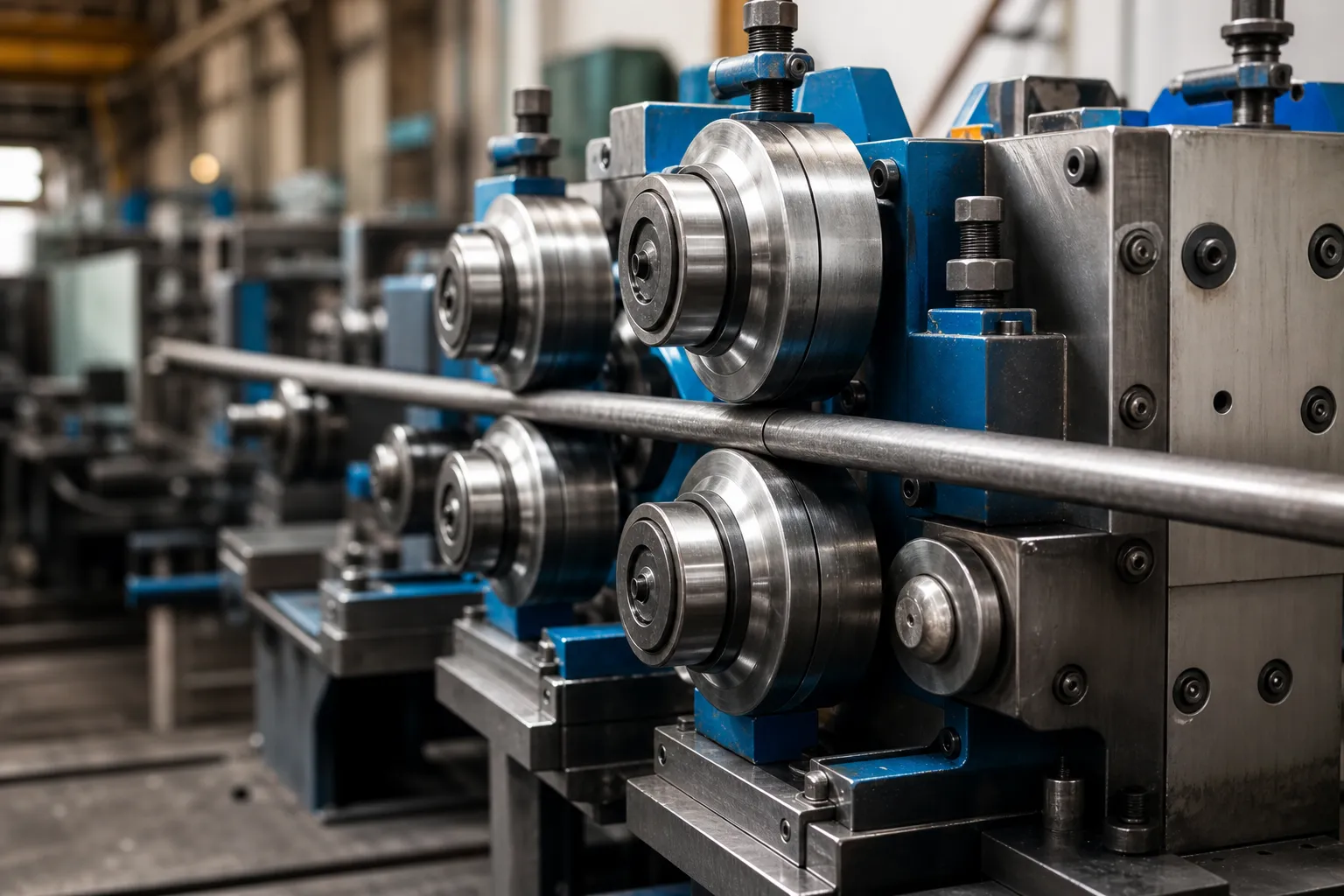
*Engineering konsept illustrasjon. Den viser en kandidat-korreksjonskontekst med lang verktøy; det er ikke en kundedatablad eller bevis på et garantert boreresultat.*
Definer verktøyfamilien og ekskluder Look-Alike-hensikter
Den nøyaktige forespørselen gir et spesialist dyphullsboringsutrettingsresultat, men også boremaskin, omsliping, resultater for pistolløp og generelle hydrauliske rettretter. Det er separate hensikter. Omfanget her er en pistolbor i produksjonsfasen eller dyphullsbor hvis geometri må evalueres før neste godkjente operasjon.
| Inkludere | Utelukke |
|---|---|
| Retthet eller utløpsevaluering av en kontrollert borefamilie | Valg av dyphullsboremaskin |
| Shank, fløyte- og hodebeskyttelse under et kandidatkorreksjonsforsøk | Omsliping, sliping eller boring |
| Prøvebasert datum og frigitt inspeksjonsplanlegging | Pistolløp, betongbor og medisinske borekrav |
Artikkelen skal lenke til den eksisterende boreverktøy retting omfang men ikke i det stille behandle det brede navet som et bevis på at hver pistoløvelse allerede er dekket.
Spor forvrengning til produksjonsstadiet
Verktøygeometri kan påvirkes av råstoffets tilstand, maskinering, fløyteformasjon, varmebehandling, overflatebehandling, håndtering eller et tidligere korrigeringsforsøk. Tidspunktet endrer den tillatte kontaktstrategien. Et emne som vil bli slipt senere, kan vurderes annerledes enn et ferdig bor med beskyttede skjærefunksjoner.
Før en rettssak, identifisere den kontrollerte verktøytegningen, materiale og varmebehandlingstilstand, lengde og skiftende diameter, skaft/endegeometri, fløyte/hodetrekk, nåværende produksjonsstadium, innkommende avvikskart og neste prosess. Ikke kopier konkurrentens dimensjoner, antall akser, makt, syklustid eller automatiseringskrav til en lokal spesifikasjon.
Hvorfor dyphullsverktøy forvrenger slik de gjør
En pistoløvelse tjener sin forvrengning. Den rå borestangen er allerede ekstremt slank – lengde-til-diameter-forhold som ville gjøre en overføringsaksel forlegen – og deretter fjerner produksjonsruten materiale asymmetrisk: rifling eller fresing av en sponkanal langs den ene siden, kutte sjåføren flatt, legge til hodet med dets kuttegeometri og kjølevæskepassasje. Hver og en av disse operasjonene fjerner begrensninger fra der den var og etterlater restspenning der maskineringen bearbeidet materialet. Varmebehandling legger deretter sin signatur på den nå asymmetriske delen, og dyphullsboring av kjølevæskeboringen gjennom kjernen forstyrrer spenningsbalansen en gang til. Det ferdige verktøyet er et presisjonsinstrument som bærer flere overlagte forvrengningsfelt. Det er praktisk å forstå denne stabelen, ikke akademisk: den forutsier at bøyninger konsentrerer seg nær seksjonsoverganger - topp til fløyte, fløyte til skaft — at samme verktøydesign kan forvrenges forskjellig på tvers av partier, og at en korrigeringsprosess som behandler verktøyet som en vanlig stang vil både måle og trykke på feil steder. Iscenesettelseslogikken og dens interaksjon med korreksjon er det samme dekket for retting etter varmebehandling, brukt på en seksjon som aldri hadde symmetri til å begynne med.
Asymmetriproblemet: Riflet seksjoner er ikke aksler
På riflet lengde, tverrsnittet er en åpen profil med en nøytral akse forskjøvet bort fra det geometriske sentrum - materialbanen og sponkanalen balanserer ikke. To tekniske konsekvenser følger. Stivhet blir retningsbestemt: snittet bøyer seg lettere i fløytens plan enn vinkelrett på det, så det samme korreksjonsslaget levert med samme kraft produserer forskjellig bevegelse avhengig av verktøyets klokkefunksjon - korreksjonsplanen må derfor være orienteringsbevisst, ikke bare posisjonsbevisst. Og måling på fløyten viser en overflate som går i spiral: en sonde som sporer OD til et rillet verktøy ser rillepasseringen som et avbrudd, og den gjenværende OD mellom rillene følger en helix, så naive avlesninger blander helixgeometrien inn i aksekartet. De disiplinerte svarene er vinkelmaskering - kun leses i definerte rotasjonsvinduer mellom fløyter - og skille mellom skaftet, hvor seksjonen er solid og oppfører seg klassisk, fra riflet lengde, hvor hvert tall trenger sin kontekst. Den samme forsiktighet med avbrutt overflate gjelder for familier med steinbor og tunge verktøy som omfattes av varmebehandlet borestangretting.
Velg et funksjonelt dato- og målekart
Retthet, radiell utløp og skjærehodeforhold er ikke utskiftbare. Kundetegningen skal angi hvilken karakteristikk som styrer aksept og hvordan verktøyet støttes eller roteres. En skaft kan være en kandidatreferanse bare hvis den samsvarer med den nødvendige funksjonsaksen og dens tilstand er kontrollert.
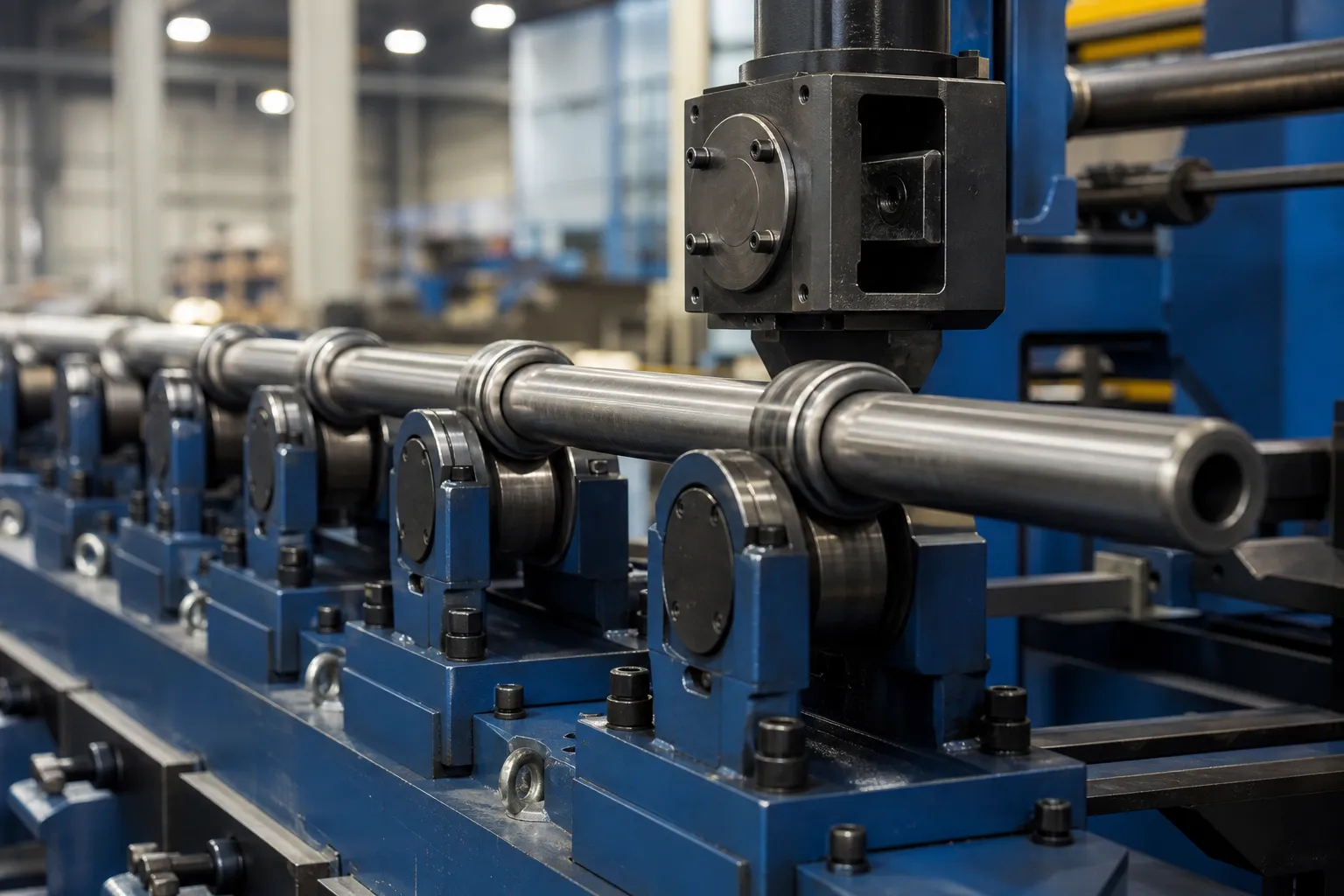
*Engineering konsept illustrasjon. Den understreker at lange slanke verktøy trenger støtteplanlegging; eksakt antall stasjoner og sensormetode må valideres fra borefamilien.*
Målegjennomgangen bør registrere godkjente referansefunksjoner, aksiale stasjoner, rotasjonsmetode hvis den brukes, sondekontaktforhold, vinkelmasker for fløyter eller hull, støttesteder og den frigitte tilstanden som ble brukt for endelig aksept. Et lokalt trekk eller ikke-støttet spenn kan ellers forveksles med en bøy av hele verktøyet.
Beskytt skaftet, Fløyte og skjærehode
Støtte- og korrigeringsplasseringer må godkjennes fra geometrikartet og gjennomgang av beskyttet sone. Fløyter, skjærekanter, kjølevæskehull, belagte soner og lokale endringer i snitt kan skape både kontaktrisiko og misvisende måling. En tilgjengelig overflate er ikke automatisk et akseptabelt lastepunkt.
| Sone | Teknisk spørsmål |
|---|---|
| Shank | Fastslår det funksjonelle datum og tolererer den foreslåtte støtten? |
| Fløyte | Kan sonde eller støttekontakt unngå avbrutt overflatesignal og merking? |
| Skjærehode | Er kontakt forbudt fordi det kan påvirke kantgeometri eller etterbehandling? |
| Slankt spenn | Støtter mellomrom forhindrer at sag blir et tilsynelatende korreksjonsmål? |
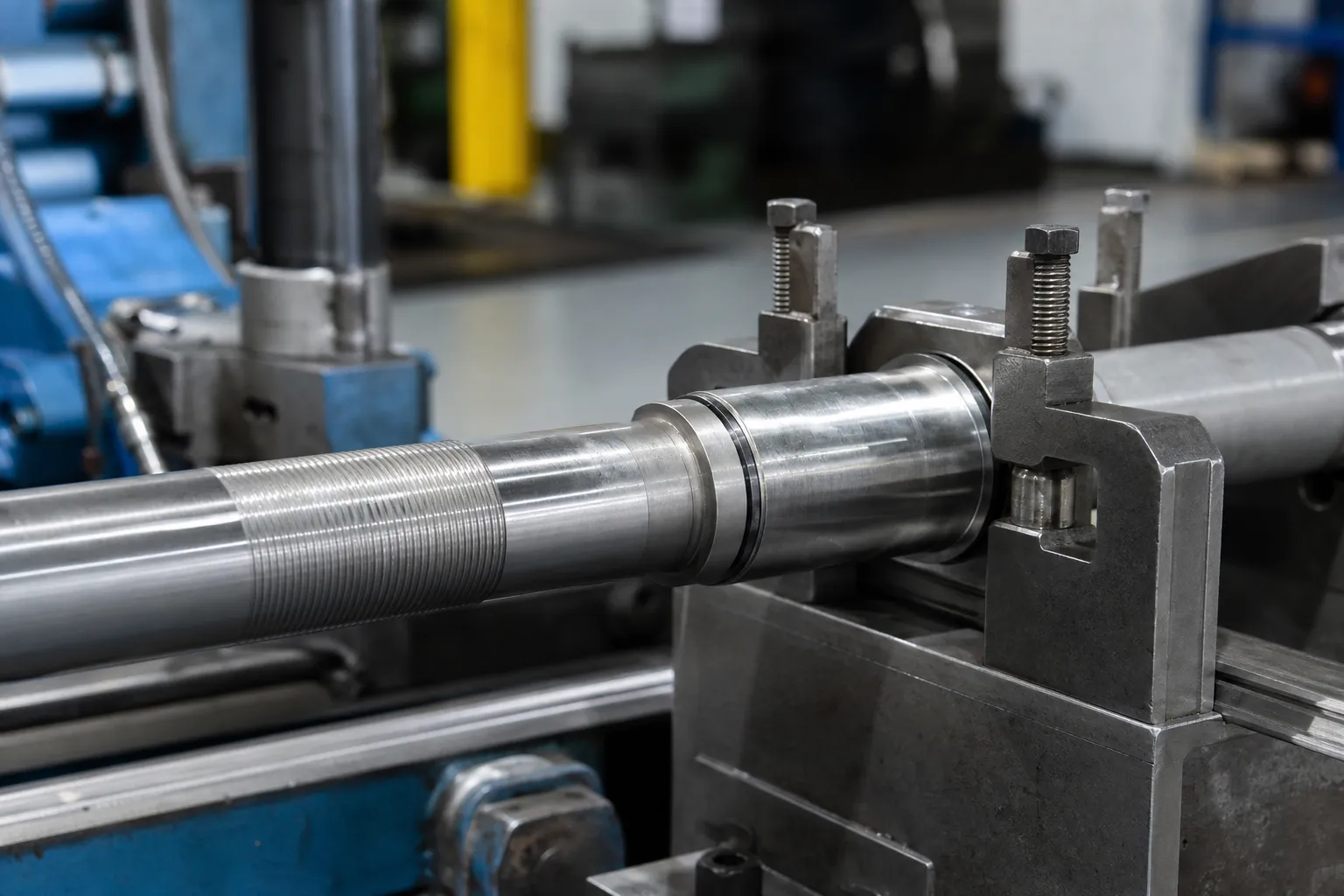
*Engineering konsept illustrasjon. Den viser et inkrementelt korreksjonskonsept, ikke et godkjent trykk, slag, armatur eller produksjonsoppskrift.*
Hvor retting sitter i verktøyets prosessrute
Det samme verktøyet stiller et annet rettespørsmål avhengig av hvor det står i ruten. En blank eller halvferdig stang, på vei inn i sliping, gir kontaktfrihet - overflater som uansett vil bli fjernet tåler korrigeringsmerker som et ferdig verktøy ikke kan - og akseptspørsmålet er om slipegodtgjørelsen kan rydde opp i den korrigerte geometrien. En ferdig drill, fløyter kuttet og kanter forberedt, snur hver prioritet: vernesoner dominerer, korrigeringer må lande på slettespennene, og akseptspørsmålet er funksjonell utløp på kundens egen inspeksjon. Et omslipt verktøy kommer med sin retthetshistorie allerede brukt én gang og dimensjonene endret fra nominelle, så korreksjonsoppskriften den kjørte under som et nytt verktøy beskriver den ikke lenger - omarbeidsreglene og deformasjonsbudsjettet fra rammeverk for omarbeidingsgrense gjelder med full kraft. Frysing av produksjonsstadiet i prøverekorden, som rammeverket ovenfor krever, er det som hindrer disse tre samtalene fra å bli uklare til én dyr misforståelse.
Håndtering av avbrente overflater i målingen
Praktiske måleplaner for riflede verktøy konvergerer på et lite sett med teknikker, hver med en kostnad. Vinkelmaskering - prøvetaking kun i vinduene mellom fløytepassasjer - holder sonden på kontinuerlig materiale til prisen av færre avlesninger per omdreining og en definert rotasjonsreferanse for å holde vinduene på linje mellom stasjonene. Skaftbasert kartlegging – måling av de massive seksjonene nøyaktig og interpolering over det riflede spennet – gir rene tall i endene, men antar at den riflede lengden oppfører seg jevnt mellom dem, en antagelse forvrengningsfysikken av og til forråder nær hodet. Funksjonsbevisst feste - støtte på land mellom riller med konform verktøy - bevarer verktøyets holdning, men gjør støttetilstand til en del av måledefinisjonen, holdes identisk mellom maskinen og en eventuell verifiseringsstasjon, per datum-disiplinen i trinnet akselmålende datumvalg. Uansett hvilken kombinasjon en prosess bruker, regelen som bestemmer dens troverdighet er uendret: sett på nytt og gjenta, og behandle enhver topp som mislykkes i re-set-kontrollen som en hypotese i stedet for et korreksjonsmål.
Bruk en inkrementell, Utgitt tilstandskorrigeringsløkke
- verifisere den godkjente borefamilien, produksjonsstadiet og innkommende tilstand;
- inspisere for skader, deformasjon utenfor omfanget eller forbudt overflatetilstand;
- etablere og verifisere datum og støtteoppsett;
- kartlegge avtalt geometri før korrigering;
- velg kun godkjente støtter og korrigeringspunkter;
- bruke en inkrementell korreksjon innenfor prøvetestgrensen;
- slipp verktøyet og sikringen helt;
- mål på nytt og ta opp OK, kr eller ingeniør-gjennomgang disposisjon.
Den endelige avgjørelsen må følge utgivelsen. En avlesning mens et verktøy er fastklemt eller under kraft kan ikke presenteres som endelig retthet eller utløp.
Bygg aksept rundt representantverktøy
Prøvepakken bør inkludere normale og verste innkommende øvelser, den kontrollerte tegningen, referansemåler, målekorrelasjon, inspeksjon av beskyttet overflate og en eksplisitt grense for ingen fremdrift. Når det gjelder sprekk eller materialintegritet, formell NDT forblir en egen prosess med mindre den ansvarlige metoden er spesifisert og kvalifisert; korrigeringsovervåking erstatter den ikke automatisk.
For den bredere akseptarbeidsflyten, se retting prøve test og aksept og akselens retthet, runout og TIR.
Informasjon som trengs for en gjennomgang av retting av pistoldrill
Gi den kontrollerte tegningen, verktøytype, materiale og varmebehandlingstilstand, produksjonsstadiet, skaft/fløyte/hodedetalj, representative normale og bøyde prøver, innkommende geometridata, krav til beskyttet kontakt, referanseinspeksjonsmetode og produksjonsmål. StraighteningTech kan deretter gjennomgå kandidatdatum, støtte, måle- og korreksjonsarkitektur før du foreslår en prøve-testplan.
FAQ
Er pistol-drill-retting det samme som en pistol-boremaskin?
Ingen. En pistolboremaskin lager en boring. Denne artikkelen tar for seg en kontrollert geometrigjennomgang av selve verktøyet under produksjon.
Kan en fløyte brukes som generell måleflate?
Ikke uten en funksjonsbevisst metode. Avbrutt geometri kan skape falske sondesignaler og kan være en beskyttet sone.
Kan en nøyaktighet eller syklustid garanteres fra artikkelen?
Ingen. Begge krever validerte prøver, avtalt datum og inspeksjonsmetode, og en verifisert maskin- og verktøykonfigurasjon.
Hvorfor bøyer pistoløvelser seg nær hodet og fløytens utløp?
Fordi stivheten endres brått ved disse overgangene og produksjonsruten fjernet materiale asymmetrisk rundt dem. Stress fra fluting, varmebehandling og kjølevæskeboringskonsentrat der seksjonen endres, så korreksjonskartet viser vanligvis toppene i nærheten av hode-til-fløyte- og fløyte-til-skaft-grensene i stedet for på midten av lengden..
Påvirker fløyteretningen korrigeringsplanen?
Ja. En rillet seksjon bøyer seg lettere i rilleplanet enn over den, så det samme trykkslaget beveger verktøyet annerledes avhengig av klokkeslett. Korrigeringsplaner for riflet verktøy er orienteringsbevisste: pressepunktet, retning og verktøyrotasjon angis sammen, ikke uavhengig.
Skal et emne rettes opp før eller etter rillefresing?
Rutebeslutningen tilhører verktøyets prosessingeniør, men handelen er eksplisitt: å rette ut det solide emnet er kontaktvennlig og geometrisk enkelt, likevel kan fluting og varmebehandling etterpå forvrenge det igjen; rette opp riflet, varmebehandlet verktøy vender mot beskyttede soner og avbrutt måling, men korrigerer geometrien det ferdige verktøyet faktisk bærer. Uansett hvilket stadium som velges, akseptdefinisjonen og korreksjonsvalideringen må kjøres på verktøy i den tilstanden.
Sammenligning av leverandører for pistolbor og dyphullsborretting? Ta valgguide for aksel, rør- og profilarbeid med deg, og tilregnelighet-sjekk priser mot kostnadssammenbrudd for rettemaskin.