
La selezione di una piastra dovrebbe iniziare con la geometria richiesta e il metodo di accettazione, non con un'etichetta della macchina. Un albero, un tubo a parete sottile e un profilo asimmetrico possono sembrare piegati, ma potrebbero richiedere dati diversi, tracce di misura, supporta, zone di contatto e metodi di correzione. Un confronto tra macchine che ignora tali differenze può produrre un preventivo interessante senza un piano di test a campione difendibile.
Questa guida è un quadro di riferimento per l'acquirente e l'ingegneria. Non afferma che StraighteningTech offra tutti i tipi di macchine, busta del pezzo, precisione, forza, livello di automazione o interfaccia di linea. Una configurazione finale richiede il disegno, campioni, metodo di ispezione e prove di capacità convalidate.

*Illustrazione del concetto di ingegneria. Mostra un processo decisionale dal pezzo al metodo, non un catalogo di prodotti o una prova che ogni percorso sia disponibile.*
Iniziare con la caratteristica e il dato richiesti
La prima domanda è cosa bisogna accettare: rettilineità della linea centrale, esaurire, TIR, relazione coassiale, arco, spazzata laterale, intrecciare, ovalità, condizione della parete o un'altra caratteristica controllata. Questi termini non sono intercambiabili. Il disegno deve identificare il riferimento, condizione di supporto, intervallo di misura, orientamento e regola decisionale dello stato rilasciato.
| Famiglia di pezzi | Tipico problema di selezione | Non dare per scontato |
|---|---|---|
| Lancia | Asse funzionale, data del diario, modifiche alla mappa di runout e alle sezioni locali | Ogni albero può utilizzare la stessa sequenza di pressione del punto |
| Tubo | Linea centrale, ovalità, Integrità delle pareti e rischio di crollo | Una lettura esterna dimostra che il foro/muro è accettabile |
| Profilo / sbarra | Arco, spazzare, intrecciare, sezione asimmetrica e protezione per il viso | Una disposizione dei rulli a barra tonda si adatta a un profilo |
Per la terminologia di misurazione, iniziare con rettilineità dell'albero, runout e TIR E ovalità del tubo rispetto alla rettilineità della linea centrale.
Mappare l'errore prima di scegliere il metodo
Una mappa geometrica iniziale identifica se la deviazione è globale, locale, un piano, multipiano, angolare, relativo alla sezione o causato da un segnale di supporto/attrezzatura. Dovrebbe essere catturato con il dato proposto e controllato mediante riposizionamento o un metodo di ripetizione concordato. Una lettura in una condizione di supporto instabile non è un obiettivo di correzione affidabile.
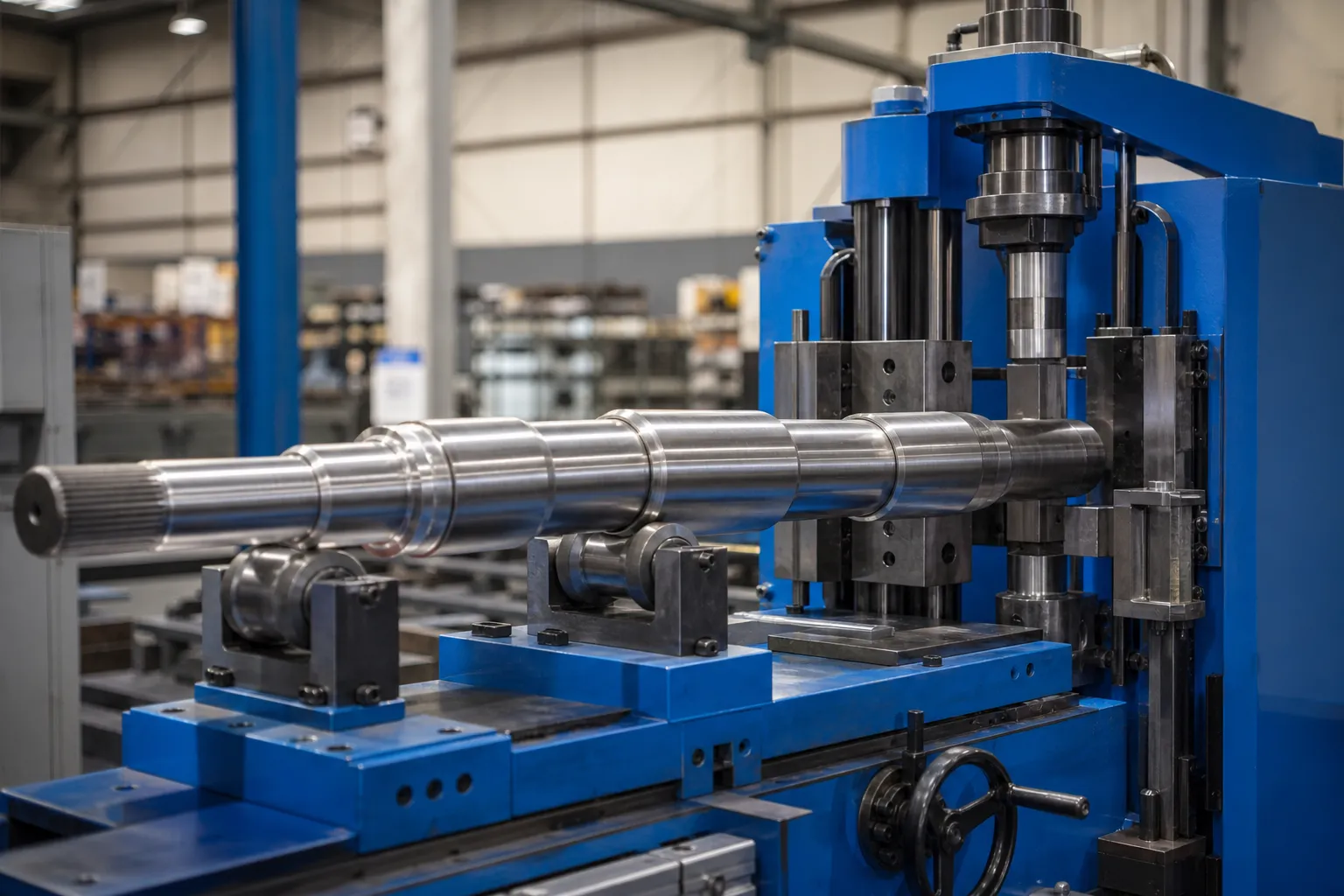
*Illustrazione del concetto di ingegneria. Mostra una cella di misurazione e correzione candidata; sensori reali, supporta, il percorso della forza e l'automazione richiedono una validazione specifica del pezzo.*
The Specification Package That Gets Accurate Quotes
The quality of the quotations a buyer receives tracks the quality of the specification package sent out, and the package is small enough to be worth assembling properly. Its items are: the drawing with the controlled characteristic named and its datum identified — not only a tolerance number floating free of a reference; the material and its process stage, because a hardened part and an annealed one are different correction problems wearing the same geometry; the incoming error distribution from real parts, because a machine sized for gentle bows will not suddenly handle the worst lot of the year; the acceptance method as the customer runs it, including support condition and released-state rule; the protected zones and surface classes; the production mix and changeover frequency; and representative samples the supplier can actually test. Buyers who send this receive differentiated engineering responses. Buyers who send a diameter and a target accuracy receive brochure round-trips — and discover the gap between the two at commissioning, which is the most expensive place to hold the conversation.
Sizing Force, Stroke and Envelope Without Overbuying
Three machine dimensions carry most of the sizing decisions, and each is set by workpiece physics rather than by ambition. Correction force follows from the section modulus of the stiffest part family and its yield condition: enough force to plastically bend the worst section, with working margin so the machine is not permanently at its ceiling — but force beyond the family’s need buys nothing except a heavier, stiffer, more expensive machine that may also be coarser in control at the small end of the range. Stroke and daylight follow from the part family’s diameters, the tooling heights and the handling concept. Work envelope and loading height follow from part length and mass, because supporting a long part safely is part of the machine’s job, non un ripensamento. The classical overbuying failure is specifying for a hypothetical giant part that never materializes and then running a family the machine barely registers; the underbuying failure is sizing to the average part and meeting the worst lot with no headroom. Both are avoided the same way: the sample test on the actual family, at its actual worst, before the configuration is frozen — the same evidence rule that governs the automation boundary.
Valutare l'integrità del contatto e della sezione
La macchina candidata deve creare un percorso di reazione approvato senza danneggiare le funzionalità protette. Esamina le zone di supporto accessibili, punti di correzione consentiti, requisiti di superficie/rivestimento, movimentazione di lunghezza e massa, transizioni di sezione, spessore della parete, condizione di noia, orientamento della cucitura e operazioni a valle.
| Ingresso di selezione | Perché è importante |
|---|---|
| Zone di contatto e senza contatto | Determina se è ammissibile un percorso di supporto o di correzione |
| Rigidità della sezione e condizioni della parete | Modifica la risposta e il rischio di danno locale |
| Distribuzione degli errori in entrata | Definisce se è possibile valutare un metodo locale o continuo |
| Fase di produzione | Determina le restrizioni sulla superficie/indennità e l'interfaccia del processo successivo |
| Mix produttivo | Influisce sul cambio, controllo delle ricette e validazione della gestione |
Confronta i percorsi candidati in modo condizionale
È possibile valutare la pressione del punto in cui è presente una mappa geometrica discreta, esistono il percorso di supporto e i punti di correzione approvati. È possibile valutare la compatibilità con la stiratura a rullo o continua, sezioni sufficientemente coerenti. Stirata, torsione o percorsi specializzati possono essere candidati solo quando il pezzo è in lavorazione, serraggio, i requisiti materiali e di convalida li supportano. Nessun metodo è una garanzia predefinita.
Vedere pressa rispetto alla raddrizzatura a rullo per il confine del metodo e stiratura a punti per un quadro di correzione locale a circuito chiuso.
Where Selections Go Wrong
Failed selections cluster into recognizable patterns, and naming them is cheaper than living one. Choosing by machine label: buying a “shaft straightener” for a shaft-shaped part whose datum, section transitions and acceptance method actually demand something else — the label describes the brochure, not the fit. Accepting accuracy from a table: a published accuracy figure is a machine attribute under stated conditions; the delivered result on your family, your gauges and your incoming distribution is established by the sample test, nothing else. Forgetting the exception path: the machine is selected on how it handles good parts, while production success also depends on how it detects, routes and records the bad ones — the NOK routing discipline deserves a line in the specification, not a discovery during ramp-up. Leaving acceptance undefined: two parties can share a number and disagree about its meaning unless the support condition, gauge and released-state rule are written down, which is why the FAT framework freezes those inputs before testing. And ignoring changeover: in a high-mix shop, the route that wins on paper for one family can lose the year through setup time, first-article validation burden and recipe control across many.
Changeover Economics in a High-Mix Shop
For shops running many part families in small lots, changeover behavior deserves evaluation as a first-class selection criterion, alongside geometry and force. The questions are concrete. What physically changes between families — supports, utensileria per pressa, sensor positions — and how is each change identified so an old setup cannot run silently on a new part? How long does a validated changeover take, and who performs it? What requalification does the quality system demand after a changeover: a first-article check, a reseat verification, or a fuller sample? Machines designed for mix answer these with identified tooling, recipe management and guided changeover sequences; machines designed for high-volume single families answer them with engineering hours. Neither answer is wrong — but the buyer should know which one they are purchasing before the second family arrives at the dock, and the honest place to test changeover is during the acceptance test, where a family switch can be demonstrated and timed under witness.
Definire il confine dell'automazione
"Automatico" dovrebbe essere scomposto in caricamento, identificazione, orientamento, misurazione, correzione, gestione, gestione delle ricette, tracciabilità e routing delle eccezioni. Un sistema può automatizzare alcuni passaggi mantenendo i dispositivi manuali, approvazione tecnica o verifica del calibro del cliente. Non utilizzare un'etichetta di automazione come proxy per la velocità effettiva, precisione o risparmio di manodopera.
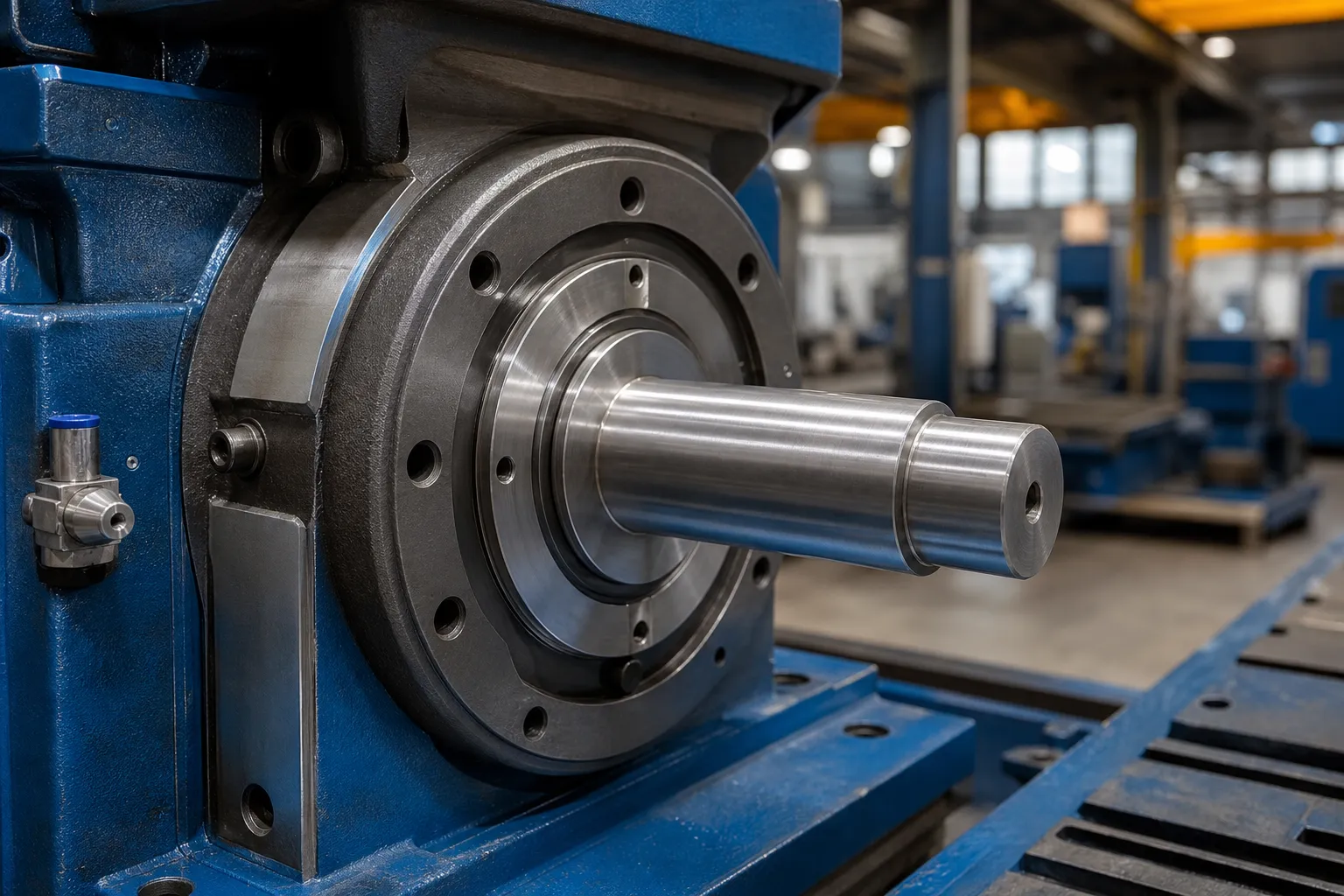
*Illustrazione del concetto di ingegneria. Enfatizza la verifica della parte rilasciata; non è un rapporto di accettazione del cliente o un risultato di prestazione garantito.*
Effettuare il test del campione sul cancello di selezione
La selezione dovrebbe chiudersi con campioni rappresentativi normali e del caso peggiore, un disegno controllato, dato/scartamento concordato, letture grezze prima e dopo, rimisurazione dello stato rilasciato, controlli di superficie/sezione, limiti massimi di tentativi di correzione e un percorso NOK definito. Qualsiasi accuratezza promessa, tempo di ciclo, la velocità di gestione o l'ambito di automazione appartengono solo dopo che tale prova è stata completata.
Utilizzo prova e accettazione del campione di raddrizzatura per strutturare il processo, Prove FAT e SAT.
Informazioni necessarie per una revisione della selezione della piastra
Fornire il disegno e le varianti del pezzo, materiale e fase di produzione, informazioni su lunghezza/sezione/muro, dati geometrici in arrivo, dato funzionale, zone protette, metodo di misurazione di riferimento, obiettivo di produzione, vincoli di gestione e campioni rappresentativi. StraighteningTech può quindi valutare la misurazione del candidato, architettura di supporto e correzione e identificare le prove necessarie prima di proporre una configurazione della macchina.
Domande frequenti
Una macchina può elaborare alberi, tubi e profilati?
Possibilmente per una gamma di pezzi definita e convalidata, ma non perché tutti e tre siano chiamati “raddrizzamento”. Il dato, sezione e percorso di contatto devono essere rivisti.
Una macchina più veloce è automaticamente la scelta migliore?
NO. La produttività ha valore solo dopo la geometria, superficie, la misurazione e la gestione delle eccezioni soddisfano il metodo di accettazione concordato.
Una pagina di prodotto può sostituire un test di esempio?
NO. Le descrizioni dei prodotti stabiliscono una categoria; un test su un campione rappresentativo stabilisce se una specifica famiglia di pezzi può essere accettata.
How do I know if a machine is oversized for my parts?
When the family consistently occupies the bottom of the machine’s force and range scale. A machine with large margin above the stiffest family’s need is heavier, coarser in control at the small end, and more expensive than a right-sized configuration — and the family’s correction precision can suffer for it. The fix is sizing from the actual section modulus and worst-case incoming error, verified by sample test.
What should changeover look like in the acceptance test?
A witnessed family switch: old tooling out, new tooling in and identified, recipe selected under version control, first-article part measured and dispositioned, with the elapsed time and each verification step on record. If changeover matters to the shop’s economics, it belongs in the FAT scope rather than in a verbal assurance.
Is the published accuracy of a straightener what my parts will achieve?
It is what the machine achieves under its stated reference conditions. What your parts achieve depends on their geometry, stato materiale, incoming error, your gauges and your acceptance method. The bridge between the two is the sample test on representative and worst-case parts — the only evidence that converts a specification into a defensible expectation.