
Une ligne ne doit pas traiter chaque lecture non réussie de la même manière. Une pièce peut avoir un problème de configuration, une alarme de mesure, une condition géométrique corrigible, une réponse sans progrès, un problème matériel suspecté ou une non-conformité confirmée. Sans itinéraires distincts, des corrections répétées peuvent masquer un problème de mesure, endommager la pièce, mélanger des lots ou prendre une décision de qualité introuvable.
Cet article est un cadre de routage de qualité. Il ne prétend pas que StraighteningTech fournisse actuellement le tri automatique, capteurs spécifiques, seuils de rejet, logiciel de traçabilité ou règles de reprise autorisées. Ces fonctions nécessitent une portée locale vérifiée et une approbation de qualité.
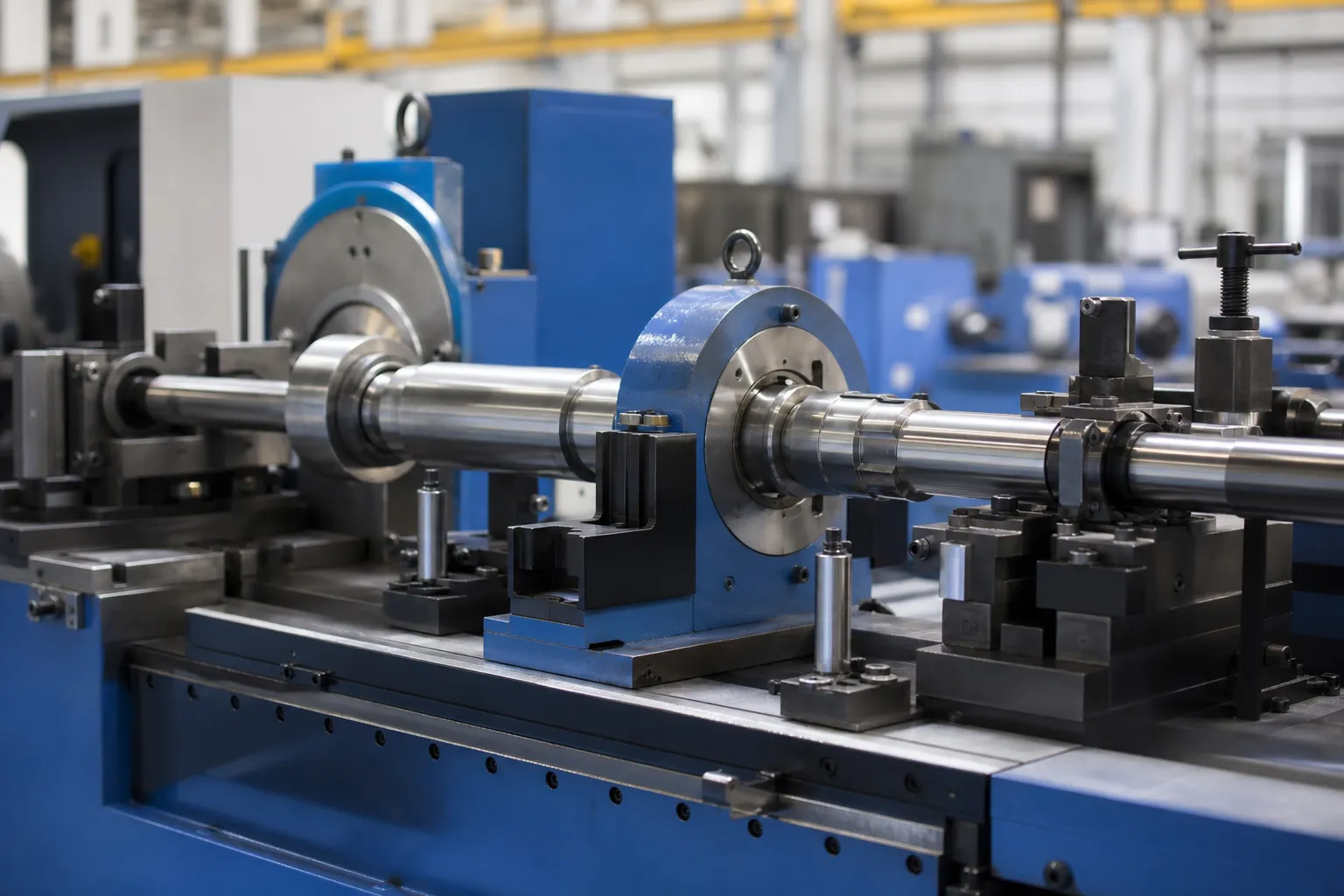
*Illustration du concept d'ingénierie. Il montre une cellule de production candidate, il ne s'agit pas d'un système de tri automatique installé ni d'une capacité définie de détection des défauts.*
Définir les états de disposition
Au minimum, distinguer PASS, ASSEZ, éligible à la retouche, arrêt/maintien et examen technique/qualité. Les définitions doivent faire référence au dessin contrôlé, méthode de mesure, état du processus et autorisation de libération. Une alarme de processus n'est pas automatiquement un rejet; il peut s'agir d'un signal d'escalade qui nécessite une vérification.
| État | Définition requise |
|---|---|
| PASSER | Répond aux exigences convenues en matière d'état de sortie avec les enregistrements requis |
| ASSEZ | Ne répond pas aux exigences définies ou présente une non-conformité confirmée |
| Éligible aux retouches | Répond aux conditions documentées pour une autre tentative approuvée |
| Arrêt / prise | Nécessite une configuration, signal de processus, examen de la qualité ou de l'ingénierie avant un traitement ultérieur |
| Examen technique | Nécessite une décision contrôlée en dehors de la voie automatique normale |
Séparez les problèmes de configuration de la non-conformité des pièces
Avant d'acheminer une pièce en NOK, déterminer si le signal pourrait résulter de la mise en place de la référence, variation de luminaire, état du capteur, identité de la pièce, mauvaise recette ou état de support non approuvé. La procédure doit définir les contrôles de nettoyage/réinstallation/répétition autorisés et empêcher les tentatives illimitées..
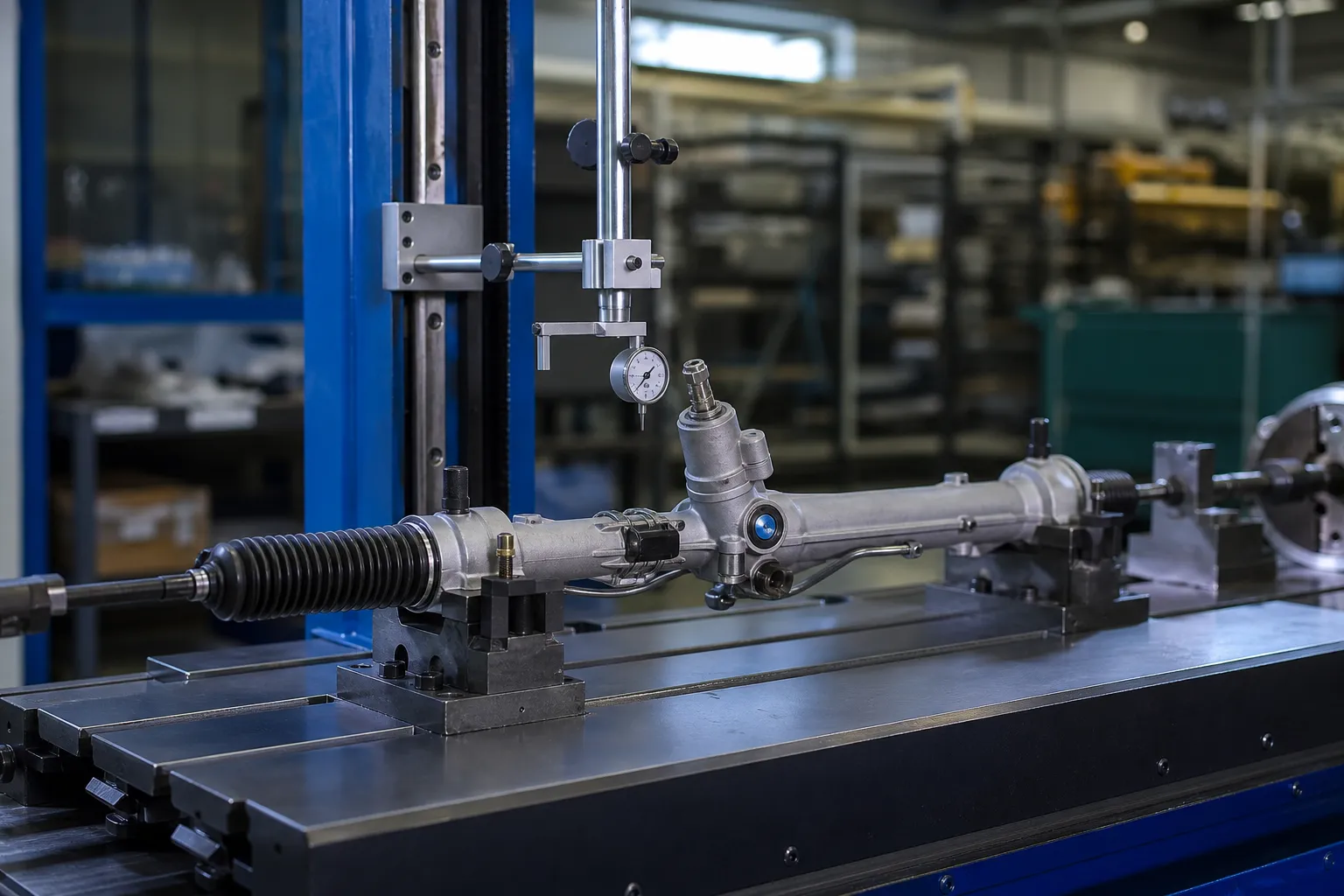
*Illustration du concept d'ingénierie. Il représente un point de décision de mesure, ne prouve pas une classification automatique ou une règle d'alarme spécifique.*
Voir répétabilité du montage et positionnement des données et détection de fissures lors du redressage automatique pour la séparation entre un signal et sa cause vérifiée.
Définir une limite de retouche avant la première correction
La reprise doit être un itinéraire approuvé avec un nombre maximum de tentatives défini., conditions de contact/assistance autorisées, exigence de réévaluation, vérifications de la surface/des caractéristiques et autorité pour continuer ou arrêter. La limite n'est pas un nombre universel; ça dépend du matériel, étape du processus, risque lié aux fonctionnalités, exigences du client et réponse validée. Lorsqu'une pièce ne répond pas comme prévu, l'action appropriée peut être maintenir ou rejeter plutôt qu'une force supplémentaire.
Why Unlimited Retries Corrupt the Line
Allowing a line to re-correct a part until the gauge finally passes feels productive and quietly destroys two things. The first is the part itself: every plastic bending cycle consumes a share of the section’s low-cycle fatigue life, and the reverse-loading behavior described for reverse loading in straightening means later cycles move the material more per unit force than earlier ones did. A part that reaches tolerance on its sixth attempt is not equivalent to one that reached it on the first, even though both read PASS.
The second casualty is the line’s own information. When retries are unlimited, the gauge sees only eventual outcomes: parts that converge, slowly, under repeated force. A drifting correction setup, a worn anvil, a bad lot of stock and a genuinely struggling part family all produce the same visible symptom — more attempts per part — and none of them generates a stop condition. The retry count is one of the cheapest and most informative process signals a straightening line produces, and it only exists as data if the line is required to stop and route the part at a defined limit instead of looping.
Thinking of the Rework Limit as a Budget
A more useful mental model than “three strikes” is a budget of deformation that each part may spend. The budget is set by the material’s condition and the consequence of failure in service, and it is spent by every correction stroke — forward or reverse. A hardened safety-critical shaft and a soft structural bar may carry very different budgets, which is why no universal rework number is defensible and why the limit belongs to the part family’s validated process, reviewed by quality. The same budget concept explains a rule that otherwise looks arbitrary: a part that has consumed its budget and still fails is rejected even though one more attempt might conceivably pass, because the part that would emerge is no longer the part the drawing specifies in any meaningful sense.
Budgets also need edges. Two conditions that stop rework regardless of remaining attempts are no-progress — corrections that stop changing the geometry, indicating the process is no longer engaging the error — and overshoot oscillation, where each attempt moves the part from one side of tolerance to the other. Both are stop signals, not tuning opportunities, and both feed the integrity-review concerns that repeated plastic cycling raises.
Maintenir l'isolement et la traçabilité
Chaque disposition doit préserver l’identité pièce/lot, version dessin/recette, condition de mesure, tentatives de correction, résultat, événement opérateur/automatisation, temps, examiner la décision et l’emplacement physique. L'isolement doit empêcher une partie retenue ou NOK de revenir dans le flux PASS sans autorisation explicite.
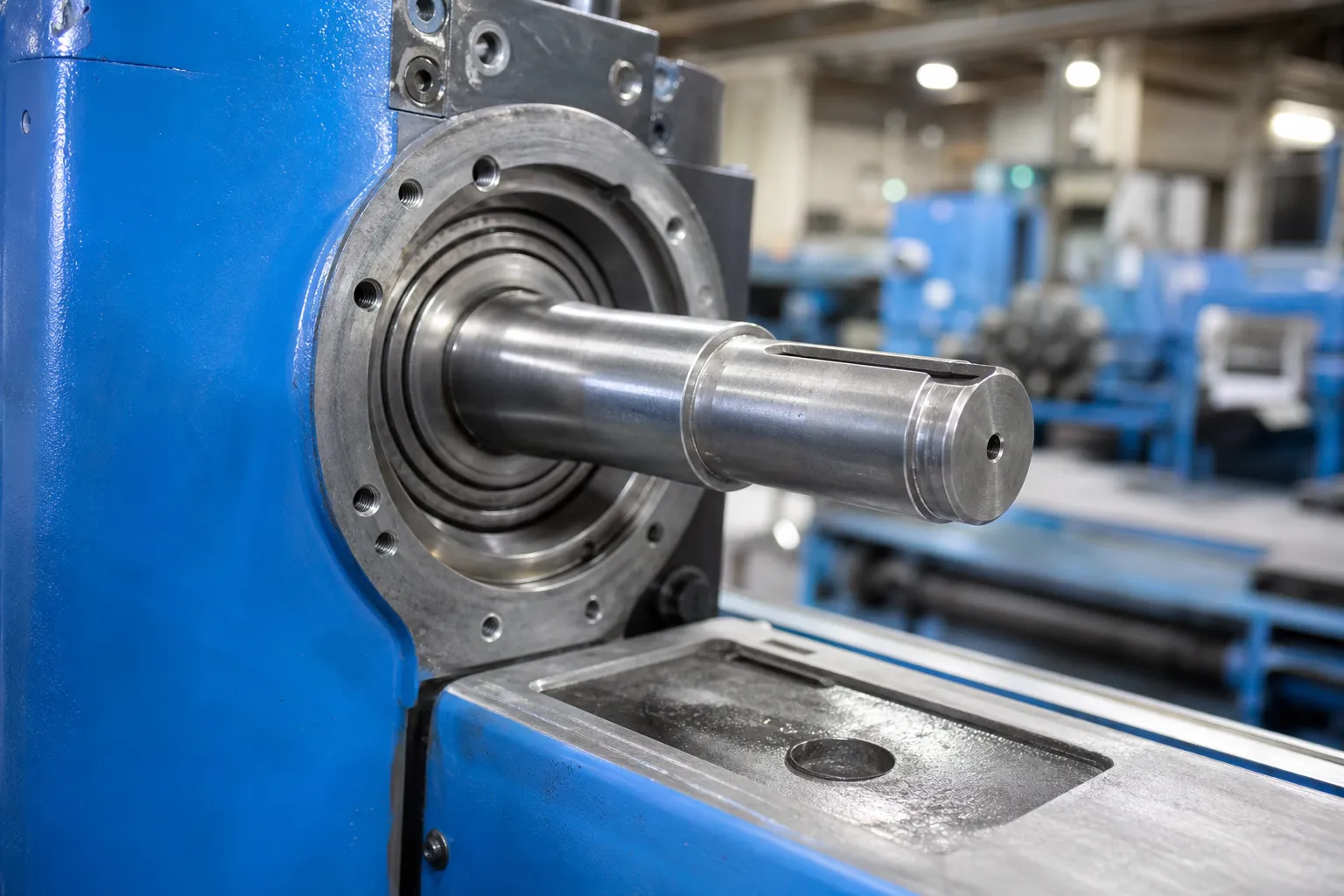
*Illustration du concept d'ingénierie. Il met l'accent sur la vérification à l'état libéré et la disposition enregistrée, pas une promesse d’interface DMC/MES ou de trieur automatique.*
Designing Segregation That Cannot Be Defeated
Disposition states only work if the physical line enforces them. The failure mode is always the same: a held or NOK part re-enters the good flow during a busy shift, through an operator judgment call, a shared conveyor or an unlabeled tote. Effective segregation design follows mistake-proofing logic rather than instruction signs. Good and rejected parts take different physical paths with no shared section where a part can be redirected by hand. Hold locations lock or require an access step that itself creates a record. Labels and bins are part-specific, not generic scrap tags, so a held-for-review part cannot decay into anonymous scrap or anonymous stock. Where volume justifies it, diverters and gates make the routing decision the machine’s, not the operator’s — the automation boundary discussed in manual versus automatic straightening applies to disposition as much as to correction.
The record side has the same anti-defeat requirement. A disposition that lives only in an operator’s memory, or in a spreadsheet anyone may edit, does not survive an audit or a containment event. The minimum durable record is the tuple — part identity, parcelle, drawing and recipe version, condition de mesure, attempt count, résultat, decision, decision-maker, time — retained long enough to answer the customer question that eventually comes: which parts from that week, from that machine, from that shift.
What the Disposition Data Buys Later
A line that routes honestly accumulates, as a by-product, the dataset that every improvement program wishes it had. Attempt-count trends flag tooling wear and setup drift while they are still cheap to fix. Lot-to-lot shifts in incoming geometry point upstream to suppliers with evidence instead of complaints. The ratio of setup-issue holds to true part nonconformances measures how much of the line’s apparent quality problem is actually its measurement and fixturing — information directly relevant to planning a jauge R&étude R. And when a customer raises a field concern, traceability converts a week of panic into an afternoon of records. None of that value survives a culture of retry-until-pass; all of it is the natural dividend of the routing discipline described here.
Créer une route de vérification et d'escalade
- identifier la pièce, parcelle, dessin et recette;
- vérifier la configuration des mesures/données dans le cadre des contrôles approuvés;
- capturer la lecture, état du processus et toute alerte;
- appliquer uniquement l'itinéraire de retouche autorisé lorsque l'éligibilité est confirmée;
- libération et réévaluation dans les conditions convenues;
- itinéraire PASS, ASSEZ, attente ou examen technique;
- conserver la traçabilité et la séparation physique;
- utiliser des modèles récurrents pour déclencher un processus ou un examen de la qualité.
Pour l’architecture de preuve nécessaire, voir Test d'échantillon de redressage et acceptation et Jauge R&R pour redresser les lignes.
Portes sans progrès et limites de correction
L'expression exacte limite de correction de redressement pas de porte de progression est médicalement pollué dans SERP, donc la logique canonique de non-progrès réside sur la page de tri et de limite de retouche NOK. Définir des cycles de correction maximaux, force/stroke ceilings and mandatory stop/sort actions before production release.
FAQ
NOK signifie-t-il toujours de la ferraille?
Non. Un état NOK peut nécessiter une vérification, reprise contrôlée, revue technique ou rejet final en fonction de la démarche qualité approuvée.
Une ligne peut-elle réessayer jusqu'à ce que la lecture soit réussie?
Non. La retouche nécessite une limite de tentative maximale définie et une autorité de qualité. Des tentatives illimitées peuvent masquer un problème de processus ou de mesure.
Cet article signifie-t-il que la ligne dispose d'un tri automatique?
Non. C'est un cadre de routage. Tri réel, les fonctions de traçabilité et d'interface nécessitent une vérification séparée.
Why does the attempt count matter more than the final reading?
Because the final reading describes where the part ended, while the attempt count describes what it cost to get there. Two parts reading identical PASS values are not equivalent if one took a single correction and the other took a full budget of repeated cycles. The attempt count is also the line’s earliest drift alarm — a setup, tooling or material change usually shows up as more attempts per part long before it shows up as rejects.
Should rework limits differ between part families?
Oui. The limit is a deformation budget set by material condition, feature risk and service consequence, so a hardened safety-critical shaft and a soft structural bar justify different numbers. The limit belongs to each family’s validated process with quality approval, not to the line as a single setting.
What is the minimum physical segregation a small line needs?
Separate paths or lockable, labeled, part-specific containers for PASS, hold and NOK — arranged so a held part cannot return to the good flow without a recorded, authorized step. The design principle is that doing the wrong thing must require effort, not just discipline. Escalate to machine-controlled diverters when volume or staffing makes human routing unreliable.
Sorting decisions are also capacity decisions – le comparaison manuelle vs automatique et le Cas de retour sur investissement pour le lissage automatique both price the NOK stream a manual line tends to hide.