
Le lissage manuel et automatique ne sont pas des labels de qualité. L'un ou l'autre itinéraire peut s'avérer inapproprié lorsque le point de référence pièce, méthode de mesure, zones de contact, la règle d'acceptation ou le processus de traitement n'est pas défini. La question utile est de savoir quelles étapes nécessitent un contrôle reproductible pour une famille de pièces définie et quelles étapes nécessitent encore une configuration qualifiée., approbation technique ou vérification des jauges client.
Ce guide est un cadre de sélection, il ne s'agit pas d'une affirmation selon laquelle StraighteningTech fournit une configuration d'automatisation particulière ou que l'automatisation garantit une précision, temps de cycle, réduction du travail ou retour sur investissement. Ces résultats nécessitent une portée d'équipement vérifiée et des preuves de production représentatives.
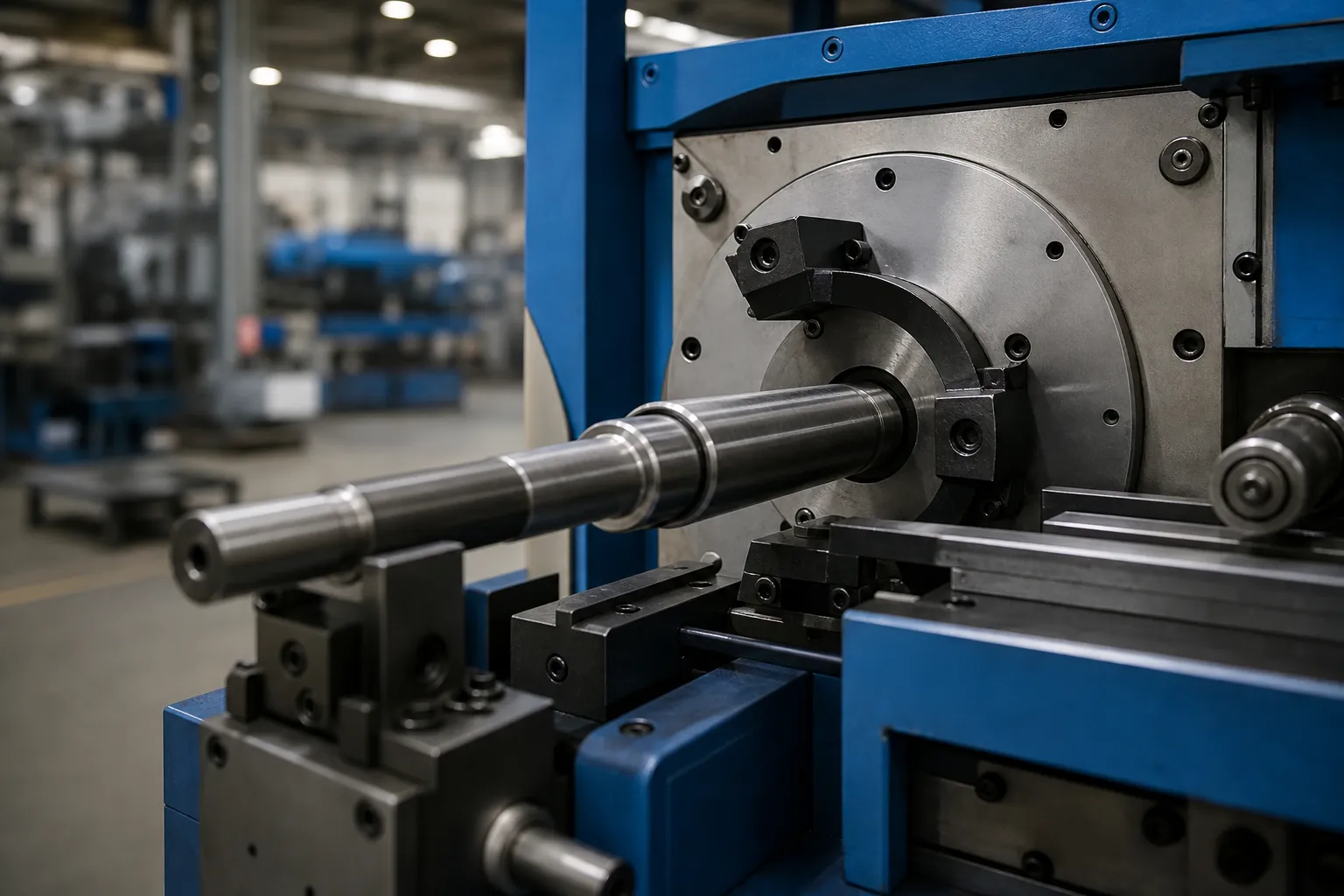
*Illustration du concept d'ingénierie. Il montre un éventuel contexte de traitement automatisé, ne constitue pas une preuve d'une configuration locale disponible ou d'un résultat de production.*
Définir les limites de l'automatisation
« Automatique » peut décrire une ou plusieurs fonctions différentes. Chargement, identification des pièces, orientation, siège de référence, mesures, correction, déchargement, sélection de recettes, la traçabilité et le tri NOK doivent être évalués séparément.
| Fonction | Itinéraire manuel à évaluer | Itinéraire automatisé à évaluer |
|---|---|---|
| Chargement et orientation | Manipulation de l'opérateur, confirmation du montage et ergonomie sécurisée | Identification de la famille, présentation contrôlée et validation de la manipulation |
| Mesures | Configuration de l'opérateur, lecture de jauge et répétabilité | Séquence contrôlée, capture de données et corrélation de jauges |
| Correction | Jugement compétent et réponse progressive | Boucle contrôlée par recette et seuils d'exception |
| Passage | Discipline de montage/réglage et premier examen | Contrôle des versions, identité de l'outillage et confirmation de première partie |
| Disposition | Ségrégation physique et examen documenté | Routage PASS/NOK/retravail défini avec autorité humaine |
Une ligne automatique peut toujours nécessiter une approbation manuelle à une étape critique. Un poste de travail manuel peut toujours utiliser des jauges contrôlées et des enregistrements traçables. La sélection doit décrire le processus réel plutôt que d'utiliser une étiquette large.
Commencez par le mélange et l'acceptation des pièces
Variation élevée, date incertaine, une manipulation complexe ou des modifications techniques fréquentes peuvent rendre un itinéraire manuel ou semi-automatique flexible approprié pendant le développement. Une famille stable avec un chargement reproductible, une mesure définie et une réponse de correction validée peuvent justifier davantage d'automatisation. Aucune des deux conclusions ne peut être tirée du seul volume de production.
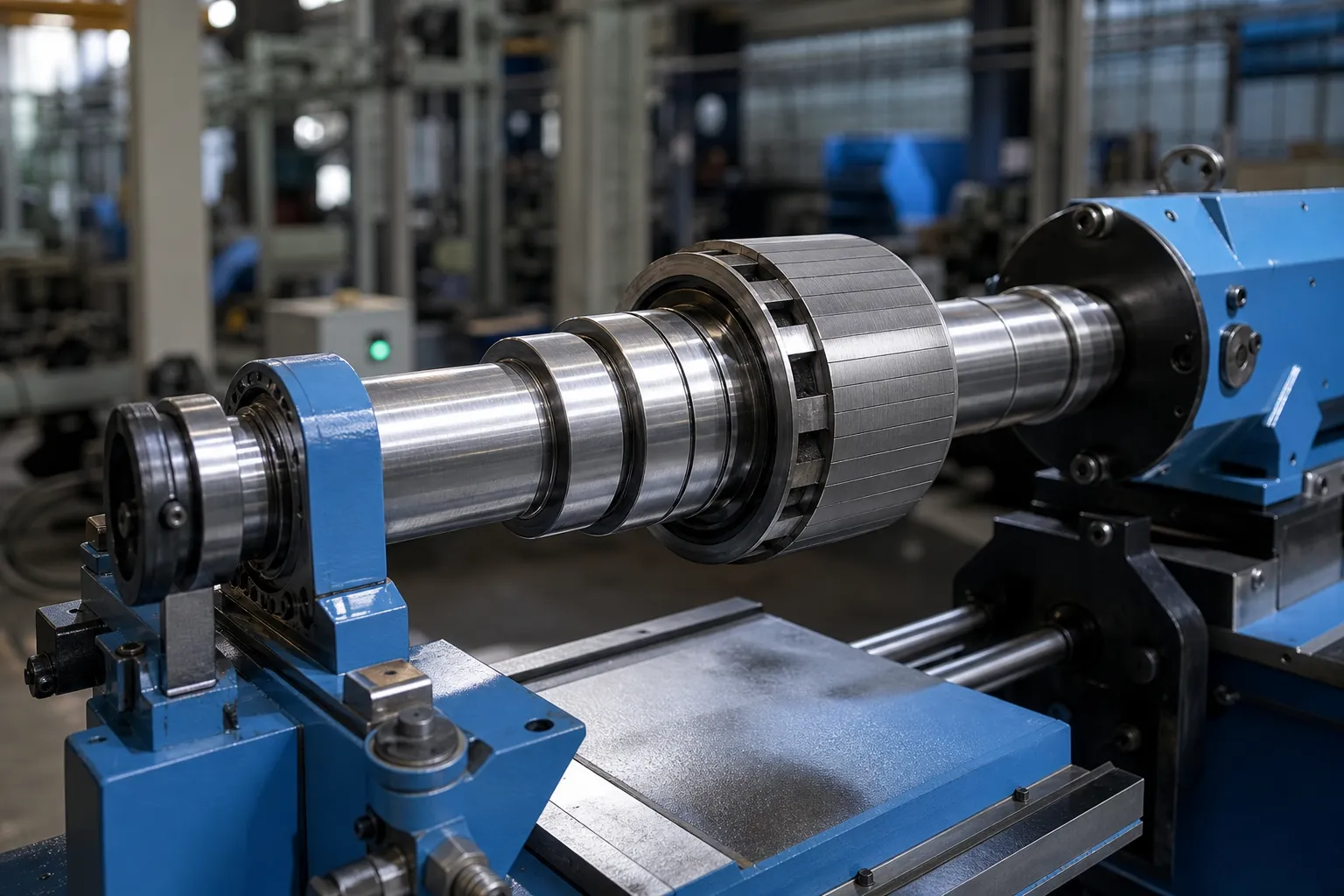
*Illustration du concept d'ingénierie. Il représente un concept de correction en boucle fermée; il ne prétend pas qu'un arbre moteur ou une fonction d'automatisation donnée soit pris en charge.*
La demande de prix doit spécifier les variantes de pièces, étape du matériau/du processus, distribution des erreurs entrantes, données, zones protégées, jauge client, mix cible et contraintes de manutention. Utiliser arbre, sélection de redresseurs de tubes et profilés avant de comparer les étiquettes d'automatisation.
Ce que l'automatisation répète réellement
Démontez la robotique et une machine à lisser automatique est un dispositif permettant de répéter une séquence validée: identifier la famille, placer la pièce, mesurer par rapport à une règle stockée, appliquer une réponse de correction stockée, re-mesurer, itinéraire. Chacun de ces verbes a été écrit à l’origine par une personne – un ingénieur qui a qualifié la donnée, un opérateur qui a prouvé la réponse de correction sur des échantillons, une fonction qualité qui a validé la règle d'acceptation. L'automatisation ne crée pas cette connaissance; il le conserve et l'exécute. Ce cadrage explique à la fois la force et la limite. La force: une fois validé, la séquence se déroule de la même manière à la huitième heure d'un quart de travail qu'à la première heure, insensible à la fatigue, et chaque partie porte ses données. La frontière: tout en amont de la validation — développer le concept de correction pour une nouvelle famille, diagnostiquer un signal inconnu, décider si une anomalie est un défaut de configuration ou un problème de pièce - reste l'ingénierie et le travail qualifié, peu importe à quel point la cellule est automatique. Une usine qui automatise avant de valider automatise sa confusion au rythme de la ligne.
Les structures de coûts sont différentes, Pas seulement les étiquettes
Comparaison des itinéraires en termes de prix d'achat ou d'effectifs manqués là où chaque itinéraire dépense réellement de l'argent. L'itinéraire manuel le dépense en continu: les opérateurs qualifiés prennent du temps à se développer et sont difficiles à remplacer, le débit varie en fonction de la personne en poste, et la cohérence entre opérateurs est une tâche de surveillance permanente — la composante reproductibilité de études de mesure existe en grande partie à cause de cela. L'itinéraire automatisé le dépense en premier et en morceaux: effort d'ingénierie pour valider chaque famille avant que la cellule puisse l'exécuter, montage et outillage par famille, et une discipline de maintenance et d'étalonnage dont dépend la cellule mais dont le calendrier de production est rarement à la hauteur. L'économie du changement s'inverse entre les itinéraires - peu coûteux en compétences et lent en quelques minutes sur un banc manuel, rapide en quelques minutes mais cher en préparation sur une ligne automatique. Rien de tout cela ne rend l’un ou l’autre itinéraire moins cher dans l’abstrait; ça veut dire que la partie mixe, la fréquence de changement et les compétences disponibles déterminent la structure de coûts qui convient. Le discussion sur la structure des coûts des machines traite ces conducteurs sans prétendre à des chiffres de récupération universels.
Comparez les boucles de mesure et de correction
Le redressage manuel peut dépendre d'un opérateur pour charger, mesure, choisir le point de correction et remesurer. Le lissage automatique peut répéter une séquence stockée. Dans les deux cas, le résultat final dépend de la position de référence, corrélation de mesure, contact autorisé, correction incrémentielle et vérification de l'état de sortie.
| Question | Pourquoi cela change la décision |
|---|---|
| La carte géométrique entrante est-elle reproductible? | L'automatisation ne peut pas compenser un signal indéfini ou instable |
| Les supports et points de correction sont-ils fixés par la famille? | Une pièce à forte teneur en mélange peut nécessiter un examen technique plutôt qu'une recette générique |
| La jauge client est-elle corrélée? | Les relevés de la machine ne remplacent pas automatiquement l'inspection finale |
| Les exceptions sont-elles définies? | Une nouvelle tentative incontrôlée peut masquer un problème de processus |
Pour la limite du processus, voir lissage par points et Test d'échantillon de redressage et acceptation.
Évaluer le changement, Données et exceptions
L'automatisation ne peut être utile que lorsque l'identité de la pièce, fixation, version de la recette, confirmation de la première pièce, les champs de données et les itinéraires d'exception sont contrôlés. L'examen doit préciser qui peut modifier un paramètre, comment les anciennes versions ne peuvent pas s'exécuter, comment un appareil est identifié, et que se passe-t-il après une alerte de mesure ou de signal de processus.
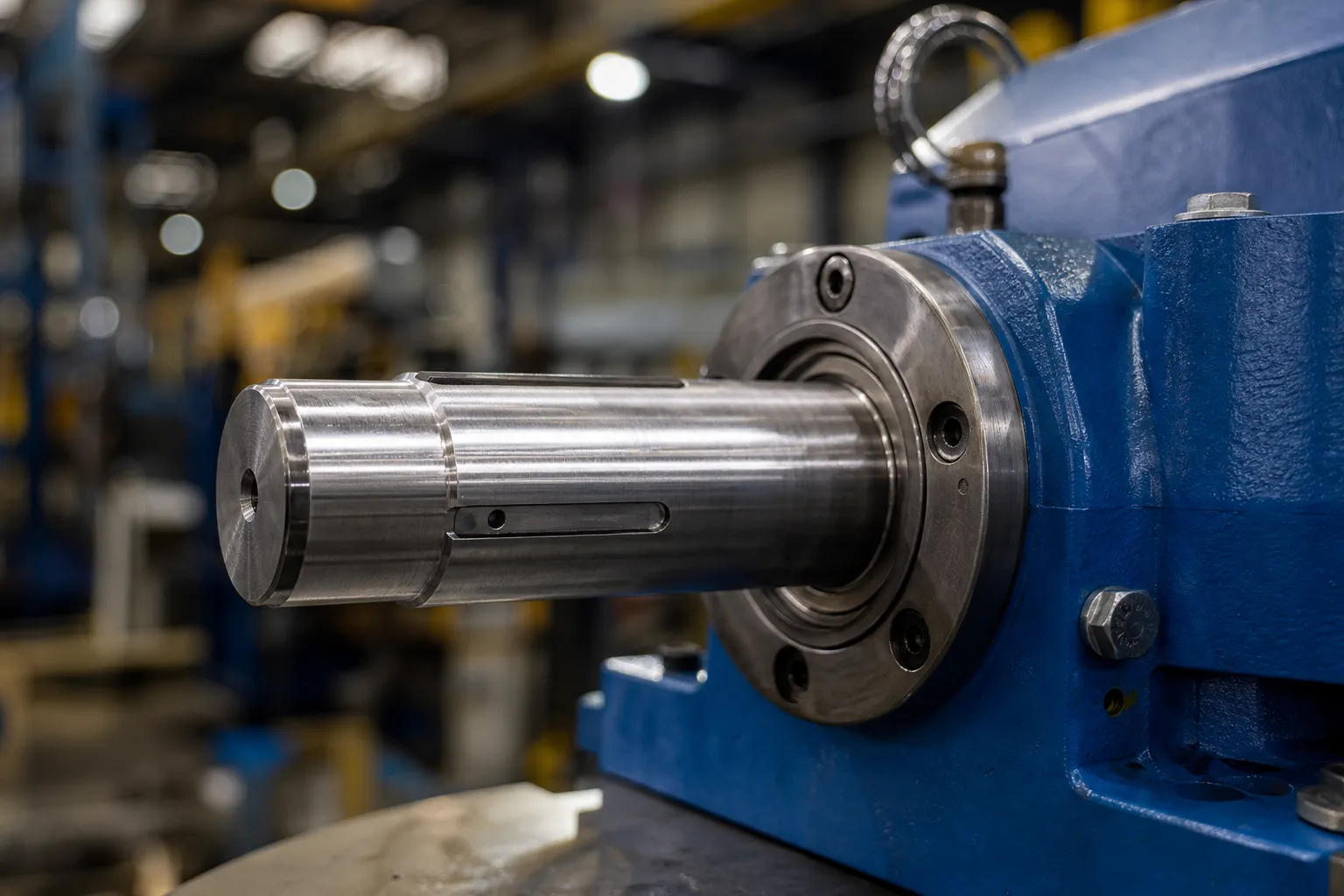
*Illustration du concept d'ingénierie. Il met l'accent sur la vérification à l'état libéré et la disposition traçable, il ne s'agit pas d'une fonction d'inspection automatisée promise.*
Le chemin de la migration que personne ne regrette
La décision manuelle ou automatique est rarement binaire en pratique, et le modèle réussi le plus courant est la mise en scène: automatiser les étapes dont la validation est complète et dont les modes de défaillance sont compris, gardez les mains humaines et le jugement sur les étapes qui ne sont pas. Une première étape fréquente automatise la mesure et la disposition : la machine jauge la pièce, l'opérateur charge et corrige toujours - car la répétabilité des mesures est généralement le premier goulot d'étranglement et le risque d'automatisation est faible. Une deuxième étape ajoute le chargement automatique et l'identification des pièces une fois la présentation de la famille stable, le domaine couvert pour entretien robotisé des machines à dresser. La correction complète en boucle fermée vient en dernier, après que la réponse de correction a été validée dans la distribution des erreurs entrantes. Chaque étape est justifiée par la même règle de preuve: un exemple de test sur l'étape spécifique, fonctionner sur des pièces représentatives et dans le pire des cas, avec un itinéraire de disposition démontré selon le ASSEZ de discipline. Les usines qui suivent cette séquence achètent l’automatisation là où elle a fait ses preuves et conservent la flexibilité là où elle est nécessaire; les usines qui achètent la dernière étape passent d'abord leur période de mise en service à découvrir ce qu'elles ont ignoré.
Compétences que chaque itinéraire consomme
Aucune des deux voies n'est sans compétence, et planifier le mauvais ensemble de compétences affame tranquillement la ligne. L'itinéraire manuel concentre les compétences de l'opérateur: lire la carte des erreurs, choix des points de correction, juger de la réponse incrémentielle – une expertise qui prend du temps réel à développer, vit chez peu de personnes, et sort avec eux. L'itinéraire automatisé répartit les compétences dans toute l'organisation: ingénieurs de procédés qui valident les familles et maintiennent les recettes, personnel de maintenance capable de diagnostiquer un défaut de capteur ou de luminaire avant qu'il ne devienne un ferraille, et un personnel de qualité qui est responsable des études de corrélation qui maintiennent les lectures de la machine significatives lors de l'acceptation. Un acheteur qui passe du manuel à l’automatique et dont le personnel est uniquement chargé du fonctionnement – et non de l’ingénierie et de la maintenance – trouve généralement les recettes de la cellule gelées., sa corrélation est obsolète et ses exceptions ne sont pas gérées au cours de la première année. La frontière de l'automatisation sur papier devrait donc être assortie d'un plan de dotation en personnel pour les compétences consommées par chaque côté de cette frontière..
Prenez la décision avec un exemple de test
Comparez les itinéraires candidats en utilisant des parties représentatives du cas normal et du pire cas. Répétabilité du chargement/configuration des enregistrements, géométrie avant et après, lectures à l'état libéré, état de surface, manutention, passage, capture de données et routage des exceptions. Ne pas déduire d’économies de main-d’œuvre annuelles, débit ou retour sur investissement d'un article concurrent ou temps de cycle hypothétique.
FAQ
Le lissage automatique est-il toujours plus précis?
Non. La précision dépend de la pièce à usiner, données, mesures, réponse de correction et méthode d'acceptation. L'automatisation ne peut améliorer la répétabilité que lorsque ces fondations sont validées.
Quand le lissage manuel est-il le meilleur choix ??
Cela peut être approprié pour le développement, familles de pièces instables ou très variables, travail à faible volume, configuration complexe, ou des situations où l'itinéraire de correction est encore en cours de qualification.
Un système manuel peut-il avoir une traçabilité?
Oui. Identification contrôlée, enregistrements de jauge, les enregistrements de discipline et de disposition des recettes/appareils peuvent être mis en œuvre indépendamment du niveau d'automatisation.
Le lissage semi-automatique est-il un compromis ou une stratégie?
Une stratégie, quand c'est délibérément mis en scène. Automatiser d'abord la mesure et la disposition, chargement en seconde, et la correction en boucle fermée fait correspondre l'investissement en automatisation aux connaissances validées - chaque étape comporte un exemple de test, et la flexibilité est conservée là où les familles sont encore en développement.
De quelles compétences une ligne automatique a-t-elle encore besoin?
Ingénierie des procédés pour valider les familles et contrôler les recettes, maintenance capable de diagnostiquer les défauts des capteurs et des luminaires, et qualité d'appropriation de la jauge de corrélation. Le travail d’exploitation diminue; les compétences en ingénierie et en maintenance ne le sont pas - elles augmentent généralement.
L'automatisation réduit-elle le nombre de décisions de qualité?
Il les déplace. Les dispositions de routine deviennent automatiques, mais la définition des règles de routage, l'approbation des recettes et la réponse aux exceptions restent des décisions humaines avec une autorité nommée. La frontière se situe entre exécuter les décisions et les prendre.