
Oikaisukoneen jälkiasentamista tai vaihtamista koskevan päätöksen tulee perustua näyttöön, not on the machine's age alone. Vanhempi mekaaninen alusta saattaa silti sopia kohdennettuun päivitykseen; uudempi kone voi silti olla huonosti istuva, jos sen mittaus, turvallisuutta, käsittely- tai tietoarkkitehtuuri ei voi tukea nykyistä työkappaleen ja hyväksymisvaatimusta. The decision must also separate a machine condition finding from the availability of a supplier's retrofit service.
Tämä opas on neutraali ostajakehys. Se ei väitä, että StraighteningTech tarjoaisi jälkiasennuksia, tuloksia, varaosat, ohjaa päivityksiä tai tiettyä palveluvastausta. Nämä laajuudet on vahvistettava erikseen.

*Suunnittelukonseptin kuva. Se näyttää ehdokassoluarkkitehtuurin, ei arvio olemassa olevasta koneesta tai lupaus, että päivitys on saatavilla.*
Aloita nykyisestä työkappaleesta ja hyväksymisvaatimuksesta
Ennen koneen tarkastusta, jäädyttää nykyiset ja suunnitellut työkappaleperheet, päivämäärien piirtäminen, geometrian ominaisuudet, mittausmenetelmä, suojattuja kosketusvyöhykkeitä, tuotevalikoima, käsittelytarpeita, jäljitettävyysodotukset ja turvallisuusvelvoitteet. Jälkiasennus, joka säilyttää väärän prosessiarkkitehtuurin, ei ratkaise valmiuksien epäsopivuutta.
Käyttää akseli, putkien ja profiilien suoristimen valinta määrittääksesi kohdeprosessin ennen vaihtoehtojen vertailua.
Arvioi mekaaninen, Turvallisuus ja työkalujen kunto
Arvioinnin tulee dokumentoida rungon kunto, oppaita, tukee, telat tai puristusliitännät, kalusteet, vartioimassa, säätimet, sähköinen kunto, huollettavuus ja kriittisten osien saatavuus. Sen tulisi myös tunnistaa se, mitä ei voida varmistaa ilman pätevää tarkastusta.
| Arviointialue | Jälkiasennuskysymys | Korvaava kysymys |
|---|---|---|
| Mekaaninen rakenne | Voiko se tukea turvallisesti kohdevoimapolkua ja työkappaletta? | Prosessiin tarvitaan uusi arkkitehtuuri? |
| Työkalut ja tuet | Voidaanko valaisimet/kontaktialueet validoida kohdeperheelle? | Tarvitseeko uusi ratkaisu erilaista työpitoa? |
| Turvallisuus | Voidaanko tarvittavat suoja- ja turvatoiminnot tarkistaa? | Vaatiiko kohdetehtävä erilaista turvallisuusarkkitehtuuria?? |
| Varaosat ja huollettavuus | Ovatko kriittiset komponentit tuettavissa aiotun käyttöiän ajan? | Aiheuttaako vanhentuminen ei-hyväksyttävää operatiivista riskiä? |
When a Retrofit Is Defensible — and When It Is Not
A retrofit earns consideration when four conditions hold at once: the mechanical structure is demonstrably sound for the target force path; the target workpiece families stay within the load and geometry envelope the structure was built for; the measurement architecture — sensors, datum repetition, settings handling — can either be added or correlated to the reference method; and a supplier has confirmed in writing the scope that will actually be performed. Lose any one of the four and the retrofit discussion is spending engineering time on a route that cannot close.
The clearest non-starters are architectural. When the product mix is moving toward a different correction architecture — a different force path, a different support concept, a different measurement principle than the frame and tooling can carry — no component-level upgrade changes that. The same applies when obsolescence has reached the safety layer: guarding and safety functions built around withdrawn components are a revalidation project of their own, and stacking that on top of a process upgrade rarely survives an honest risk review. Lopulta, when frame condition cannot be verified without a qualified inspection, the retrofit quote is priced against unknowns — commission the inspection first, or treat the machine's remaining life as unproven.
Arvioi mittausten ja ohjauksen yhteensopivuus
Jälkiasennuspäätös ei koske vain ohjaimen vaihtamista. Koneen on mitattava oikea ominaisuus oikealla peruspisteellä, toista vaadittu tuki/asentoehto, hallita asetuksia tai reseptejä tarvittaessa, tallentaa tarvittavat tiedot ja reittipoikkeukset turvallisesti.
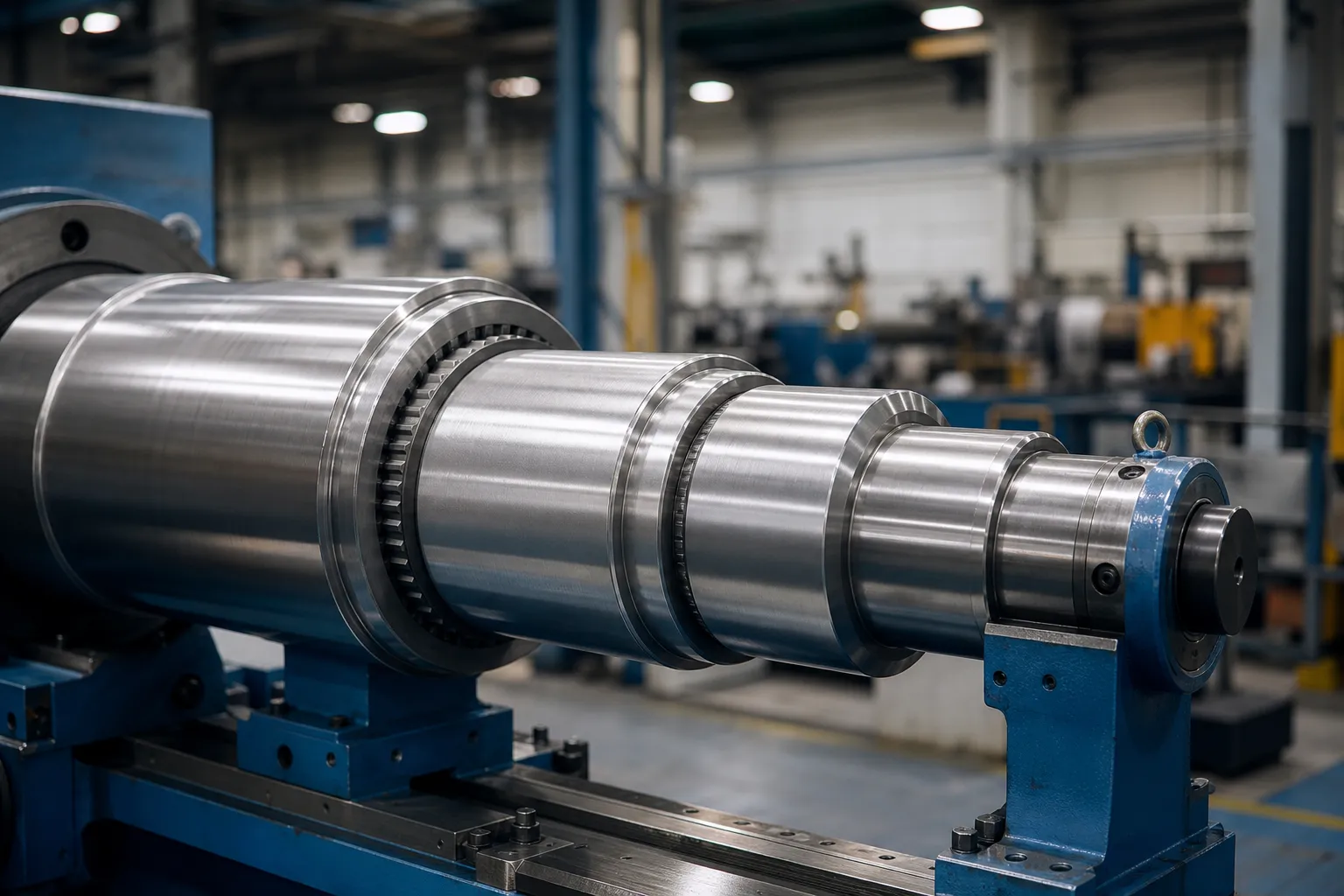
*Suunnittelukonseptin kuva. Se kuvaa kohdeprosessin valinnan tarkistusta, ei ole arviota siitä, että olemassa oleva kone voidaan päivittää jokaiseen ehdokasarkkitehtuuriin.*

*Suunnittelukonseptin kuva. Se korostaa tarvetta tarkistaa geometria julkaisun jälkeen; siinä ei mainita, että mikä tahansa olemassa oleva kone voidaan muuntaa suljetun silmukan järjestelmäksi.*
Tarkista mittarin korrelaatio, anturin kunto, tietojen eheys, kulunvalvonta, muutosten hallinta sekä mitattujen arvojen ja asiakkaan referenssimenetelmän välinen suhde. Uusi näyttö ei itsessään muodosta kelvollista korjaussilmukkaa.
A Five-Gate Verification Path
The decision becomes tractable when it is run as a sequence of gates, each with a defined pass condition and a defined action when it fails. Järjestyksellä on väliä: every later gate is cheaper to evaluate once the earlier ones have closed.
Portti 1 — Requirement
Syöttö: workpiece families, tarkistusten piirtäminen, päivämäärä, characteristics and the customer acceptance method are frozen in writing. Fail action: stop. Neither a retrofit nor a replacement can be specified against a moving target, and any quote received at this stage is a guess.
Portti 2 — Mechanical
Syöttö: documented evidence that frame, oppaita, supports and force path carry the target family — including the findings that require a qualified inspection. Fail action: korvata, repurpose the machine to a lighter family, or close the gap with the inspection before any further spending.
Portti 3 — Measurement
Syöttö: the machine measures the specified characteristic on the specified datum, repeats the support and positioning condition, manages settings or recipes where relevant, and can be correlated to the customer gauge. Fail action: scope the measurement retrofit explicitly as its own engineering and validation package, or route the decision to replacement.
Portti 4 — Demonstration
Syöttö: the proposed configuration is demonstrated on representative parts through to released-state results and customer-gauge correlation. Fail action: treat the proposal as unproven. A retrofit that cannot be demonstrated before commitment is a bet placed with production as the stake.
Portti 5 — Economics
Syöttö: both routes are compared on total evaluated cost — engineering, asennus, seisokkeja, voimassaolon jatkaminen, koulutusta, spares for the intended life, contingency for failure — using the buyer's own baseline. Fail action: if the comparison cannot be made honestly, the deciding factor is risk posture, not price, and that is a management decision to make explicitly.
Vertaa seisokkeja, Riski ja validointi
Molemmat reitit tarvitsevat suunnittelusuunnitelman, asennus, turvallisuuskatsaus, käyttöönotto, näytetestaus, kuljettajan koulutus ja asiakirjat. Vertailun tulisi sisältää todennäköiset seisokkiikkunat, varaosien altistuminen, changeover impact, qualification effort, production contingency and the cost of an unsuccessful outcome. Do not use an average payback or “faster ROI” claim without the buyer's own baseline data.
Cost Items Both Quotes Must State
Most retrofit-versus-replace comparisons fail not on the numbers but on what the numbers omit. The table lists the items a comparable pair of quotes has to carry:
| Cost item | Where it hides in retrofit quotes | Where it hides in replacement quotes |
|---|---|---|
| Engineering and qualification | Marked “included” with no validation scope | Assumed to be in the machine price with no FAT/SAT scope |
| Installation and downtime | Scheduled around production informally | Window underestimated where foundations or utilities change |
| Safety review and commissioning | Omitted when controls are touched | Bundled invisibly into startup support |
| Gauge correlation study | Postponed until after startup | Postponed until after startup |
| Operator training | Limited to the new component | Limited to the first shift |
| Documentation and traceability update | Legacy records not migrated | Templates delivered without the buyer's data model |
| Spares for the intended life | Old-platform parts assumed available | First-generation components on a new platform |
| Production contingency during ramp | Coverage during validation runs undefined | Coverage during the learning curve undefined |
| Cost of an unsuccessful outcome | Rarely defined at all | Rarely defined at all |
| Existing machine disposal or residual value | Ignored | Ignored |
Two of these deserve emphasis because they are almost always missing: the correlation study and the cost of failure. Without a gauge correlation there is no common acceptance language between the machine and the customer, and every later dispute is unresolvable. Without a defined failure outcome — re-run, external processing, scrap allowance, rollback — the comparison silently assigns zero cost to the riskier route.
Tee näytteen validoinnista päätösportti
Ensisijaisen reitin tulee osoittaa kohdeprosessi edustavin osin: perusistuin, mittauksen toistettavuus, korjausvastaus, julkaistun tilan tulos, pinnan kunto, käsittelyä, poikkeusreititys ja asiakasmittarin korrelaatio. Jos todisteita ei voida sulkea turvallisesti olemassa olevalla alustalla, korvaaminen tai erilainen prosessiarkkitehtuuri voi olla puolustettavampi reitti.
Validointirakennetta varten, katso suoristusnäytteen testaus ja hyväksyminen and machine gauge versus customer gauge correlation.
Risks a Retrofit Trial Must Retire
A retrofit validation is not a demonstration that the machine moves; it is the retirement of specific failure modes, each with its own test:
- Correction-response risk — springback drifting with material state or batch. Test with representative parts from more than one material lot, recording the stroke-versus-result relationship; how that relationship moves between lots is the process's real signature. The underlying mechanism is covered in Bauschinger-efekti suoristuksessa.
- Released-state risk — in-machine readings diverging from final geometry once the part is released. Test by independent remeasurement after release, on supports defined in the acceptance plan. The distinction is developed in kuormitettu vs irrotettu suoruusmittaus.
- Setup-repeatability risk — the corrected result depending on who sets up the part. Test by repeating full setups with the datum deliberately reseated, comparing results before any capability claim. The statistical framing is in gage R&R suoristukseen.
- Exception-routing risk — a rejected or mid-cycle-interrupted part following an undefined path. Test by injecting faults deliberately, including an interrupted cycle, and verifying what happens to the part in the machine and how the event is recorded. Disposition rules for rejected parts are covered in NOK:n lajittelu- ja korjausrajat.
Red Flags in Any Proposal
- No representative-part demonstration is offered, or one is promised only after commitment.
- ROI or payback is asserted without asking for the buyer's own baseline data.
- The scope is written in conditional language — “can be considered”, “possible upgrade” — leaving the binding scope undefined.
- A controller or screen upgrade is presented as proof of straightening capability.
- No failure path is defined: nothing about what happens if the agreed result is not met.
Kysymyksiä ennen jälkiasennus- tai vaihtoehdotusta
- Mikä työkappaleperhe ja piirustusversio määrittelevät vaatimuksen?
- Minkä mittaus- ja hyväksymismenetelmän kanssa ratkaisun tulee korreloida?
- Mikä mekaaninen, turvallisuutta, ohjaus- ja varaosahavainnot dokumentoidaan?
- What configuration changes are actually within the supplier's confirmed service scope?
- Mitä validointinäytteitä, mittaritiedot ja julkaisukriteerit ratkaisevat onnistumisen?
- Mitä tapahtuu, jos olemassa oleva alusta ei saavuta sovittua tulosta??
FAQ
Onko jälkiasennus aina halvempaa kuin vaihto?
Ei. Hinta riippuu kunnosta, soveltamisalaan, turvallisuutta, vanhentuminen, validointi, seisokit ja kohdeprosessi. It must be evaluated with the buyer's own data. The defensible comparison is total evaluated cost — engineering, seisokkeja, voimassaolon jatkaminen, spares over the intended life and a priced failure path — not the number on the upgrade quote.
Voiko ohjaimen päivitys todistaa suoristuskyvyn??
Ei. Mittaus, datum, työkalut, tukea, korjausvastaus ja hyväksyminen vaativat edelleen validoinnin. What a controller changes is data handling and interface; the characteristic and the correction response still have to be demonstrated on parts, which is what Gates 3 ja 4 above are for.
Tarkoittaako tämä artikkeli, että StraighteningTech tarjoaa jälkiasennuspalvelua?
Ei. Palvelun saatavuus ja laajuus on vahvistettava erikseen ennen kaupallisia sitoumuksia. The five-gate path above works the same way regardless of which supplier or route is eventually selected.
What should we do if a retrofit cannot be demonstrated with our parts before commitment?
Treat the demonstration gate as failed. Either phase the commitment so that a paid engineering study on your parts precedes the full scope, route the work to a proven process in the interim, or move the decision to replacement. What should not happen is accepting the retrofit on price while carrying the full validation risk in production.