
Straightening often involves bending a material in a direction related to its prior deformation history. The Bauschinger effect is a material-behavior concept used to describe how prior plastic deformation can change yielding behavior under reverse loading. It helps explain why a single generic correction rule may not transfer between material states, forming histories or lots.
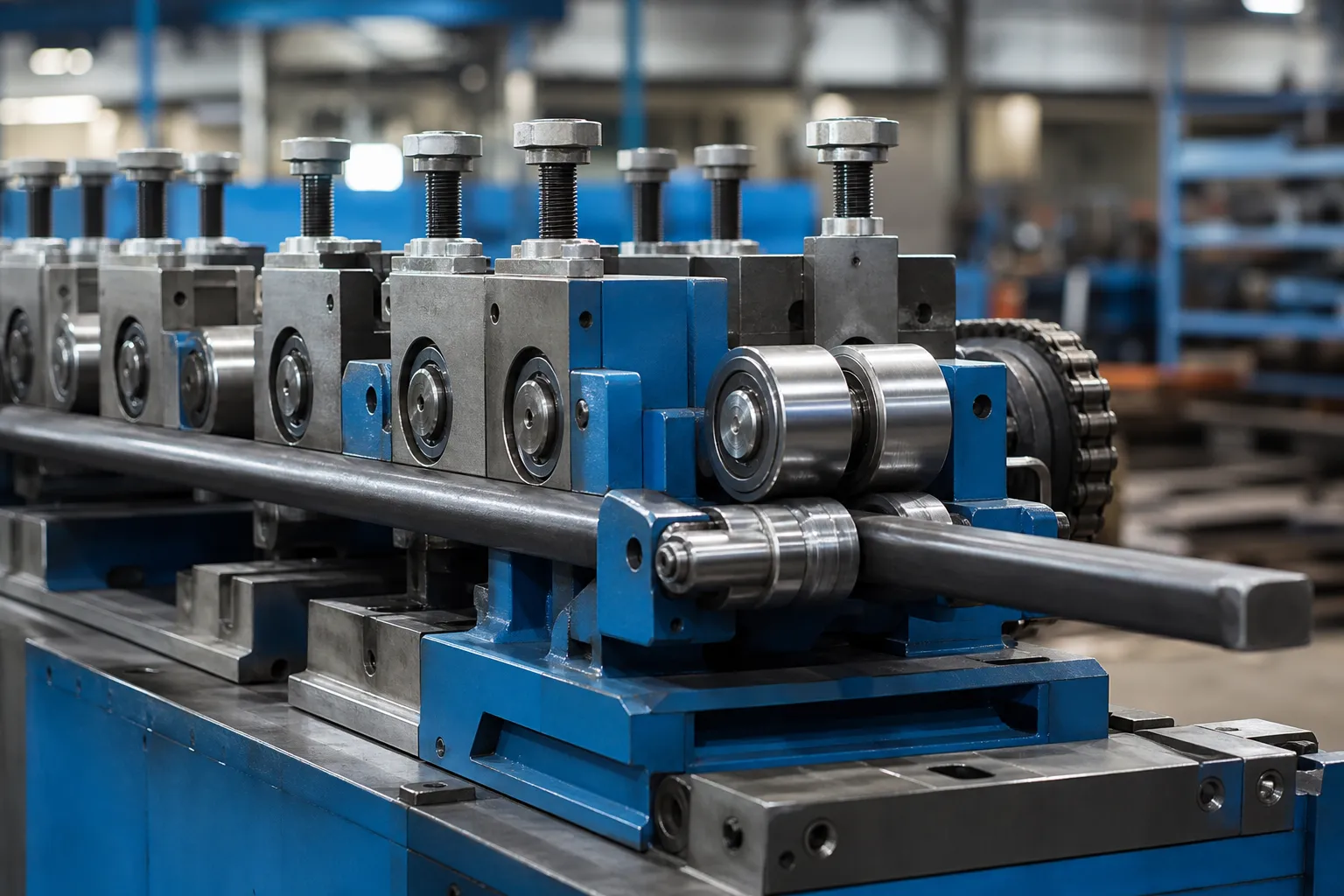
*Engineering concept illustration. It is not a material test, stress model or verified straightening outcome.*
What the Effect Physically Is
In plain terms: a metal that has been plastically bent one way yields more easily when it is then bent the other way. On a stress–strain curve, a bar pulled past yield, unloaded, and then loaded in compression reaches its new yield point at a lower magnitude than the original tensile yield. The microstructural reason is that plastic deformation leaves the crystal lattice populated with dislocations arranged to resist further deformation in the loading direction; when the load reverses, that same arrangement assists slip in the opposite direction, so reverse yielding begins early. The effect is strongest right after the first reversal and saturates after a few cycles, and it is more pronounced in softer, lower-carbon conditions than in heavily hardened ones.
Two consequences matter for straightening. First, the material’s force–deflection response is asymmetric with respect to the sign of bending: the same press stroke moving a bend in one direction produces a different permanent set than the identical stroke applied against it. Second, every unload leaves a locked-in micro-residual stress state, so the “same” part is never quite the same material twice once correction has begun. Both consequences push toward the same process discipline — few, planned, well-aimed correction strokes instead of many small reversing ones.
What This Means for a Correction Stroke
Straightening control commonly assumes a repeatable relationship between applied correction and resulting movement — the basis of springback compensation practice. Reverse-loading history threatens exactly that repeatability. Consider the classic over-correct-and-press-back sequence: the first stroke plastically bends the section, the second stroke bends it back. Because the material yields earlier in the reverse direction, the second stroke needs less force to move the part the same amount, and a control routine calibrated on the first stroke’s response will overshoot. Each additional reversal compounds the drift while accumulating low-cycle fatigue damage in the section, which is the mechanism that connects careless correction sequences to the cracking risks discussed for over-straightening and cracking.
The practical rules that follow are qualitative but firm. Plan the correction so that each location is plastically worked in one predominant direction, not ping-ponged. Set the rework limit before the first stroke — the number of correction attempts a part may receive — and enforce it through the NOK sorting and rework-limit discipline. And when a process has drifted so that the same nominal error now needs visibly more or fewer strokes than it did at qualification, treat the change as a material signal to investigate, not as a knob to tune away.
Why Reverse Loading Matters
A part may have accumulated deformation during rolling, drawing, forming, heat treatment, machining, transport or a prior correction step. When a straightening process applies reverse bending, the response can depend on that history as well as the current material condition and geometry. This is why a bend map alone does not establish a safe correction window.
| Factor | Trial question |
|---|---|
| Material grade and condition | Is the applicable condition documented, not assumed? |
| Prior forming/drawing | Could the deformation history differ between lots? |
| Heat-treatment stage | Is correction allowed at this stage? |
| Section/geometry | Does stiffness vary along the part? |
| Surface/functional features | Are there contact or crack-risk constraints? |
| Previous rework | Has reverse loading already occurred? |
Use It as a Trial-Planning Concept
The concept should lead to better records, not unsupported claims. Record incoming condition, material/lot, manufacturing stage, initial map, correction sequence, released measurement, surface observation and rework status. Change one controlled factor at a time during development and do not extrapolate from an easy specimen to a different part family.
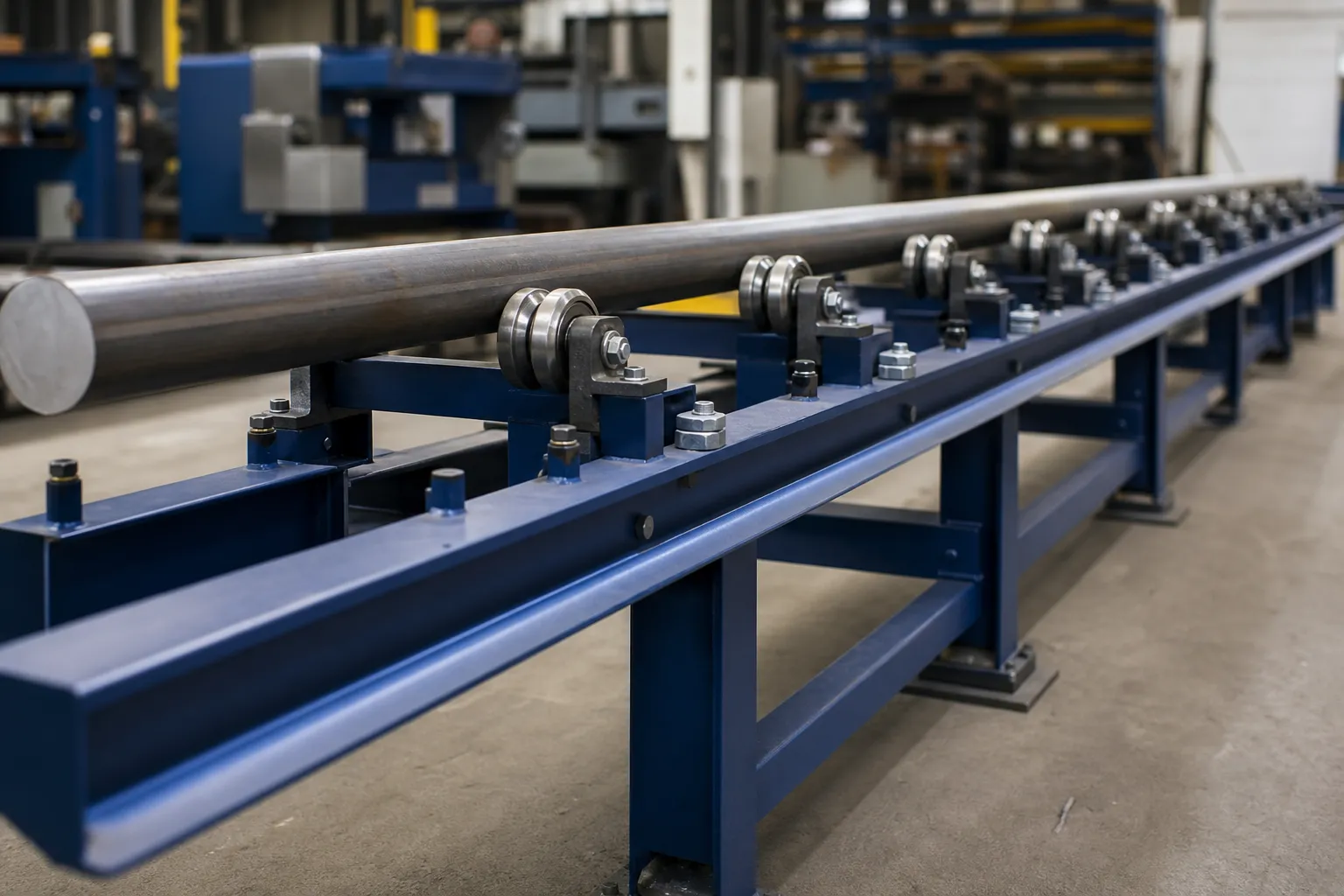
*Engineering concept illustration. Support, contact and material behavior require part-specific engineering review.*
Avoid calling a result “Bauschinger-controlled” unless a qualified material/process study defines exactly what that means. The term does not replace a drawing requirement, material certificate, fracture assessment or customer approval.
Where Loading History Hides in Real Parts
Reverse-loading sensitivity does not require a previous straightening operation — most parts arrive with a history already written into them. Bars and wire carry directional deformation from rolling and drawing, so their bend response differs with orientation relative to the mill direction. Heat-treated parts carry quench distortion plus the residual stress field of the treatment, and any straightening performed at the heat treater counts as prior history for the correction performed later — the staging questions covered under straightening after heat treatment. Long slender parts accumulate transport and clamping bends, and a part that has already been through one rework loop at a supplier arrives pre-cycled. Even within one purchased lot, different bar lengths can come from different mill heats with different histories, which is why a correction setup that works on the first pieces of a lot can misbehave on the last.
The countermeasure is informational, not mechanical: capture material and lot identity, the manufacturing stage, and any prior correction record alongside the incoming geometry map. That data costs almost nothing at receiving and is the difference between a drift investigation that takes an afternoon and one that cannot be closed at all.
Reading the Effect in Production Data
Because the effect cannot be seen on the part, it announces itself through patterns in the process data. The signals to watch for are structural rather than numeric: the number of correction strokes needed for the same incoming error creeping upward or downward over a run; parts that oscillate around nominal across alternating strokes instead of converging; released measurements that flip to the opposite side of the tolerance band after correction sequences that historically landed centered; and lot-to-lot differences in correction behavior with no change in machine setup. None of these patterns is proof of reverse-yield behavior on its own — each has measurement and fixture mimics, which is why the datum and gauge checks come first — but together they justify pulling a sample set aside for a controlled material-and-history review rather than continuing to adjust the machine.
Separate Material Behavior From Measurement Error
An unexpected released result can come from material response, but also from datum seating, fixture compliance, support/sag, gauge correlation or an incomplete error map. Check these factors before assigning the cause to reverse-yield behavior. See fixture repeatability and datum seating and measurement uncertainty in straightness inspection.
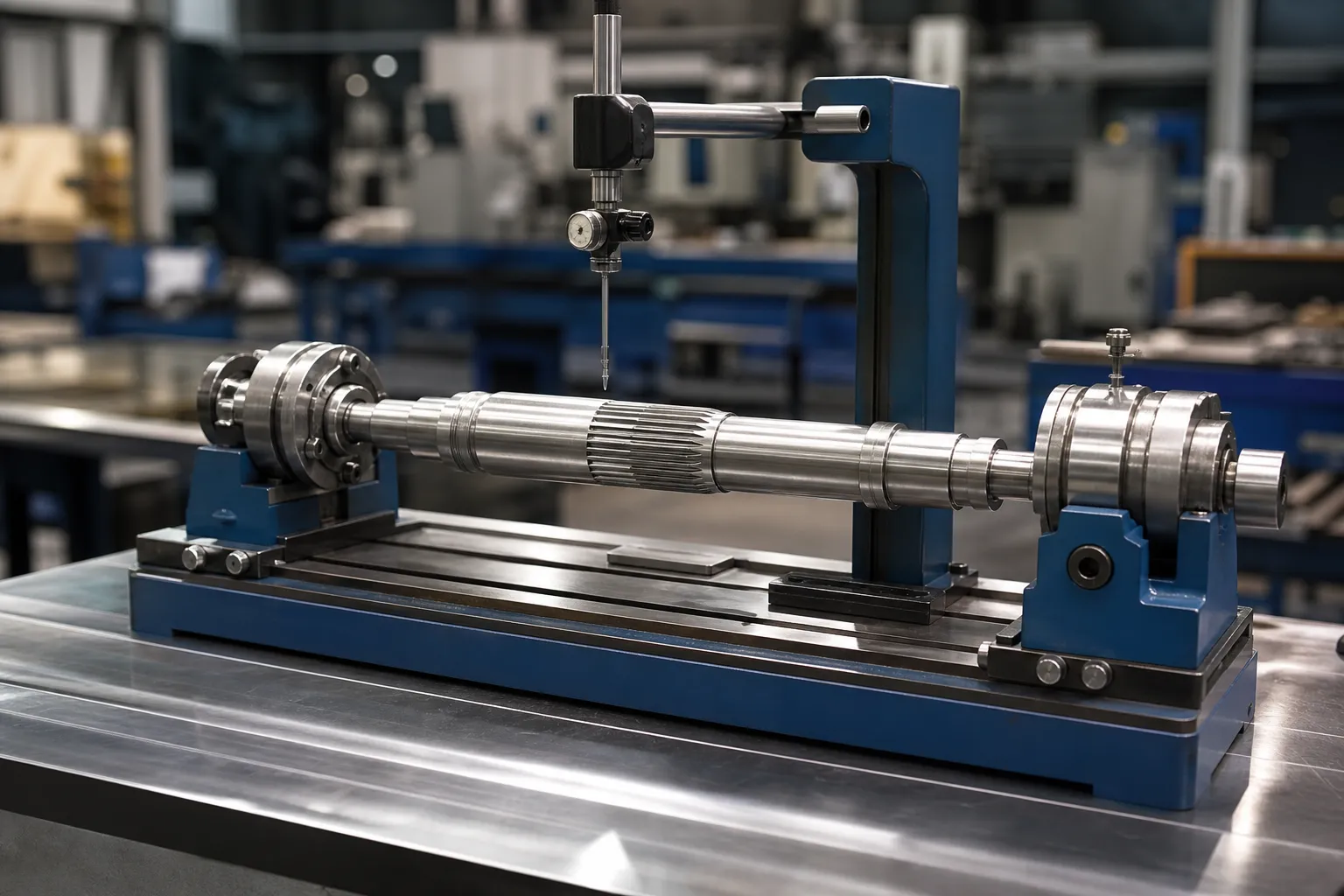
*Engineering concept illustration. The approved released-state measurement method determines the reportable result.*
Evidence Needed Before Process Claims
Provide drawing/revision, material specification and condition, manufacturing history, heat-treatment stage, prior correction/rework records, incoming geometry, surface restrictions, accepted measurement method and representative samples. Use straightening after heat treatment to clarify stage controls and straightening sample test and acceptance to plan trials. Then contact StraighteningTech for discussion.
Required Validation Before a System Claim
Any material-behavior claim needs a defined material and process scope, calibrated references, representative heat-treated samples, and traceable measurement data. A generic machine capability is not a verified result for this topic.
FAQ
Does the Bauschinger effect make straightening impossible for previously bent parts?
No. It makes the response history-dependent rather than fixed. Processes handle it by planning corrections that work each location predominantly in one direction, limiting the number of correction cycles per part, and validating the correction rule on representative parts that carry the same history as production.
Why does pressing a bend back often overshoot?
Because the reverse stroke meets a material that yields at a lower stress than the forward stroke did. A force or depth calibrated on the forward response therefore over-delivers in reverse. The remedy is a separate, smaller correction rule for reverse strokes, or better, an error-map strategy that avoids reversing the same location repeatedly.
Can a correction setup be transferred to a new material lot unchanged?
Only with evidence. Different mill heats can carry different deformation histories and conditions, so the first pieces of each new lot should be treated as a confirmation sample: if correction behavior matches the qualified baseline, continue; if it shifts, requalify before running. This is standard practice for managing the springback variation discussed for springback variation between batches.
Related StraighteningTech Resources
See how automatic shaft straightening works, straightening sample test and acceptance and shaft straightness vs runout vs TIR for generic control boundaries that apply before any capability claim on Bauschinger Effect in Straightening.