
Quyết định trang bị thêm hoặc thay thế máy làm thẳng phải dựa trên bằng chứng, not on the machine's age alone. Nền tảng cơ khí cũ hơn vẫn có thể phù hợp để nâng cấp có mục tiêu; một chiếc máy mới hơn có thể vẫn không phù hợp nếu số đo của nó, sự an toàn, xử lý hoặc kiến trúc dữ liệu không thể hỗ trợ phôi hiện tại và yêu cầu chấp nhận. The decision must also separate a machine condition finding from the availability of a supplier's retrofit service.
Hướng dẫn này là một khuôn khổ người mua trung lập. Nó không khẳng định rằng StraighteningTech cung cấp các trang bị thêm, chuyển đổi, phụ tùng thay thế, kiểm soát việc nâng cấp hoặc phản hồi dịch vụ cụ thể. Những phạm vi đó phải được xác nhận riêng.

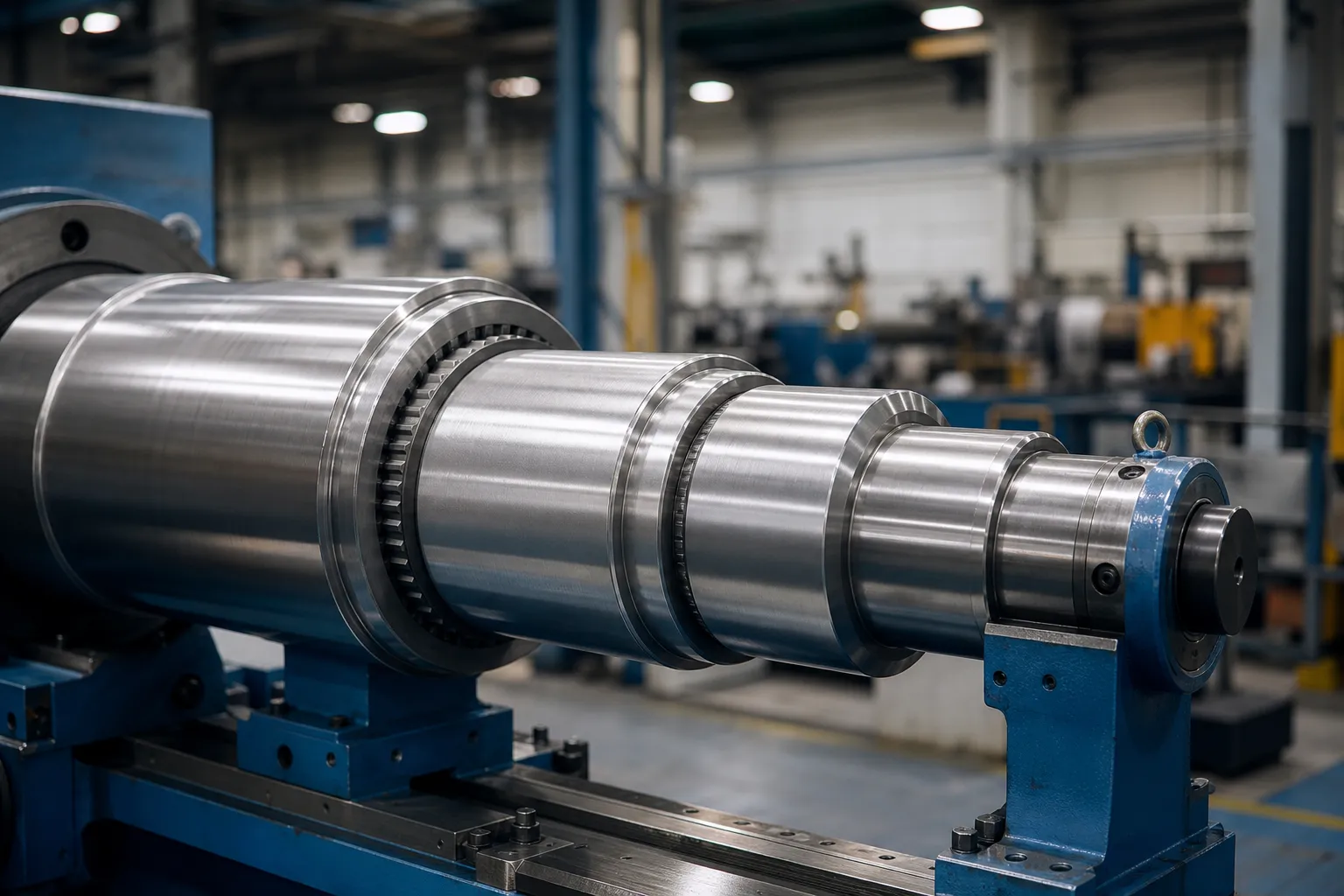
*Minh họa khái niệm kỹ thuật. Nó hiển thị cấu trúc ô ứng cử viên, không phải là đánh giá về máy hiện có hay lời hứa rằng sẽ có bản nâng cấp.*
Bắt đầu với phôi hiện tại và yêu cầu chấp nhận
Trước khi kiểm tra máy, cố định các dòng phôi hiện tại và theo kế hoạch, vẽ ngày, đặc điểm hình học, phương pháp đo, vùng tiếp xúc được bảo vệ, hỗn hợp sản phẩm, xử lý nhu cầu, kỳ vọng về truy xuất nguồn gốc và nghĩa vụ an toàn. Việc trang bị thêm để duy trì kiến trúc quy trình sai sẽ không giải quyết được sự không phù hợp về năng lực.
Sử dụng trục, lựa chọn máy ép ống và hồ sơ để xác định quy trình mục tiêu trước khi so sánh các lựa chọn.
Đánh giá cơ khí, Tình trạng an toàn và dụng cụ
Một đánh giá nên ghi lại điều kiện khung, hướng dẫn, hỗ trợ, con lăn hoặc giao diện báo chí, đồ đạc, canh gác, điều khiển, tình trạng điện, khả năng phục vụ và sự sẵn có của các bộ phận quan trọng. Nó cũng cần xác định những gì không thể được xác minh nếu không có cuộc kiểm tra đủ điều kiện.
| Khu vực đánh giá | Câu hỏi trang bị thêm | Câu hỏi thay thế |
|---|---|---|
| Kết cấu cơ khí | Nó có thể hỗ trợ đường dẫn lực mục tiêu và phôi một cách an toàn không? | Kiến trúc mới có cần thiết cho quá trình này không?? |
| Dụng cụ và hỗ trợ | Có thể xác nhận đồ đạc/vùng tiếp xúc cho gia đình mục tiêu không? | Giải pháp mới có cần cách làm việc khác không? |
| Sự an toàn | Các chức năng bảo vệ và an toàn cần thiết có thể được xác minh? | Nhiệm vụ mục tiêu có yêu cầu một kiến trúc an toàn khác không? |
| Phụ tùng và khả năng bảo trì | Các thành phần quan trọng có được hỗ trợ trong thời gian sử dụng dự định không? | Sự lỗi thời có tạo ra rủi ro hoạt động không thể chấp nhận được không?? |
When a Retrofit Is Defensible — and When It Is Not
A retrofit earns consideration when four conditions hold at once: the mechanical structure is demonstrably sound for the target force path; the target workpiece families stay within the load and geometry envelope the structure was built for; the measurement architecture — sensors, datum repetition, settings handling — can either be added or correlated to the reference method; and a supplier has confirmed in writing the scope that will actually be performed. Lose any one of the four and the retrofit discussion is spending engineering time on a route that cannot close.
The clearest non-starters are architectural. When the product mix is moving toward a different correction architecture — a different force path, a different support concept, a different measurement principle than the frame and tooling can carry — no component-level upgrade changes that. The same applies when obsolescence has reached the safety layer: guarding and safety functions built around withdrawn components are a revalidation project of their own, and stacking that on top of a process upgrade rarely survives an honest risk review. Cuối cùng, when frame condition cannot be verified without a qualified inspection, the retrofit quote is priced against unknowns — commission the inspection first, or treat the machine's remaining life as unproven.
Đánh giá khả năng tương thích đo lường và kiểm soát
Quyết định trang bị thêm không chỉ là thay thế bộ điều khiển. Máy phải đo đúng đặc tính trên đúng mốc đo, lặp lại điều kiện hỗ trợ/định vị cần thiết, quản lý cài đặt hoặc công thức nấu ăn nếu có liên quan, ghi lại dữ liệu cần thiết và định tuyến các trường hợp ngoại lệ một cách an toàn.
*Minh họa khái niệm kỹ thuật. Nó mô tả việc xem xét lựa chọn quy trình mục tiêu, không phải là đánh giá rằng máy hiện có có thể được nâng cấp lên từng kiến trúc ứng viên.*

*Minh họa khái niệm kỹ thuật. Nó nhấn mạnh sự cần thiết phải xác minh hình học sau khi phát hành; nó không nêu rõ rằng bất kỳ máy hiện có nào cũng có thể được chuyển đổi sang hệ thống vòng kín.*
Xem lại thước đo tương quan, tình trạng cảm biến, tính toàn vẹn dữ liệu, kiểm soát truy cập, quản lý thay đổi và mối quan hệ giữa giá trị đo được và phương pháp tham chiếu của khách hàng. Màn hình mới không tự thiết lập vòng điều chỉnh hợp lệ.
A Five-Gate Verification Path
The decision becomes tractable when it is run as a sequence of gates, each with a defined pass condition and a defined action when it fails. Thứ tự quan trọng: every later gate is cheaper to evaluate once the earlier ones have closed.
Cổng 1 — Requirement
Vượt qua: workpiece families, bản vẽ sửa đổi, ngày, characteristics and the customer acceptance method are frozen in writing. Fail action: stop. Neither a retrofit nor a replacement can be specified against a moving target, and any quote received at this stage is a guess.
Cổng 2 — Mechanical
Vượt qua: documented evidence that frame, hướng dẫn, supports and force path carry the target family — including the findings that require a qualified inspection. Fail action: thay thế, repurpose the machine to a lighter family, or close the gap with the inspection before any further spending.
Cổng 3 — Measurement
Vượt qua: the machine measures the specified characteristic on the specified datum, repeats the support and positioning condition, manages settings or recipes where relevant, and can be correlated to the customer gauge. Fail action: scope the measurement retrofit explicitly as its own engineering and validation package, or route the decision to replacement.
Cổng 4 — Demonstration
Vượt qua: the proposed configuration is demonstrated on representative parts through to released-state results and customer-gauge correlation. Fail action: treat the proposal as unproven. A retrofit that cannot be demonstrated before commitment is a bet placed with production as the stake.
Cổng 5 — Economics
Vượt qua: both routes are compared on total evaluated cost — engineering, cài đặt, thời gian ngừng hoạt động, xác nhận lại, đào tạo, spares for the intended life, contingency for failure — using the buyer's own baseline. Fail action: if the comparison cannot be made honestly, the deciding factor is risk posture, not price, and that is a management decision to make explicitly.
So sánh thời gian ngừng hoạt động, Rủi ro và xác nhận lại
Cả hai tuyến đường đều cần có kế hoạch kỹ thuật, cài đặt, đánh giá an toàn, vận hành thử, thử nghiệm mẫu, đào tạo người vận hành và tài liệu. Một so sánh nên bao gồm các khoảng thời gian ngừng hoạt động có thể xảy ra, tiếp xúc với phụ tùng, tác động chuyển đổi, nỗ lực trình độ chuyên môn, dự phòng sản xuất và chi phí của một kết quả không thành công. Do not use an average payback or “faster ROI” claim without the buyer's own baseline data.
Cost Items Both Quotes Must State
Most retrofit-versus-replace comparisons fail not on the numbers but on what the numbers omit. The table lists the items a comparable pair of quotes has to carry:
| Cost item | Where it hides in retrofit quotes | Where it hides in replacement quotes |
|---|---|---|
| Engineering and qualification | Marked “included” with no validation scope | Assumed to be in the machine price with no FAT/SAT scope |
| Installation and downtime | Scheduled around production informally | Window underestimated where foundations or utilities change |
| Safety review and commissioning | Omitted when controls are touched | Bundled invisibly into startup support |
| Gauge correlation study | Postponed until after startup | Postponed until after startup |
| Operator training | Limited to the new component | Limited to the first shift |
| Documentation and traceability update | Legacy records not migrated | Templates delivered without the buyer's data model |
| Spares for the intended life | Old-platform parts assumed available | First-generation components on a new platform |
| Production contingency during ramp | Coverage during validation runs undefined | Coverage during the learning curve undefined |
| Cost of an unsuccessful outcome | Rarely defined at all | Rarely defined at all |
| Existing machine disposal or residual value | Ignored | Ignored |
Two of these deserve emphasis because they are almost always missing: the correlation study and the cost of failure. Without a gauge correlation there is no common acceptance language between the machine and the customer, and every later dispute is unresolvable. Without a defined failure outcome — re-run, external processing, scrap allowance, rollback — the comparison silently assigns zero cost to the riskier route.
Biến việc xác thực mẫu thành Cổng quyết định
Lộ trình ưu tiên sẽ thể hiện quy trình mục tiêu với các bộ phận đại diện: chỗ ngồi chuẩn, độ lặp lại đo lường, phản ứng điều chỉnh, kết quả trạng thái phát hành, tình trạng bề mặt, xử lý, định tuyến ngoại lệ và mối tương quan giữa thước đo khách hàng. Nếu bằng chứng không thể được đóng một cách an toàn trên nền tảng hiện có, thay thế hoặc kiến trúc quy trình khác có thể là con đường an toàn hơn.
Đối với cấu trúc xác nhận, nhìn thấy thử nghiệm và chấp nhận mẫu thẳng and machine gauge versus customer gauge correlation.
Risks a Retrofit Trial Must Retire
A retrofit validation is not a demonstration that the machine moves; it is the retirement of specific failure modes, each with its own test:
- Correction-response risk — springback drifting with material state or batch. Test with representative parts from more than one material lot, recording the stroke-versus-result relationship; how that relationship moves between lots is the process's real signature. The underlying mechanism is covered in hiệu ứng Bauschinger trong việc làm thẳng.
- Released-state risk — in-machine readings diverging from final geometry once the part is released. Test by independent remeasurement after release, on supports defined in the acceptance plan. The distinction is developed in đo độ thẳng được tải và phát hành.
- Setup-repeatability risk — the corrected result depending on who sets up the part. Test by repeating full setups with the datum deliberately reseated, comparing results before any capability claim. The statistical framing is in máy đo R&R để làm thẳng các đường thẳng.
- Exception-routing risk — a rejected or mid-cycle-interrupted part following an undefined path. Test by injecting faults deliberately, including an interrupted cycle, and verifying what happens to the part in the machine and how the event is recorded. Disposition rules for rejected parts are covered in Giới hạn phân loại và làm lại NOK.
Red Flags in Any Proposal
- No representative-part demonstration is offered, or one is promised only after commitment.
- ROI or payback is asserted without asking for the buyer's own baseline data.
- The scope is written in conditional language — “can be considered”, “possible upgrade” — leaving the binding scope undefined.
- A controller or screen upgrade is presented as proof of straightening capability.
- No failure path is defined: nothing about what happens if the agreed result is not met.
Các câu hỏi cần hỏi trước khi đề xuất trang bị thêm hoặc thay thế
- Họ phôi và bản sửa đổi bản vẽ nào xác định yêu cầu?
- Phương pháp đo lường và chấp nhận nào mà giải pháp phải tương ứng với?
- Cơ khí nào, sự an toàn, các phát hiện về kiểm soát và phụ tùng được ghi lại?
- What configuration changes are actually within the supplier's confirmed service scope?
- Mẫu xác nhận nào, đánh giá hồ sơ và tiêu chí phát hành sẽ quyết định thành công?
- Điều gì xảy ra nếu nền tảng hiện tại không thể đáp ứng được kết quả đã thỏa thuận?
Câu hỏi thường gặp
Là một trang bị thêm luôn rẻ hơn so với thay thế?
KHÔNG. Chi phí phụ thuộc vào tình trạng, phạm vi, sự an toàn, lỗi thời, xác nhận, thời gian chết và quá trình mục tiêu. It must be evaluated with the buyer's own data. The defensible comparison is total evaluated cost — engineering, thời gian ngừng hoạt động, xác nhận lại, spares over the intended life and a priced failure path — not the number on the upgrade quote.
Nâng cấp bộ điều khiển có thể chứng minh khả năng làm thẳng không?
KHÔNG. Đo lường, mốc thời gian, dụng cụ, ủng hộ, phản hồi và chấp nhận sửa chữa vẫn cần xác nhận. What a controller changes is data handling and interface; the characteristic and the correction response still have to be demonstrated on parts, which is what Gates 3 Và 4 above are for.
Bài viết này có nghĩa là StraighteningTech cung cấp dịch vụ trang bị thêm?
KHÔNG. Tính sẵn có và phạm vi của dịch vụ phải được xác nhận riêng trước khi thực hiện bất kỳ cam kết thương mại nào. The five-gate path above works the same way regardless of which supplier or route is eventually selected.
What should we do if a retrofit cannot be demonstrated with our parts before commitment?
Treat the demonstration gate as failed. Either phase the commitment so that a paid engineering study on your parts precedes the full scope, route the work to a proven process in the interim, or move the decision to replacement. What should not happen is accepting the retrofit on price while carrying the full validation risk in production.