
Giá trị đọc được thực hiện khi phôi đang chịu lực điều chỉnh, lực kẹp, sức căng hoặc một điều kiện hỗ trợ cụ thể có thể là thông tin quá trình có giá trị. Nó không tự động là kết quả chấp nhận cuối cùng. Khi loại bỏ các lực bên ngoài, phần, hệ thống hỗ trợ và đo lường có thể phản ứng khác nhau thông qua lò xo hồi lưu, xệ xuống, thay đổi chỗ ngồi hoặc giải phóng lịch thi đấu. Do đó, phương pháp chấp nhận phải nêu rõ điều kiện nào chi phối quyết định.
Bài viết này cung cấp một khung chấp nhận kỹ thuật. Nó không nêu giá trị hồi phục, độ lệch cho phép, khả năng đo StraighteningTech hoặc kết quả được đảm bảo. Bản vẽ được kiểm soát và phương pháp tham khảo của khách hàng vẫn có thẩm quyền.

*Minh họa khái niệm kỹ thuật. Nó nhấn mạnh việc kiểm tra sau khi phát hành; nó không phải là báo cáo chấp nhận của khách hàng hoặc bằng chứng về một kết quả thẳng thắn cụ thể.*
Đặt tên cho điều kiện đo
Trước khi so sánh bài đọc, ghi lại xem phần đó có miễn phí không, được hỗ trợ, bị kẹp, căng thẳng, quay, ép, bị giữ lại hoặc bị hạn chế bằng cách khác. Đồng thời xác định mốc thời gian, địa điểm hỗ trợ, nhịp, định hướng, quy tắc đo và tính toán. Một con số không có ngữ cảnh đó không thể được so sánh một cách đáng tin cậy với yêu cầu bản vẽ hoặc trạm kiểm tra khác.
| Tình trạng | Hữu ích cho | Bản thân nó không đủ cho |
|---|---|---|
| Dưới lực điều chỉnh | Phản ứng quá trình và kiểm soát gia tăng | Chấp nhận hình học cuối cùng |
| Kẹp trong một vật cố định | Thiết lập độ lặp lại và định vị trong quá trình | Kết quả phần miễn phí/được phát hành trừ khi được chỉ định |
| Được hỗ trợ trên một khoảng được kiểm soát | Đo lường máy nhất quán | Một điều kiện hỗ trợ theo tiêu chuẩn khách hàng khác |
| Được phát hành theo phương pháp kiểm tra đã thỏa thuận | Quyết định cuối cùng khi đặc tả yêu cầu | Tuyên bố về mọi lô hoặc biến thể trong tương lai |
The Mechanics Behind the Difference
Why does a part measure straighter under the press than after release? Three effects stack. Đầu tiên, elastic deflection: while correction force is applied, the section is elastically bent in addition to its permanent shape, so the gauge reads the sum of plastic geometry and elastic deflection. Remove the force and the elastic part of that reading disappears with it — the mechanics behind bồi thường hồi xuân in process control. Thứ hai, hình học phản ứng: supports and clamps carry reaction loads that change the part’s shape while it is held, and fixture compliance under those loads shifts the measured stations. thứ ba, chỗ ngồi: clamping forces seat the part onto its datum features differently than free placement does, so the datum itself moves between conditions.
The sign of the combined effect is not always predictable — that is the trap. A machine reading under support can be higher or lower than the released value depending on which effect dominates, which is why no fixed correction offset between the two conditions survives contact with a real part family. The relationship has to be measured per family, per support condition, and revisited whenever the setup changes.
Gravity Is Part of the Reading
Trên những phần mảnh mai, self-weight sag is not negligible — it is often the same order as the tolerance being controlled. A bar supported at its ends droops in the middle; the same bar supported at intermediate points droops less but tilts its ends. This gives the support layout a measurement role that is independent of its correction role: where the part sits while being read determines what the gauge sees, before any part geometry enters. Precision length metrology solved this decades ago for standards and line scales, and the same logic transfers: symmetric support at roughly 0.21 of the length from each end (the Airy points) minimizes end slope, while support near 0.22 of length (the Bessel points) minimizes mid-length sag for a uniform section. Production lines do not always need textbook elegance — they need consistency — but the underlying point is non-negotiable: the support condition is part of the measurement definition, and it must match between machine, local inspection and customer gauge or be explicitly correlated. The same reasoning governs rotating measurements, where support and seating effects enter the trace directly.
Hiểu tại sao bài đọc có thể thay đổi
Phục hồi vật liệu, trường hợp hỗ trợ, liên lạc phát hành, phản ứng đàn hồi cố định, thay đổi chỗ ngồi, nhiệt độ và phương pháp đo đều có thể góp phần tạo ra sự thay đổi giữa kết quả trong quá trình và kết quả cuối cùng. Nguyên nhân phải được điều tra chứ không phải giả định. Số đọc được tải thấp hơn có thể đơn giản có nghĩa là máy đang giữ bộ phận đó ở trạng thái nó sẽ không giữ lại sau khi nhả ra..
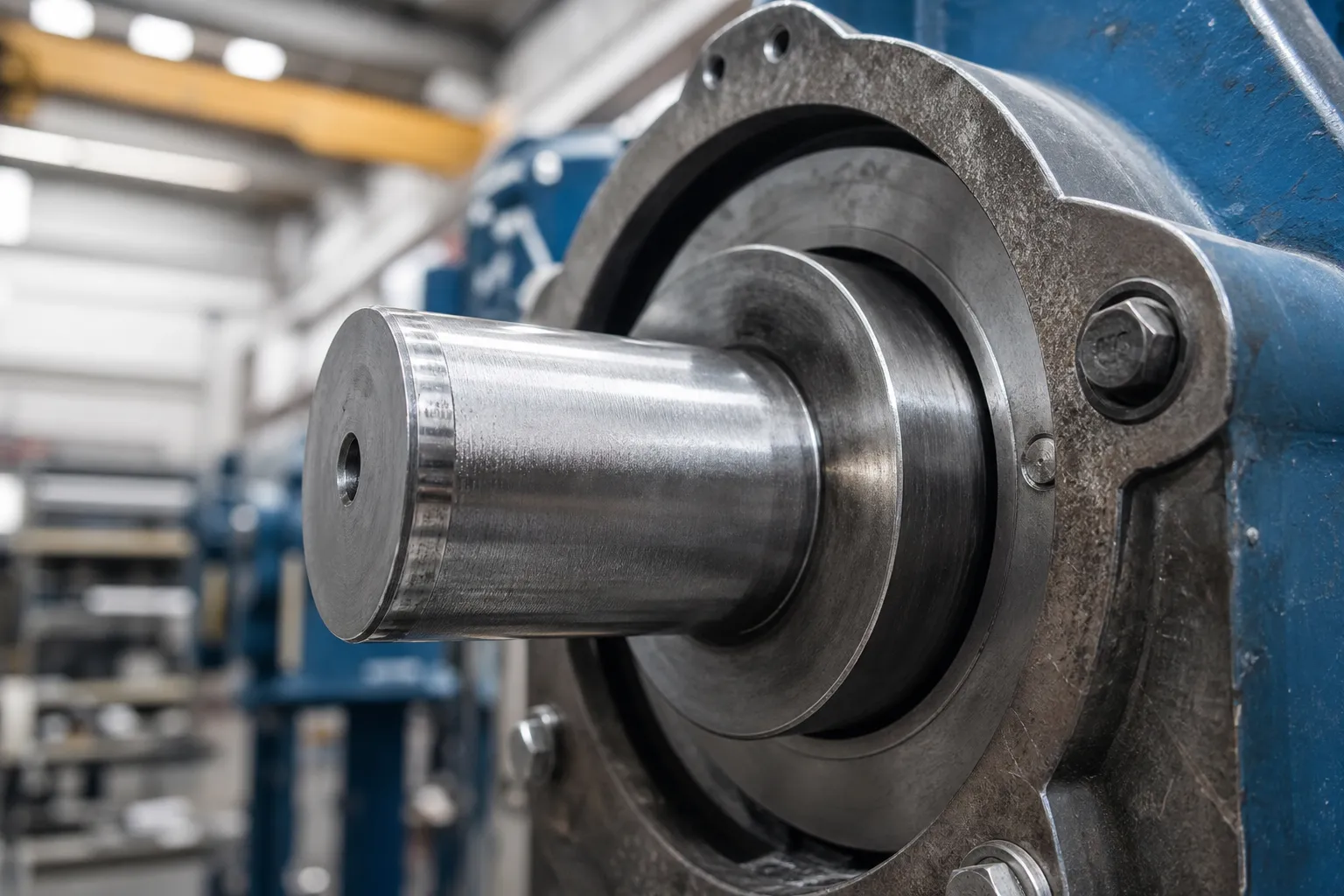
*Minh họa khái niệm kỹ thuật. Nó hiển thị bước xác minh trạng thái được phát hành, không phải là một vật cố định phổ quát, cảm biến hoặc quy trình chấp nhận.*
Cùng nhau xác định mốc thời gian và điều kiện hỗ trợ
Cùng một phôi có thể có hình dạng khác nhau khi được đỡ ở các điểm khác nhau hoặc được gắn lại trong vật cố định. Thỏa thuận cần xác định các đặc điểm tham khảo, hỗ trợ được phép, vị trí trục/quay, đo tiếp điểm và điều kiện nhả chính xác. Khi máy và máy đo của khách hàng khác nhau, mối quan hệ của họ đòi hỏi một nghiên cứu tương quan được ghi lại thay vì giả định về sự tương đương.
See machine gauge versus customer gauge correlation and độ lặp lại của vật cố định và chỗ ngồi chuẩn để kiểm soát chất lượng liên quan.
Sử dụng bản phát hành làm bước quy trình khép kín
Quá trình này nên bao gồm trình tự sau:
- xác định họ bộ phận đã được phê duyệt, bản vẽ sửa đổi và phương pháp đo lường;
- thanh tra, làm sạch và tải sắp xếp mốc/hỗ trợ được chỉ định;
- ghi lại số đọc ban đầu và tình trạng của nó;
- áp dụng bất kỳ sự điều chỉnh gia tăng nào đã được phê duyệt;
- loại bỏ lực điều chỉnh, kẹp và hạn chế tạm thời như được xác định;
- chờ đợi hoặc chỉ ổn định theo thủ tục đã thỏa thuận;
- đo lại trong điều kiện phát hành cần thiết;
- ghi lại kết quả, kiểm tra lại/kiểm tra lại và xử lý ĐẠT/NOK/xem xét kỹ thuật.
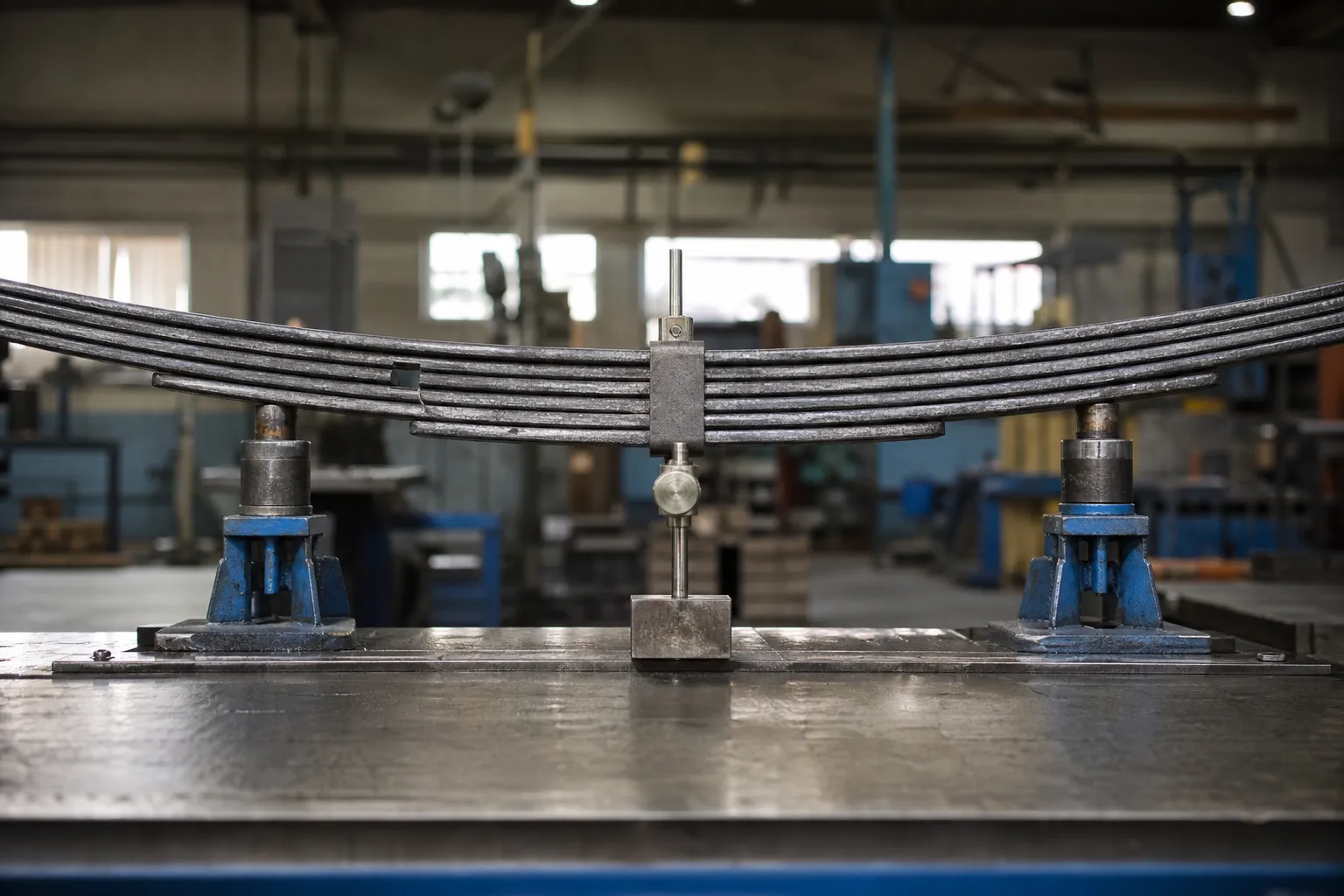
*Minh họa khái niệm kỹ thuật. Nó minh họa rằng điều kiện trạng thái tự do cần thiết có thể khác nhau tùy theo dòng phôi; nó không quy định quy trình nghiệm thu lò xo cho trục hoặc ống.*
When the Loaded Reading Is the Right Reading
Loaded-versus-released is not a morality tale in which released always wins. Some acceptance definitions are written in a loaded or restrained state, because that is how the part functions or how its predecessor processes measured it: wire and strip under tension, parts inspected on a defined mandrel, assemblies checked in the clamped condition of the next operation. The engineering failure is not measuring under load — it is measuring under load while the drawing and the customer expect free state, hoặc ngược lại, without anyone naming the condition. The fix is clerical and absolute: the acceptance record states the condition, and any station that cannot reproduce that condition either gets the correlation study or gets out of the acceptance path.
Is the Part Finished Moving After Release?
A released reading is only final if the part has stopped changing. Immediately after correction, several slow effects can still be in play: elastic recovery completes quickly, but micro-yield rearrangement in freshly worked zones, residual-stress redistribution around the corrected section, and temperature equalization between a warm part and a cooler gauge room all act on slower clocks. For most part families the movement after release is small and stabilizes quickly — but “small” Và “quickly” are exactly the kind of quantities that must be established once per family by re-measuring released parts at defined intervals, rather than assumed forever. When a family shows continuing drift, the process answer may be a defined stabilization hold before final measurement, or in stubborn cases a stress-relief route reviewed with the customer — the staging decisions covered for làm thẳng sau khi xử lý nhiệt.
The practical protocol is simple: at qualification, measure released parts immediately, then again after the interval the production schedule can afford. If the readings agree within the gauge’s own repeatability, immediate reading is validated for that family and the question is closed. If not, the stabilization step becomes part of the method, written down with the interval, the support state during the hold, and the temperature condition.
Xây dựng kế hoạch tương quan mẫu
Các mẫu đại diện phải được đo trong điều kiện máy và trong điều kiện tham chiếu của khách hàng. Ghi lại mốc thời gian, hỗ trợ, nhiệt độ/môi trường nếu có liên quan, nhà điều hành/thiết lập, đọc lại, phương pháp tính toán và định hướng bộ phận. Mục đích là để hiểu sự thiên vị và biến thể, không buộc hai hệ thống báo cáo cùng một số mà không có mối quan hệ xác định.
Sử dụng thử nghiệm và chấp nhận mẫu thẳng để xác định kế hoạch mẫu và nhấn điểm làm thẳng cho ranh giới kiểm soát quá trình.
Câu hỏi thường gặp
Kết quả đọc thấp hơn dưới lực ép có phải là kết quả đạt không?
KHÔNG. Đây là kết quả đọc trong quá trình trừ khi phương pháp chấp nhận được kiểm soát yêu cầu rõ ràng điều kiện đó. Sự chấp nhận cuối cùng phải tuân theo điều kiện phát hành đã chỉ định.
Phép đo được phát hành luôn có nghĩa là hoàn toàn không được hỗ trợ?
KHÔNG. “Được giải phóng” có nghĩa là điều kiện được xác định bởi thỏa thuận sau khi lực lượng khắc phục và biện pháp kiềm chế tạm thời được dỡ bỏ. Hỗ trợ kiểm tra có kiểm soát vẫn có thể được yêu cầu.
Một phương pháp đo lường có thể thay thế thước đo của khách hàng không?
Không phải không có thỏa thuận chấp nhận và tương quan được ghi lại.
How much lower is a released reading than a loaded one?
There is no universal difference — the offset depends on the part’s stiffness, the correction force, the support layout and the fixture compliance, and it can even change sign between setups. That is precisely why the correlation plan measures the relationship per part family instead of applying a inherited correction factor.
Does support location change straightness readings on slender parts?
Đúng, through self-weight sag. Supporting a long part at its ends maximizes mid-span droop; intermediate supports reduce it. The measurement definition therefore fixes the support positions, and the same positions — or a documented correlation to them — must be used wherever the acceptance decision is made.
Should parts be re-measured some time after release?
At qualification, yes — released parts re-measured after a defined interval tell you whether the family stabilizes immediately or continues to move. If readings agree within gauge repeatability, immediate measurement is validated; if not, a written stabilization step joins the method.