
Tube ovality and centerline straightness are different geometric conditions. Ovality concerns the shape of a cross-section; centerline straightness concerns the path of the tube along its length. A tube can have acceptable centerline geometry but be out of round at one station, or it can be round at each measured section while its centerline bows across a long span. Treating these conditions as one “straightness” value can lead to a wrong process decision.
This guide is a measurement and acceptance framework. It does not claim a StraighteningTech tube range, wall capability, máy đo, sensor, tolerance or validated correction process. Final requirements must come from the controlled drawing, reference method and representative samples.

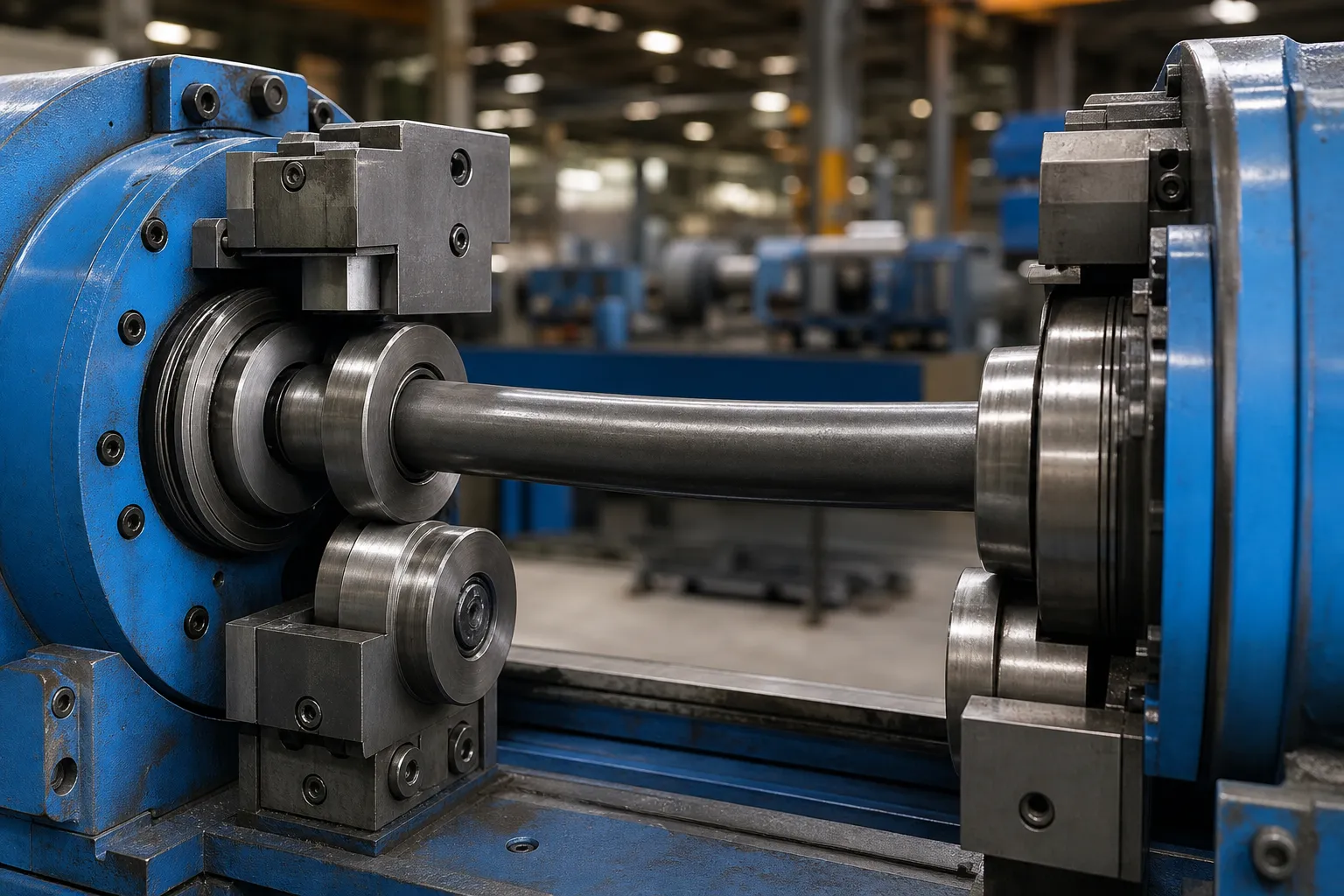
*Minh họa khái niệm kỹ thuật. It depicts a tube-straightening process context, not proof that a specific tube family or wall condition can be processed.*
Measure Cross-Section and Lengthwise Geometry With Appropriate Supports
Support positions can affect the apparent centerline through sag; clamping can affect a thin-wall section; probe contact can affect surface or wall response. The procedure should therefore define the conditions for each characteristic and repeat/reseat checks where needed.
| Kiểm soát đo lường | Tại sao nó quan trọng |
|---|---|
| Cross-section station and orientation | Ovality can vary along length and around the circumference |
| Longitudinal span and supports | Centerline readings can include gravity and fixture effects |
| Datum and end condition | Determines whether the result relates to the intended function |
| Contact or optical method | Can introduce different surface, access and uncertainty limits |
| Released condition | Prevents temporary restraint from being reported as final geometry |
Do Not Correct One Error and Assume the Other Is Solved
A correction process intended to reduce bow may change ovality or wall condition. A process intended to improve section form may not establish centerline straightness. The sample plan must define which geometry is controlled, which secondary characteristics are checked, where contact is permitted and when an independent process is required.
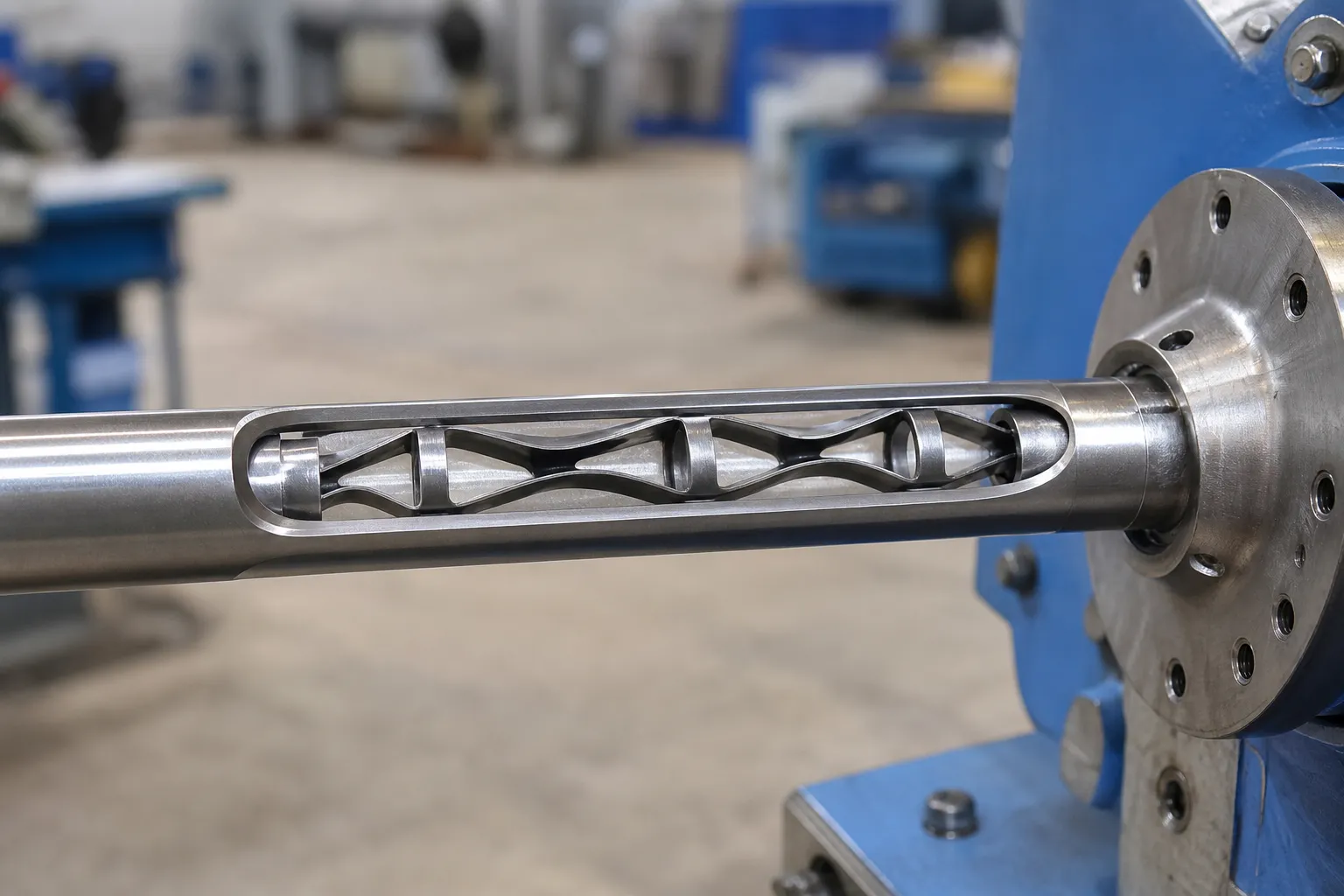
*Minh họa khái niệm kỹ thuật. It presents internal support as a candidate engineering question; it is not a claim that internal tooling is standard or appropriate for every tube.*
For non-round hollow sections, nhìn thấy square and rectangular tube straightening. For hollow rotating parts, nhìn thấy làm thẳng trục rỗng tường mỏng.
Build a Customer-Gauge Correlation Plan
The trial should use representative normal and worst-case tubes, raw readings for both characteristics, agreed support and release conditions, thiết lập lại, surface/wall checks, and comparison to the customer gauge. The record should state whether a reading is a machine process value, a customer acceptance value or a correlated result.
Sử dụng tương quan giữa thước đo máy và thước đo của khách hàng Và thử nghiệm và chấp nhận mẫu thẳng to define the evidence package.
Câu hỏi thường gặp
Can a tube be straight but out of round?
Đúng. Centerline straightness and ovality are different conditions and require separate measurement.
Does a round cross-section prove the tube is straight over its length?
KHÔNG. A tube may be round at measured sections while its centerline has bow or sweep.
Can a correction process guarantee both results?
Not without workpiece-specific validation. The process must measure and verify every characteristic required by the drawing.
*Minh họa khái niệm kỹ thuật.*