
Îndreptarea prin presare punctuală este o metodă de corecție locală controlată, nu pur și simplu apăsând oriunde o piesă pare îndoită. Procesul trebuie să conecteze o hartă de geometrie validă la un datum aprobat, puncte de sprijin, cale de reacție, locații de corectare permise, control incremental și o remăsurare în stare eliberată. Fără acea buclă, o lovitură de apăsare poate crea un marcaj, mutați o caracteristică adiacentă sau reduceți o citire temporară a indicatorului fără a îndeplini cerința reală de acceptare.
Acesta este un cadru de proces. Nu pretinde o forță de presă StraighteningTech, accident vascular cerebral, algoritm de control, gama de materiale, precizie, durata ciclului sau compatibilitatea piesei de prelucrat. Aceste valori necesită o revizuire a desenului și mostre validate.
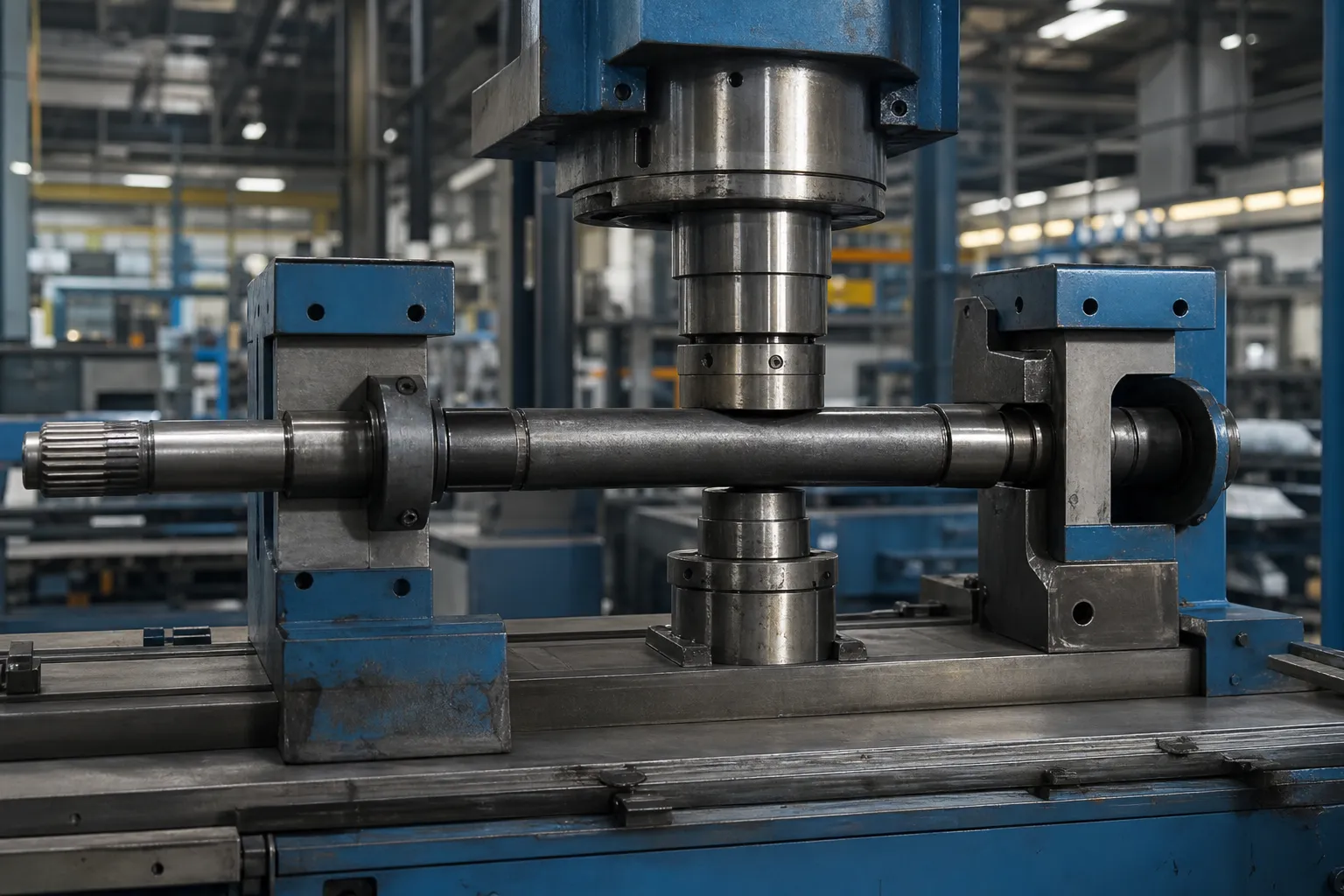
*Ilustrație de concept de inginerie. Acesta arată un posibil context de corectare a presării pentru o anumită familie de piese de prelucrat, nu este o rețetă de proces universală sau o capacitate locală verificată.*
Definiți ce corectează procesul
Caracteristica necesară poate fi dreptatea pe o deschidere, deformare radială în raport cu o axă de referință, măturare laterală, o relație de caracteristică locală sau o altă geometrie controlată. Trebuie denumit înainte de selectarea unei prese. O eroare de circularitate, întreruperea suprafeței, semnalul de fixare sau cambra intenționată nu pot fi corectate ca și cum ar fi același tip de îndoire.
Utilizare dreptatea arborelui, runout și TIR când piesa este inspectată prin rotație. Tub, profil, primăvară, piesele de prelucrat cu inele și sudate necesită geometrie proprie și limite de proces.
Creați o hartă inițială a erorilor
Planul de măsurare trebuie să identifice datele aprobate, orientarea părţii, statii axiale, starea de suport, metoda senzorului și verificarea repetă/așezării. O singură citire a punctului de mijloc poate pierde mai multe coturi sau poate confunda cota gravitațională și variația dispozitivului de fixare cu geometria piesei.

*Ilustrație de concept de inginerie. Acesta ilustrează o hartă de măsurare înainte de corectare; locațiile reale ale stațiilor, sondele și datele trebuie fixate din desenul controlat.*
| Intrare pentru a îngheța | Decizie pe care o susține |
|---|---|
| Data de desen și regula de acceptare | Stabilește ce trebuie să reprezinte măsurarea |
| Harta geometriei inițiale | Identifică zonele de corecție candidate și riscul de interacțiune |
| Suporturi și puncte de reacție aprobate | Împiedică o cale de forță să creeze un semnal neintenționat |
| Caracteristici protejate și limite de suprafață | Stabilește unde contactul este interzis |
| Etapa materialului și procesului | Definește răspunsul posibil, constrângeri de retur și aval |
The Mechanics of a Point-Press Stroke
A point-press correction is a three-point bend executed on purpose. Two supports and one press point form a loading frame: the press pushes the section toward the supports, bending moment peaks at the press point and falls toward the supports, and the outer fibers at the correction location pass yield while the core of the section stays elastic. When the force is released, the elastic core tries to spring the section back while the yielded fibers hold their new shape — the permanent set is the difference, and the art of the process is delivering just enough plastic work to land the released part inside tolerance. Three consequences follow directly from this picture. The correction is local: the plastic zone concentrates around the press point, which is why error maps guide where to press rather than intuition. The process is self-limiting only if treated incrementally: a single stroke sized optimistically cannot be un-pressed. And the section’s own geometry — its stiffness variation, its transitions, its prior deformation history — modulates everything, which is why identical stroke settings do not transfer blindly between diameters, materials or lots, and why reverse-loading effects, as described for the Bauschinger effect, change the response of a part that has already been corrected once.
Support Span Is the Primary Tuning Parameter
Operators reach for force when they should reach for geometry. Moving the supports changes the correction before any force value is touched: supports spread wide give a long, gentle bending field — the same press force produces a larger deflection spread over a longer zone, appropriate for a single broad bow; supports close in around the correction point concentrate the same energy into a short, deep correction, appropriate for a local kink but harder on the surface and the section. Span also sets the mechanical advantage of the stroke: the closer the supports, the more force the same correction demands, which is why narrowing the span on a stiff section quickly reaches the machine’s or the part’s limits. Two practical rules fall out. Primul, choose span from the error map’s wavelength — long bows get long spans, kinks get short ones — and document the choice in the setup record, because span is a process parameter like any other. Doilea, treat support condition as part of the tooling: geometria contactului, cleanliness and wear change the reaction path silently, iar cel surface-protection tooling discipline applies to supports exactly as it does to the press nose.
Alegeți împreună Suporturile și Punctele de corecție
Un punct de presare nu poate fi selectat independent de suporturile sale. Distanța între suport, rigiditatea secțiunii, direcția forței și geometria contactului creează calea de reacție. Un suport greșit poate face ca o presă locală să pară eficientă în timp ce transferă erori în altă parte sau dăunează unei funcții.
Înainte de o probă de probă, document:
- locații de sprijin și reacție, inclusiv zonele fără contact;
- punct de corectare, direcția forței și orientarea permisă;
- material de contact, curăţenie şi controale marcaj-risc;
- corecție incrementală maximă și număr de încercări;
- plan de măsurare a returului/eliberarii;
- condiţii de refuz greu şi de revizuire inginerească.
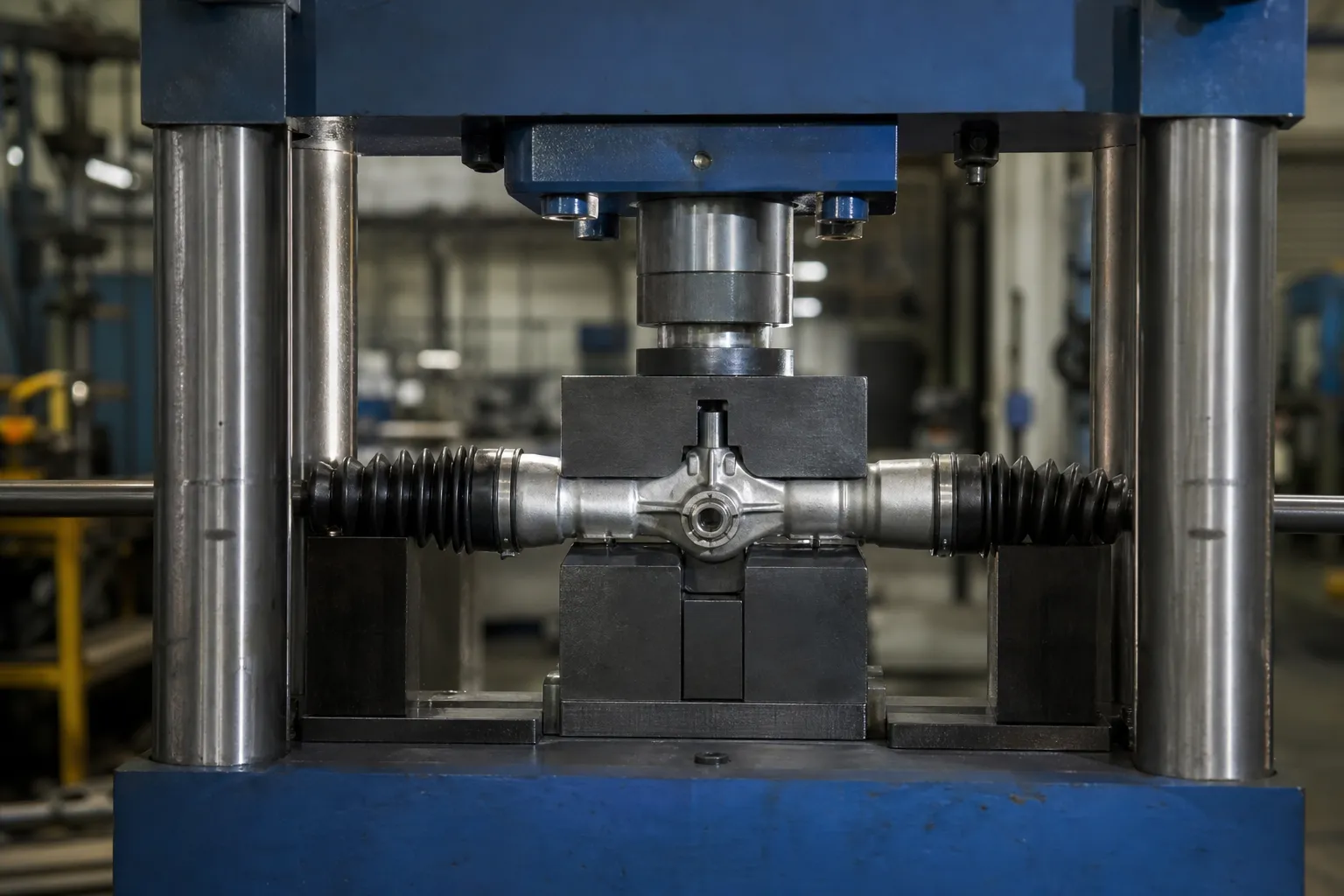
*Ilustrație de concept de inginerie. Prezintă un concept de corecție incrementală; nu prescrie sarcina de presare, accident vascular cerebral, scule sau un punct de corecție aprobat pentru o altă piesă de prelucrat.*
Corectați incremental și verificați din nou după lansare
Secvența în buclă închisă este:
- identificați familia de piese controlate și revizuirea desenului;
- inspectați pentru daune, parte greșită, starea suprafeței interzisă sau deformarea în afara domeniului de aplicare;
- încărcați datele aprobate și verificați locul;
- măsurați harta geometriei inițiale;
- selectați planul de suport și corecție permis;
- aplicați o corecție incrementală în limita eșantion-test;
- eliberați complet forța, cleme și reținere;
- Măsurați din nou toate pistele necesare și înregistrați rezultatul;
- direcționați piesa către OK, NOK sau revizuire de inginerie.
Acceptarea finală este după eliberare. O citire în timp ce piesa rămâne sub forța de presare sau reținerea dispozitivului de fixare nu poate fi folosită ca dovadă a rezultatului final.
Springback as a Process Variable, Not a Constant
Because the released shape is set by the competition between yielded fibers and the elastic core, the same stroke delivers different permanent set on parts that differ in material condition, section or prior history. That is springback as a process variable, and treating it as a fixed correction factor is how lines end up oscillating around tolerance. The discipline that handles it honestly is described for compensarea returului elastic la îndreptarea arborelui: learn the response on representative samples, correct incrementally, and re-learn when the material lot or part revision changes. A related trap deserves its own sentence: pressing a part past nominal on purpose — overshoot to pre-compensate springback — is legitimate within a validated recipe and a defined limit, but repeated overshoot-and-press-back cycles accumulate reverse-loading damage, and the correction-attempt limit exists precisely to stop that sequence before it becomes a cracking risk, pe the integrity-review framework.
Reading the Data Between Strokes
Each stroke in the incremental loop is also an experiment, and the data between strokes tells the operator when to continue and when to stop. A healthy convergence shows the remaining error shrinking by a decreasing amount each stroke — the response per stroke falling as the part approaches target, which is the natural signature of a stable correction. Three patterns break that signature and each demands stopping rather than pressing harder. No progress: the geometry stops responding, meaning the process is no longer engaging the error — the correction point, support condition or part state has changed under the operator. Diminishing returns with rising effort: each stroke moves the part less while the press works harder — the section is fighting back through strain hardening, and continuing trades diminishing geometry gain for accumulating material damage. Oscillation: the part crosses nominal in alternate directions stroke by stroke — the correction rule is over-reacting, often because it was calibrated on a different response, and the fix is the recipe, not the part. Building these three stop patterns into the operating procedure converts the between-stroke data from noise into the line’s earliest quality alarm.
Aflați când apăsarea punctelor nu este traseul potrivit
Apăsarea punctului nu este o metodă implicită pentru fiecare produs. Sârmă continuă, tub cu perete subțire, profil asimetric, inel, primăvară, Piesa critică la oboseală sau sensibilă la sudură poate necesita o abordare diferită, instrumente dedicate sau o revizuire separată a procesului. Vedea presă versus îndreptare cu role pentru limita metoda-selectare.
Testarea și acceptarea eșantionului
Eșantionul de plan ar trebui să includă părțile de intrare normale și cele mai defavorabile, geometrie brută înainte/după, repetabilitatea reseat, inspecția suprafeței, verificările necesare materialelor/caracteristicilor, o limită maximă de încercare și corelare cu indicatorul de referință al clientului. Daca crapa, duritate, NDT, slefuirea sau echilibrarea sunt relevante, ele rămân responsabilităţi independente de acceptare.
Utilizare testarea probei de îndreptare și acceptarea pentru a defini dovezile necesare înaintea unei cereri de producție sau a unei decizii FAT/SAT.
FAQ
Apăsarea poate garanta o precizie specifică?
Nu. Rezultatul atins depinde de piesa de prelucrat, datum, stare materială, sprijin, zone de contact, răspunsul eșantionului și metoda de inspecție convenită.
Este cel mai înalt punct indicator întotdeauna punctul de corecție?
Nu. Punctul de corecție trebuie ales din harta geometriei și calea de reacție aprobată, nu dintr-o observație vizuală sau indicator izolată.
Poate o presă să repare o fisură sau să înlocuiască NDT?
Nu. Îndreptarea nu repară defectele materialelor și nu înlocuiește procesele de inspecție calificate.
Why does the same press stroke move two identical-looking parts differently?
Because released geometry depends on material condition, section detail and prior deformation, not on appearance. Different lots, heat-treatment states or a previous correction cycle all change the plastic-versus-elastic balance the stroke works against. The remedy is learning the response per family on samples and re-checking it when lots change.
When should supports be moved closer together?
When the error map shows a short, local kink rather than a broad bow. A narrow span concentrates the correction where the error lives; a broad span spreads it. The span choice belongs in the documented setup, because it changes both the correction shape and the force the part must carry.
What does it mean when a part stops responding to corrections?
The process is no longer engaging the error — a no-progress condition. Causes range from a changed correction point to a setup or part-state shift, and the defined response is to stop and route the part to review, not to increase force. Continuing to press spends the part’s deformation budget on nothing.
Îndreptarea înainte vs după șlefuire
Nu este menținută nicio pagină canonică independentă pentru indreptarea inainte vs dupa slefuire deoarece cererea industrială de potrivire exactă este subțire. Secvențierea etapei, alocația de stoc și transferul de date aparțin barei forjate, pagini de procesare punct-press și multi-punct. Confirmați dacă șlefuirea îndepărtează materialul care ar invalida o citire anterioară a dreptății înainte de a bloca traseul de producție.
Curbele de deplasare a forței în îndreptare
O pagină dedicată pentru ghidajul curbei de deplasare a forței de îndreptare nu este menținută fără cerere de interogare validată. Interpretarea lui Force's Troke, limitele de siguranță și condițiile de oprire a procesului sunt explicate în punct-press, pagini multi-punct și de detectare a fisurilor. Orice alarmă bazată pe curbe trebuie validată pe piese reprezentative, mai degrabă decât copiată dintr-o altă familie de materiale.
Point-press work lives or dies by stroke control – read why over-correction cracks parts before you size a machine, then use the straightener selection walkthrough to match press concepts to your part family.