
Decizia de a moderniza sau înlocui o mașină de îndreptat ar trebui să se bazeze pe dovezi, not on the machine's age alone. O platformă mecanică mai veche poate fi încă potrivită pentru o actualizare țintită; o mașină mai nouă poate fi totuși o potrivire proastă dacă măsurarea sa, siguranţă, manipularea sau arhitectura datelor nu poate suporta piesa de prelucrat curentă și cerința de acceptare. The decision must also separate a machine condition finding from the availability of a supplier's retrofit service.
Acest ghid este un cadru neutru pentru cumpărători. Nu pretinde că StraighteningTech oferă modernizări, conversii, piese de schimb, controlează upgrade-urile sau un răspuns specific de serviciu. Aceste domenii trebuie confirmate separat.

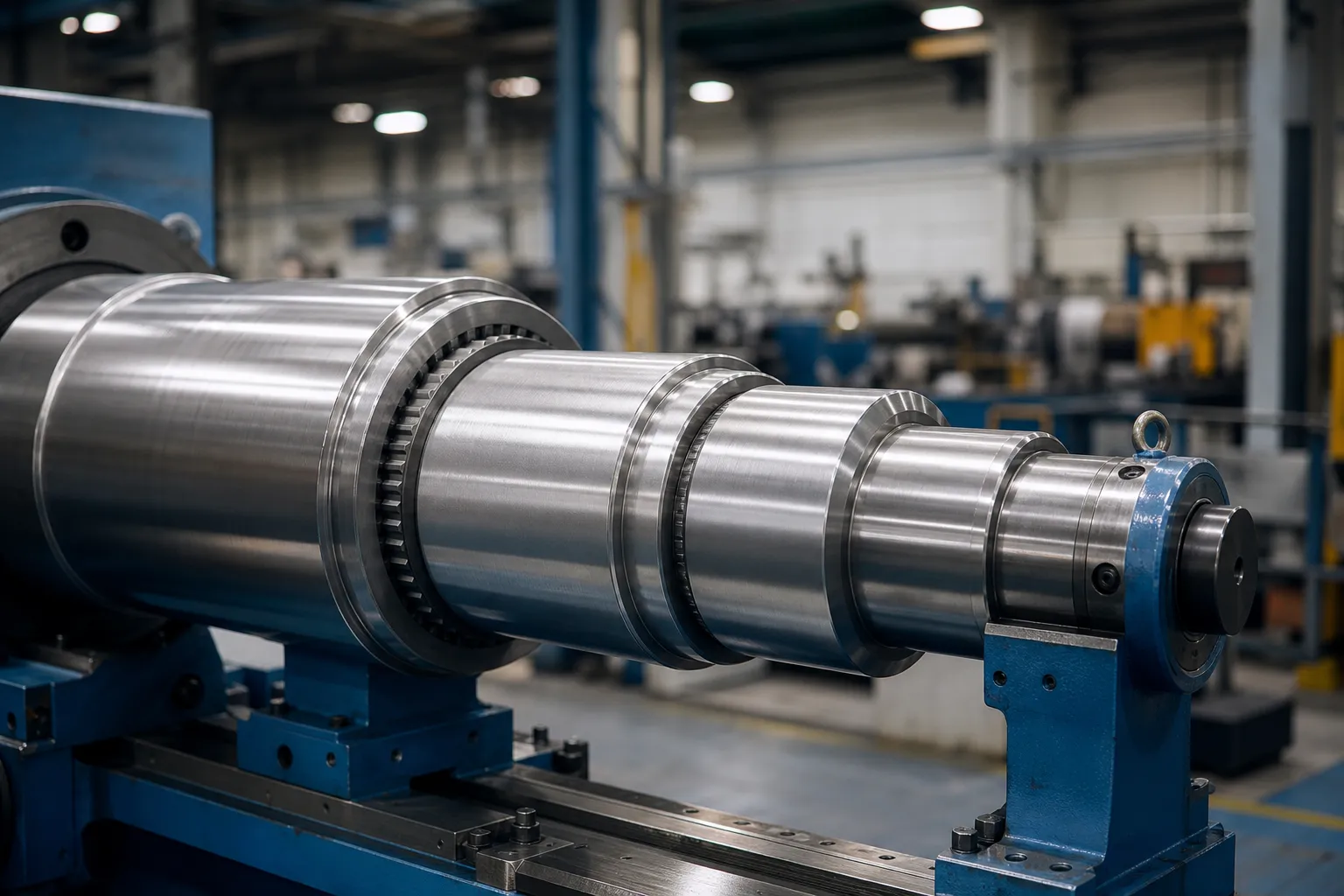
*Ilustrație de concept de inginerie. Acesta arată o arhitectură de celulă candidată, nu o evaluare a unei mașini existente sau o promisiune că este disponibilă o actualizare.*
Începeți cu piesa curentă și cerința de acceptare
Înainte de a inspecta mașina, îngheța familiile de piese de prelucrat curente și planificate, date de desen, caracteristicile geometriei, metoda de masurare, zone de contact protejate, mix de produse, manipularea nevoilor, așteptările de trasabilitate și obligațiile de siguranță. O modernizare care păstrează arhitectura greșită a procesului nu va rezolva o nepotrivire a capacităților.
Utilizare arborele, selectarea tubului și a plăcii de îndreptat profil pentru a defini procesul țintă înainte de a compara opțiunile.
Evaluează mecanic, Siguranța și starea sculelor
O evaluare ar trebui să documenteze starea cadrului, ghiduri, suporturi, role sau interfețe de presă, corpuri de fixare, paza, controale, starea electrica, capacitatea de service și disponibilitatea pieselor critice. De asemenea, ar trebui să identifice ceea ce nu poate fi verificat fără o inspecție calificată.
| Zona de evaluare | Întrebare de modernizare | Întrebare de înlocuire |
|---|---|---|
| Structura mecanică | Poate susține în siguranță traseul forței țintă și piesa de prelucrat? | Este o nouă arhitectură necesară pentru proces? |
| Scule și suporturi | Pot fi validate dispozitivele/zonele de contact pentru familia țintă? | Noua soluție necesită o fixare diferită? |
| Siguranţă | Pot fi verificate funcțiile de pază și siguranță necesare? | Sarcina țintă necesită o arhitectură de siguranță diferită? |
| Piese de schimb și întreținere | Sunt componentele critice suportabile pentru durata de viață prevăzută? | Învechirea creează un risc operațional inacceptabil? |
When a Retrofit Is Defensible — and When It Is Not
A retrofit earns consideration when four conditions hold at once: the mechanical structure is demonstrably sound for the target force path; the target workpiece families stay within the load and geometry envelope the structure was built for; the measurement architecture — sensors, datum repetition, settings handling — can either be added or correlated to the reference method; and a supplier has confirmed in writing the scope that will actually be performed. Lose any one of the four and the retrofit discussion is spending engineering time on a route that cannot close.
The clearest non-starters are architectural. When the product mix is moving toward a different correction architecture — a different force path, a different support concept, a different measurement principle than the frame and tooling can carry — no component-level upgrade changes that. The same applies when obsolescence has reached the safety layer: guarding and safety functions built around withdrawn components are a revalidation project of their own, and stacking that on top of a process upgrade rarely survives an honest risk review. In sfarsit, when frame condition cannot be verified without a qualified inspection, the retrofit quote is priced against unknowns — commission the inspection first, or treat the machine's remaining life as unproven.
Evaluați compatibilitatea cu măsurarea și controlul
Decizia de modernizare nu se referă doar la înlocuirea unui controler. Mașina trebuie să măsoare caracteristica corectă pe data corectă, repetați condiția de sprijin/poziționare necesară, gestionați setările sau rețetele acolo unde este cazul, înregistrați datele necesare și rutați excepțiile în siguranță.
*Ilustrație de concept de inginerie. Acesta descrie o revizuire a selecției procesului țintă, nu o evaluare că o mașină existentă poate fi actualizată la fiecare arhitectură candidată.*

*Ilustrație de concept de inginerie. Subliniază necesitatea verificării geometriei după eliberare; nu precizează că orice mașină existentă poate fi convertită într-un sistem cu buclă închisă.*
Revizuiți corelația gabaritului, starea senzorului, integritatea datelor, controlul accesului, managementul schimbărilor și relația dintre valorile măsurate și metoda de referință a clientului. Un nou ecran nu stabilește în sine o buclă de corecție validă.
A Five-Gate Verification Path
The decision becomes tractable when it is run as a sequence of gates, each with a defined pass condition and a defined action when it fails. Ordinea contează: every later gate is cheaper to evaluate once the earlier ones have closed.
Poartă 1 — Requirement
Pasa: workpiece families, revizuiri de desen, data, characteristics and the customer acceptance method are frozen in writing. Fail action: stop. Neither a retrofit nor a replacement can be specified against a moving target, and any quote received at this stage is a guess.
Poartă 2 — Mechanical
Pasa: documented evidence that frame, ghiduri, supports and force path carry the target family — including the findings that require a qualified inspection. Fail action: înlocui, repurpose the machine to a lighter family, or close the gap with the inspection before any further spending.
Poartă 3 — Measurement
Pasa: the machine measures the specified characteristic on the specified datum, repeats the support and positioning condition, manages settings or recipes where relevant, and can be correlated to the customer gauge. Fail action: scope the measurement retrofit explicitly as its own engineering and validation package, or route the decision to replacement.
Poartă 4 — Demonstration
Pasa: the proposed configuration is demonstrated on representative parts through to released-state results and customer-gauge correlation. Fail action: treat the proposal as unproven. A retrofit that cannot be demonstrated before commitment is a bet placed with production as the stake.
Poartă 5 — Economics
Pasa: both routes are compared on total evaluated cost — engineering, instalare, timp de nefuncţionare, revalidare, antrenament, spares for the intended life, contingency for failure — using the buyer's own baseline. Fail action: if the comparison cannot be made honestly, the deciding factor is risk posture, not price, and that is a management decision to make explicitly.
Comparați timpii de nefuncționare, Risc și revalidare
Ambele rute au nevoie de un plan pentru inginerie, instalare, revizuirea siguranței, punerea în funcţiune, testarea probelor, instruirea și documentarea operatorilor. O comparație ar trebui să includă ferestre probabile de nefuncționare, expunerea piesei de schimb, impactul trecerii, efort de calificare, contingența de producție și costul unui rezultat nereușit. Do not use an average payback or “faster ROI” claim without the buyer's own baseline data.
Cost Items Both Quotes Must State
Most retrofit-versus-replace comparisons fail not on the numbers but on what the numbers omit. The table lists the items a comparable pair of quotes has to carry:
| Cost item | Where it hides in retrofit quotes | Where it hides in replacement quotes |
|---|---|---|
| Engineering and qualification | Marked “included” with no validation scope | Assumed to be in the machine price with no FAT/SAT scope |
| Installation and downtime | Scheduled around production informally | Window underestimated where foundations or utilities change |
| Safety review and commissioning | Omitted when controls are touched | Bundled invisibly into startup support |
| Gauge correlation study | Postponed until after startup | Postponed until after startup |
| Operator training | Limited to the new component | Limited to the first shift |
| Documentation and traceability update | Legacy records not migrated | Templates delivered without the buyer's data model |
| Spares for the intended life | Old-platform parts assumed available | First-generation components on a new platform |
| Production contingency during ramp | Coverage during validation runs undefined | Coverage during the learning curve undefined |
| Cost of an unsuccessful outcome | Rarely defined at all | Rarely defined at all |
| Existing machine disposal or residual value | Ignored | Ignored |
Two of these deserve emphasis because they are almost always missing: the correlation study and the cost of failure. Without a gauge correlation there is no common acceptance language between the machine and the customer, and every later dispute is unresolvable. Without a defined failure outcome — re-run, external processing, scrap allowance, rollback — the comparison silently assigns zero cost to the riskier route.
Faceți din validarea eșantionului poarta de decizie
Calea preferată ar trebui să demonstreze procesul țintă cu părți reprezentative: aşezarea de referinţă, repetabilitatea măsurătorilor, răspuns de corectare, rezultat în stare eliberată, starea suprafeței, manipulare, rutarea excepțiilor și corelarea client-gauge. Dacă dovezile nu pot fi închise în siguranță pe platforma existentă, înlocuirea sau o arhitectură diferită a procesului poate fi calea mai susținută.
Pentru structura de validare, vedea testarea probei de îndreptare și acceptarea and machine gauge versus customer gauge correlation.
Risks a Retrofit Trial Must Retire
A retrofit validation is not a demonstration that the machine moves; it is the retirement of specific failure modes, each with its own test:
- Correction-response risk — springback drifting with material state or batch. Test with representative parts from more than one material lot, recording the stroke-versus-result relationship; how that relationship moves between lots is the process's real signature. The underlying mechanism is covered in efectul Bauschinger în îndreptare.
- Released-state risk — in-machine readings diverging from final geometry once the part is released. Test by independent remeasurement after release, on supports defined in the acceptance plan. The distinction is developed in măsurarea dreptății încărcate vs eliberate.
- Setup-repeatability risk — the corrected result depending on who sets up the part. Test by repeating full setups with the datum deliberately reseated, comparing results before any capability claim. The statistical framing is in gage R&R pentru liniile de îndreptare.
- Exception-routing risk — a rejected or mid-cycle-interrupted part following an undefined path. Test by injecting faults deliberately, including an interrupted cycle, and verifying what happens to the part in the machine and how the event is recorded. Disposition rules for rejected parts are covered in Limite de sortare și reprelucrare NOK.
Red Flags in Any Proposal
- No representative-part demonstration is offered, or one is promised only after commitment.
- ROI or payback is asserted without asking for the buyer's own baseline data.
- The scope is written in conditional language — “can be considered”, “possible upgrade” — leaving the binding scope undefined.
- A controller or screen upgrade is presented as proof of straightening capability.
- No failure path is defined: nothing about what happens if the agreed result is not met.
Întrebări de pus înainte de o propunere de modernizare sau de înlocuire
- Ce familie de piese de prelucrat și revizuirea desenului definesc cerința?
- Cu ce metodă de măsurare și acceptare trebuie să se coreleze soluția?
- Care mecanic, siguranţă, constatările de control și piese de schimb sunt documentate?
- What configuration changes are actually within the supplier's confirmed service scope?
- Ce mostre de validare, înregistrările de măsurare și criteriile de lansare vor decide succesul?
- Ce se întâmplă dacă platforma existentă nu poate îndeplini rezultatul convenit?
FAQ
Este o modernizare întotdeauna mai ieftină decât înlocuirea?
Nu. Costul depinde de stare, domeniul de aplicare, siguranţă, învechirea, validare, timpul de nefuncţionare şi procesul ţintă. It must be evaluated with the buyer's own data. The defensible comparison is total evaluated cost — engineering, timp de nefuncţionare, revalidare, spares over the intended life and a priced failure path — not the number on the upgrade quote.
Poate o actualizare a controlerului să dovedească capacitatea de îndreptare?
Nu. Măsurare, datum, scule, sprijin, răspunsul de corecție și acceptarea necesită încă validare. What a controller changes is data handling and interface; the characteristic and the correction response still have to be demonstrated on parts, which is what Gates 3 şi 4 above are for.
Acest articol înseamnă că StraighteningTech oferă servicii de modernizare?
Nu. Disponibilitatea și domeniul de aplicare al serviciului trebuie confirmate separat înainte de orice angajament comercial. The five-gate path above works the same way regardless of which supplier or route is eventually selected.
What should we do if a retrofit cannot be demonstrated with our parts before commitment?
Treat the demonstration gate as failed. Either phase the commitment so that a paid engineering study on your parts precedes the full scope, route the work to a proven process in the interim, or move the decision to replacement. What should not happen is accepting the retrofit on price while carrying the full validation risk in production.