
Îndreptarea manuală și automată nu sunt etichete de calitate. Oricare traseu poate fi nepotrivit atunci când originea piesei de prelucrat, metoda de masurare, zone de contact, regula de acceptare sau procesul de manipulare este nedefinit. Întrebarea utilă este ce pași necesită control repetabil pentru o familie de piese definită - și care pași necesită încă o configurare calificată, aprobarea inginerească sau verificarea calității clientului.
Acest ghid este un cadru de selecție, nu este o afirmație că StraighteningTech furnizează o anumită configurație de automatizare sau că automatizarea garantează o acuratețe, timpul ciclului, reducerea forței de muncă sau rentabilitatea investiției. Aceste rezultate necesită un domeniu de aplicare verificat al echipamentului și dovezi reprezentative ale producției.
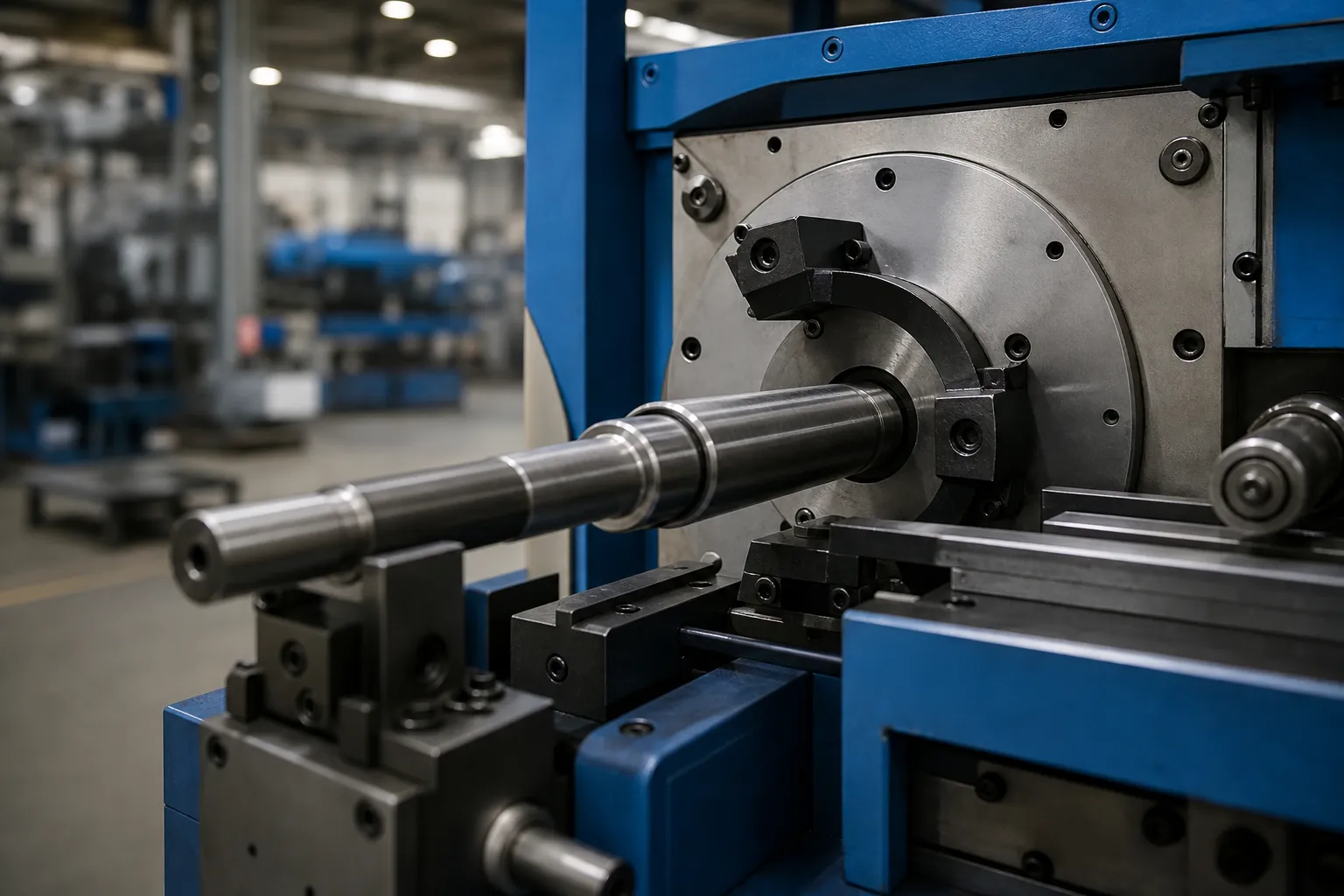
*Ilustrație de concept de inginerie. Acesta arată un posibil context de manipulare automatizată, nu este dovada unei configurații locale disponibile sau a unui rezultat al producției.*
Definiți limita automatizării
„Automat” poate descrie una sau mai multe funcții diferite. Încărcare, identificarea piesei, orientare, aşezarea de referinţă, măsurare, corecţie, descărcare, selecția rețetei, trasabilitatea și sortarea NOK ar trebui evaluate separat.
| Funcţie | Traseu manual de evaluat | Traseu automat pentru evaluare |
|---|---|---|
| Încărcare și orientare | Manevrarea operatorului, confirmarea dispozitivului și ergonomia sigură | Identificarea familiei, prezentare controlată și validare a manipulării |
| Măsurare | Configurarea operatorului, citirea manometrului și repetabilitate | Secvență controlată, captarea datelor și corelarea gabaritului |
| Corecţie | Raționament calificat și răspuns incremental | Buclă controlată de rețetă și praguri de excepție |
| Trecere | Disciplina de fixare/setare și revizuire primară | Controlul versiunilor, identitatea instrumentului și confirmarea primei părți |
| Dispoziţie | Segregarea fizică și revizuirea documentată | Rută definită PASS/NOK/rework cu autoritate umană |
O linie automată poate necesita în continuare aprobare manuală la un pas critic. O stație de lucru manuală poate folosi în continuare instrumente controlate și înregistrări urmăribile. Selecția ar trebui să descrie procesul real, mai degrabă decât să folosească o etichetă largă.
Începeți cu amestecarea și acceptarea piesei de prelucrat
Variație mare, data incerta, Manevrarea complexă sau schimbările de inginerie frecvente pot face ca o rută flexibilă manuală sau semi-automată să fie adecvată în timpul dezvoltării. O familie stabilă cu încărcare repetabilă, măsurarea definită și un răspuns de corecție validat pot justifica mai multă automatizare. Nicio concluzie nu poate fi făcută doar din volumul producției.
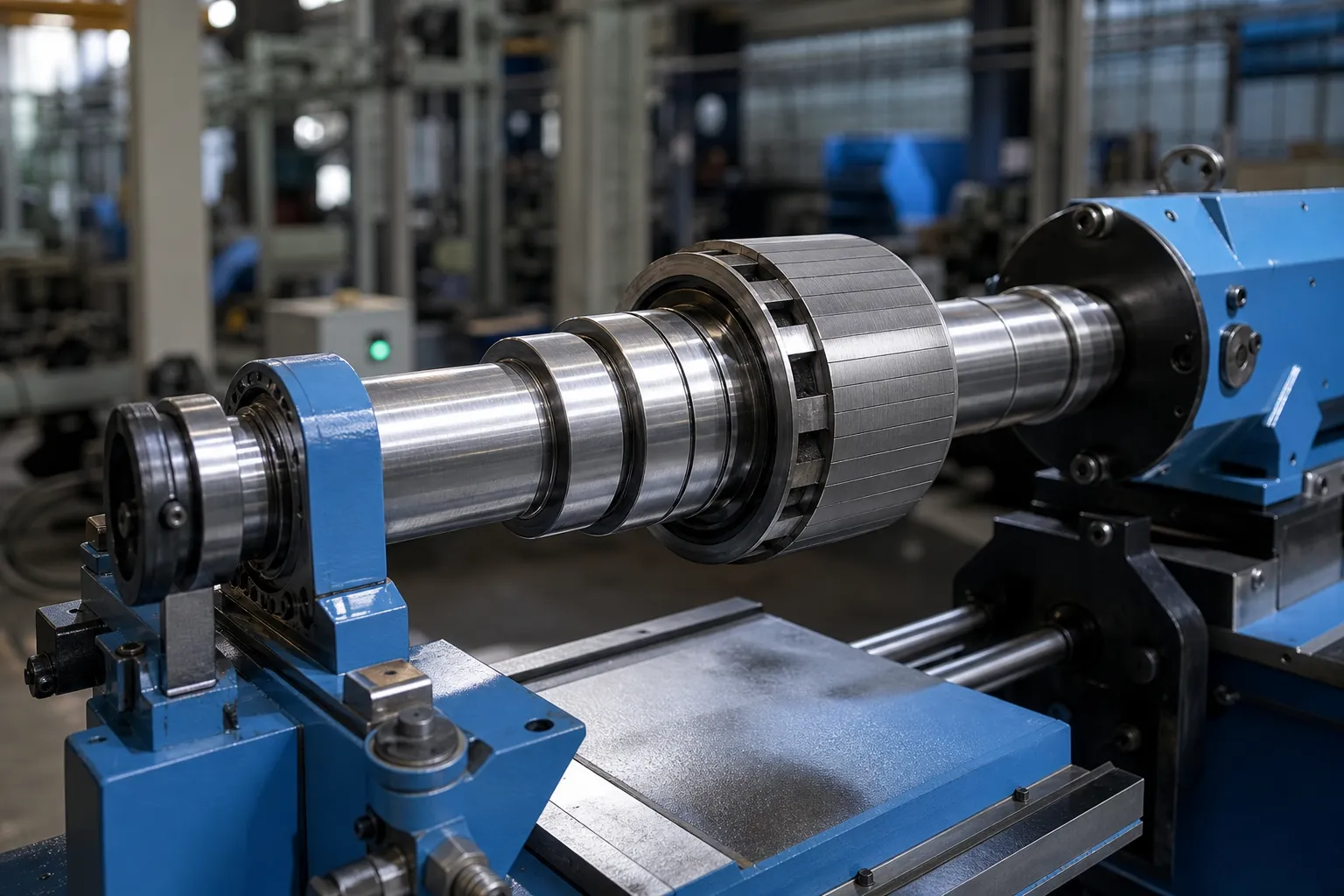
*Ilustrație de concept de inginerie. Reprezintă un concept de corecție în buclă închisă; nu pretinde că este acceptată un arbore de motor dat sau o funcție de automatizare.*
RFQ trebuie să specifice variantele piesei de prelucrat, material/etapă de proces, distribuția erorilor de intrare, datum, zone protejate, gabarit client, mixul țintă și constrângerile de manipulare. Utilizare arborele, selectarea tubului și a plăcii de îndreptat profil înainte de a compara etichetele de automatizare.
What Automation Actually Repeats
Strip away the robotics and an automatic straightening machine is a device for repeating a validated sequence: identify the family, seat the part, measure against a stored rule, apply a stored correction response, re-măsură, route. Every one of those verbs was originally written by a person — an engineer who qualified the datum, an operator who proved the correction response on samples, a quality function that approved the acceptance rule. Automation does not create that knowledge; it preserves and executes it. This framing explains both the strength and the boundary. The strength: once validated, the sequence runs identically at hour eight of a shift as at hour one, unaffected by fatigue, and every part carries its data. The boundary: everything upstream of validation — developing the correction concept for a new family, diagnosing an unfamiliar signal, deciding whether an anomaly is a setup fault or a part problem — remains engineering and skilled work, no matter how automatic the cell. A factory that automates before validating automates its confusion at line rate.
The Cost Structures Are Different, Not Just the Labels
Comparing routes on purchase price or headcount misses where each route actually spends money. The manual route spends it continuously: skilled operators take time to develop and are hard to replace, throughput varies with the person on shift, and consistency between operators is a permanent supervision task — the reproducibility component of measurement studies exists largely because of this. The automated route spends it front-loaded and in lumps: engineering effort to validate each family before the cell can run it, fixture and tooling per family, and a maintenance and calibration discipline that the cell depends on but the production schedule rarely celebrates. Changeover economics invert between the routes — cheap in skill and slow in minutes on a manual bench, fast in minutes but expensive in preparation on an automatic line. None of this makes either route cheaper in the abstract; it means the part mix, changeover frequency and available skills decide which cost structure fits. The machine cost structure discussion treats these drivers without pretending at universal payback numbers.
Comparați buclele de măsurare și corecție
Îndreptarea manuală se poate baza pe încărcarea unui operator, măsură, alegeți punctul de corecție și măsurați din nou. Îndreptarea automată poate repeta o secvență stocată. În ambele cazuri, rezultatul final depinde de așezarea datelor, corelarea măsurătorilor, contact permis, corecție incrementală și verificare a stării de eliberare.
| Întrebare | De ce schimbă decizia |
|---|---|
| Este repetabilă harta geometriei primite? | Automatizarea nu poate compensa un semnal nedefinit sau instabil |
| Sunt suporturi și puncte de corecție fixate de familie? | O piesă cu amestec ridicat poate avea nevoie de o revizuire de inginerie, mai degrabă decât o rețetă generică |
| Indicatorul clientului este corelat? | Citirile aparatului nu înlocuiesc automat inspecția finală |
| Sunt definite excepții? | Reîncercarea necontrolată poate ascunde o problemă de proces |
Pentru limita procesului, vedea îndreptare prin presare punctuală şi testarea probei de îndreptare și acceptarea.
Evaluați schimbarea, Date și excepții
Automatizarea poate fi utilă numai atunci când identitatea piesei, fixare, varianta retetei, confirmare din prima bucată, câmpurile de date și rutele de excepție sunt controlate. Revizuirea ar trebui să specifice cine poate schimba o setare, modul în care versiunile vechi sunt împiedicate să ruleze, cum este identificat un dispozitiv, și ce se întâmplă după o măsurătoare sau o alertă de semnal de proces.
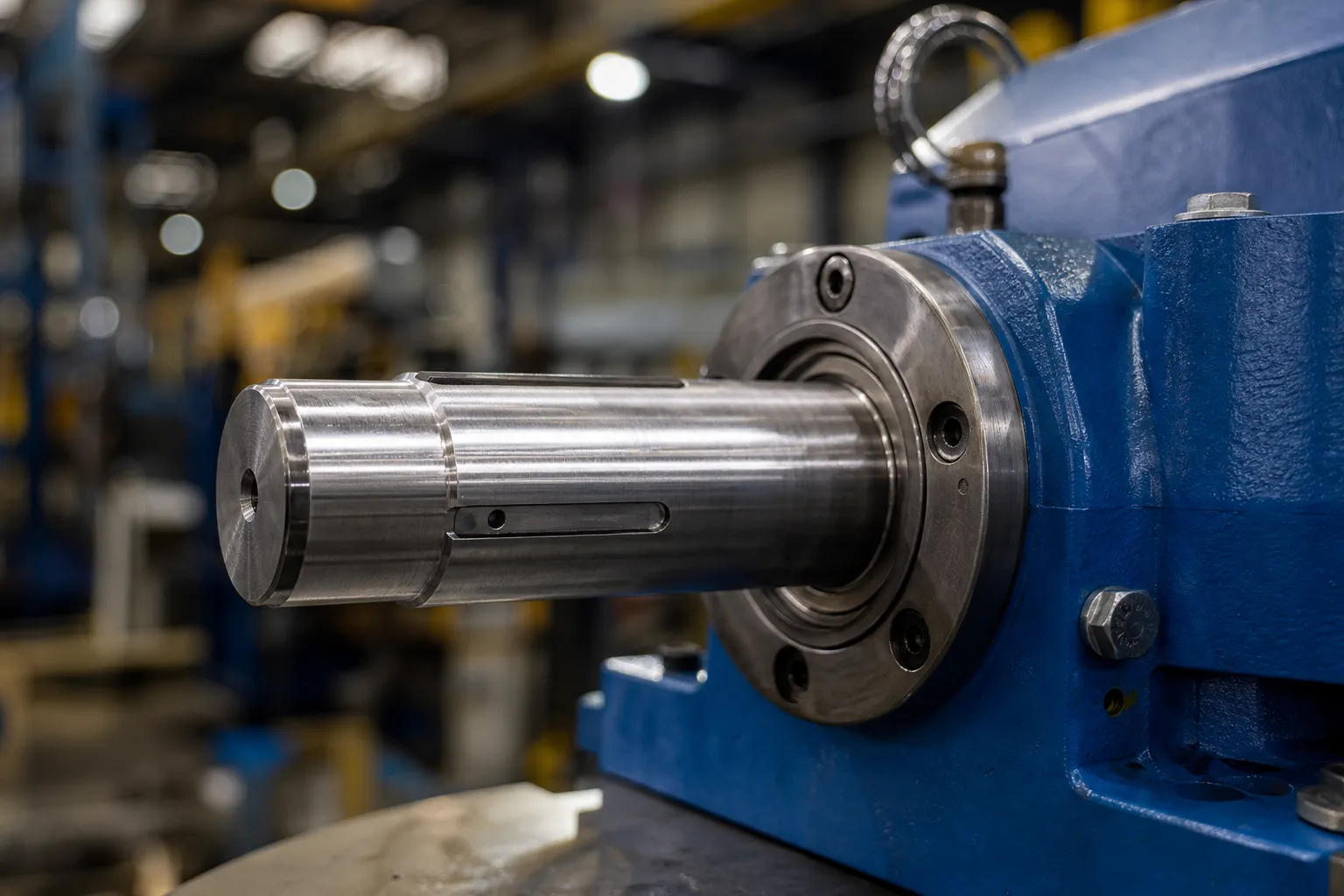
*Ilustrație de concept de inginerie. Ea pune accent pe verificarea în stare de eliberare și dispoziție trasabilă, nu este o funcție de inspecție automată promisă.*
The Migration Path Nobody Regrets
The manual-versus-automatic decision is rarely binary in practice, and the most common successful pattern is staged: automate the steps whose validation is complete and whose failure modes are understood, keep human hands and judgment on the steps that are not. A frequent first stage automates measurement and disposition — the machine gauges the part, the operator still loads and corrects — because measurement repeatability is usually the first bottleneck and its automation risk is low. A second stage adds automatic loading and part identification once the family presentation is stable, the domain covered for robot tending of straightening machines. Full closed-loop correction comes last, after the correction response has been validated across the incoming error distribution. Each stage is justified by the same evidence rule: a sample test on the specific step, run on representative and worst-case parts, with disposition routing demonstrated per the NOK discipline. Factories that follow this sequence buy automation where it is proven and keep flexibility where it is needed; factories that buy the last stage first spend their commissioning period discovering what they skipped.
Skills Each Route Consumes
Neither route is skill-free, and planning the wrong skill set starves the line quietly. The manual route concentrates skill in the operator: reading the error map, choosing correction points, judging incremental response — expertise that takes real time to build, lives in few people, and walks out the door with them. The automated route distributes skill across the organization: process engineers who validate families and maintain recipes, maintenance staff who can diagnose a sensor or fixture fault before it becomes scrap, and quality staff who own the correlation studies that keep the machine’s readings meaningful at acceptance. A buyer moving from manual to automatic who staffs only for operation — and not for engineering and maintenance — typically finds the cell’s recipes frozen, its correlation stale and its exceptions unowned within the first year. The automation boundary on paper should therefore be matched by a staffing plan for the skills each side of that boundary consumes.
Luați decizia cu un test de probă
Comparați rutele candidate folosind părți reprezentative normale și cele mai defavorabile. Repetabilitate de încărcare/setare a înregistrării, geometrie înainte și după, citiri de stare eliberată, starea suprafeței, manipulare, schimbarea, captarea datelor și rutarea excepțiilor. Nu deduceți economii anuale de muncă, debitul sau rambursarea de la un articol concurent sau un timp de ciclu ipotetic.
FAQ
Îndreptarea automată este întotdeauna mai precisă?
Nu. Precizia depinde de piesa de prelucrat, datum, măsurare, răspunsul de corecție și metoda de acceptare. Automatizarea poate îmbunătăți repetabilitatea numai atunci când acele fundații sunt validate.
Când este îndreptarea manuală cea mai bună alegere?
Poate fi potrivit pentru dezvoltare, familii de piese instabile sau foarte variabile, munca de volum redus, configurație complexă, sau situații în care traseul de corectare este încă în curs de calificare.
Un sistem manual poate avea trasabilitate??
Da. Identificare controlată, înregistrări de gabarit, Înregistrările de disciplină și dispoziție ale rețetei/instalației pot fi implementate independent de nivelul de automatizare.
Is semi-automatic straightening a compromise or a strategy?
A strategy, when it is staged deliberately. Automating measurement and disposition first, loading second, and closed-loop correction last matches automation investment to validated knowledge — each stage carries a sample test, and flexibility is retained where families are still developing.
What skills does an automatic line still need?
Process engineering to validate families and control recipes, maintenance able to diagnose sensor and fixture faults, and quality ownership of the gauge correlation. Operation labor drops; engineering and maintenance skill does not — it usually rises.
Does automation reduce the number of quality decisions?
It relocates them. Routine dispositions become automatic, but the definition of the routing rules, the approval of recipes and the response to exceptions remain human decisions with named authority. The boundary is between executing decisions and making them.