
Die Entscheidung, eine Richtmaschine nachzurüsten oder auszutauschen, sollte evidenzbasiert sein, not on the machine's age alone. Eine ältere mechanische Plattform kann für ein gezieltes Upgrade noch geeignet sein; Eine neuere Maschine passt möglicherweise immer noch schlecht, wenn sie gemessen wird, Sicherheit, Handhabung oder Datenarchitektur können die aktuelle Werkstück- und Abnahmeanforderung nicht unterstützen. The decision must also separate a machine condition finding from the availability of a supplier's retrofit service.
Dieser Leitfaden ist ein neutraler Käuferrahmen. Es wird nicht behauptet, dass StraighteningTech Nachrüstungen anbietet, Konvertierungen, Ersatzteile, Steuert Upgrades oder eine bestimmte Servicereaktion. Diese Umfänge müssen gesondert bestätigt werden.

*Illustration des technischen Konzepts. Es zeigt eine mögliche Zellarchitektur, keine Bewertung einer vorhandenen Maschine oder ein Versprechen, dass ein Upgrade verfügbar ist.*
Beginnen Sie mit dem aktuellen Werkstück und den Abnahmeanforderungen
Vor der Inspektion der Maschine, Einfrieren der aktuellen und geplanten Werkstückfamilien, drawing datums, Geometrieeigenschaften, Messmethode, geschützte Kontaktzonen, Produktmix, Umgang mit Bedürfnissen, Rückverfolgbarkeitserwartungen und Sicherheitsverpflichtungen. Eine Nachrüstung, die die falsche Prozessarchitektur beibehält, wird ein Leistungsungleichgewicht nicht beheben.
Verwenden Welle, Auswahl von Rohr- und Profilrichtgeräten um den Zielprozess zu definieren, bevor Optionen verglichen werden.
Bewerten Sie mechanisch, Sicherheits- und Werkzeugzustand
Eine Beurteilung sollte den Rahmenzustand dokumentieren, Führer, unterstützt, Walzen oder Pressenschnittstellen, Vorrichtungen, Bewachung, Kontrollen, elektrischer Zustand, Wartungsfreundlichkeit und Verfügbarkeit kritischer Teile. Es sollte auch identifizieren, was ohne eine qualifizierte Inspektion nicht überprüft werden kann.
| Bewertungsbereich | Frage zur Nachrüstung | Ersatzfrage |
|---|---|---|
| Mechanische Struktur | Kann es den Zielkraftpfad und das Werkstück sicher abstützen?? | Ist für den Prozess eine neue Architektur erforderlich?? |
| Werkzeuge und Unterstützungen | Können Einbauten/Kontaktzonen für die Zielfamilie validiert werden?? | Benötigt die neue Lösung eine andere Werkstückhalterung?? |
| Sicherheit | Können erforderliche Schutz- und Sicherheitsfunktionen nachgewiesen werden?? | Erfordert die Zielaufgabe eine andere Sicherheitsarchitektur?? |
| Ersatzteile und Wartbarkeit | Sind kritische Komponenten für die vorgesehene Lebensdauer wartungsfähig?? | Führt Veralterung zu einem inakzeptablen Betriebsrisiko?? |
When a Retrofit Is Defensible — and When It Is Not
A retrofit earns consideration when four conditions hold at once: the mechanical structure is demonstrably sound for the target force path; the target workpiece families stay within the load and geometry envelope the structure was built for; the measurement architecture — sensors, datum repetition, settings handling — can either be added or correlated to the reference method; and a supplier has confirmed in writing the scope that will actually be performed. Lose any one of the four and the retrofit discussion is spending engineering time on a route that cannot close.
The clearest non-starters are architectural. When the product mix is moving toward a different correction architecture — a different force path, a different support concept, a different measurement principle than the frame and tooling can carry — no component-level upgrade changes that. The same applies when obsolescence has reached the safety layer: guarding and safety functions built around withdrawn components are a revalidation project of their own, and stacking that on top of a process upgrade rarely survives an honest risk review. Endlich, when frame condition cannot be verified without a qualified inspection, the retrofit quote is priced against unknowns — commission the inspection first, or treat the machine's remaining life as unproven.
Bewerten Sie die Mess- und Steuerungskompatibilität
Bei der Retrofit-Entscheidung geht es nicht nur um den Austausch einer Steuerung. Die Maschine muss das richtige Merkmal am richtigen Bezugspunkt messen, Wiederholen Sie die erforderliche Stütz-/Positionierungsbedingung, Verwalten Sie ggf. Einstellungen oder Rezepte, Notwendige Daten aufzeichnen und Ausnahmen sicher weiterleiten.
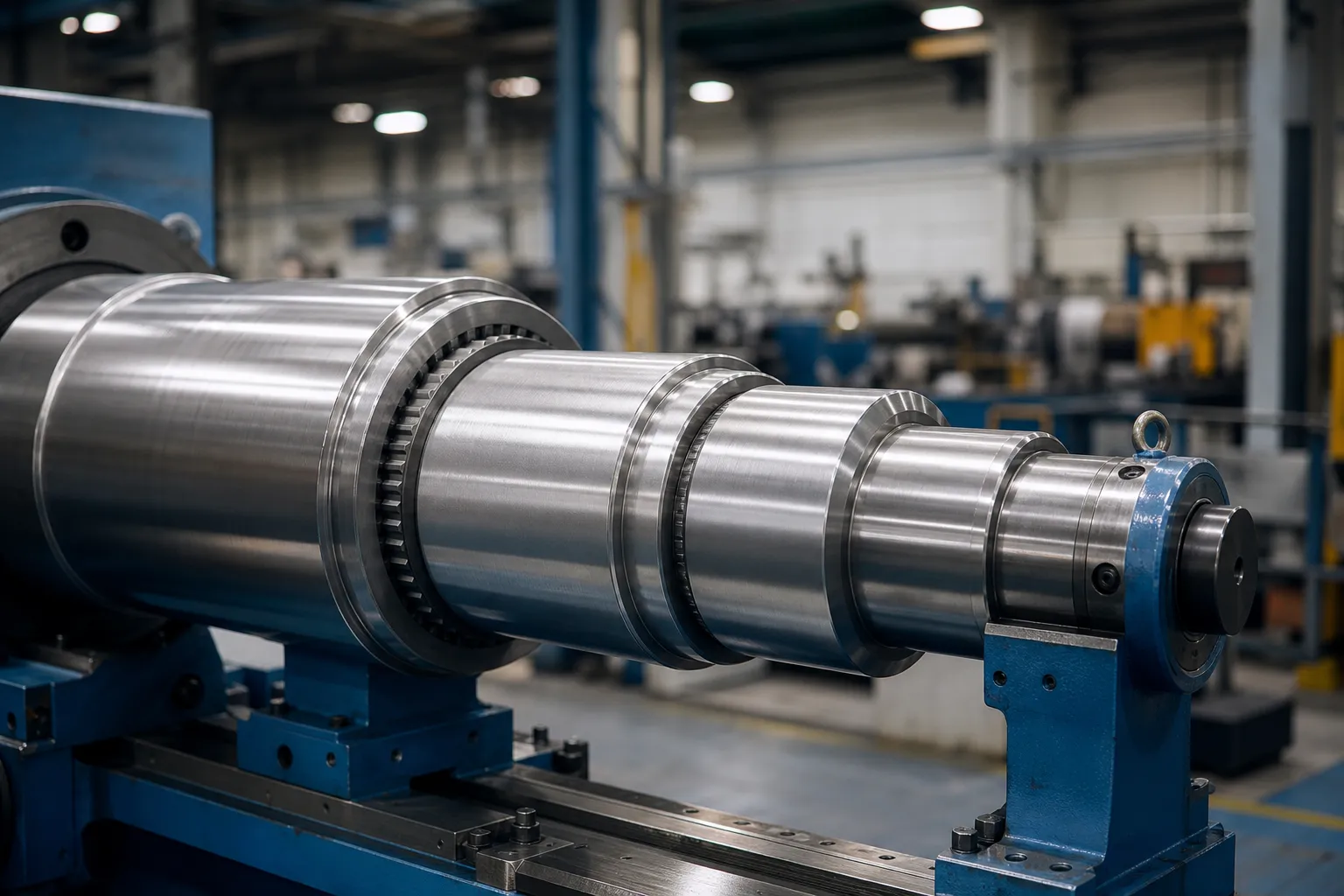
*Illustration des technischen Konzepts. Es stellt eine Überprüfung der Zielprozessauswahl dar, keine Einschätzung, dass eine vorhandene Maschine auf jede Kandidatenarchitektur aufgerüstet werden kann.*

*Illustration des technischen Konzepts. Es betont die Notwendigkeit, die Geometrie nach der Freigabe zu überprüfen; Es heißt nicht, dass jede bestehende Maschine auf ein geschlossenes System umgerüstet werden kann.*
Überprüfen Sie die Messgerätkorrelation, Sensorzustand, Datenintegrität, Zugangskontrolle, Änderungsmanagement und der Zusammenhang zwischen Messwerten und der Kundenreferenzmethode. Ein neuer Bildschirm allein stellt noch keine gültige Korrekturschleife her.
A Five-Gate Verification Path
The decision becomes tractable when it is run as a sequence of gates, each with a defined pass condition and a defined action when it fails. Die Reihenfolge ist wichtig: every later gate is cheaper to evaluate once the earlier ones have closed.
Tor 1 — Requirement
Passieren: workpiece families, Zeichnungsüberarbeitungen, das Datum, characteristics and the customer acceptance method are frozen in writing. Fail action: stop. Neither a retrofit nor a replacement can be specified against a moving target, and any quote received at this stage is a guess.
Tor 2 — Mechanical
Passieren: documented evidence that frame, Führer, supports and force path carry the target family — including the findings that require a qualified inspection. Fail action: ersetzen, repurpose the machine to a lighter family, or close the gap with the inspection before any further spending.
Tor 3 — Measurement
Passieren: the machine measures the specified characteristic on the specified datum, repeats the support and positioning condition, manages settings or recipes where relevant, and can be correlated to the customer gauge. Fail action: scope the measurement retrofit explicitly as its own engineering and validation package, or route the decision to replacement.
Tor 4 — Demonstration
Passieren: the proposed configuration is demonstrated on representative parts through to released-state results and customer-gauge correlation. Fail action: treat the proposal as unproven. A retrofit that cannot be demonstrated before commitment is a bet placed with production as the stake.
Tor 5 — Economics
Passieren: both routes are compared on total evaluated cost — engineering, Installation, Ausfallzeit, Verlängerung, Ausbildung, spares for the intended life, contingency for failure — using the buyer's own baseline. Fail action: if the comparison cannot be made honestly, the deciding factor is risk posture, not price, and that is a management decision to make explicitly.
Vergleichen Sie Ausfallzeiten, Risiko und Revalidierung
Für beide Strecken ist ein technischer Plan erforderlich, Installation, Sicherheitsüberprüfung, Inbetriebnahme, Probenprüfung, Bedienerschulung und Dokumentation. Ein Vergleich sollte wahrscheinliche Ausfallzeitfenster umfassen, Ersatzteilbelichtung, Auswirkungen der Umstellung, Qualifizierungsaufwand, Produktionsunsicherheit und die Kosten eines erfolglosen Ergebnisses. Do not use an average payback or “faster ROI” claim without the buyer's own baseline data.
Cost Items Both Quotes Must State
Most retrofit-versus-replace comparisons fail not on the numbers but on what the numbers omit. The table lists the items a comparable pair of quotes has to carry:
| Cost item | Where it hides in retrofit quotes | Where it hides in replacement quotes |
|---|---|---|
| Engineering and qualification | Marked “included” with no validation scope | Assumed to be in the machine price with no FAT/SAT scope |
| Installation and downtime | Scheduled around production informally | Window underestimated where foundations or utilities change |
| Safety review and commissioning | Omitted when controls are touched | Bundled invisibly into startup support |
| Gauge correlation study | Postponed until after startup | Postponed until after startup |
| Operator training | Limited to the new component | Limited to the first shift |
| Documentation and traceability update | Legacy records not migrated | Templates delivered without the buyer's data model |
| Spares for the intended life | Old-platform parts assumed available | First-generation components on a new platform |
| Production contingency during ramp | Coverage during validation runs undefined | Coverage during the learning curve undefined |
| Cost of an unsuccessful outcome | Rarely defined at all | Rarely defined at all |
| Existing machine disposal or residual value | Ignored | Ignored |
Two of these deserve emphasis because they are almost always missing: the correlation study and the cost of failure. Without a gauge correlation there is no common acceptance language between the machine and the customer, and every later dispute is unresolvable. Without a defined failure outcome — re-run, external processing, scrap allowance, rollback — the comparison silently assigns zero cost to the riskier route.
Machen Sie die Probenvalidierung zum Entscheidungstor
Die bevorzugte Route sollte den Zielprozess mit repräsentativen Teilen demonstrieren: Bezugssitz, Wiederholgenauigkeit der Messung, Korrekturantwort, Ergebnis im freigegebenen Zustand, Oberflächenzustand, Handhabung, Ausnahme-Routing und Kunden-Gauge-Korrelation. Wenn die Beweisaufnahme auf der vorhandenen Plattform nicht sicher abgeschlossen werden kann, Ein Ersatz oder eine andere Prozessarchitektur kann der vertretbarere Weg sein.
Für die Validierungsstruktur, sehen Richtmusterprüfung und Abnahme and machine gauge versus customer gauge correlation.
Risks a Retrofit Trial Must Retire
A retrofit validation is not a demonstration that the machine moves; it is the retirement of specific failure modes, each with its own test:
- Correction-response risk — springback drifting with material state or batch. Test with representative parts from more than one material lot, recording the stroke-versus-result relationship; how that relationship moves between lots is the process's real signature. The underlying mechanism is covered in Der Bauschinger-Effekt beim Richten.
- Released-state risk — in-machine readings diverging from final geometry once the part is released. Test by independent remeasurement after release, on supports defined in the acceptance plan. The distinction is developed in Messung der Geradheit unter Belastung und im entspannten Zustand.
- Setup-repeatability risk — the corrected result depending on who sets up the part. Test by repeating full setups with the datum deliberately reseated, comparing results before any capability claim. The statistical framing is in Messgerät R&R zum Begradigen von Linien.
- Exception-routing risk — a rejected or mid-cycle-interrupted part following an undefined path. Test by injecting faults deliberately, including an interrupted cycle, and verifying what happens to the part in the machine and how the event is recorded. Disposition rules for rejected parts are covered in NOK-Sortierung und Nacharbeitsgrenzen.
Red Flags in Any Proposal
- No representative-part demonstration is offered, or one is promised only after commitment.
- ROI or payback is asserted without asking for the buyer's own baseline data.
- The scope is written in conditional language — “can be considered”, “possible upgrade” — leaving the binding scope undefined.
- A controller or screen upgrade is presented as proof of straightening capability.
- No failure path is defined: nothing about what happens if the agreed result is not met.
Fragen, die Sie vor einem Nachrüstungs- oder Ersatzvorschlag stellen sollten
- Welche Werkstückfamilie und Zeichnungsrevision definieren die Anforderung?
- Mit welcher Mess- und Akzeptanzmethode muss die Lösung korrelieren??
- Welche mechanisch, Sicherheit, Kontroll- und Ersatzteilbefunde werden dokumentiert?
- What configuration changes are actually within the supplier's confirmed service scope?
- Welche Validierungsproben, Messprotokolle und Freigabekriterien entscheiden über den Erfolg?
- Was passiert, wenn die bestehende Plattform das vereinbarte Ergebnis nicht erreichen kann??
FAQ
Ist eine Nachrüstung immer günstiger als ein Austausch??
NEIN. Die Kosten hängen vom Zustand ab, Umfang, Sicherheit, Veralten, Validierung, Ausfallzeit und der Zielprozess. It must be evaluated with the buyer's own data. The defensible comparison is total evaluated cost — engineering, Ausfallzeit, Verlängerung, spares over the intended life and a priced failure path — not the number on the upgrade quote.
Kann ein Controller-Upgrade die Richtfähigkeit nachweisen??
NEIN. Messung, Datum, Werkzeuge, Unterstützung, Korrekturantwort und Annahme müssen noch validiert werden. What a controller changes is data handling and interface; the characteristic and the correction response still have to be demonstrated on parts, which is what Gates 3 Und 4 above are for.
Bedeutet dieser Artikel, dass StraighteningTech einen Nachrüstservice anbietet??
NEIN. Verfügbarkeit und Umfang des Dienstes müssen vor jeder kommerziellen Verpflichtung gesondert bestätigt werden. The five-gate path above works the same way regardless of which supplier or route is eventually selected.
What should we do if a retrofit cannot be demonstrated with our parts before commitment?
Treat the demonstration gate as failed. Either phase the commitment so that a paid engineering study on your parts precedes the full scope, route the work to a proven process in the interim, or move the decision to replacement. What should not happen is accepting the retrofit on price while carrying the full validation risk in production.