
Eine Zeile sollte nicht jeden nicht bestandenen Messwert gleich behandeln. Bei einem Teil liegt möglicherweise ein Einrichtungsproblem vor, ein Messalarm, eine korrigierbare Geometriebedingung, eine Antwort ohne Fortschritt, ein vermutetes wesentliches Problem oder eine bestätigte Nichtkonformität. Ohne eindeutige Routen, Eine wiederholte Korrektur kann ein Messproblem verbergen, das Teil beschädigen, Lose vermischen oder eine nicht nachvollziehbare Qualitätsentscheidung treffen.
Bei diesem Artikel handelt es sich um ein Qualitäts-Routing-Framework. Es wird nicht behauptet, dass StraighteningTech derzeit eine automatische Sortierung anbietet, spezifische Sensoren, Ablehnungsschwellen, Rückverfolgbarkeitssoftware oder autorisierte Nacharbeitsregeln. Diese Funktionen erfordern eine überprüfte lokale Umfangs- und Qualitätsgenehmigung.
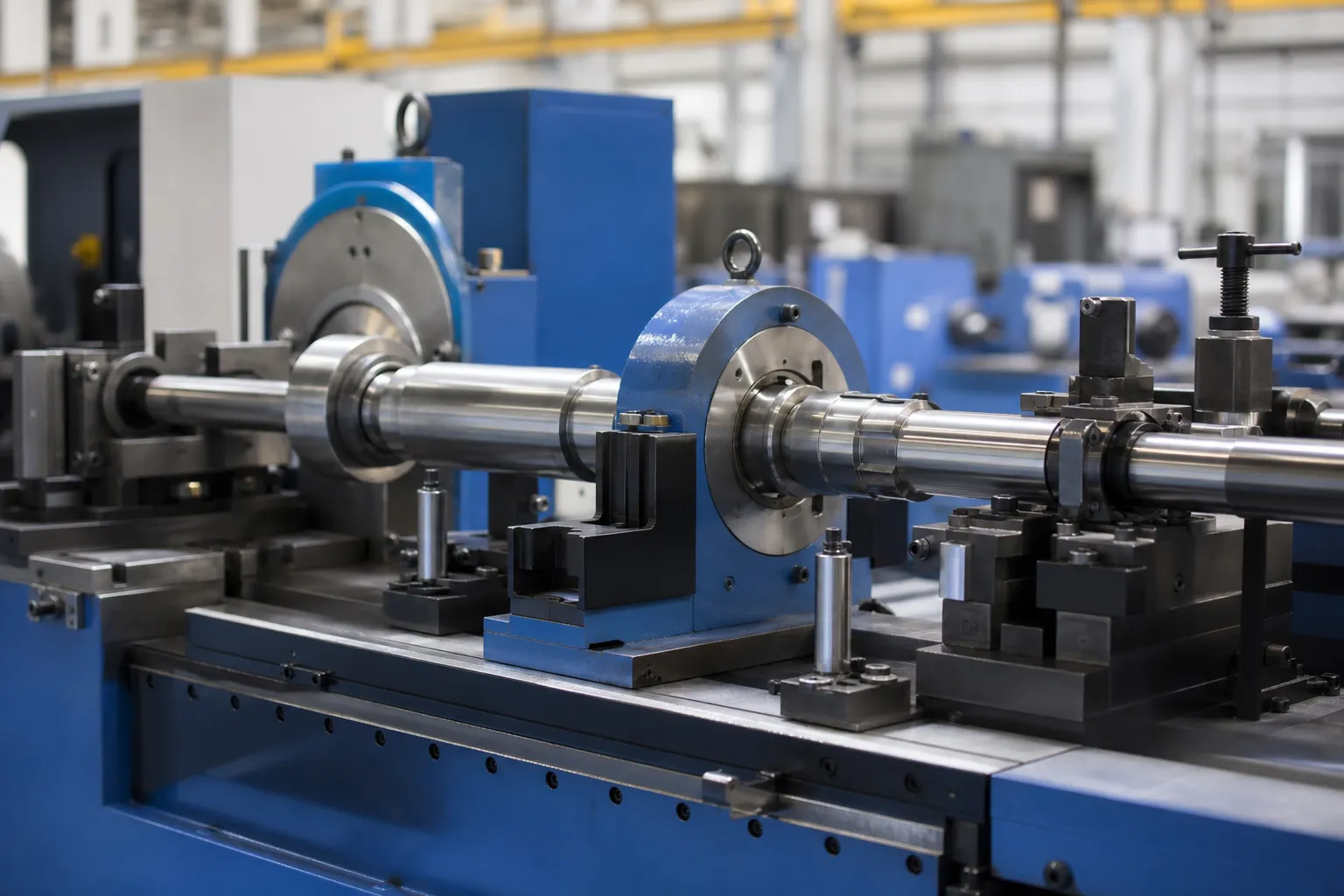
*Illustration des technischen Konzepts. Es zeigt eine mögliche Produktionszelle, kein installiertes automatisches Sortiersystem oder eine definierte Fehlererkennungsfähigkeit.*
Definieren Sie die Dispositionszustände
Zumindest, PASS unterscheiden, GENUG, nacharbeitsfähig, Stopp/Halten und technische/Qualitätsprüfung. Die Definitionen müssen auf die kontrollierte Zeichnung verweisen, Messmethode, Prozesszustand und Freigabeberechtigung. Ein Prozessalarm ist nicht automatisch eine Ablehnung; Es kann sich um ein Eskalationssignal handeln, das einer Überprüfung bedarf.
| Zustand | Erforderliche Definition |
|---|---|
| PASSIEREN | Erfüllt die vereinbarte Freigabeanforderung mit den erforderlichen Aufzeichnungen |
| GENUG | Erfüllt die definierte Anforderung nicht oder weist eine bestätigte Nichtkonformität auf |
| Nacharbeitsfähig | Erfüllt die dokumentierten Bedingungen für einen weiteren genehmigten Versuch |
| Stoppen / halten | Erfordert eine Einrichtung, Prozesssignal, Qualitäts- oder technische Prüfung vor der Weiterverarbeitung |
| Technische Überprüfung | Erfordert eine kontrollierte Entscheidung außerhalb der normalen automatischen Route |
Halten Sie Setup-Probleme von der Nichtkonformität von Teilen getrennt
Bevor ein Teil als NIO weitergeleitet wird, Überlegen Sie, ob das Signal von der Bezugspunkteinstellung herrühren könnte, Vorrichtungsvariation, Sensorzustand, Teilidentität, falsches Rezept oder ein nicht genehmigter Support-Status. Das Verfahren sollte die zulässigen Reinigungs-/Neueinsetzungs-/Wiederholungsprüfungen definieren und unbegrenzte Wiederholungsversuche verhindern.
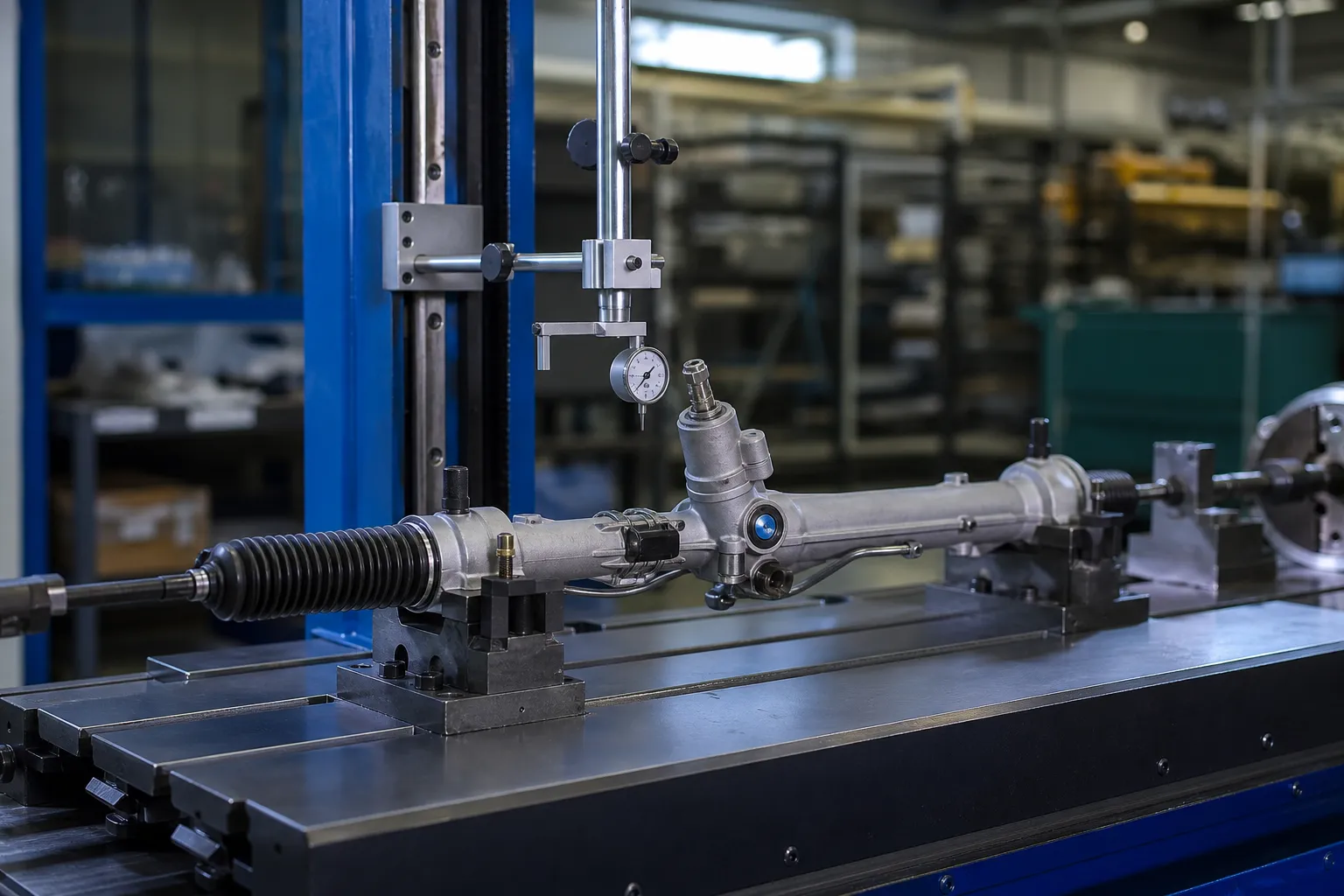
*Illustration des technischen Konzepts. Es stellt einen Messentscheidungspunkt dar, kein Nachweis einer automatischen Klassifizierung oder einer bestimmten Alarmregel.*
Sehen Wiederholgenauigkeit der Vorrichtung und Bezugspunkteinstellung Und Risserkennung beim automatischen Richten für die Trennung zwischen einem Signal und seiner nachgewiesenen Ursache.
Legen Sie vor der ersten Korrektur ein Nacharbeitslimit fest
Nacharbeiten sollten eine genehmigte Route mit einer definierten maximalen Anzahl von Versuchen sein, zulässige Kontakt-/Supportbedingungen, Nachmessungspflicht, Oberflächen-/Merkmalsprüfungen und Berechtigung zum Fortfahren oder Anhalten. Der Grenzwert ist keine universelle Zahl; es kommt auf das Material an, Prozessstufe, Funktionsrisiko, Kundenanforderungen und validierte Reaktion. Wenn ein Teil nicht wie erwartet reagiert, Die geeignete Maßnahme könnte eher Halten oder Zurückweisen als zusätzliche Gewalt sein.
Why Unlimited Retries Corrupt the Line
Allowing a line to re-correct a part until the gauge finally passes feels productive and quietly destroys two things. The first is the part itself: every plastic bending cycle consumes a share of the section’s low-cycle fatigue life, and the reverse-loading behavior described for reverse loading in straightening means later cycles move the material more per unit force than earlier ones did. A part that reaches tolerance on its sixth attempt is not equivalent to one that reached it on the first, even though both read PASS.
The second casualty is the line’s own information. When retries are unlimited, the gauge sees only eventual outcomes: parts that converge, slowly, under repeated force. A drifting correction setup, a worn anvil, a bad lot of stock and a genuinely struggling part family all produce the same visible symptom — more attempts per part — and none of them generates a stop condition. The retry count is one of the cheapest and most informative process signals a straightening line produces, and it only exists as data if the line is required to stop and route the part at a defined limit instead of looping.
Thinking of the Rework Limit as a Budget
A more useful mental model than “three strikes” is a budget of deformation that each part may spend. The budget is set by the material’s condition and the consequence of failure in service, and it is spent by every correction stroke — forward or reverse. A hardened safety-critical shaft and a soft structural bar may carry very different budgets, which is why no universal rework number is defensible and why the limit belongs to the part family’s validated process, reviewed by quality. The same budget concept explains a rule that otherwise looks arbitrary: a part that has consumed its budget and still fails is rejected even though one more attempt might conceivably pass, because the part that would emerge is no longer the part the drawing specifies in any meaningful sense.
Budgets also need edges. Two conditions that stop rework regardless of remaining attempts are no-progress — corrections that stop changing the geometry, indicating the process is no longer engaging the error — and overshoot oscillation, where each attempt moves the part from one side of tolerance to the other. Both are stop signals, not tuning opportunities, and both feed the integrity-review concerns that repeated plastic cycling raises.
Sorgen Sie für Isolation und Rückverfolgbarkeit
Bei jeder Verfügung muss die Teile-/Losidentität gewahrt bleiben, Zeichnungs-/Rezeptversion, Messbedingung, Korrekturversuche, Ergebnis, Bediener-/Automatisierungsereignis, Zeit, Überprüfungsentscheidung und physischer Standort. Durch die Isolierung muss verhindert werden, dass ein zurückgehaltener oder NOK-Teil ohne ausdrückliche Genehmigung in den PASS-Fluss zurückkehrt.
*Illustration des technischen Konzepts. Der Schwerpunkt liegt auf der Überprüfung des freigegebenen Zustands und der aufgezeichneten Verfügung, kein Versprechen einer DMC/MES-Schnittstelle oder eines automatischen Sortierers.*
Designing Segregation That Cannot Be Defeated
Disposition states only work if the physical line enforces them. The failure mode is always the same: a held or NOK part re-enters the good flow during a busy shift, through an operator judgment call, a shared conveyor or an unlabeled tote. Effective segregation design follows mistake-proofing logic rather than instruction signs. Good and rejected parts take different physical paths with no shared section where a part can be redirected by hand. Hold locations lock or require an access step that itself creates a record. Labels and bins are part-specific, not generic scrap tags, so a held-for-review part cannot decay into anonymous scrap or anonymous stock. Where volume justifies it, diverters and gates make the routing decision the machine’s, not the operator’s — the automation boundary discussed in manual versus automatic straightening applies to disposition as much as to correction.
The record side has the same anti-defeat requirement. A disposition that lives only in an operator’s memory, or in a spreadsheet anyone may edit, does not survive an audit or a containment event. The minimum durable record is the tuple — part identity, viel, drawing and recipe version, Messbedingung, attempt count, Ergebnis, decision, decision-maker, time — retained long enough to answer the customer question that eventually comes: which parts from that week, from that machine, from that shift.
What the Disposition Data Buys Later
A line that routes honestly accumulates, as a by-product, the dataset that every improvement program wishes it had. Attempt-count trends flag tooling wear and setup drift while they are still cheap to fix. Lot-to-lot shifts in incoming geometry point upstream to suppliers with evidence instead of complaints. The ratio of setup-issue holds to true part nonconformances measures how much of the line’s apparent quality problem is actually its measurement and fixturing — information directly relevant to planning a Messgerät R&R-Studie. And when a customer raises a field concern, traceability converts a week of panic into an afternoon of records. None of that value survives a culture of retry-until-pass; all of it is the natural dividend of the routing discipline described here.
Erstellen Sie eine Verifizierungs- und Eskalationsroute
- Identifizieren Sie das Teil, viel, Zeichnung und Rezept;
- Überprüfen Sie die Mess-/Bezugseinstellung im Rahmen der genehmigten Prüfungen;
- Erfassen Sie die Lesung, Prozessstatus und etwaige Warnungen;
- Wenden Sie nur die zulässige Nacharbeitsroute an, wenn die Berechtigung bestätigt ist;
- Freigabe und erneute Messung unter den vereinbarten Bedingungen;
- Route PASS, GENUG, Hold oder technische Überprüfung;
- die Rückverfolgbarkeit und physische Trennung gewährleisten;
- Verwenden Sie wiederkehrende Muster, um eine Prozess- oder Qualitätsüberprüfung auszulösen.
Für die benötigte Beweisarchitektur, sehen Richtmusterprüfung und Abnahme Und Gage R&R zum Begradigen von Linien.
No-Progress- und Correction-Limit-Gates
Der genaue Satz Begradigungskorrekturlimit, kein Fortschrittstor ist in SERP medizinisch verunreinigt, Daher lebt die kanonische No-Progress-Logik auf der NOK-Sortierungs- und Nacharbeitsbegrenzungsseite. Definieren Sie maximale Korrekturzyklen, force/stroke ceilings and mandatory stop/sort actions before production release.
FAQ
Bedeutet NOK immer Schrott??
NEIN. Ein NOK-Zustand kann eine Überprüfung erfordern, kontrollierte Nacharbeit, technische Überprüfung oder endgültige Ablehnung, je nach genehmigtem Qualitätsweg.
Kann eine Zeile wiederholt werden, bis der Lesevorgang abgeschlossen ist??
NEIN. Nacharbeiten erfordern eine definierte maximale Versuchsgrenze und Qualitätsautorität. Unbegrenzte Wiederholungen können ein Prozess- oder Messproblem verschleiern.
Bedeutet dieser Artikel, dass die Linie über eine automatische Sortierung verfügt??
NEIN. Es handelt sich um ein Routing-Framework. Tatsächliche Sortierung, Rückverfolgbarkeit und Schnittstellenfunktionen bedürfen einer gesonderten Prüfung.
Why does the attempt count matter more than the final reading?
Because the final reading describes where the part ended, while the attempt count describes what it cost to get there. Two parts reading identical PASS values are not equivalent if one took a single correction and the other took a full budget of repeated cycles. The attempt count is also the line’s earliest drift alarm — a setup, tooling or material change usually shows up as more attempts per part long before it shows up as rejects.
Should rework limits differ between part families?
Ja. The limit is a deformation budget set by material condition, feature risk and service consequence, so a hardened safety-critical shaft and a soft structural bar justify different numbers. The limit belongs to each family’s validated process with quality approval, not to the line as a single setting.
What is the minimum physical segregation a small line needs?
Separate paths or lockable, labeled, part-specific containers for PASS, hold and NOK — arranged so a held part cannot return to the good flow without a recorded, authorized step. The design principle is that doing the wrong thing must require effort, not just discipline. Escalate to machine-controlled diverters when volume or staffing makes human routing unreliable.
Sorting decisions are also capacity decisions – Die manueller vs. automatischer Vergleich und die ROI-Koffer für automatisches Richten both price the NOK stream a manual line tends to hide.