
Caurules ovitāte un viduslīnijas taisnums ir dažādi ģeometriski apstākļi. Ovalitāte attiecas uz šķērsgriezuma formu; viduslīnijas taisnums attiecas uz caurules ceļu visā tās garumā. Caurulei var būt pieņemama viduslīnijas ģeometrija, bet vienā stacijā tā var būt neapaļa, vai arī tas var būt apaļš katrā izmērītajā daļā, kamēr tā viduslīnija liecas pāri garam laidumam. Uzskatot šos nosacījumus par vienu “taisnuma” vērtību, var tikt pieņemts nepareizs procesa lēmums.
Šī rokasgrāmata ir mērīšanas un pieņemšanas sistēma. Tas nepretendē uz StraighteningTech cauruļu klāstu, sienas spēja, mērierīce, sensors, pielaide vai apstiprināts korekcijas process. Galīgajām prasībām jānāk no kontrolētā rasējuma, standartmetode un reprezentatīvie paraugi.

*Inženierzinātņu koncepcijas ilustrācija. Tas attēlo cauruļu iztaisnošanas procesa kontekstu, nav pierādījums tam, ka var apstrādāt konkrētu cauruļu saimi vai sienas stāvokli.*
Define Each Characteristic Before Measuring Either
Ovality is a per-station property: every measured cross-section has its own value, and a tube inspected at twelve stations has twelve ovality values that can differ. Centerline straightness is a whole-length property: it is derived from the path traced by the successive centers of those cross-sections. The two characteristics do not merely describe different defects — they live at different levels of the measurement chain, and the higher level is computed from the lower one.
That dependency is the hidden coupling. A centerline is not measured directly; it is computed, station by station, from sections that are never perfectly round. Whichever rule converts a measured section into a single center point — the average of two diameters, mazāko kvadrātu apļa centrs, minimālās zonas apļa centrs, vai centrs, uz kuru notiek divu punktu mērierīce, — kļūst par daļu no taisnuma definīcijas. Tāpēc divas pārbaudes metodes var nesakrist par vienas un tās pašas fiziskās caurules viduslīniju, lai gan katra no tām ir iekšēji konsekventa, jo tajos ir iegulti dažādi centra atrašanas noteikumi.
Pieņemšanas dokumentos jānorāda, katrai īpašībai: formula (uz diametru balstīta ovitāte, uz radiālām novirzēm balstīta ovitāte, vai pilna formas pielaide), centra atrašanas noteikums, kas nodrošina viduslīnijas aprēķinu, un stacijas komplekts, uz kuru attiecas katra vērtība. Vientuļa “taisnums OK” ieraksts, kurā nav norādīts, kuri noteikumi ir izstrādāti, nav nododams starp piegādātāja un klienta mērierīcēm.
Izmēriet šķērsgriezumu un garuma ģeometriju ar atbilstošiem balstiem
Atbalsta pozīcijas var ietekmēt šķietamo viduslīniju, izmantojot noliekšanos; iespīlēšana var ietekmēt plānsienu daļu; zondes kontakts var ietekmēt virsmas vai sienas reakciju. Tāpēc procedūrā būtu jādefinē nosacījumi katram raksturlielumam un vajadzības gadījumā jāatkārto/atkārtotas pārbaudes.
| Mērījumu kontrole | Kāpēc tas ir svarīgi |
|---|---|
| Šķērsgriezuma stacija un orientācija | Ovalitāte var atšķirties visā garumā un ap apkārtmēru |
| Gareniskais laidums un balsti | Viduslīnijas rādījumi var ietvert gravitācijas un stiprinājuma efektus |
| Datum un beigu nosacījums | Nosaka, vai rezultāts attiecas uz paredzēto funkciju |
| Kontakta vai optiskā metode | Var ieviest dažādas virsmas, piekļuves un nenoteiktības robežas |
| Atbrīvots stāvoklis | Novērš pagaidu ierobežojumu uzrādīšanu kā galīgo ģeometriju |
Atbalsta atstarpes filtrē viduslīnijas signālu
Uz izmērīta laiduma, supports act as a mechanical filter for the centerline reading: bending content with a wavelength shorter than the support spacing is partially suppressed by the stiffened sections, while longer-wavelength bow passes into the reading. The same tube can therefore report different bow on a short fixture span than on a long one without either reading being wrong. The support span is not a setup convenience — it is part of the straightness definition, and it must match, or be explicitly correlated to, the span used by the customer gauge.
Station spacing plays the analogous role in the sampling domain. Widely spaced stations under-sample the centerline path and can miss a local kink between stations; very dense stations begin to mix surface and wall-thickness variation into the computed axis. The sampling plan should state where stations sit — not only how many — because the informative stations are the support points, the clamping points, the tube ends and the neighborhoods of expected bend peaks.
On thin-wall tubes the supports carry a second, unwanted effect: support reaction can ovalize the section locally, so the ovality measured at a support station includes a measurement-induced contribution. Comparing readings at supported stations against readings taken just outside the support influence is a cheap check for this; where the difference is significant, the ovality acceptance must be evaluated at defined free stations. For the loaded-versus-released distinction in final acceptance, skat noslogotā un atbrīvotā taisnuma mērījums.
Nelabojiet vienu kļūdu un pieņemiet, ka otra ir atrisināta
Korekcijas process, kas paredzēts priekšgala samazināšanai, var mainīt ovālu vai sienas stāvokli. Process, kas paredzēts sekcijas formas uzlabošanai, var nenoteikt viduslīnijas taisnumu. Parauga plānā ir jādefinē, kura ģeometrija tiek kontrolēta, kuri sekundārie raksturlielumi tiek pārbaudīti, kur ir atļauts sazināties un kad ir nepieciešams neatkarīgs process.
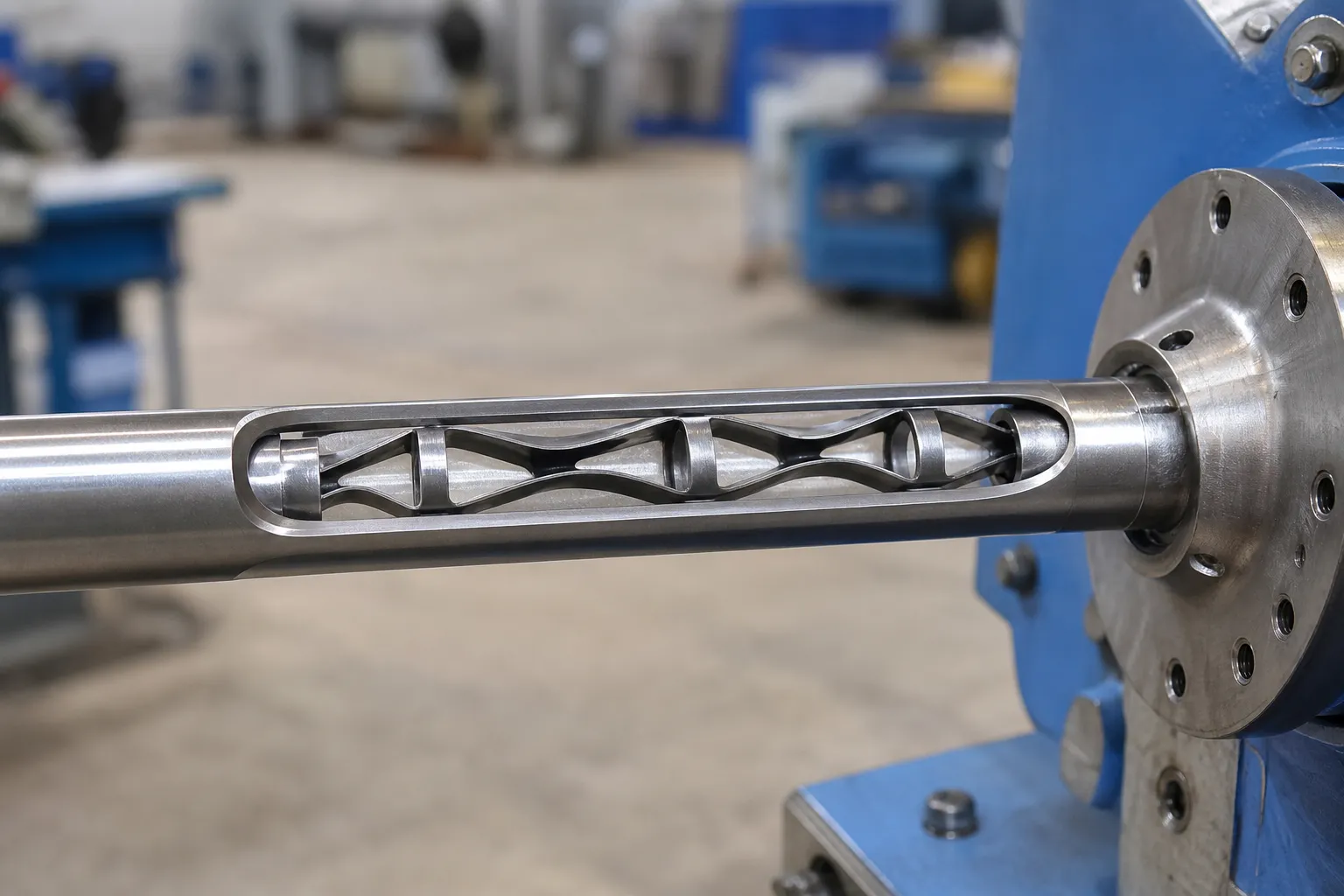
*Inženierzinātņu koncepcijas ilustrācija. Tajā iekšējais atbalsts tiek piedāvāts kā inženierzinātņu kandidāta jautājums; tas neapgalvo, ka iekšējie instrumenti ir standarta vai piemēroti katrai caurulei.*
Neapaļām dobām sekcijām, see square and rectangular tube straightening. Dobām rotējošām daļām, skat plānsienu dobās vārpstas iztaisnošana.
Separate the Two Signals Before Accepting Either Reading
The two characteristics contaminate each other's measurements in specific, diagnosable ways. In a rotating single-probe trace at one station, the radial signal contains at least the local form error of the section and the offset of the section center from the rotation axis. Ovality-dominated form error appears primarily as a second harmonic — the trace repeats twice per revolution, with the ovality major axis setting the phase. A center offset appears as a first harmonic — one bump per revolution. Within a single trace the two are separable in principle, but the first harmonic itself is ambiguous: a genuine bend and a seating or chucking offset produce the same single-station signature. The discriminators live outside the single trace. Across stations, a bend changes amplitude with longitudinal position and follows the bend plane, while a seating offset keeps a constant amplitude and a phase locked to the rotation axis. That multi-station logic, together with the harmonic fingerprints of lobing and datum effects, is developed in apaļums pret līkumu rotējošā mērījumā.
The contamination also runs the other way. A probe scanned along the tube reads the local surface, nevis ass: a tube that is straight on its centerline but drifting in ovality orientation along its length produces a lengthwise trace that looks like bow. A practical two-scan check costs little: scan the length in one direction, then in the orthogonal direction — by rotating the tube ninety degrees against the same probe, or by using a second probe at right angles. Compare the two traces. A centerline bow decomposes into the two directions as projections of one vector: the two traces are similar in shape and same in sign, each a scaled copy of the other. Section form does the opposite: where the ovality major axis lies in the first scan direction it lies across it in the second, so a peak in one trace corresponds to a valley in the other. Traces that are same-shape-same-sign nominate a bend; traces that are opposite-sign at particular stations nominate form and wall variation. Only the first category should go to a correction decision.
Wall-thickness eccentricity adds a third layer on drawn or rolled tube: the outside surface and the bore are not concentric, so a centerline computed from outside-diameter measurements and one computed from bore measurements will not coincide. Neither is wrong; they answer different functional questions. Which one governs acceptance must follow the function of the part in its assembly — and the drawing, not whichever gauge happens to be available, defines it. Thin-wall behavior during correction has its own failure modes, aptverts plānsienu cauruļu iztaisnošana bez sabrukšanas.
Izveidojiet klienta un mērierīces korelācijas plānu
Izmēģinājumā jāizmanto reprezentatīvas parastās un sliktākā gadījuma caurules, neapstrādāti rādījumi abiem raksturlielumiem, saskaņoti atbalsta un atbrīvošanas nosacījumi, atkārtot iestatīšanu, virsmas/sienu pārbaudes, un salīdzinājums ar klientu mērītāju. Ierakstā jānorāda, vai nolasījums ir mašīnas procesa vērtība, klienta akcepta vērtība vai korelēts rezultāts.
Izmantot mašīnas mērierīces pret klienta gabarītu korelāciju un iztaisnošanas parauga pārbaude un pieņemšana lai definētu pierādījumu paketi.
Run Two Separate Acceptance Chains, Not One
Because the definitions, supports and failure modes differ, ovality and centerline straightness each need their own chain from drawing language to signed record. Collapsing both into one generic “geometry OK” leaves every link below ambiguous:
| Chain link | Ovality chain | Centerline chain |
|---|---|---|
| Characteristic and formula | Which deviation rule, applied per station | Which span governs, and which center-finding rule feeds the path |
| Atsauces metode | Posmu mērīšana noteiktās stacijās | Skenēšana gareniski vai rotējoša trase uz noteiktiem balstiem |
| Atbalstīt un atbrīvot | Bezmaksas stacijas, kas atšķiras no atbalstītajām stacijām | Laipums definēts; sagāšanās un saspiešanas efekti ir risināti vai saistīti |
| Paraugu ņemšana | Staciju pozīcijas noteiktas specifikācijā, nevis ērtības dēļ | Staciju atstatums ir pietiekami īss, lai atrisinātu īsāko paredzamo līkumu |
| Mērinstrumentu spēja | Atkārtojamība ir pierādīta pret formas izmaiņām daļās | Atkārtojamība ir pierādīta pret daļu līdz detaļu un iestatījumu variācijām |
| Korelācija | Mašīnas gabarīts pret klientu gabarītu tajās pašās sekcijās | Mašīnas gabarīts pret klienta mērierīci vienā laidumā un balstos |
| Ieraksts | Katras stacijas vērtības ar noteikumu un stacijas identitāti | Ceļa rezultāts ar norādīto atbalsta diapazonu un filtrēšanu |
Katrs posms ir vieta, kur ķēde klusi pārtrauc. Nenoteikta formula veido divus mērierīces' skaitļi nesalīdzināmi. A support condition defined at the machine but not at the customer builds a systematic offset into every correlation attempt. An unspecified station set makes the verdict depend on where the operator happened to measure. And an unproven gauge capability converts measurement noise into apparent process drift, which the correction loop then chases. Validating the measurement system before trusting any of these numbers is covered in Gage R&R iztaisnošanas līnijām.
FAQ
Vai caurule var būt taisna, bet neapaļa?
Jā. Viduslīnijas taisnums un ovitāte ir dažādi apstākļi, un tiem ir nepieciešams atsevišķs mērījums. In practice the two belong in the same inspection record but under different characteristic numbers, each with its own formula, station set and gauge correlation.
Vai apaļais šķērsgriezums pierāda, ka caurule ir taisna visā garumā?
Nē. Caurule izmērītajās daļās var būt apaļa, kamēr tās viduslīnijai ir priekšgals vai slīpums. A lengthwise scan reads the surface rather than the axis, so the orthogonal two-scan comparison above is what keeps form effects out of the straightness verdict.
Vai korekcijas process var garantēt abus rezultātus?
Ne bez sagatavei raksturīgas validācijas. Procesam ir jāizmēra un jāpārbauda katrs zīmējumā prasītais raksturlielums. In particular, a process validated for bow says nothing about its effect on section form at contacts, supports and free stations — those need their own before-and-after readings.
How can we tell whether a straightness reading is contaminated by ovality?
Repeat the lengthwise scan in the orthogonal direction and compare the traces. Same shape and same sign across the two scans is the signature of a centerline bow; opposite sign at particular stations points to section form or wall variation. Rotating single-station traces add a second test: a bend changes amplitude between stations, while a seating offset does not.
Does ovality need to be measured at every cross-section?
Only the specification can answer that. Pieņemšanas plānam ir jāgarantē, ka stacijas komplekts ir iepriekš fiksēts, parasti ietverot balstus, skavas, galos un līkumu virsotņu apkārtnes — tāpēc spriedums nav atkarīgs no tā, kur operators gadījās pārbaudīt.

*Inženierzinātņu koncepcijas ilustrācija.*