
Every automatic straightening machine purchase eventually has to survive the same meeting: the finance meeting. Engineering is convinced, quality is convinced, but the capital request needs a number — what does this machine save, what does it earn back, and when?
The honest answer is that nobody can hand you that number from outside your company. It depends on your volumes, your labor rates, your current scrap and rework, and your quality costs. What we can do — and what this article does — is give you the calculation framework: which cost positions move when you replace manual straightening with an automatic machine, how to structure the comparison, and which benefits are easy to quantify and which quietly dominate the result anyway.
Why the Purchase Price Is the Wrong Starting Point
The machine invoice is one line in a much larger picture. An automatic straightening cell changes the cost structure of an entire operation:
- Labor content per part drops — often substantially — because one operator supervises a cell instead of pressing each part by hand.
- Scrap and rework fall as correction becomes measured and repeatable instead of skill-dependent.
- Throughput stabilizes, which releases capacity elsewhere in the line.
- Quality data appears — every part’s cycle, measurements and results are logged — which changes what you can promise customers and auditors.
A framework that only compares the machine price against saved wages will systematically undervalue automation, because wages are merely the most visible of the moving pieces.
Side One of the Ledger: What Manual Straightening Really Costs
Before any comparison, you have to know your current cost baseline honestly. Manual straightening costs are usually understated because they hide in overhead positions:
- Direct labor: operator hours multiplied by fully loaded rate (wage, social costs, floor space, supervision). If straightening is a bottleneck, count the hours of everyone who waits on it.
- Skill dependency: manual straightening quality depends on operator experience. That skill takes time to build, varies across shifts, and leaves the company when the operator does.
- Rework loop: parts that miss tolerance go around again — re-measure, re-press, re-check. Each loop consumes machine time, labor and material ductility (a point our article on over-straightening and cracking treats in depth).
- Scrap: parts that cannot be rescued within the material’s correction limits.
- Downstream quality costs: the cost of a straightness escape — warranty, ordinamento, customer complaint, expedited replacement.
- Measurement and documentation labor: recording results, transcribing readings, preparing quality records by hand.
The last three positions are where manual operations are most commonly under-measured. If you do not track rework loops and quality escapes today, your baseline is optimistic — and your ROI case will understate the benefit.
Side Two: What the Automatic Cell Changes
Labor structure
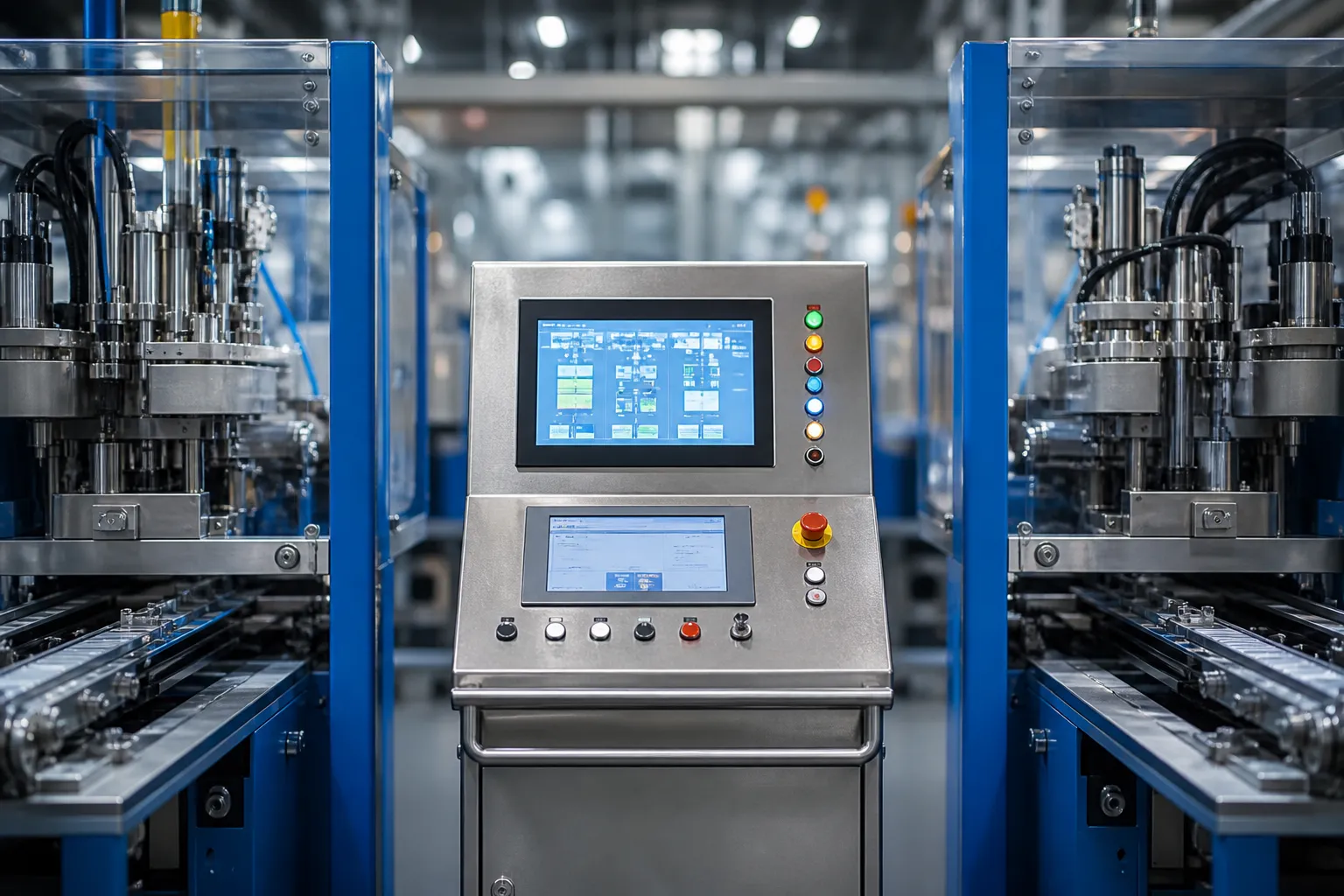
The operator role shifts from performing corrections to supervising, loading and verifying. Whether that converts to savings depends on volume: at low volumes, an automatic machine may simply be underutilized; at high volumes, one operator per several cells changes labor cost per part by an order of magnitude.
Rework rate
Closed-loop correction — measure, calculate stroke, premere, re-measure, iterate — converges on tolerance more consistently than manual skill does. The rework loop shrinks from “common” A “exception”, and the exceptions are recorded, which lets you attack their root causes. The structural difference between the two operating modes is covered in our comparison of manual vs automatic straightening machines.
Cycle time and takt
Automatic cycles are fast and, more importantly, consistent. Consistent takt integrates with downstream automation, removes buffers and stabilizes delivery promises. In ROI terms, throughput reliability often matters more than raw speed.
Quality cost
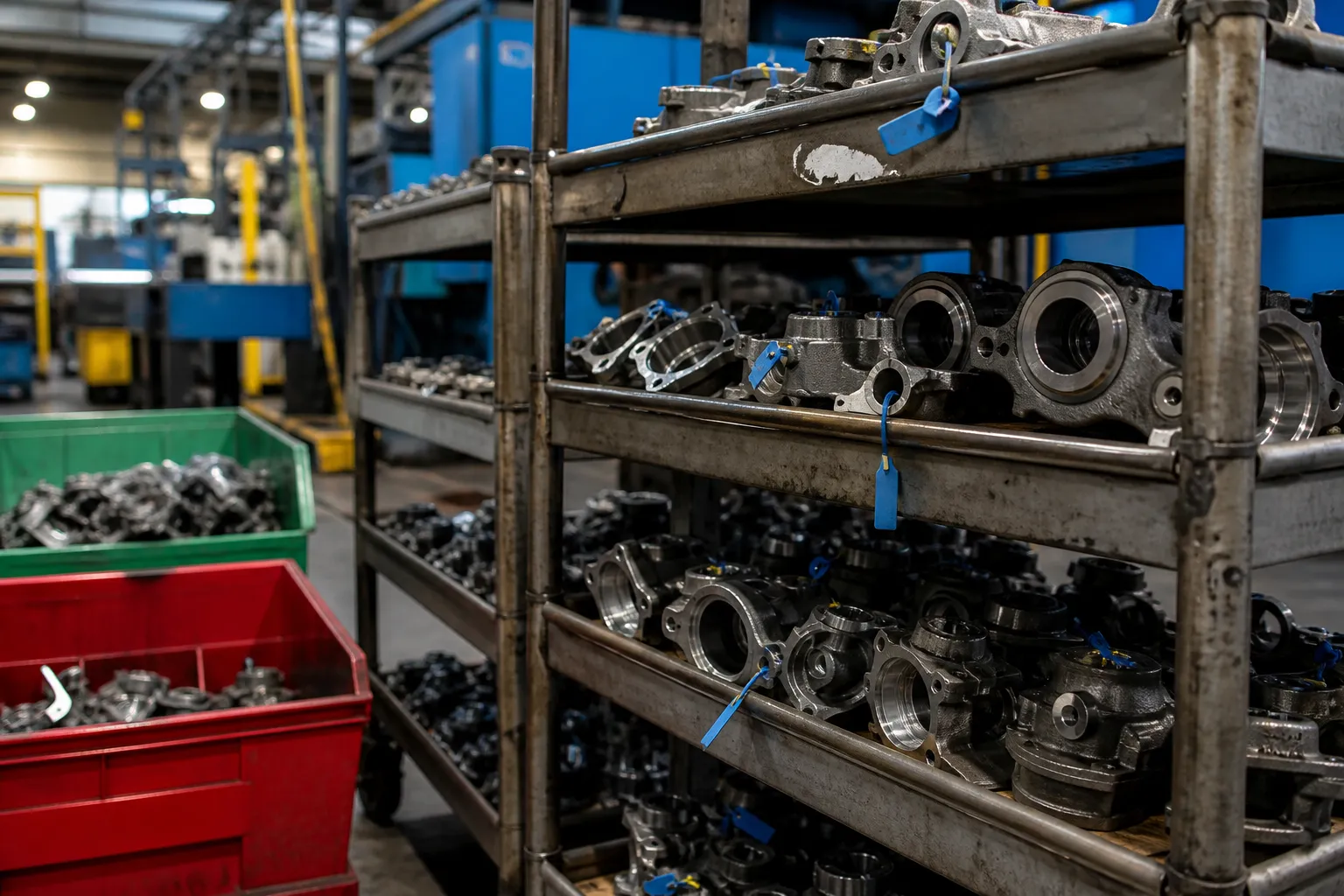
Every part measured and corrected by a documented, data-logged process is a part you can trace. That reduces escapes, simplifies audits, and in some industries is a condition of doing business at all. Quantifying “avoided escapes” is uncomfortable because it is probabilistic — but the expected-cost method below handles it honestly.
Disposition discipline
An automatic line enforces your acceptance rules: OK parts pass, NOK parts are sorted, rework limits are respected instead of negotiated at the press. The design of those rules matters and is covered in NOK sorting and rework limits in a straightening line.
The Calculation Framework, Step by Step
Here is a structure you can populate with your own numbers. No invented values — just the arithmetic skeleton.
Fare un passo 1: Total investment
Add everything it takes to reach production, not the machine invoice alone: machine and tooling per part family, freight and installation, measurement and acceptance testing, formazione, and integration to your line. (How machine configuration drives these costs is covered in our article How Much Does a Straightening Machine Cost? — the six cost drivers there are exactly the line items to collect here.)
Fare un passo 2: Annual operating cost delta
For both the current and the future state, list: direct labor hours × loaded rate; consumables and tooling wear; manutenzione; energy; and calibration/metrology costs. The delta between the two states is the net operating cost change. It can be negative (automatic cells usually add maintenance and calibration while removing labor).
Fare un passo 3: Annual quality and throughput effects
Four quantifiable positions:
- Scrap reduction = (current scrap rate − expected rate) × annual volume × part cost.
- Rework reduction = avoided rework loops × average loop cost (lavoro + machine time).
- Capacity release = throughput gain valued either as new revenue contribution or as deferred investment in another machine.
- Quality-escape avoidance = expected-cost method: escape probability × cost per escape. Estimate the probability from your complaint history; be conservative and say so.
Fare un passo 4: Payback and return
Payback period = total investment ÷ (annual operating savings + annual quality/throughput effects). Return metrics follow the same inputs. Present the result as a range — optimistic, expected, conservative — based on the assumptions you are least sure about (usually expected scrap and rework rates on the new machine, which the supplier should be able to bound during acceptance testing).
Presentation: Making the Case Survive Scrutiny
A technically correct model can still fail in committee. Three presentation practices make straightening ROI cases credible:
- Show the baseline data, not just the delta. Attach the measured rework loops, scrap rates and labor hours behind the “current state” column. The most common objection — “your savings are invented” — dissolves when the current-state numbers come from the plant’s own records.
- Separate verified from assumed. Values confirmed by acceptance testing or supplier process data are one category; estimates are another. Label them. A model that admits its assumptions is trusted; one that hides them is discounted wholesale.
- Include the sensitivity table. Payback at optimistic, expected and conservative scrap and rework rates tells the committee what the risk actually is — and usually shows that even the conservative case clears the hurdle.
Framing matters too: an automatic straightening cell is not only a cost-reduction project. In many plants it is a capability project — the enabler for tighter tolerances, higher volumes, or new contracts that the manual process cannot support. Cost-reduction projects compete against every other savings idea in the company; capability projects compete against the alternative of not winning the business at all.
Benefits That Won’t Fit in the Spreadsheet
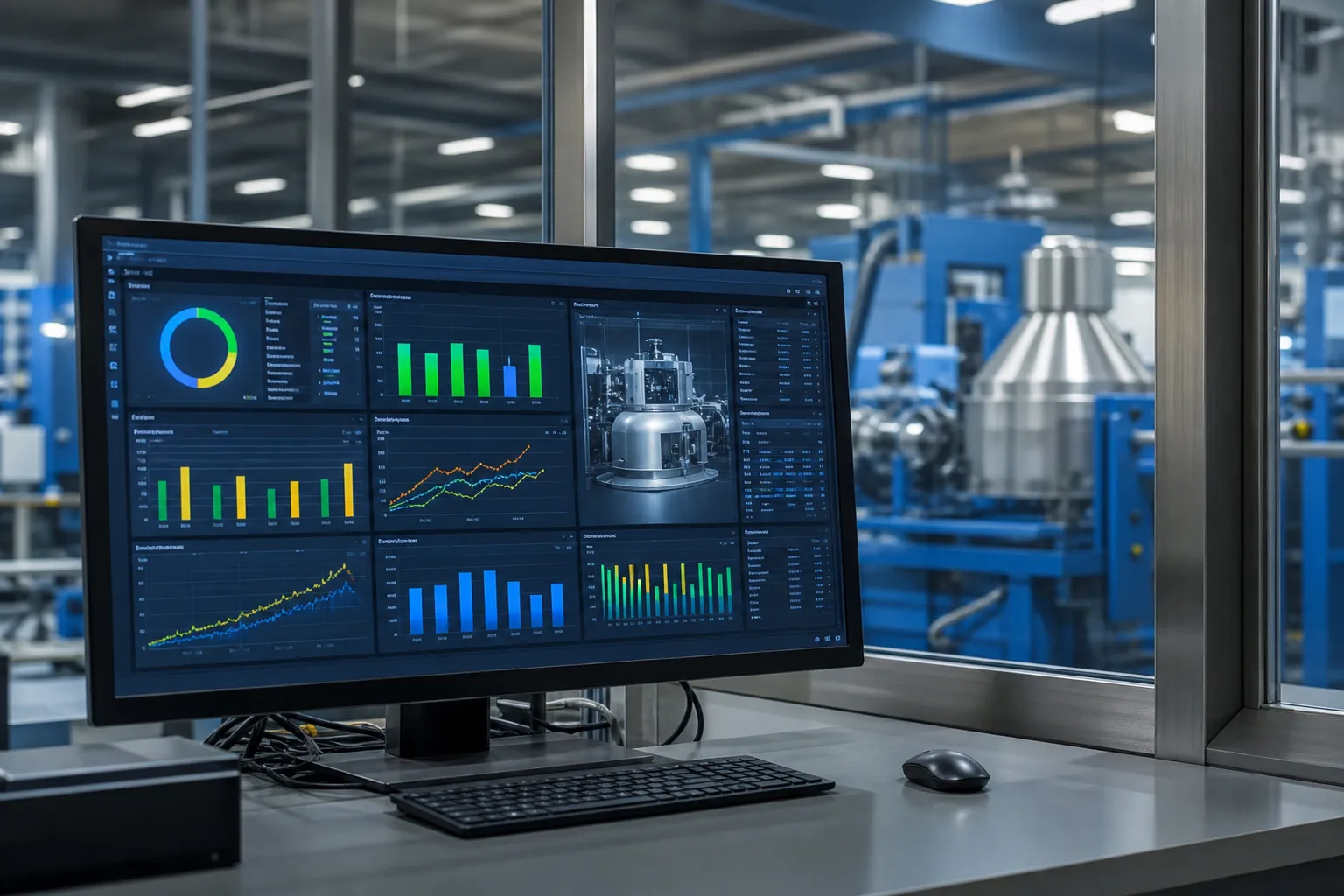
Three effects are routinely excluded from ROI models because they are hard to quantify, and routinely cited later as the real reasons the investment was right:
- Prova di capacità. Cpk values per part number, generated automatically, change what you can bid on. Some contracts are simply not winnable without documented capability.
- Process transparency. When incoming distortion creeps up — a dying die, a drifting heat treatment batch — the machine’s data shows it before scrap does. That is a loss-prevention capability, not a cost-saving line item.
- Operator independence. Removing the dependency on one or two skilled straightening specialists removes a real business risk that never appears in any spreadsheet.
Mention them in the capital request as qualitative benefits. They will not carry the ROI number, but they decide how the committee reads it.
A Sanity Checklist Before You Present the Case
- Is the baseline honest — rework loops and escapes measured, not estimated generously?
- Are volumes realistic over the machine’s life, including ramp-down of legacy parts?
- Is the part spectrum broad enough that the machine stays utilized — or should flexibility be part of the configuration?
- Has the acceptance test been budgeted — with real parts, real gauges, defined records — so the promised rates are verified before payment milestones close? Our FAT checklist is the reference.
- Has the alternative been considered honestly? Sometimes upgrading an existing machine is the better economics — the decision logic is in retrofit vs replace.
When the ROI Case Says No
The framework cuts both ways, and a credible analysis has to be willing to conclude that automation is not the right investment yet:
- Volume does not support it. Low-volume, high-variety straightening with skilled operators may be better served by an excellent manual or semi-automatic setup — the labor savings are real but small, while the machine sits idle.
- The bottleneck is elsewhere. If straightening is not the constraint, automating it improves a number nobody is waiting on. Fix the constraint first.
- The part spectrum is unstable. If the parts the machine would run are expected to sunset within the payback period, the investment window does not close. In that case a used machine, a retrofit of existing equipment, or outsourcing the operation may dominate — the alternatives are analyzed in retrofit vs replace.
- Quality costs are already controlled. If scrap and escapes are genuinely negligible in the current process, the quality-side savings positions shrink, and the case rests on labor alone — which may not carry it.
An ROI analysis that can only ever say yes is not an analysis; it is a justification. Presenting the conditions under which the investment would not pay back makes the positive case stronger, not weaker.
Key Takeaways
- The ROI case is a change in cost structure, not a machine price comparison: lavoro, rilavorazione, scrap, throughput and quality costs all move.
- Manual baselines are usually optimistic — measure rework loops and escapes before trusting any savings estimate.
- Use the four-position quality/throughput model (scrap, rilavorazione, capacità, expected escape cost) and present payback as a range with stated assumptions.
- Acceptance testing converts promised rates into verified numbers — budget it and make it contractual.
- Prova di capacità, process transparency and skill independence are unpriced benefits that often decide the investment’s real value.
If you want to populate this framework with real numbers, we will help: send us your part spectrum, tolerances, volumes and current scrap/rework situation, and we will work the calculation with you — including which configuration changes the numbers and which only changes the invoice.