
जब कोई वर्कपीस सुधार बल के अधीन होता है तो ली गई रीडिंग, दबाना बल, तनाव या कोई विशेष समर्थन स्थिति मूल्यवान प्रक्रिया जानकारी हो सकती है. यह स्वचालित रूप से अंतिम स्वीकृति परिणाम नहीं है. जब बाहरी ताकतें हटा दी जाती हैं, हिस्सा, समर्थन और माप प्रणाली स्प्रिंगबैक के माध्यम से अलग-अलग प्रतिक्रिया दे सकती है, एसएजी, बैठने की जगह में बदलाव या स्थिरता जारी करना. इसलिए स्वीकृति पद्धति में यह बताया जाना चाहिए कि कौन सी स्थिति निर्णय को नियंत्रित करती है.
यह आलेख एक इंजीनियरिंग स्वीकृति रूपरेखा प्रदान करता है. यह स्प्रिंगबैक मान नहीं बताता है, एक अनुमत विचलन, स्ट्रेटनिंगटेक माप क्षमता या गारंटीकृत परिणाम. नियंत्रित ड्राइंग और ग्राहक संदर्भ पद्धति आधिकारिक बनी हुई है.

*इंजीनियरिंग अवधारणा चित्रण. इसमें रिहाई के बाद निरीक्षण पर जोर दिया गया है; यह ग्राहक स्वीकृति रिपोर्ट या किसी विशिष्ट सीधे परिणाम का प्रमाण नहीं है।*
माप की स्थिति को नाम दें
रीडिंग की तुलना करने से पहले, दस्तावेज़ करें कि क्या भाग निःशुल्क है, का समर्थन किया, clamped, तनावग्रस्त, घूर्णन, दबाया, किसी रोक के विरुद्ध रखा गया या अन्यथा रोका गया. डाटाम को भी परिभाषित करें, समर्थन स्थान, अवधि, अभिविन्यास, गेज और गणना नियम. उस संदर्भ के बिना किसी संख्या की तुलना किसी ड्राइंग आवश्यकता या किसी अन्य निरीक्षण स्टेशन से विश्वसनीय रूप से नहीं की जा सकती.
| स्थिति | के लिए उपयोगी | के लिए अपने आप में पर्याप्त नहीं है |
|---|---|---|
| सुधार बल के तहत | प्रक्रिया प्रतिक्रिया और वृद्धिशील नियंत्रण | अंतिम ज्यामिति स्वीकृति |
| एक स्थिरता में जकड़ा हुआ | सेटअप दोहराव और प्रक्रिया में स्थिति | जब तक निर्दिष्ट न हो, नि:शुल्क/जारी भाग परिणाम |
| नियंत्रित अवधि पर समर्थित | लगातार मशीन माप | एक अलग ग्राहक-गेज समर्थन स्थिति |
| सहमत निरीक्षण पद्धति के तहत जारी किया गया | अंतिम निर्णय तब जब विनिर्देशन को इसकी आवश्यकता हो | प्रत्येक भावी लॉट या वैरिएंट के बारे में एक दावा |
The Mechanics Behind the Difference
Why does a part measure straighter under the press than after release? Three effects stack. पहला, elastic deflection: while correction force is applied, the section is elastically bent in addition to its permanent shape, so the gauge reads the sum of plastic geometry and elastic deflection. Remove the force and the elastic part of that reading disappears with it — the mechanics behind स्प्रिंगबैक मुआवजा in process control. दूसरा, प्रतिक्रिया ज्यामिति: supports and clamps carry reaction loads that change the part’s shape while it is held, and fixture compliance under those loads shifts the measured stations. तीसरा, बैठने की: clamping forces seat the part onto its datum features differently than free placement does, so the datum itself moves between conditions.
The sign of the combined effect is not always predictable — that is the trap. A machine reading under support can be higher or lower than the released value depending on which effect dominates, which is why no fixed correction offset between the two conditions survives contact with a real part family. The relationship has to be measured per family, per support condition, and revisited whenever the setup changes.
Gravity Is Part of the Reading
पतले हिस्सों पर, self-weight sag is not negligible — it is often the same order as the tolerance being controlled. A bar supported at its ends droops in the middle; the same bar supported at intermediate points droops less but tilts its ends. This gives the support layout a measurement role that is independent of its correction role: where the part sits while being read determines what the gauge sees, before any part geometry enters. Precision length metrology solved this decades ago for standards and line scales, and the same logic transfers: symmetric support at roughly 0.21 of the length from each end (the Airy points) minimizes end slope, while support near 0.22 of length (the Bessel points) minimizes mid-length sag for a uniform section. Production lines do not always need textbook elegance — they need consistency — but the underlying point is non-negotiable: the support condition is part of the measurement definition, and it must match between machine, local inspection and customer gauge or be explicitly correlated. The same reasoning governs rotating measurements, where support and seating effects enter the trace directly.
समझें कि रीडिंग क्यों बदल सकती है
सामग्री पुनर्प्राप्ति, समर्थन मामला, संपर्क रिलीज, स्थिरता लोचदार प्रतिक्रिया, बैठने की व्यवस्था में परिवर्तन, तापमान और माप पद्धति सभी प्रक्रियागत और अंतिम रीडिंग के बीच परिवर्तन में योगदान कर सकते हैं. अनुमान लगाने के बजाय कारण की जांच की जानी चाहिए. कम लोडेड रीडिंग का सीधा सा मतलब यह हो सकता है कि मशीन ने उस हिस्से को ऐसी स्थिति में पकड़ रखा है कि रिलीज होने के बाद वह इसे बरकरार नहीं रखेगा.
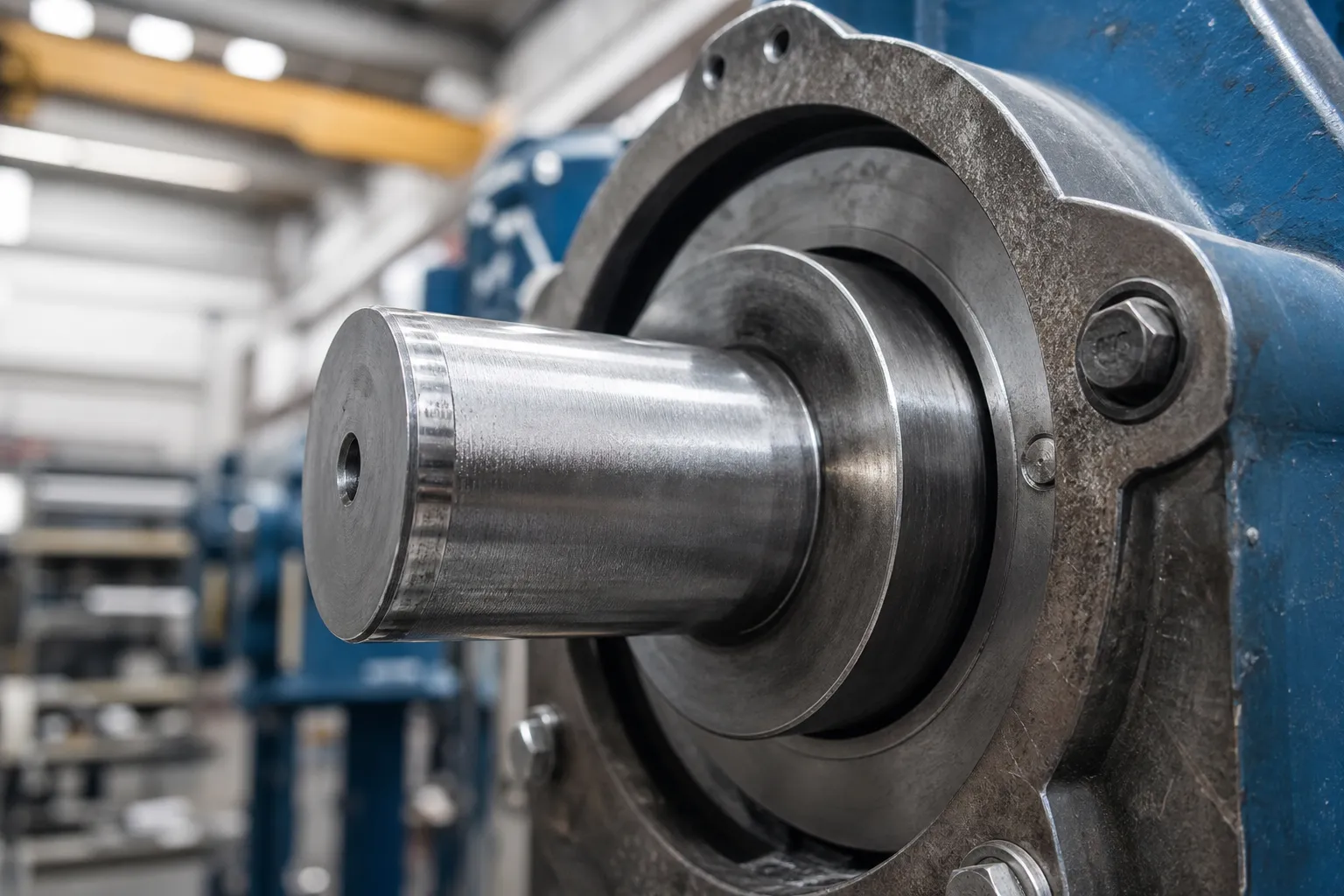
*इंजीनियरिंग अवधारणा चित्रण. यह एक रिलीज़-स्टेट सत्यापन चरण दिखाता है, एक सार्वभौमिक स्थिरता नहीं, सेंसर या स्वीकृति प्रक्रिया.*
डेटाम और सपोर्ट कंडीशन को एक साथ परिभाषित करें
एक ही वर्कपीस अलग-अलग बिंदुओं पर समर्थित होने पर या किसी फिक्स्चर में दोबारा स्थापित होने पर अलग-अलग ज्यामिति प्रस्तुत कर सकता है. समझौते में संदर्भ सुविधाओं की पहचान होनी चाहिए, अनुमत समर्थन, अक्षीय/घूर्णी स्थिति, गेज संपर्क और सटीक रिलीज़ स्थिति. जब मशीन और ग्राहक का गेज भिन्न हो, उनके रिश्ते को तुल्यता की धारणा के बजाय एक दस्तावेजी सहसंबंध अध्ययन की आवश्यकता है.
See machine gauge versus customer gauge correlation and फिक्सचर रिपीटेबिलिटी और डेटम सीटिंग संबंधित गुणवत्ता नियंत्रण के लिए.
रिलीज़ को बंद-लूप प्रक्रिया चरण के रूप में उपयोग करें
प्रक्रिया में निम्नलिखित अनुक्रम शामिल होना चाहिए:
- अनुमोदित भाग परिवार की पहचान करें, ड्राइंग पुनरीक्षण और माप विधि;
- निरीक्षण करें, निर्दिष्ट डेटाम/समर्थन व्यवस्था को साफ और लोड करें;
- प्रारंभिक रीडिंग और उसकी स्थिति को कैप्चर करें;
- कोई भी स्वीकृत वृद्धिशील सुधार लागू करें;
- सुधार बल हटाएँ, परिभाषित अनुसार क्लैंप और अस्थायी प्रतिबंध;
- सहमत प्रक्रिया के अनुसार ही प्रतीक्षा करें या स्थिर रहें;
- आवश्यक जारी स्थिति में पुनः माप;
- परिणाम रिकॉर्ड करें, दोबारा/रीसीट जांच और पास/एनओके/इंजीनियरिंग-समीक्षा स्वभाव.
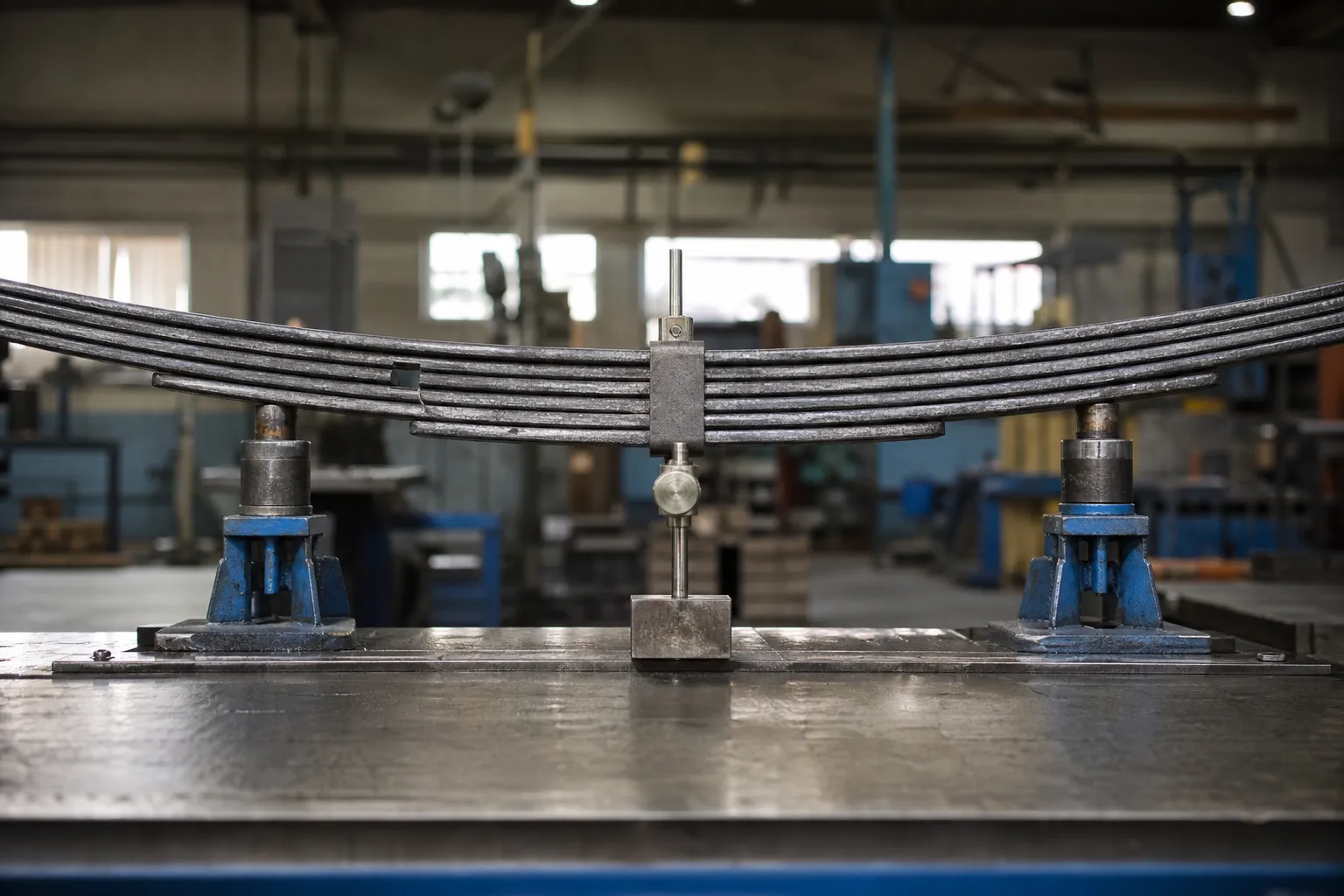
*इंजीनियरिंग अवधारणा चित्रण. यह दर्शाता है कि आवश्यक मुक्त-अवस्था की स्थिति वर्कपीस परिवार के अनुसार भिन्न हो सकती है; यह शाफ्ट या ट्यूबों के लिए स्प्रिंग स्वीकृति प्रक्रिया निर्धारित नहीं करता है।*
When the Loaded Reading Is the Right Reading
Loaded-versus-released is not a morality tale in which released always wins. Some acceptance definitions are written in a loaded or restrained state, because that is how the part functions or how its predecessor processes measured it: wire and strip under tension, parts inspected on a defined mandrel, assemblies checked in the clamped condition of the next operation. The engineering failure is not measuring under load — it is measuring under load while the drawing and the customer expect free state, या विपरीत, without anyone naming the condition. The fix is clerical and absolute: the acceptance record states the condition, and any station that cannot reproduce that condition either gets the correlation study or gets out of the acceptance path.
Is the Part Finished Moving After Release?
A released reading is only final if the part has stopped changing. Immediately after correction, several slow effects can still be in play: elastic recovery completes quickly, but micro-yield rearrangement in freshly worked zones, residual-stress redistribution around the corrected section, and temperature equalization between a warm part and a cooler gauge room all act on slower clocks. For most part families the movement after release is small and stabilizes quickly — but “small” और “quickly” are exactly the kind of quantities that must be established once per family by re-measuring released parts at defined intervals, rather than assumed forever. When a family shows continuing drift, the process answer may be a defined stabilization hold before final measurement, or in stubborn cases a stress-relief route reviewed with the customer — the staging decisions covered for गर्मी उपचार के बाद सीधा करना.
The practical protocol is simple: at qualification, measure released parts immediately, then again after the interval the production schedule can afford. If the readings agree within the gauge’s own repeatability, immediate reading is validated for that family and the question is closed. If not, the stabilization step becomes part of the method, written down with the interval, the support state during the hold, and the temperature condition.
एक नमूना सहसंबंध योजना बनाएं
प्रतिनिधि नमूनों को मशीन की स्थिति और ग्राहक संदर्भ स्थिति के तहत मापा जाना चाहिए. डेटाम रिकॉर्ड करें, का समर्थन करता है, तापमान/पर्यावरण जहां प्रासंगिक हो, ऑपरेटर/सेटअप, दोबारा पढ़ना, भाग अभिविन्यास और गणना विधि. इसका उद्देश्य पूर्वाग्रह और भिन्नता को समझना है, किसी परिभाषित संबंध के बिना दो प्रणालियों को समान संख्या रिपोर्ट करने के लिए बाध्य न करना.
उपयोग नमूना परीक्षण और स्वीकृति को सीधा करना नमूना योजना को परिभाषित करने के लिए और पॉइंट-प्रेस सीधा करना प्रक्रिया-नियंत्रण सीमा के लिए.
अक्सर पूछे जाने वाले प्रश्न
क्या प्रेस के दबाव में कम रीडिंग एक उत्तीर्ण परिणाम है?
नहीं. यह एक इन-प्रोसेस रीडिंग है जब तक कि नियंत्रित स्वीकृति पद्धति को स्पष्ट रूप से उस स्थिति की आवश्यकता न हो. अंतिम स्वीकृति को निर्दिष्ट जारी शर्त का पालन करना होगा.
क्या जारी माप का मतलब हमेशा पूरी तरह से असमर्थित होता है?
नहीं. "जारी" का अर्थ है सुधार बल और अस्थायी प्रतिबंध हटा दिए जाने के बाद समझौते द्वारा परिभाषित स्थिति. एक नियंत्रित निरीक्षण समर्थन की अभी भी आवश्यकता हो सकती है.
क्या एक माप पद्धति ग्राहक गेज की जगह ले सकती है??
दस्तावेज़ी सहसंबंध और स्वीकृति समझौते के बिना नहीं.
How much lower is a released reading than a loaded one?
There is no universal difference — the offset depends on the part’s stiffness, the correction force, the support layout and the fixture compliance, and it can even change sign between setups. That is precisely why the correlation plan measures the relationship per part family instead of applying a inherited correction factor.
Does support location change straightness readings on slender parts?
हाँ, through self-weight sag. Supporting a long part at its ends maximizes mid-span droop; intermediate supports reduce it. The measurement definition therefore fixes the support positions, and the same positions — or a documented correlation to them — must be used wherever the acceptance decision is made.
Should parts be re-measured some time after release?
At qualification, yes — released parts re-measured after a defined interval tell you whether the family stabilizes immediately or continues to move. If readings agree within gauge repeatability, immediate measurement is validated; if not, a written stabilization step joins the method.