
Odabir ispravljača treba započeti s potrebnom geometrijom i metodom prihvatanja, ne sa etiketom mašine. Osovina, tankozidna cijev i asimetrični profil mogu izgledati savijeno, ali mogu zahtijevati različite podatke, mjerne staze, podržava, kontaktne zone i metode korekcije. Poređenje mašina koje zanemaruje te razlike može proizvesti atraktivnu ponudu bez odbranjivog plana testiranja uzoraka.
Ovaj vodič je okvir za kupca i inženjering. Ne tvrdi da StraighteningTech nudi svaki tip mašine, omotač radnog komada, tačnost, sila, nivo automatizacije ili linijski interfejs. Konačna konfiguracija zahtijeva crtež, uzorci, metoda inspekcije i validirani dokaz sposobnosti.

*Ilustracija inženjerskog koncepta. Prikazuje proces odlučivanja od obratka do metode, nije katalog proizvoda ili dokaz da je svaka ruta dostupna.*
Počnite sa traženom karakteristikom i datumom
Prvo pitanje je šta se mora prihvatiti: središnja linija, istjecanje, TIR, koaksijalni odnos, bow, lateral sweep, twist, ovalnost, stanje zida ili neku drugu kontrolisanu funkciju. Ovi termini nisu zamjenjivi. Crtež mora identificirati referencu, uslov podrške, mjerni raspon, orijentacija i pravilo odluke oslobođenog stanja.
| Porodica izradaka | Tipičan problem odabira | Nemojte pretpostavljati |
|---|---|---|
| Shaft | Funkcionalna osa, datum dnevnika, mapa istjecanja i promjene lokalnih dionica | Svaka osovina može koristiti isti redoslijed pritiska |
| Tube | Centralna linija, ovalnost, integritet zida i rizik od urušavanja | Očitavanje izvana dokazuje da je provrt/zid prihvatljiv |
| Profil / šina | Naklon, sweep, twist, asimetrični presjek i zaštita za lice | Okrugli raspored valjaka odgovara profilu |
Za terminologiju mjerenja, početi sa ravnost osovine, istjecanje i TIR i ovalnost cijevi naspram ravnosti središnje linije.
Mapirajte grešku prije odabira metode
Početna mapa geometrije identifikuje da li je odstupanje globalno, lokalni, jedan avion, više aviona, ugaona, povezan sa sekcijom ili uzrokovan signalom podrške/fiksiranja. Treba ga uhvatiti s predloženim datumom i provjeriti ponovnim postavljanjem ili dogovorenom metodom ponavljanja. Očitavanje pod nestabilnim uslovima podrške nije pouzdan cilj korekcije.
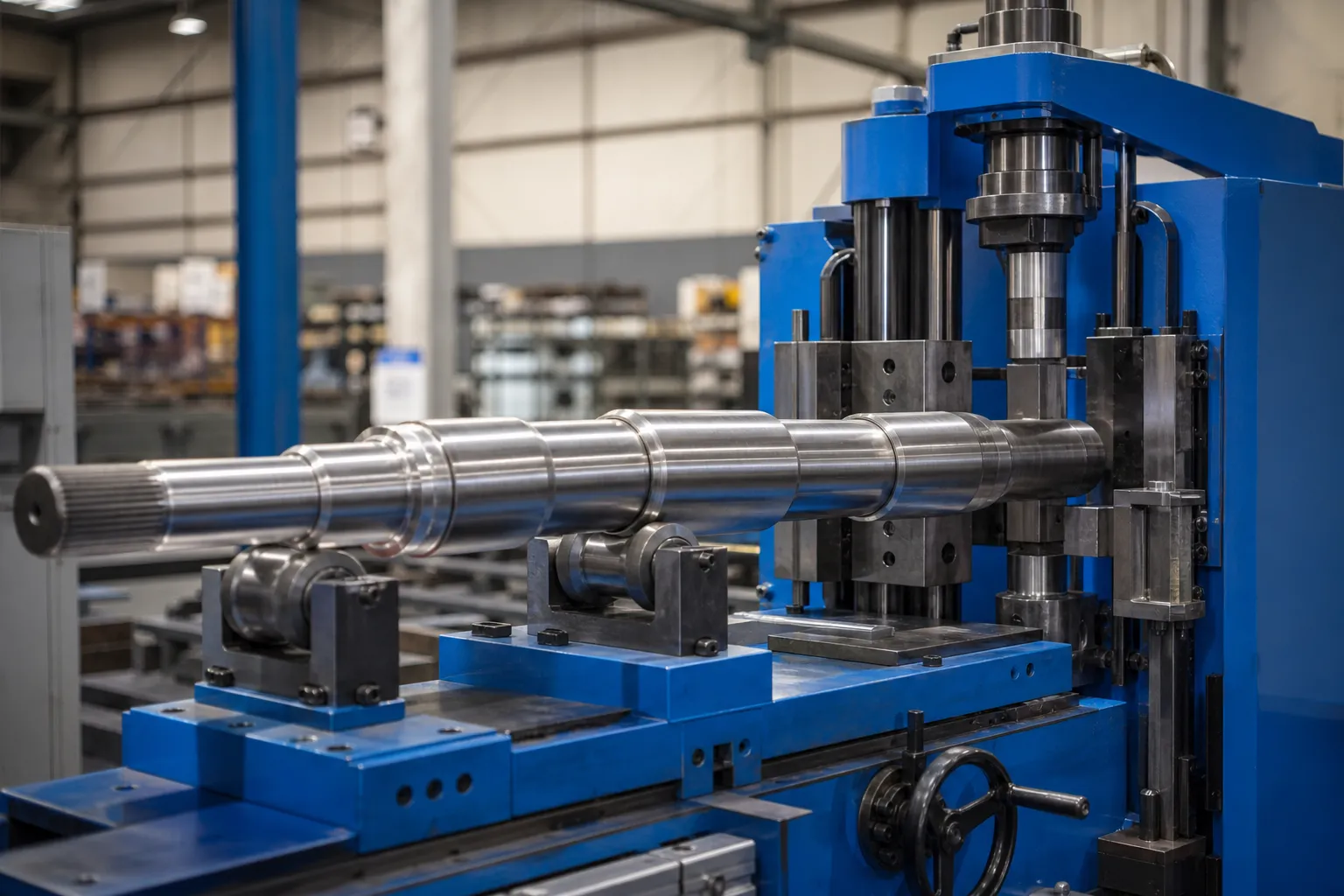
*Ilustracija inženjerskog koncepta. Prikazuje ćeliju kandidata za mjerenje i korekciju; stvarni senzori, podržava, putanja sile i automatizacija zahtijevaju provjeru specifične za radni komad.*
The Specification Package That Gets Accurate Quotes
The quality of the quotations a buyer receives tracks the quality of the specification package sent out, and the package is small enough to be worth assembling properly. Its items are: the drawing with the controlled characteristic named and its datum identified — not only a tolerance number floating free of a reference; the material and its process stage, because a hardened part and an annealed one are different correction problems wearing the same geometry; the incoming error distribution from real parts, because a machine sized for gentle bows will not suddenly handle the worst lot of the year; the acceptance method as the customer runs it, including support condition and released-state rule; the protected zones and surface classes; the production mix and changeover frequency; and representative samples the supplier can actually test. Buyers who send this receive differentiated engineering responses. Buyers who send a diameter and a target accuracy receive brochure round-trips — and discover the gap between the two at commissioning, which is the most expensive place to hold the conversation.
Sizing Force, Stroke and Envelope Without Overbuying
Three machine dimensions carry most of the sizing decisions, and each is set by workpiece physics rather than by ambition. Correction force follows from the section modulus of the stiffest part family and its yield condition: enough force to plastically bend the worst section, with working margin so the machine is not permanently at its ceiling — but force beyond the family’s need buys nothing except a heavier, stiffer, more expensive machine that may also be coarser in control at the small end of the range. Stroke and daylight follow from the part family’s diameters, the tooling heights and the handling concept. Work envelope and loading height follow from part length and mass, because supporting a long part safely is part of the machine’s job, nije naknadna misao. The classical overbuying failure is specifying for a hypothetical giant part that never materializes and then running a family the machine barely registers; the underbuying failure is sizing to the average part and meeting the worst lot with no headroom. Both are avoided the same way: the sample test on the actual family, at its actual worst, before the configuration is frozen — the same evidence rule that governs the automation boundary.
Procijenite integritet kontakta i odjeljenja
Mašina kandidat mora kreirati odobrenu putanju reakcije bez oštećenja zaštićenih karakteristika. Pregledajte dostupne zone podrške, dozvoljene tačke korekcije, Zahtjevi površine/premaza, rukovanje dužinom i masom, prijelazi sekcija, debljina zida, stanje provrta, orijentacija šava i nizvodno operacije.
| Unos odabira | Zašto je važno |
|---|---|
| Kontaktne i bezkontaktne zone | Određuje da li je ruta podrške ili korekcije uopće dopuštena |
| Krutost presjeka i stanje zida | Reakcija na promjene i rizik od lokalne štete |
| Distribucija dolaznih grešaka | Definira može li se evaluirati lokalna ili kontinuirana metoda |
| Faza proizvodnje | Određuje ograničenja površine/dopune i sljedeće sučelje procesa |
| Proizvodni miks | Utiče na promjenu, kontrola receptura i validacija rukovanja |
Usporedite rute kandidata uslovno
Tačkasti pritisak se može procijeniti gdje je diskretna geometrijska mapa, postoje putanja podrške i odobrene korektivne tačke. Može se ocijeniti kompatibilnost valjka ili kontinuiranog ravnanja, dovoljno konzistentne sekcije. Stretch, torzione ili specijalizirane rute mogu biti kandidati samo kada obradak, stezanje, materijal i zahtjevi validacije ih podržavaju. Nijedna metoda nije standardna garancija.
Vidi presa naspram ravnanja valjkom za granicu metode i point-press ravnanje za okvir lokalne korekcije zatvorene petlje.
Where Selections Go Wrong
Failed selections cluster into recognizable patterns, and naming them is cheaper than living one. Choosing by machine label: buying a “shaft straightener” for a shaft-shaped part whose datum, section transitions and acceptance method actually demand something else — the label describes the brochure, not the fit. Accepting accuracy from a table: a published accuracy figure is a machine attribute under stated conditions; the delivered result on your family, your gauges and your incoming distribution is established by the sample test, nothing else. Forgetting the exception path: the machine is selected on how it handles good parts, while production success also depends on how it detects, routes and records the bad ones — the NOK routing discipline deserves a line in the specification, not a discovery during ramp-up. Leaving acceptance undefined: two parties can share a number and disagree about its meaning unless the support condition, gauge and released-state rule are written down, which is why the FAT framework freezes those inputs before testing. And ignoring changeover: in a high-mix shop, the route that wins on paper for one family can lose the year through setup time, first-article validation burden and recipe control across many.
Changeover Economics in a High-Mix Shop
For shops running many part families in small lots, changeover behavior deserves evaluation as a first-class selection criterion, alongside geometry and force. The questions are concrete. What physically changes between families — supports, alat za presovanje, sensor positions — and how is each change identified so an old setup cannot run silently on a new part? How long does a validated changeover take, and who performs it? What requalification does the quality system demand after a changeover: a first-article check, a reseat verification, or a fuller sample? Machines designed for mix answer these with identified tooling, recipe management and guided changeover sequences; machines designed for high-volume single families answer them with engineering hours. Neither answer is wrong — but the buyer should know which one they are purchasing before the second family arrives at the dock, and the honest place to test changeover is during the acceptance test, where a family switch can be demonstrated and timed under witness.
Definirajte granicu automatizacije
„Automatski“ treba razložiti na učitavanje, identifikaciju, orijentacija, mjerenje, korekcija, rukovanje, upravljanje receptima, sljedivost i usmjeravanje izuzetaka. Sistem može automatizirati neke korake uz zadržavanje ručnih uređaja, inženjersko odobrenje ili potvrda kupca. Nemojte koristiti oznaku automatizacije kao proxy za propusnost, tačnost ili uštedu rada.
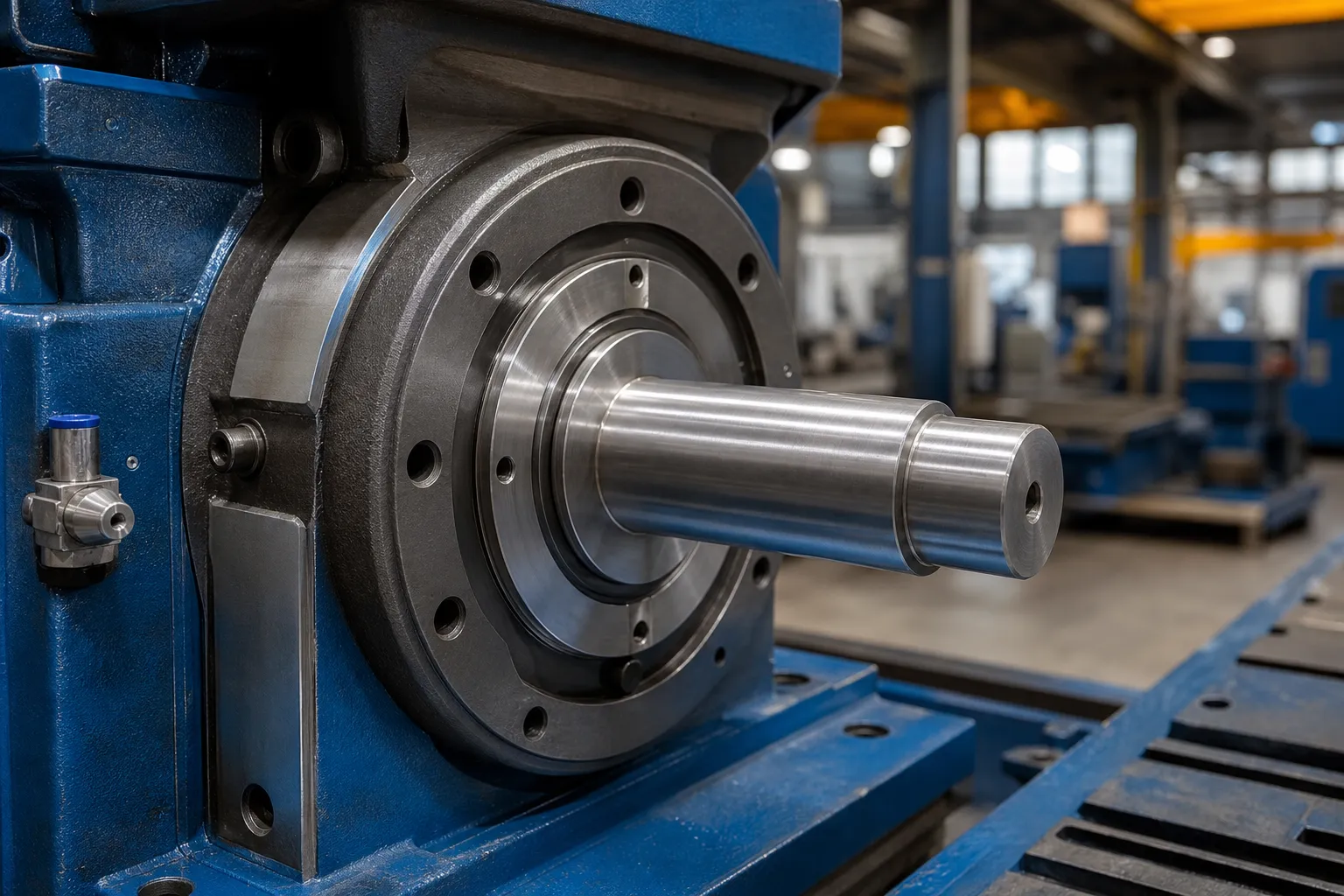
*Ilustracija inženjerskog koncepta. Naglašava verifikaciju oslobođenog dijela; to nije izvještaj o prihvatanju korisnika ili zajamčeni rezultat učinka.*
Učinite Uzorak Test kao kapiju selekcije
Odabir treba zatvoriti reprezentativnim normalnim i najgorim uzorcima, kontrolisanog crteža, dogovoreni datum/kalibar, neobrađena očitavanja prije i poslije, ponovno mjerenje oslobođenog stanja, provjere površine/presjeka, maksimalne granice pokušaja korekcije i definisana ruta NOK. Svaka obećana tačnost, vrijeme ciklusa, stopa rukovanja ili opseg automatizacije pripada tek nakon što je dokaz završen.
Koristi ispitivanje i prihvatanje uzorka ispravljanja da strukturira suđenje, FAT i SAT dokazi.
Informacije potrebne za pregled odabira ravnala
Navedite crtež obratka i varijante, materijal i faza proizvodnje, informacije o dužini/presjeku/zidu, dolazne geometrijske podatke, funkcionalni podatak, zaštićene zone, referentna metoda mjerenja, proizvodni cilj, ograničenja rukovanja i reprezentativni uzorci. StraighteningTech tada može procijeniti mjerenje kandidata, podršku i arhitekturu korekcija i identificirati potrebne dokaze prije predlaganja konfiguracije stroja.
FAQ
Može li jedna mašina obraditi osovine, cijevi i profili?
Moguće za definirani i potvrđeni raspon radnih komada, ali ne zato što se sva tri nazivaju "ispravljanje". Datum, dionica i kontakt ruta moraju se pregledati.
Da li je brža mašina automatski bolji izbor?
br. Propusnost ima vrijednost samo nakon geometrije, površine, mjerenje i rukovanje izuzetcima ispunjavaju dogovoreni metod prihvatanja.
Može li stranica proizvoda zamijeniti uzorak testa?
br. Opisi proizvoda uspostavljaju kategoriju; test reprezentativnog uzorka utvrđuje da li se može prihvatiti određena porodica obratka.
How do I know if a machine is oversized for my parts?
When the family consistently occupies the bottom of the machine’s force and range scale. A machine with large margin above the stiffest family’s need is heavier, coarser in control at the small end, and more expensive than a right-sized configuration — and the family’s correction precision can suffer for it. The fix is sizing from the actual section modulus and worst-case incoming error, verified by sample test.
What should changeover look like in the acceptance test?
A witnessed family switch: old tooling out, new tooling in and identified, recipe selected under version control, first-article part measured and dispositioned, with the elapsed time and each verification step on record. If changeover matters to the shop’s economics, it belongs in the FAT scope rather than in a verbal assurance.
Is the published accuracy of a straightener what my parts will achieve?
It is what the machine achieves under its stated reference conditions. What your parts achieve depends on their geometry, materijalno stanje, incoming error, your gauges and your acceptance method. The bridge between the two is the sample test on representative and worst-case parts — the only evidence that converts a specification into a defensible expectation.