
Red ne bi trebao tretirati svako neprolazno čitanje na isti način. Neki dio može imati problem sa podešavanjem, mjerni alarm, stanje geometrije koje se može ispraviti, odgovor bez napretka, sumnjivi materijalni problem ili potvrđena neusklađenost. Bez posebnih ruta, ponovljena korekcija može prikriti problem mjerenja, oštetiti dio, miješati lotove ili stvoriti odluku o kvalitetu koja se ne može pratiti.
Ovaj članak je okvir za kvalitetno usmjeravanje. Ne tvrdi da StraighteningTech trenutno isporučuje automatsko sortiranje, specifični senzori, pragovi odbijanja, softver za sljedivost ili ovlaštena pravila za preradu. Te funkcije zahtijevaju provjereni lokalni opseg i odobrenje kvalitete.
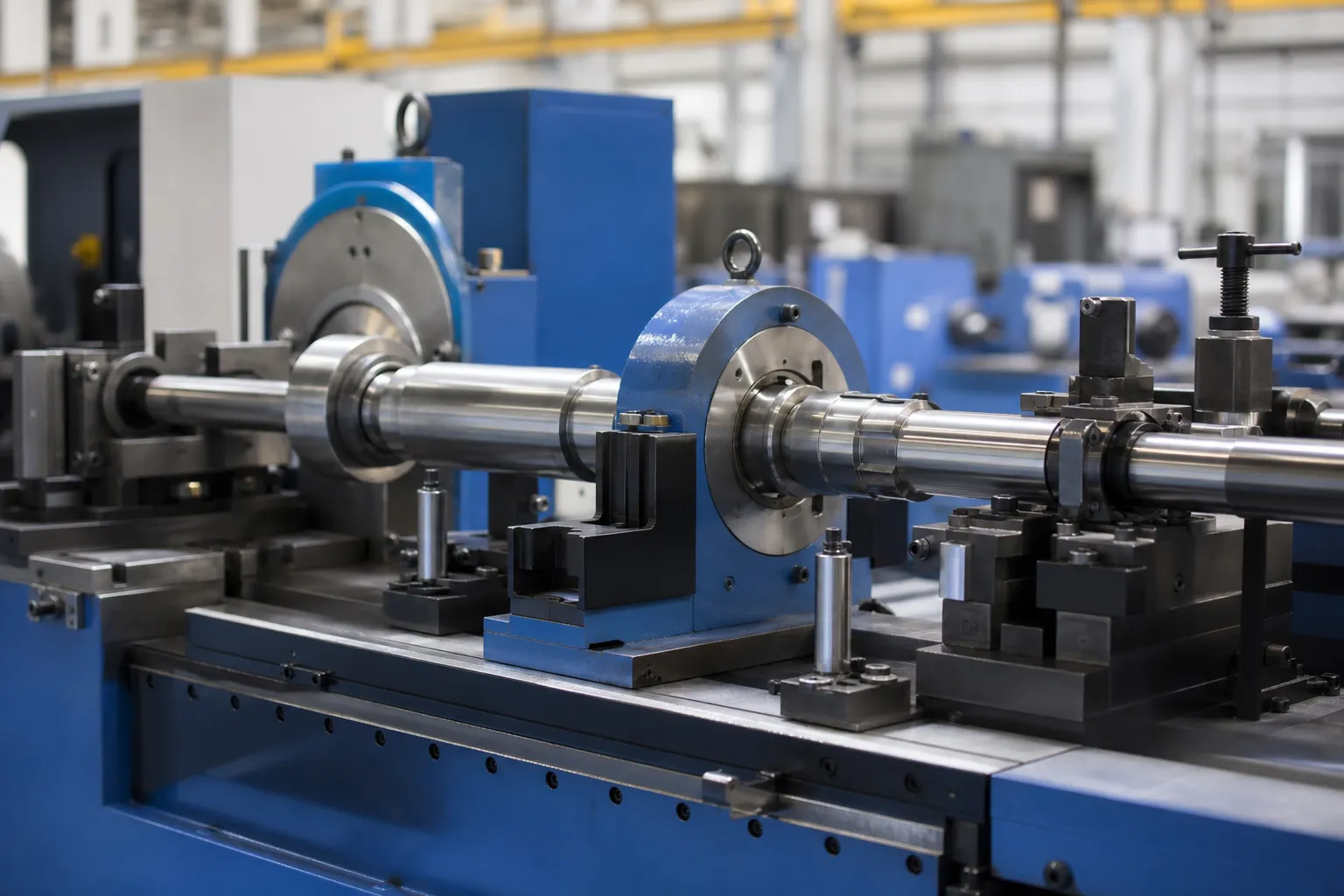
*Ilustracija inženjerskog koncepta. Prikazuje proizvodnu ćeliju kandidata, nije instaliran sistem automatskog sortiranja ili definisana sposobnost otkrivanja kvarova.*
Definirajte stanja dispozicije
U najmanju ruku, razlikovati PASS, ENOUGH, pogodan za preradu, stop/hold i pregled inženjeringa/kvaliteta. Definicije moraju upućivati na kontrolirani crtež, metoda mjerenja, uvjet procesa i ovlaštenje za oslobađanje. Procesni alarm nije automatski odbijen; to može biti signal eskalacije koji zahtijeva verifikaciju.
| Država | Obavezna definicija |
|---|---|
| PASS | Ispunjava dogovoreni zahtjev za pušteno stanje sa potrebnim zapisima |
| ENOUGH | Ne ispunjava definisani zahtjev ili ima potvrđenu neusklađenost |
| Pogodno za preradu | Ispunjava dokumentirane uslove za još jedan odobreni pokušaj |
| Stani / čekaj | Zahteva podešavanje, proces-signal, pregled kvaliteta ili inženjering prije dalje obrade |
| Inženjerski pregled | Potrebna je kontrolirana odluka izvan normalne automatske rute |
Odvojite probleme postavljanja od neusklađenosti dijela
Prije glodanja dijela kao NOK, razmotrite da li bi signal mogao biti rezultat postavljanja datuma, varijacija učvršćenja, stanje senzora, dio identiteta, wrong recipe or an unapproved support state. The procedure should define the allowed clean/reseat/repeat checks and prevent unlimited retries.
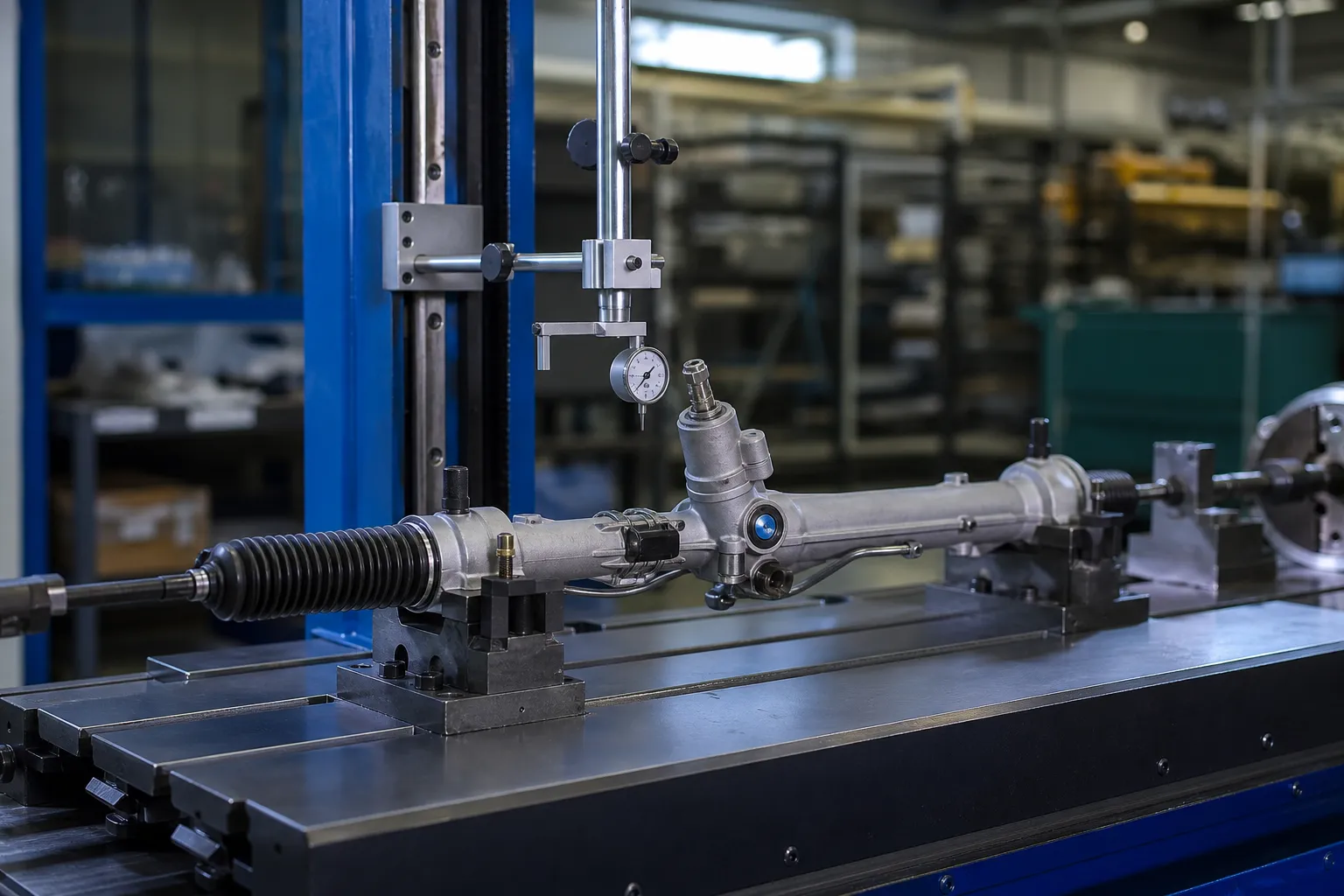
*Ilustracija inženjerskog koncepta. It depicts a measurement decision point, not proof of an automatic classification or a specific alarm rule.*
Vidi ponovljivost učvršćenja i pozicioniranje i otkrivanje pukotina tokom automatskog ispravljanja for the separation between a signal and its verified cause.
Set a Rework Limit Before the First Correction
Rework should be an approved route with a defined maximum number of attempts, permitted contact/support conditions, remeasurement requirement, surface/feature checks and authority to continue or stop. The limit is not a universal number; it depends on material, faza procesa, feature risk, customer requirements and validated response. When a part does not respond as expected, odgovarajuća radnja može biti zadržavanje ili odbijanje, a ne dodatna sila.
Why Unlimited Retries Corrupt the Line
Allowing a line to re-correct a part until the gauge finally passes feels productive and quietly destroys two things. The first is the part itself: every plastic bending cycle consumes a share of the section’s low-cycle fatigue life, and the reverse-loading behavior described for reverse loading in straightening means later cycles move the material more per unit force than earlier ones did. A part that reaches tolerance on its sixth attempt is not equivalent to one that reached it on the first, even though both read PASS.
The second casualty is the line’s own information. When retries are unlimited, the gauge sees only eventual outcomes: parts that converge, slowly, under repeated force. A drifting correction setup, a worn anvil, a bad lot of stock and a genuinely struggling part family all produce the same visible symptom — more attempts per part — and none of them generates a stop condition. The retry count is one of the cheapest and most informative process signals a straightening line produces, and it only exists as data if the line is required to stop and route the part at a defined limit instead of looping.
Thinking of the Rework Limit as a Budget
A more useful mental model than “three strikes” is a budget of deformation that each part may spend. The budget is set by the material’s condition and the consequence of failure in service, and it is spent by every correction stroke — forward or reverse. A hardened safety-critical shaft and a soft structural bar may carry very different budgets, which is why no universal rework number is defensible and why the limit belongs to the part family’s validated process, reviewed by quality. The same budget concept explains a rule that otherwise looks arbitrary: a part that has consumed its budget and still fails is rejected even though one more attempt might conceivably pass, because the part that would emerge is no longer the part the drawing specifies in any meaningful sense.
Budgets also need edges. Two conditions that stop rework regardless of remaining attempts are no-progress — corrections that stop changing the geometry, indicating the process is no longer engaging the error — and overshoot oscillation, where each attempt moves the part from one side of tolerance to the other. Both are stop signals, not tuning opportunities, and both feed the integrity-review concerns that repeated plastic cycling raises.
Održavanje izolacije i sljedivosti
Svaka dispozicija mora sačuvati identitet dijela/partije, verzija crteža/recepta, stanje merenja, pokušaji korekcije, rezultat, operater/automatizacija događaj, vrijeme, preispitati odluku i fizičku lokaciju. Izolacija mora spriječiti držani ili NOK dio da se vrati u PASS tok bez eksplicitnog ovlaštenja.
*Ilustracija inženjerskog koncepta. Naglašava verifikaciju objavljenog stanja i evidentiranu dispoziciju, ne obećava DMC/MES sučelje ili automatski sorter.*
Designing Segregation That Cannot Be Defeated
Disposition states only work if the physical line enforces them. The failure mode is always the same: a held or NOK part re-enters the good flow during a busy shift, through an operator judgment call, a shared conveyor or an unlabeled tote. Effective segregation design follows mistake-proofing logic rather than instruction signs. Good and rejected parts take different physical paths with no shared section where a part can be redirected by hand. Hold locations lock or require an access step that itself creates a record. Labels and bins are part-specific, not generic scrap tags, so a held-for-review part cannot decay into anonymous scrap or anonymous stock. Where volume justifies it, diverters and gates make the routing decision the machine’s, not the operator’s — the automation boundary discussed in manual versus automatic straightening applies to disposition as much as to correction.
The record side has the same anti-defeat requirement. A disposition that lives only in an operator’s memory, or in a spreadsheet anyone may edit, does not survive an audit or a containment event. The minimum durable record is the tuple — part identity, puno, drawing and recipe version, stanje merenja, attempt count, rezultat, decision, decision-maker, time — retained long enough to answer the customer question that eventually comes: which parts from that week, from that machine, from that shift.
What the Disposition Data Buys Later
A line that routes honestly accumulates, as a by-product, the dataset that every improvement program wishes it had. Attempt-count trends flag tooling wear and setup drift while they are still cheap to fix. Lot-to-lot shifts in incoming geometry point upstream to suppliers with evidence instead of complaints. The ratio of setup-issue holds to true part nonconformances measures how much of the line’s apparent quality problem is actually its measurement and fixturing — information directly relevant to planning a gage R&R studija. And when a customer raises a field concern, traceability converts a week of panic into an afternoon of records. None of that value survives a culture of retry-until-pass; all of it is the natural dividend of the routing discipline described here.
Izgradite rutu verifikacije i eskalacije
- identificirati dio, puno, crtež i recept;
- provjeriti mjerenje/podatke u okviru odobrenih provjera;
- uhvatite čitanje, stanje procesa i svako upozorenje;
- primijeniti samo dozvoljeni put dorade kada se potvrdi podobnost;
- puštanje i ponovno mjerenje pod dogovorenim uslovima;
- ruta PASS, ENOUGH, čekanje ili inženjerski pregled;
- zadržati sljedivost i fizičku segregaciju;
- koristite ponavljajuće obrasce za pokretanje procesa ili revizije kvaliteta.
Za potrebnu arhitekturu dokaza, vidi ispitivanje i prihvatanje uzorka ispravljanja i Gage R&R za ispravljanje linija.
No-progress and Correction-Limit Gates
Tačna fraza granica korekcije ispravljanja bez kapije napretka je medicinski zagađen u SERP-u, tako da kanonska logika bez napretka živi na stranici za sortiranje i ograničenje prerade NOK-a. Definirajte maksimalne cikluse korekcije, force/stroke ceilings and mandatory stop/sort actions before production release.
FAQ
Da li NOK uvijek znači otpad?
br. Država NOK može zahtijevati verifikaciju, kontrolisane prerade, tehnički pregled ili konačno odbijanje u zavisnosti od odobrenog puta kvaliteta.
Može li linija ponovo pokušati dok očitavanje ne prođe?
br. Za preradu je potrebno definirano ograničenje maksimalnog pokušaja i autoritet za kvalitet. Neograničeni pokušaji mogu prikriti problem procesa ili mjerenja.
Da li ovaj članak znači da linija ima automatsko sortiranje?
br. To je okvir za rutiranje. Stvarno sortiranje, sljedivost i funkcije interfejsa zahtijevaju posebnu verifikaciju.
Why does the attempt count matter more than the final reading?
Because the final reading describes where the part ended, while the attempt count describes what it cost to get there. Two parts reading identical PASS values are not equivalent if one took a single correction and the other took a full budget of repeated cycles. The attempt count is also the line’s earliest drift alarm — a setup, tooling or material change usually shows up as more attempts per part long before it shows up as rejects.
Should rework limits differ between part families?
Da. The limit is a deformation budget set by material condition, feature risk and service consequence, so a hardened safety-critical shaft and a soft structural bar justify different numbers. The limit belongs to each family’s validated process with quality approval, not to the line as a single setting.
What is the minimum physical segregation a small line needs?
Separate paths or lockable, labeled, part-specific containers for PASS, hold and NOK — arranged so a held part cannot return to the good flow without a recorded, authorized step. The design principle is that doing the wrong thing must require effort, not just discipline. Escalate to machine-controlled diverters when volume or staffing makes human routing unreliable.