
يمكن لقراءات الإزاحة المتعددة تحويل فحص العمود الطويل من قمة واحدة إلى خريطة خطأ. تعتمد هذه القيمة على أكثر من المستشعر: هندسة الدعم, مسند الجلوس, الاتصال التحقيق, التدوير/الفهرسة, المزامنة, الظروف البيئية وقاعدة الحساب كلها تؤثر على ما يتم الإبلاغ عنه.

*التوضيح المفهوم الهندسي. إنها ليست مواصفات الاستشعار, النظام المثبت أو نتيجة القياس التي تم التحقق منها.*
تحديد الخاصية قبل اختيار أجهزة الاستشعار
أولاً، اذكر ما إذا كانت خاصية القبول هي استقامة خط الوسط, القوس المحلي, نفاذ نسبة إلى مسند, انحراف الملف الشخصي أو نتيجة أخرى يمكن التحكم فيها. إن جهد المستشعر أو أثر الإزاحة ليس في حد ذاته متطلبات العميل. يجب أن تحدد خطة التفتيش ميزات المسند, يدعم, محطات, التوجهات, فترة, حساب, وحدات, الحدود والحالة التي يتم فيها قبول الجزء.
| عنصر | سؤال للإغلاق |
|---|---|
| مسند | ما هي الميزات التي تحدد المحور المرجعي أو السطح? |
| يدعم | هل يقوم بتكرار حالة العميل أو الجزء الذي تم إصداره? |
| مسار التحقيق | تعتبر نقاط الاتصال أسطح وظيفية ومحمية من التلف? |
| محطات | هل يلتقطون مناطق الانحناء المعروفة ويميزون التحولات؟? |
| التدوير/الفهرسة | كيف يتم الحفاظ على الاتجاه بين القراءات? |
| حساب | كيف يتم تحويل القراءات إلى الخاصية الخاضعة للرقابة? |
لضوابط المسند, يرى تنظيف الفتحة المركزية للعمود وإعداد مسند الإسناد و التكرار لاعبا اساسيا وجلوس مسند.
How an LVDT Works, and Why Its Physics Matters
The linear variable differential transformer earns its place on production machinery through a short list of physical virtues. Inside the housing, a primary coil is excited with an alternating current, and two secondary coils sit either side of it; a ferromagnetic core, attached to the probe tip by a slim push rod, slides along the axis. With the core centered, the induced voltages in the two secondaries balance; displace the core and the balance tips in proportion to the movement. The electronics read the amplitude and phase of that imbalance and report displacement. Because the core never touches the coils, there is no friction or wear inside the sensor; because the coupling is inductive, the reading is largely indifferent to dust, oil mist and humidity that blind optical sensors; and because the moving mass is small, the tip can follow moderate surface motion faithfully. The trade-offs are equally physical: it needs signal conditioning and calibration against a reference, the raw output is relative rather than absolute, and the probe tip itself is a mechanical component with its own condition, force and wear story.
Where Errors Enter Between Probe and Number
Treating the chain as one system, as the section above demands, means knowing the specific doors through which error walks in. Thermal drift: the sensor body, the fixture and the part all expand and contract with temperature, and on a machine that warms through a shift, a morning zero and an afternoon reading are not the same event — hence reference checks on a master at intervals the procedure defines. Mounting: a probe on a long, unsupported bracket is a cantilever with its own compliance, and vibration or cable pull moves the whole assembly relative to the part, indistinguishable from part movement in the data. Dynamics: when the part or probe moves during scanning, the stylus mass and tip force set a speed limit beyond which the tip skips or lags, writing false features into the trace. Contact condition: tip wear flattens the intended radius and changes where the reading sits on a curved surface. None of these is exotic; each is controlled by written procedure — zero method, master check interval, scan speed, tip inspection — which is precisely what the validation framework above asks the system description to contain.
التعامل مع سلسلة القياس كنظام واحد
قد يكون LVDT مناسبًا للإزاحة النسبية, لكن النتيجة المقاسة تتضمن أيضًا تركيب المستشعر, انحراف لاعبا أساسيا, تكييف الإشارة, توقيت, الجلوس الجزئي وسلوك المشغل أو الأتمتة. قم بتسجيل كل عنصر في السلسلة حتى يمكن دراسة التحول اللاحق في النتيجة.
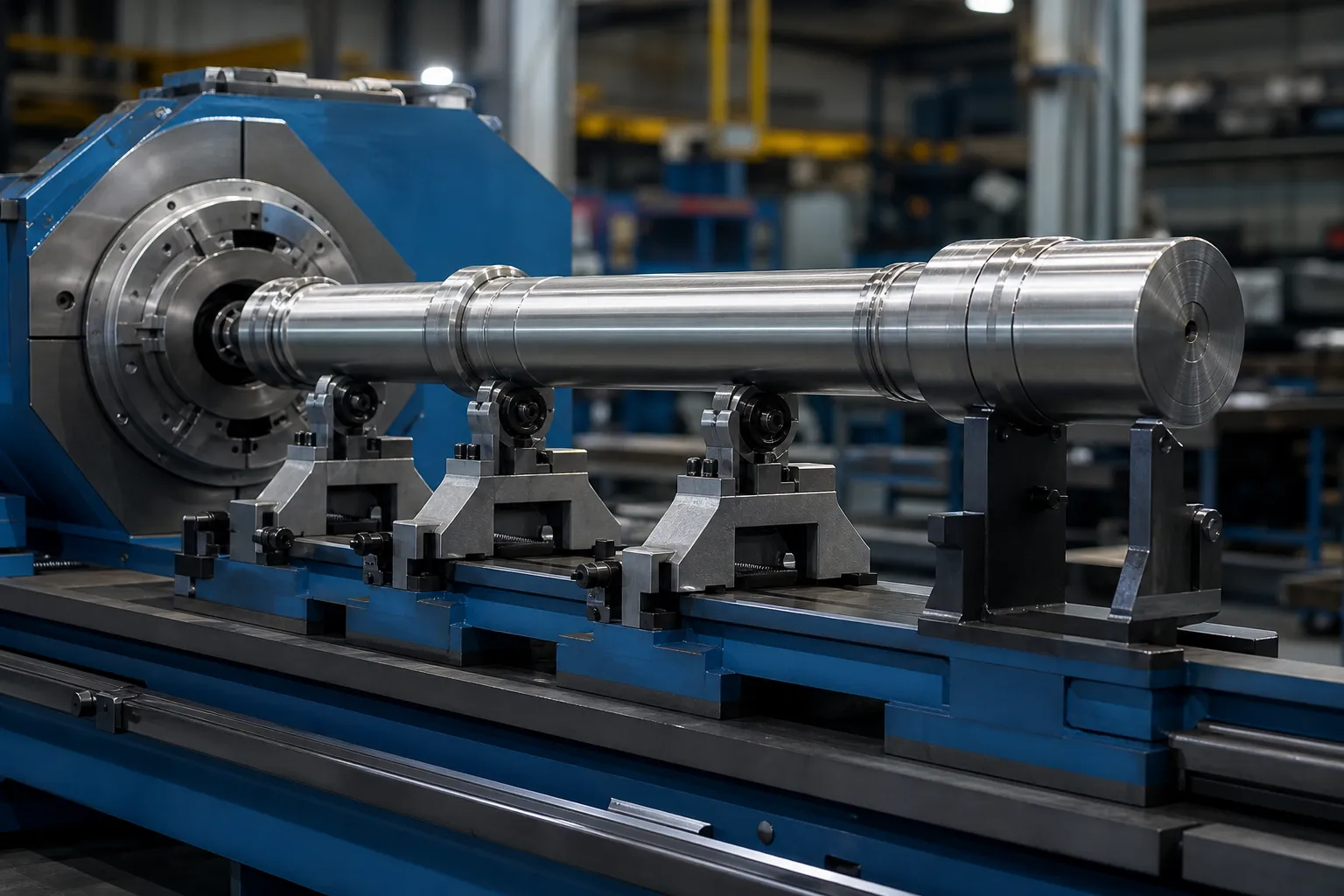
*التوضيح المفهوم الهندسي. صلابة لاعبا اساسيا, يتطلب وضع المستشعر والحراسة هندسة خاصة بالمشروع.*
يجب أن يغطي الإجراء الخاضع للرقابة تحديد المستشعر, مرجع / فحص رئيسي, حالة التركيب, حماية الكابلات, طريقة الصفر, اتجاه العينة, دعم النظافة, إعدادات الحصول على البيانات والاحتفاظ بالبيانات. القراءة المتكررة من تركيبات غير مستقرة ليست دليلاً على التكرار.
مزامنة الموقع, التوجيه والقراءات
تكون البيانات متعددة النقاط مفيدة فقط عندما يمكن تعيين كل قيمة إلى موضع وحالة معروفة. إذا كان الجزء يدور أو يتحرك, تحديد التشفير/الفهرس, إحداثيات المحطة, اتجاه السفر, حالة السكن أو أخذ العينات, وماذا يحدث إذا كانت الإشارة مفقودة. يجب أن تحافظ النتيجة على بيانات المصدر الأولية أو التي يمكن تتبعها اللازمة لإعادة بناء الخريطة.
تجنب تفسير الذروة المحلية دون التحقق من المقاعد والاتصال. إعادة اختبار الاختبارات, الاتجاه العكسي حيث يمكن للقراءات الأساسية المناسبة والمتكررة التمييز بين ميزة الجزء والإشارة الخاطئة.
Choosing Station Count and Placement
How many stations, and where, is a geometry question before it is a budget question. The error modes of slender parts are smooth in space: a bend is a low-frequency curve, so a modest number of stations — placed where the physics says the information lives — reconstructs it well, while doubling the count in uninformative positions buys data volume, not accuracy. Informative positions are predictable: mid-span between supports where a bow reaches its excursion; each stiffness transition on stepped parts, where peaks like to hide; immediately beside functional features whose relationship to the datum matters; and the free ends, which anchor the map. The failure mode of sparse placement is aliasing in its practical form — a short kink sitting between two stations contributes to neither reading cleanly, and a correction aimed at the reconstructed map presses in the wrong place. The honest way to close this risk is not infinite density but a validation: map a set of parts at high density once, confirm that the production station set reconstructs the same peaks and amplitudes, and document that comparison as the station-plan justification.
Turning the Map Into a Correction Decision
The map exists to drive action, and its action vocabulary has three entries: where to press, in which direction, and how hard to expect the part to respond. Peak position and direction come from comparing stations around the maximum; on a part rotating between stations, preserving angular indexing — the synchronization discipline above — is what converts separate readings into a vector, not a pile of magnitudes. Expected response comes from the stiffness story the map already tells: a peak on a heavy section needs a different correction plan than the same amplitude on a thin one, and peaks at stiffness transitions deserve the respect described for separating bend from roundness and setup effects before any press follows. What the map must not do is trigger correction on unverified signals: a localized reading that has not survived a reseat check is a hypothesis, not a peak. That guard rail — map, يؤكد, then correct, with released-state measurement closing the loop — is the same sequence that makes استقامة رمح التلقائي converge in few strokes instead of many.
ترتبط بقبول الجزء المفرج عنه
قد يكون القياس أثناء التثبيت أو التصحيح مفيدًا للتحكم في العملية, لكنه لا يثبت تلقائيًا أن العمود المحرر يلبي المتطلبات. قارن طريقة الخط مع طريقة الجزء المفرج عنه المعتمدة على العينات التمثيلية عبر التباين الطبيعي. يرى قياس الاستقامة المحملة مقابل المفرج عنها للحدود.
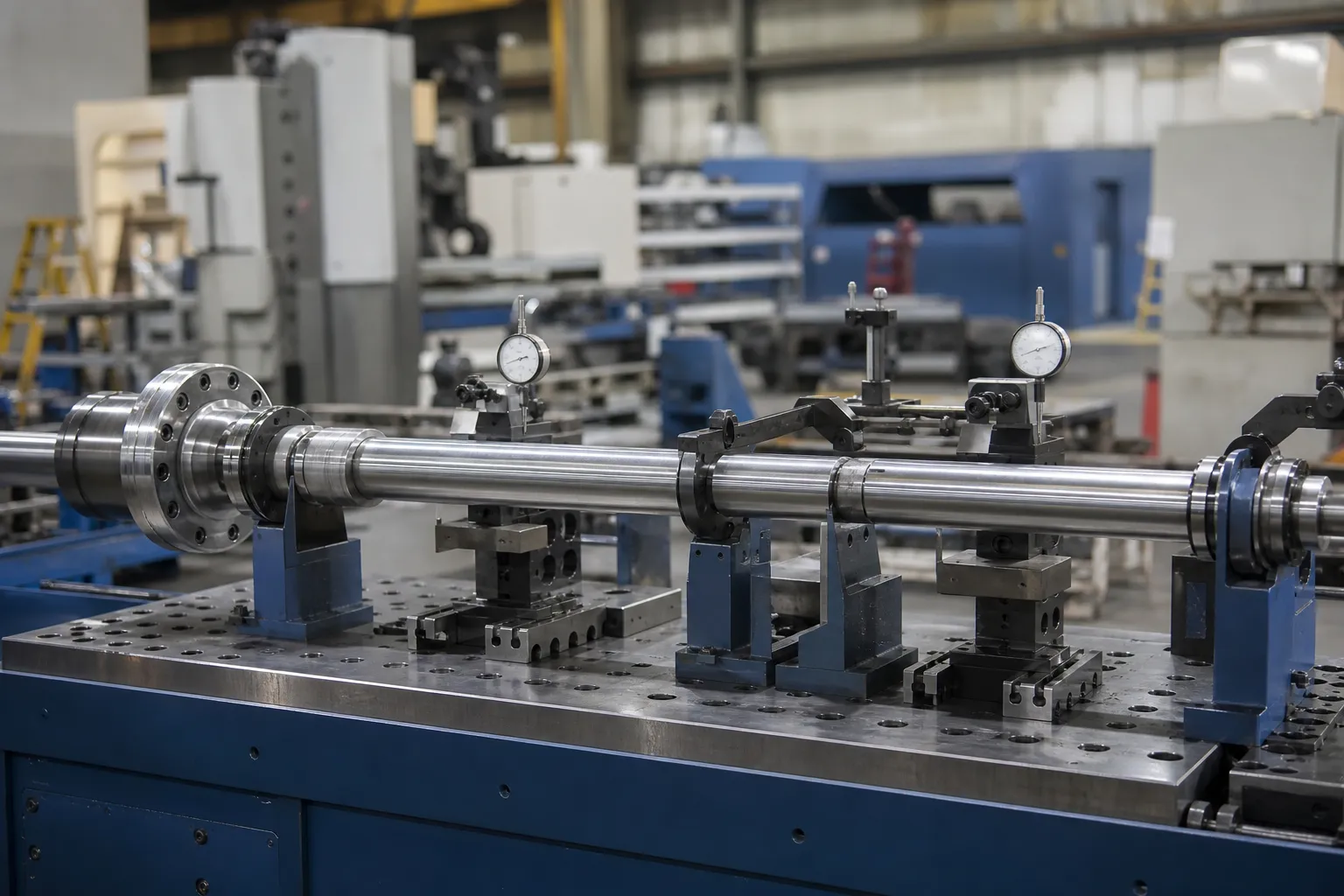
*التوضيح المفهوم الهندسي. الطريقة المرجعية, يجب أن يتم التحكم في حساب الدعم والقبول من خلال خطة الجودة المعتمدة.*
يجب أن تحدد خطة الارتباط العينات المطابقة, مقارنة عمياء حيثما يكون ذلك عمليًا, معادلة مسند/دعم, حالة المعايرة, مراجعة التحيز, مراجعة التكرار/التكرار, الفرق المسموح به, قواعد التصعيد والتحكم في التغيير. الرجوع إلى مقياس الماكينة مقابل ارتباط مقياس العميل و غيج ر&R لتسوية الخطوط.
المدخلات اللازمة لدراسة القياس
توفير الرسم والتعريف المميز, طريقة التفتيش الموجودة, هندسة الأجزاء وميزات مسند الإسناد, مرحلة المواد/التصنيع, مواقع الانحناء المتوقعة, عينة السكان, القيود البيئية, سجل البيانات المطلوبة وطريقة قبول العملاء. استخدم استقامة اختبار العينة ودليل القبول لتثبيت محضر المحاكمة, ثم الاتصال بـ StraighteningTech لمناقشة التطبيق.
التحقق من الصحة مطلوب قبل مطالبة النظام
Any multi-point measurement claim needs a defined probe and datum setup, مراجع معايرة, repeated or reseated readings on representative parts, and customer-gauge correlation. A generic machine capability is not a verified result.
التعليمات
Does adding more measurement stations automatically improve accuracy?
لا. Stations placed where the geometry has information — mid-span peaks, stiffness transitions, functional features, ends — improve the map. Stations added elsewhere add data volume and cost while leaving reconstruction essentially unchanged. Validate the chosen set once against a dense map and document the comparison.
Why do LVDT readings drift over a production shift?
Most often thermal: الاستشعار, fixture and part expand at different rates as the cell warms, shifting the zero. Mechanical causes come next — bracket compliance, cable pull, tip wear. The control is procedural: a defined zero method and reference-master checks at set intervals, with any shift beyond the procedure’s limit triggering investigation rather than quiet re-zeroing.
Can multipoint LVDT data replace final inspection?
Only through correlation. In-process multipoint data drives the correction loop; the acceptance decision belongs to the released-state method the customer recognizes. When the two have a documented correlation on representative parts, the line method gains standing — until then it is process control, not release.
موارد تقنية الاستقامة ذات الصلة
يرى كيف يعمل استقامة العمود التلقائي, استقامة اختبار العينة والقبول و استقامة العمود مقابل الجريان مقابل TIR لحدود التحكم العامة التي تنطبق قبل أي مطالبة بالقدرة LVDT قياس رمح متعدد النقاط.
Multipoint measurement pays off at acceptance time – pair the قائمة مرجعية للدهون مع جي دي&دليل قبول الاستقامة T to agree measurement method and tolerance interpretation in one pass.