
يمكن أن تكون الأجزاء الهيكلية الكبيرة المصبوبة معقدة, هندسة رقيقة الجدار وواجهات وظيفية متعددة. يجب أن يتحكم نظام التقويم ثلاثي الأبعاد الموثوق به في إستراتيجية المسند والتركيب, حالة القياس, مفهوم التصحيح متعدد النقاط, خطر الاتصال/السطح, مراجعة مخاطر الكراك والهندسة الصادرة. لا تعد الصحافة العامة أو التصميم المنافس المنشور دليلاً على أن المورد يمكنه أداء هذا العمل.
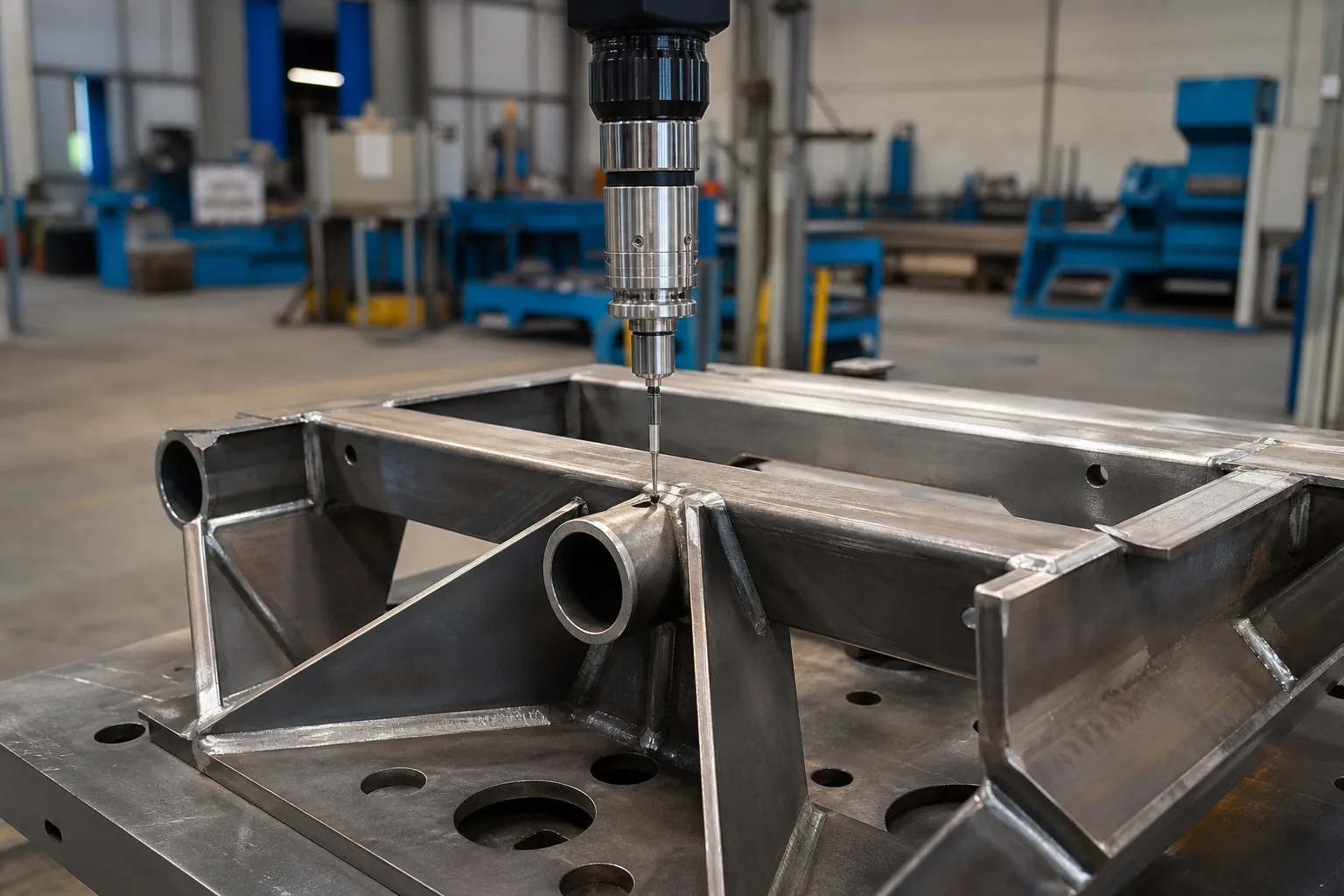
*التوضيح المفهوم الهندسي. لا يُظهر تسلسل تصحيح تم التحقق من صحته, مجموعة المحرك أو نتيجة الجزء الهيكلي.*
لا دولة القوة, عدد المحرك, وقت الدورة, تسامح, معدل اكتشاف الشقوق أو نوع الصب المتوافق بدون دليل المشروع. هذه القيم غير قابلة للتحويل من نظام ورقي أو منافس.
Why Large Castings Move After Casting
Cast structural parts distort because solidification and cooling are never uniform across a section of varying thickness. Thick features cool slowly and contract later than thin walls, so the casting leaves the die or mold with a locked-in residual stress field. That stress field is not visible on the part — it only announces itself later, when something changes. Ejection, trimming, المعالجة الحرارية, shot blasting, and above all machining all remove or redistribute constraint, and the part moves toward a new equilibrium. A rear-structure casting that measured acceptable in the as-cast state can drift out of position tolerance after critical interfaces are machined, because removing material from one face releases the balancing stress on the opposite side.
This is why distortion control on structural castings is a sequence problem, not a single-press problem. The timing of the straightening operation inside the process route — before stress relief, بعد الآلات الخام, before finish machining — changes both how much correction is needed and how stable that correction remains. Each of those routes has different risk: correcting an as-cast part may be undone by later machining, while correcting a finish-machined part risks damaging functional surfaces. The route decision belongs to the responsible process engineer, with the distortion history of the part in view.
What Makes Correction “3د” Instead of Planar
Conventional bar and shaft straightening corrects a centerline that is, to first order, a plane curve: bow in one plane, sometimes bow measured in two perpendicular planes and combined. The machine finds the high point of the bend, supports the part on two anvils, and presses at the peak. The geometry being controlled is a single neutral axis. This is the model behind كيف يعمل استقامة العمود التلقائي, and it assumes a stiff, uniform section.
A thin-wall structural casting breaks those assumptions. The section is not uniform — rails, الأضلاع, bosses and window openings give it direction-dependent stiffness, so the same applied force produces different deflection depending on where and in which direction it acts. The deviation is not one bend: it is a combination of bow in one axis, sweep in another, twist about the longitudinal axis, and local displacement of individual functional interfaces — a mounting pad seated high on one end, a bore axis tilted relative to the datum system. The measurand is the position and orientation of each functional interface in the part coordinate system, not a single runout reading. Any correction plan that only chases an overall bow will move interfaces it did not intend to move.
Practically, this means the error map for a structural casting is a table of interface deviations, not a polar diagram of a centerline. It also means correction targets must be prioritized: interfaces with tight position tolerances and mating consequences come first, and secondary geometry is allowed to float inside its own tolerance bands. That prioritization is a drawing-driven engineering decision made before any press stroke is planned.
Datum and Fixture Strategy Comes Before Correction
إن قياس وتصحيح عملية الصب تكون بنفس جودة نظام المسند الذي يشيرون إليه. الأسطح المصبوبة عبارة عن زوايا وجلد مسودة - فهي ليست قابلة للتكرار ولا ممثلة. يجب أن يكون الجزء موجودًا على مسند الإسناد المحدد بالرسم, نفس الميزات التي سيستخدمها مقياس العميل عند القبول. إذا كان القياس يستخدم مجموعة واحدة من الميزات ويستخدم جهاز قياس العميل مجموعة أخرى, سوف يختلف النظامان بسبب خطأ الإعداد وحده, قبل أن يدخل أي اختلاف في الجزء الحقيقي. المبادئ هي نفس تلك التي يغطيها اختيار مسند قياس رمح متدرج, يتم تطبيقها على قطعة عمل أقل تماثلًا بكثير.
تحمل تركيبات المسبوكات ذات الجدران الرقيقة عبئًا إضافيًا: يجب ألا يقوم نظام التثبيت والدعم بتحميل الجزء في شكل زائف. A casting supported at the wrong points deflects under its own weight and under clamp force, and the measurement system will faithfully record that deflection as part error. Supports belong under stiff sections — ribs, rails, boss clusters — not in the middle of window openings. Every fixture concept should be proven by reseating: يقيس, unload, reload, measure again, and treat the spread between those readings as the floor of what the system can resolve. If reseating repeatability is poor, no amount of correction accuracy downstream will close the loop, a lesson that also drives غيج ر&R practice for straightening lines.
Correction Concepts and Their Limits
The mechanical idea behind correcting a casting is selective local plastic deformation: apply force at chosen points to shorten one side of the structure or shift its stiffness balance, so the released part settles closer to nominal. Two families of concepts exist. Point pressing — the same family described for استقامة الصحافة نقطة — concentrates deformation at a support-and-press location and is best suited to localized deviations on stiff sections. Distributed or multi-point methods spread smaller corrections over several locations to reshape a longer span. Which concept fits a given casting depends on where the deviations sit and how the stiffness varies between them, which is exactly why a generic press specification answers nothing.
Three limits bound any correction route. أولاً, cast aluminum has limited ductility compared with drawn bar stock, and a thin-wall section concentrates strain: the crack-risk review — where cracks are likely, how they will be looked for, and who accepts the result — must be settled before the first trial stroke, not after a suspect part appears. ثانية, correction interacts with the residual stress field that caused the distortion. A correction imposed without regard to that field can relax during subsequent handling, machining or thermal exposure; stress behavior after correction is a topic treated separately for استقامة بعد المعالجة الحرارية. ثالث, over-correction on a casting is usually not recoverable by pressing back, because reverse loading accumulates low-cycle fatigue damage in the section.
The discipline that manages all three limits is the same incremental loop used on precision shafts: small correction, يطلق, إعادة قياس, decide. The measure–correct–release–remeasure cycle described for long structural sections such as elevator guide rails scales down to castings in principle, but with one added rule: because interface positions rather than a single centerline are the target, each loop must re-read the interface table, not just the worst single reading.
قياس, يجب أن يتفق النزاهة والإفراج
يجب أن يحافظ سجل التطوير على الهندسة الواردة, إعداد المسند/التركيبات, طريقة القياس/إصدار البيانات, تسلسل التصحيح, الهندسة المفرج عنها, نتائج السطح/التفتيش والتصرف فيها. إذا كان فحص النزاهة مطلوبًا, طريقتها, يجب تحديد النطاق وسلطة القبول من قبل فرق الهندسة والجودة المسؤولة.
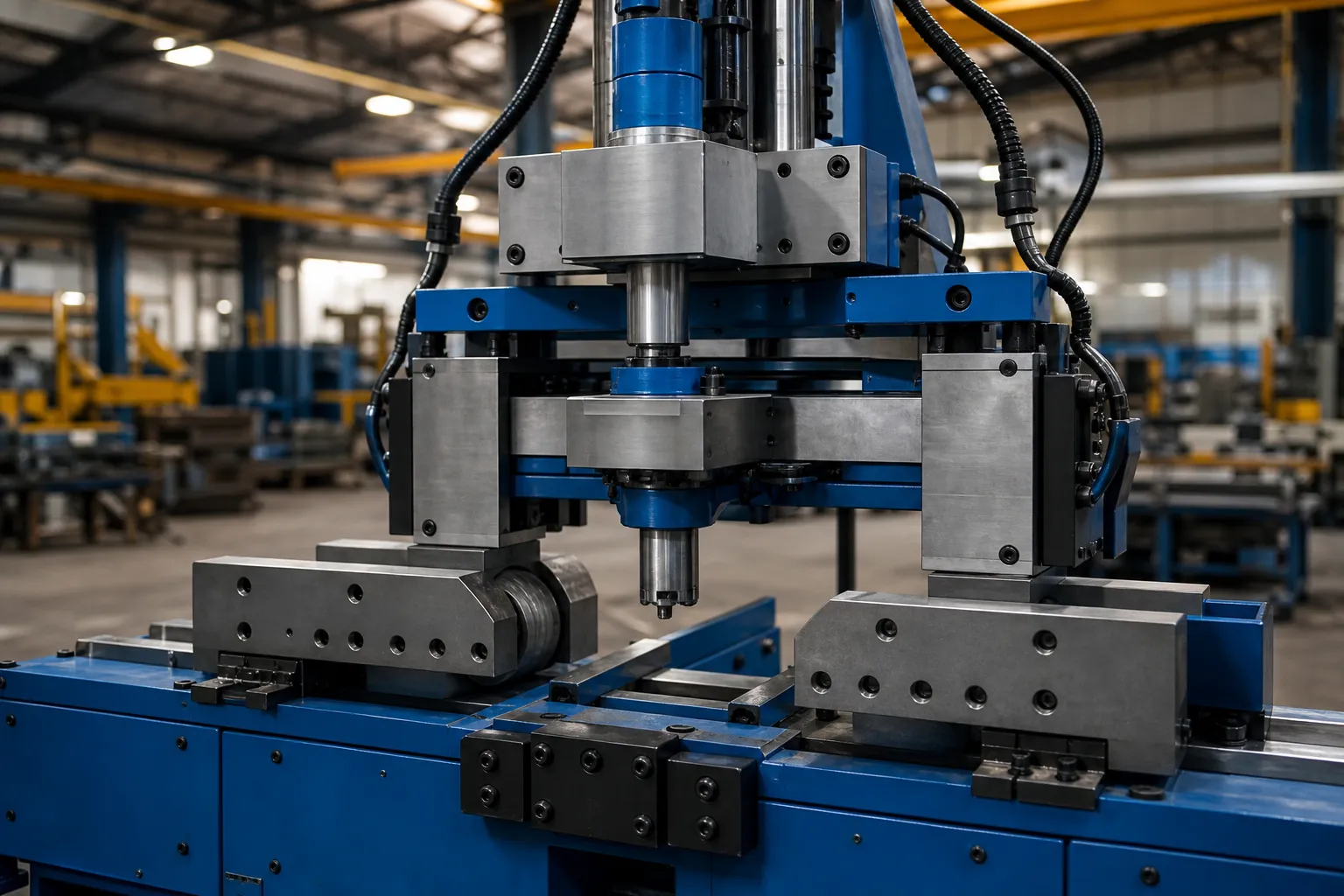
*التوضيح المفهوم الهندسي. إنه ليس دليلاً على المعدات المتاحة, تصميم آمن أو تطبيق جيجا كاستينغ.*
يرى التكرار لاعبا اساسيا وجلوس مسند و عدم اليقين في القياس في فحص الاستقامة للضوابط ذات الصلة; ولا يقدم أي منهما دليلاً على قدرة الصب ثلاثي الأبعاد.
الأدلة المطلوبة قبل أي مطالبة من الموردين
يتطلب قرار النشر المفتوح وجود مشروع حقيقي معتمد, مسند وتركيبات ثلاثية الأبعاد محددة بالرسم, بيانات القياس قبل/بعد/الإصدار, سجلات التصحيح, مراجعة السطح/النزاهة, العينات المقبولة وتفويض العملاء. وحتى ذلك الحين تظل هذه الصفحة إطارًا للبحث. لإجراء مناقشة هندسية واسعة النطاق, الاتصال بـ StraighteningTech مع معلومات المشروع المعتمدة.
التحقق من الصحة مطلوب قبل مطالبة النظام
Any system claim for giga-cast correction needs a defined workpiece scope, calibrated datums and fixtures, بيانات القياس التي يمكن تتبعها, and correlation with the customer’s own gauge. A generic machine capability is not a verified result for this topic.
التعليمات
Can a giga-cast structural part be straightened on a bar straightening machine?
Not as a drop-in. Bar straightening machines assume a uniform stiff section and a single centerline error. A thin-wall structural casting has direction-dependent stiffness, twist and interface-position deviations, and needs a datum, fixture and measurement concept built around its drawing — plus a crack-risk review appropriate to cast ductility. Some underlying correction physics is shared; the workholding, measurement and validation are not.
Should stress relief come before or after straightening a casting?
That depends on the distortion history and the process route, and it is a decision for the responsible process engineer. Correcting before stress relief risks later relaxation of the correction; correcting after removes one instability source but may face harder material. What should be non-negotiable is that the choice is deliberate, documented, and consistent between the trial and production.
What evidence should a buyer request before accepting a 3D straightening proposal?
A drawing-defined 3D datum and fixture concept, بيانات القياس في الحالات المستلمة والمفرج عنها, سجل التصحيح لكل جزء تجريبي, نطاق النزاهة أو فحص الكراك المتفق عليه مع فريق الجودة, ويتم الحكم على القبول على مقياس العميل. اقتراح يقدم مواصفات الجهاز فقط, بدون تلك العناصر, ليس اقتراحا لهذا العمل.
موارد تقنية الاستقامة ذات الصلة
يرى كيف يعمل استقامة العمود التلقائي, استقامة اختبار العينة والقبول و استقامة العمود مقابل الجريان مقابل TIR لحدود التحكم العامة التي تنطبق قبل أي مطالبة بالقدرة 3د استقامة الأجزاء الهيكلية جيجا المصبوب.

*رسم توضيحي للمفهوم الهندسي.*
يعد تصحيح Giga-casting بمثابة محادثة تلقائية أولاً – ال المقارنة اليدوية مقابل التلقائية يعالج القفزة العملية, و حالة العائد على الاستثمار للاستقامة التلقائية يعالج مسألة رأس المال.