
في صناعة تصنيع السحابة, يعد ثني البراغي الطويلة بعد المعالجة الحرارية نقطة ألم عالمية. تقليدي “الطرق اليدوية” ليس فقط غير فعال ولكنه يفشل أيضًا في ضمان الدقة المتسقة. تشارك هذه المقالة المتخصصة حل استقامة الترباس الآلي: demonstrating a reported client case in which automation took an 8-person manual line to one operator supervising four machines, with straightness held within 0.1 mm on the client’s acceptance records.
What is the Bolt?
البراغي هي أدوات التثبيت الأساسية للآلات, بناء, وصناعات السيارات. قطعة العمل النموذجية لهذا الحل هي مسمار طويل عالي القوة: 15قطر مم, 340طول مم.
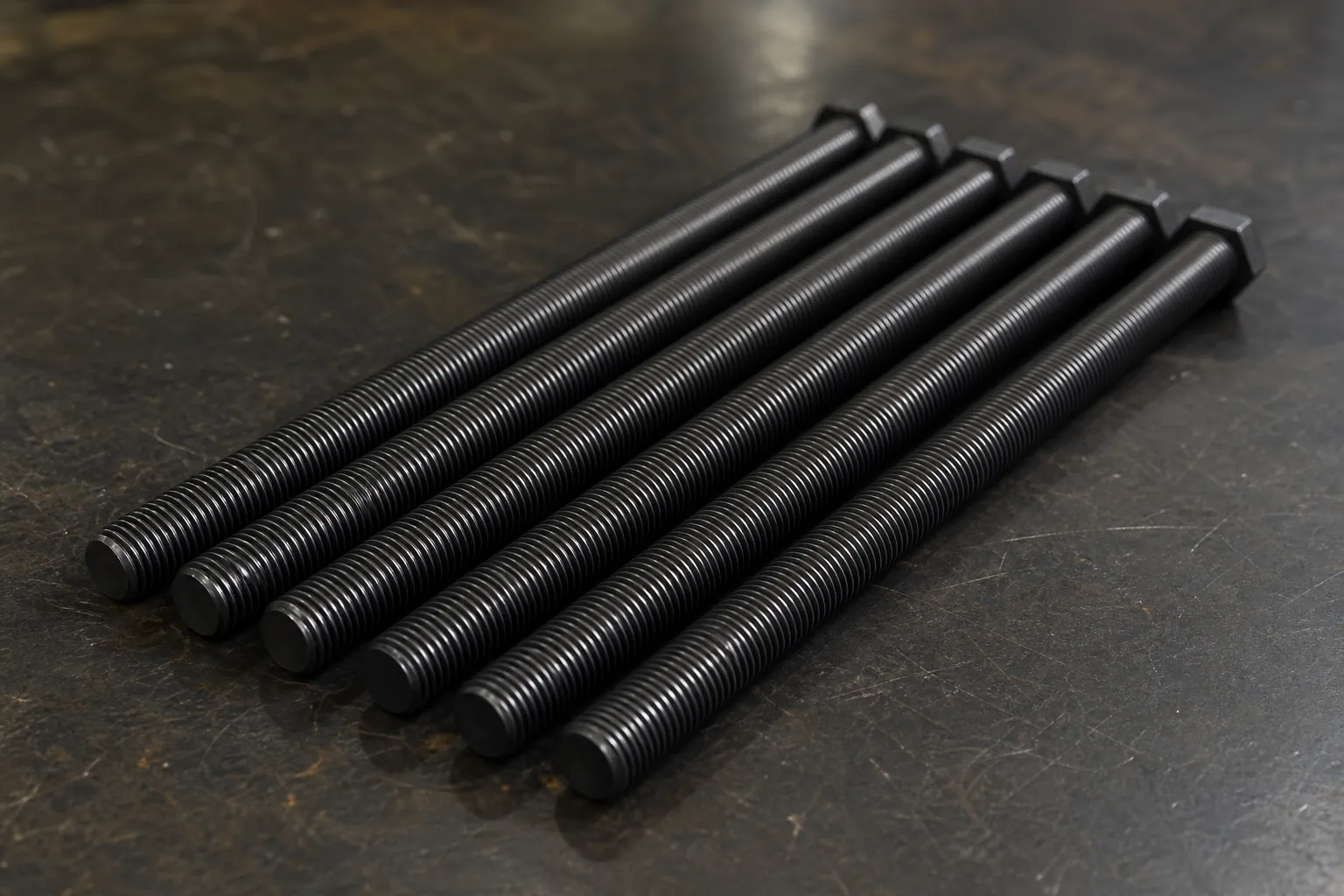
الميزات والتحديات الهيكلية
- نسبة L/D عالية: الطول 340 مم يجعل البرغي شديد التأثر بالانحناء الأولي بمقدار 0.5 مم – 1.5ملم بعد المعالجة الحرارية.
- متطلبات الدقة: The client required straightness within 0.2 مم; the case acceptance records were held under 0.1 مم.
- متطلبات الحماية: يجب أن تضمن عملية الاستقامة عدم حدوث أي ضرر لدقة الخيط وجودة السطح.
Why Heat Treatment Bends Long Bolts in the First Place
Understanding the distortion source is what makes a correction process defensible instead of decorative. During quenching, a long fastener cools unevenly: the section cools at different rates depending on orientation in the basket or fixture, agitation contact, and local mass differences between the plain shank, the threaded length and the head. Each cooling path wants to contract by a different amount, and the resulting locked-in stresses bend the part when it relaxes. The effect scales with length — which is why short bolts leave heat treatment usable while long ones of the same grade systematically arrive bent. Thread rolling and machining before treatment add their own stress history, and any straightening performed at the heat treater counts as prior deformation for everything done afterward.
Two practical consequences follow. أولاً, incoming inspection on long heat-treated bolts is not optional paperwork — the bend magnitude and pattern arriving at the straightening station determine both the correction plan and any supplier conversation, and the interaction of prior deformation with correction response is the reason reverse-loading behavior matters, as covered under تأثير بوشنجر في الاستقامة. ثانية, process decisions upstream — how parts are racked or basketed through quench, whether stress relief is applied — change the distribution the straightening station sees, and are usually the cheapest place to reduce total correction work.
Reading the Bend Before Correcting It
Long fasteners arrive with a small vocabulary of bend patterns, and naming the pattern is the first step of an efficient correction loop. A single-arc bow — one gentle curve, maximum near the middle — is the most common heat-treatment signature and the most straightforward to correct with supports positioned around the peak. An S-shaped double bend has two opposite peaks, usually reflecting two constraint points during quench, and demands two coordinated corrections rather than one big press at the largest reading. A local kink near the head or the thread runout concentrates distortion where section stiffness changes, and behaves differently from a distributed bow. أخيراً, twist about the axis occasionally accompanies bending on parts with asymmetric features. Each pattern requires its own measurement map and correction sequence, which is why an automatic station that scans the full length and builds the map before pressing — rather than chasing the single worst reading — converges in fewer strokes. The measuring-and-correcting loop behind this is described for automatic shaft straightening generally, and for the long-bolt family specifically in the automatic long bolt straightening process.
لماذا يجب أن يبتعد استقامة الترباس عن “المطرقة اليدوية”
العملية التقليدية مقابل. الحل الآلي
The figures below are this client’s reported baseline and post-commissioning values, not a universal benchmark for every fastener line.
| نقطة الألم | المطرقة اليدوية / الصحافة اليدوية | حل استقامة الآلي |
| متطلبات العمل | 8 workers per shift (manual baseline, reported case) | 1 عامل ل 4 آلات (reported case) |
| استقامة | 0.2 – 0.5 mm spread (reported manual baseline) | ≥ 0.1 مم (client acceptance records) |
| وقت الدورة | 120 – 180 ق / قطعة (reported manual baseline) | 10 – 15 ق / قطعة (reported case) |
| التكلفة الإجمالية | High labor cost per corrected part | Manpower reduced from 8 operators to 1 supervising 4 آلات (reported case) |
تدفق عملية استقامة الترباس الآلي
يغطي هذا الحل عملية آلية كاملة ومغلقة بدءًا من التغذية وحتى الفرز, ضمان أن كل مسمار يلبي متطلبات التسليم عالية المستوى.
أوصاف العملية الأساسية
- التغذية التلقائية: يتم تغذية البراغي المنحنية تلقائيًا من القادوس إلى محطة التقويم دون تدخل بشري.
- القياس الديناميكي: تقوم أجهزة الاستشعار عالية الدقة بمسح قطعة العمل الدوارة في الوقت الفعلي, التقاط دقيق لنقطة الانحناء القصوى عبر الطول بالكامل.
- الضغط المؤازر: يقوم النظام الذكي تلقائيًا بحساب الزنبرك الخلفي بناءً على المادة (الكربون الصلب/سبائك الصلب), ويطبق الكبش المؤازر ضغطًا دقيقًا لتصحيح تمريرة واحدة.
- الفرز التلقائي: تنتقل البراغي المؤهلة إلى المرحلة التالية, while non-conforming parts are automatically isolated before they leave the machine.

آلة استقامة البراغي UBJ-80
يعتبر جهاز تمليس الشعر هذا مثاليًا للأجزاء النهائية المعالجة بالحرارة (على سبيل المثال, ختم/مكونات الجهاز المكتبي, قطع غيار السيارات/الدراجات النارية, أدوات, مسامير) والحانات (فُولاَذ, نحاس, الألومنيوم, الفولاذ المقاوم للصدأ, سبائك التيتانيوم) بطول 60-600 ملم & قطر φ3 – φ25 مم. إنه يعزز الدقة وجودة المنتج.
التحديات والحلول الأساسية للاستقامة
تحدي 1: Manning and the Reported “1 عامل ل 4 آلات” Case
وصف المشكلة: Manual hammering and press correction depend on operator skill, stamina and shift discipline, so manning levels stay high and results vary from operator to operator.
حل:
يتم تنفيذ الحل لدينا أتمتة كاملة للحلقة المغلقة. منطق العملية بسيط للغاية, مع وصفات مدمجة لمختلف مواصفات الترباس. يحتاج العامل العادي فقط إلى إعادة ملء القادوس بشكل دوري; الباقي - القياس, استقامة, والتفتيش - يتم التعامل معه تلقائيًا بواسطة الجهاز. وهذا يحل مشكلة نقص العمالة ويزيل السقوط الدقيق الناتج عن التعب.
تحدي 2: ضمان الاتساق ضمن دقة 0.1 مم
وصف المشكلة: عندما يتعرض الترباس لضربات المطرقة, يصبح توزيع الضغط الداخلي غير متساوٍ, وغالبا ما يؤدي ذلك إلى الإفراط في التصحيح في المناطق المحلية.
حل:
يستخدم الحل أ نظام التحكم المؤازر ذو المعلمات الكاملة. على عكس الحكم البشري الغامض, تكتشف المستشعرات المنحنى المحوري للمسمار بدقة على مستوى الميكرون. من خلال خوارزميات مؤازرة متعددة الخطوات, يتغلب النظام بدقة على الزنبرك الخلفي المرن للفولاذ S45C أو سبائك الفولاذ, locking final straightness within the 0.1 mm window achieved on this client’s qualified recipe.
How Thread and Head Zones Are Protected During Correction
Thread protection is a contact-zone engineering problem, and the principles are the same ones that govern surface-protection tooling across straightening applications. The correction force and the reaction forces both need somewhere to live, and on a long bolt the plain shank is the region designed to carry load, while the threaded length and the under-head fillet are the regions most easily damaged. A protection concept therefore has three parts: place supports on the shank at controlled span positions around the bend peak; direct press contact onto the shank through tooling that conforms to the section instead of touching thread crests; and keep every edge that could contact the workpiece generously radiused so load spreads instead of concentrating. Cleanliness belongs in the same sentence — debris trapped between press tooling and a thread flank is a scratch generator, and on plated or coated bolts the coating class defines how much contact the finish can tolerate at all.
The validation side is equally concrete. A thread-protection claim is proven by inspection agreed before the trial — thread gauges still running, flank condition reviewed under the method the quality function specifies — together with the released-state straightness result, on representative parts, after repeat setups. Protection and geometry are accepted together or not at all.
What an Acceptance Criteria Package Should Contain
A bolt straightening process is only as good as the acceptance definition it answers to, and a complete one answers five questions in writing. What characteristic governs — straightness of the axis, measured how: on centers, on supports, rotating, in what condition, since a reading under restraint is not a released result, لكل loaded versus released measurement practice. What the limit is, and where it applies — full length or specified spans. What else must survive the process — thread fit, الانتهاء من السطح, طلاء, head markings. How conformity is sampled — every part through an automatic gauge, or a sampling plan with defined reaction to a failure. And what happens to nonconforming parts — rework limits, segregation and disposition authority, following the NOK sorting and rework-limit framework. Buyers comparing straightening suppliers are well advised to ask for exactly this package; the ability to produce it says more about a supplier than any single machine specification.
حالة التصنيع: الخيار الرابع للعميل الهندي
خلفية العملاء
مورد أدوات تثبيت هندي معروف يوفر مكونات لعلامات تجارية عالمية لآلات البناء.
نتائج التنفيذ
- كرر الأوامر: بناءً على الأداء المتميز للوحدات الثلاث الأولى, العميل اشترى مؤخرا بهم 4الآلة.
- Operator Consolidation: The client reported one operator managing all 4 machines after commissioning, with a substantial increase in output per operator.
- معيار الجودة: The client’s records report straightness moving from 0.2 mm down to under 0.1 mm after commissioning.
الأسئلة الشائعة
- س: هل سيؤدي كبش الاستقامة إلى إتلاف خيوط الترباس?
- لا. لقد صممنا عدم الاتصال, قوالب حماية مبطنة خصيصا لاستقامة الترباس. تتوافق كتل الضغط مع انحناء الترباس بشكل مثالي, ضمان التوزيع المتساوي للقوة وتجنب المسافات البادئة السطحية.
- س: هل يمكن دمج المعدات في نظام MES الخاص بمصنعنا?
- نعم. يتميز نظام التحكم الخاص بنا بواجهات بيانات قياسية لتسجيل وتصدير بيانات التسوية في الوقت الفعلي لكل مسمار, تلبية متطلبات التتبع الحديثة.
Additional Process Questions
Why do bolts from the same heat-treatment lot arrive with different bend patterns?
Because each part’s position in the basket or rack gave it a different cooling path. Quench distortion is sensitive to orientation, local mass and agitation contact, so even identical bolts leave treatment with different locked-in stress patterns. Mapping incoming parts rather than assuming a uniform error is the practical answer, and it is why scanning-based stations build a per-part correction plan.
How many correction passes does a long bolt need?
It depends on the pattern, not a fixed number. A single-arc bow typically converges in one planned press; an S-bend needs two coordinated corrections; local kinks near section changes respond differently again. The governing rule is a rework limit set before production — parts that stop responding are routed to review, not pressed repeatedly, because each additional plastic cycle consumes fatigue life and changes the material’s response.
Should straightening come before or after thread rolling?
The route belongs to the fastener process engineer, but the trade-off is explicit: correcting before thread rolling lets subsequent operations work from a straight blank, while correcting after heat treatment with finished threads demands the contact-zone protection described above. Whichever route is chosen, the acceptance package must define what state the straightness limit applies to, and the correction validation must be run on parts carrying that state.
ملخص
لمصانع التثبيت التي تسعى لتحقيق الكفاءة والجودة العالية, ان حل استقامة الترباس الآلي هو الطريق الأساسي لزيادة القدرة التنافسية. Whether the target is lower manning or 0.1 mm delivery precision, the figures in this article are one client’s reported case; your own results depend on the bolt family, incoming distortion and acceptance definition.
Moving from manual bolt correction toward automation? ال منطق التحديد اليدوي مقابل المنطق التلقائي و حالة العائد على الاستثمار للاستقامة التلقائية هي الخطوات الطبيعية التالية.
إذا كنت تواجه مشكلات في إدارة العمل أو اختناقات دقيقة, لا تتردد في اتصل بنا لاقتراح فني مخصص.