
ٹیوب کا بیضوی پن اور سینٹر لائن سیدھا پن مختلف جیومیٹرک حالات ہیں۔. اوولٹی ایک کراس سیکشن کی شکل سے متعلق ہے۔; سینٹر لائن سیدھا اس کی لمبائی کے ساتھ ٹیوب کے راستے سے متعلق ہے۔. ایک ٹیوب میں قابل قبول سینٹر لائن جیومیٹری ہو سکتی ہے لیکن ایک سٹیشن پر گول سے باہر ہو سکتی ہے۔, یا یہ ہر ناپے ہوئے حصے پر گول ہو سکتا ہے جب کہ اس کی سنٹرل لائن ایک طویل عرصے تک جھکتی ہے۔. ان حالات کو ایک "سیدھے پن" کی قدر کے طور پر سمجھنا ایک غلط عمل کے فیصلے کا باعث بن سکتا ہے۔.
یہ گائیڈ پیمائش اور قبولیت کا فریم ورک ہے۔. یہ سٹریٹننگ ٹیک ٹیوب رینج کا دعوی نہیں کرتا ہے۔, دیوار کی صلاحیت, گیج, سینسر, رواداری یا توثیق شدہ اصلاحی عمل. حتمی ضروریات کو کنٹرول شدہ ڈرائنگ سے آنا چاہیے۔, حوالہ کا طریقہ اور نمائندہ نمونے۔.

*انجینئرنگ تصور کی مثال. اس میں ٹیوب کو سیدھا کرنے کے عمل کے سیاق و سباق کو دکھایا گیا ہے۔, اس بات کا ثبوت نہیں ہے کہ ایک مخصوص ٹیوب فیملی یا دیوار کی حالت پر کارروائی کی جا سکتی ہے۔*
Define Each Characteristic Before Measuring Either
Ovality is a per-station property: every measured cross-section has its own value, and a tube inspected at twelve stations has twelve ovality values that can differ. Centerline straightness is a whole-length property: it is derived from the path traced by the successive centers of those cross-sections. The two characteristics do not merely describe different defects — they live at different levels of the measurement chain, and the higher level is computed from the lower one.
That dependency is the hidden coupling. A centerline is not measured directly; it is computed, station by station, from sections that are never perfectly round. Whichever rule converts a measured section into a single center point — the average of two diameters, a least-squares circle center, a minimum-zone circle center, or the center a two-point gauge happens to report — becomes part of the straightness definition. Two inspection methods can therefore disagree about the centerline of the same physical tube while each is internally consistent, because they embedded different center-finding rules.
The acceptance documents should state, for each characteristic: the formula (diameter-based ovality, radial-deviation-based ovality, or a full form tolerance), the center-finding rule feeding the centerline calculation, and the station set over which each value applies. A single “straightness OK” record that does not say which rules produced it is not transferable between supplier and customer gauges.
مناسب سپورٹ کے ساتھ کراس سیکشن اور لمبائی کے لحاظ سے جیومیٹری کی پیمائش کریں۔
سپورٹ پوزیشنز ساگ کے ذریعے ظاہری سنٹر لائن کو متاثر کر سکتی ہیں۔; کلیمپنگ ایک پتلی دیوار والے حصے کو متاثر کر سکتی ہے۔; تحقیقاتی رابطہ سطح یا دیوار کے ردعمل کو متاثر کر سکتا ہے۔. اس لیے طریقہ کار کو ہر ایک خصوصیت کے لیے شرائط کی وضاحت کرنی چاہیے اور جہاں ضرورت ہو وہاں چیک کو دوبارہ/دوبارہ سیٹ کرنا چاہیے۔.
| پیمائش کا کنٹرول | یہ کیوں اہمیت رکھتا ہے۔ |
|---|---|
| کراس سیکشن اسٹیشن اور واقفیت | اوولٹی لمبائی اور فریم کے ارد گرد مختلف ہو سکتی ہے۔ |
| طول بلد کا دورانیہ اور معاونت | سینٹر لائن ریڈنگ میں کشش ثقل اور فکسچر اثرات شامل ہو سکتے ہیں۔ |
| ڈیٹم اور اختتامی حالت | اس بات کا تعین کرتا ہے کہ آیا نتیجہ مطلوبہ فنکشن سے متعلق ہے۔ |
| رابطہ یا نظری طریقہ | مختلف سطح کو متعارف کرایا جا سکتا ہے, رسائی اور غیر یقینی کی حدود |
| رہائی کی شرط | عارضی پابندی کو حتمی جیومیٹری کے طور پر رپورٹ ہونے سے روکتا ہے۔ |
Support Spacing Filters the Centerline Signal
On a measured span, سینٹر لائن ریڈنگ کے لیے مکینیکل فلٹر کے طور پر کام کرنے کی حمایت کرتا ہے۔: سپورٹ اسپیسنگ سے کم طول موج کے ساتھ موڑنے والے مواد کو سخت حصوں سے جزوی طور پر دبا دیا جاتا ہے, جب کہ لمبی طول موج کا کمان پڑھنے میں گزرتا ہے۔. لہذا ایک ہی ٹیوب لمبے لمبے کے مقابلے میں مختصر فکسچر اسپین پر مختلف کمان کی اطلاع دے سکتی ہے بغیر پڑھے غلط۔. سپورٹ اسپین سیٹ اپ کی سہولت نہیں ہے — یہ سیدھی تعریف کا حصہ ہے۔, اور یہ ملنا چاہئے, یا واضح طور پر منسلک کیا جائے, گاہک گیج کے ذریعہ استعمال کردہ اسپین.
سٹیشن کا فاصلہ نمونے لینے کے ڈومین میں یکساں کردار ادا کرتا ہے۔. وسیع پیمانے پر فاصلہ والے اسٹیشن سینٹر لائن کے راستے کے نمونے سے کم ہیں اور اسٹیشنوں کے درمیان مقامی کنک کو کھو سکتے ہیں۔; بہت گھنے اسٹیشنز سطح اور دیوار کی موٹائی کے فرق کو حسابی محور میں ملانا شروع کر دیتے ہیں. The sampling plan should state where stations sit — not only how many — because the informative stations are the support points, the clamping points, the tube ends and the neighborhoods of expected bend peaks.
On thin-wall tubes the supports carry a second, unwanted effect: support reaction can ovalize the section locally, so the ovality measured at a support station includes a measurement-induced contribution. Comparing readings at supported stations against readings taken just outside the support influence is a cheap check for this; where the difference is significant, the ovality acceptance must be evaluated at defined free stations. For the loaded-versus-released distinction in final acceptance, دیکھیں بھری ہوئی بمقابلہ جاری کردہ سیدھے پن کی پیمائش.
ایک غلطی کو درست نہ کریں اور فرض کریں کہ دوسری حل ہو گئی ہے۔
ایک اصلاحی عمل جس کا مقصد کمان کو کم کرنا ہے، بیضوی یا دیوار کی حالت کو تبدیل کر سکتا ہے۔. ایک عمل جس کا مقصد سیکشن فارم کو بہتر بنانا ہے، ہو سکتا ہے سینٹر لائن سیدھا پن قائم نہ کرے۔. نمونے کے منصوبے میں یہ واضح کرنا چاہیے کہ کون سی جیومیٹری کو کنٹرول کیا جاتا ہے۔, جس میں ثانوی خصوصیات کی جانچ کی جاتی ہے۔, جہاں رابطے کی اجازت ہے اور جب ایک آزاد عمل درکار ہو۔.
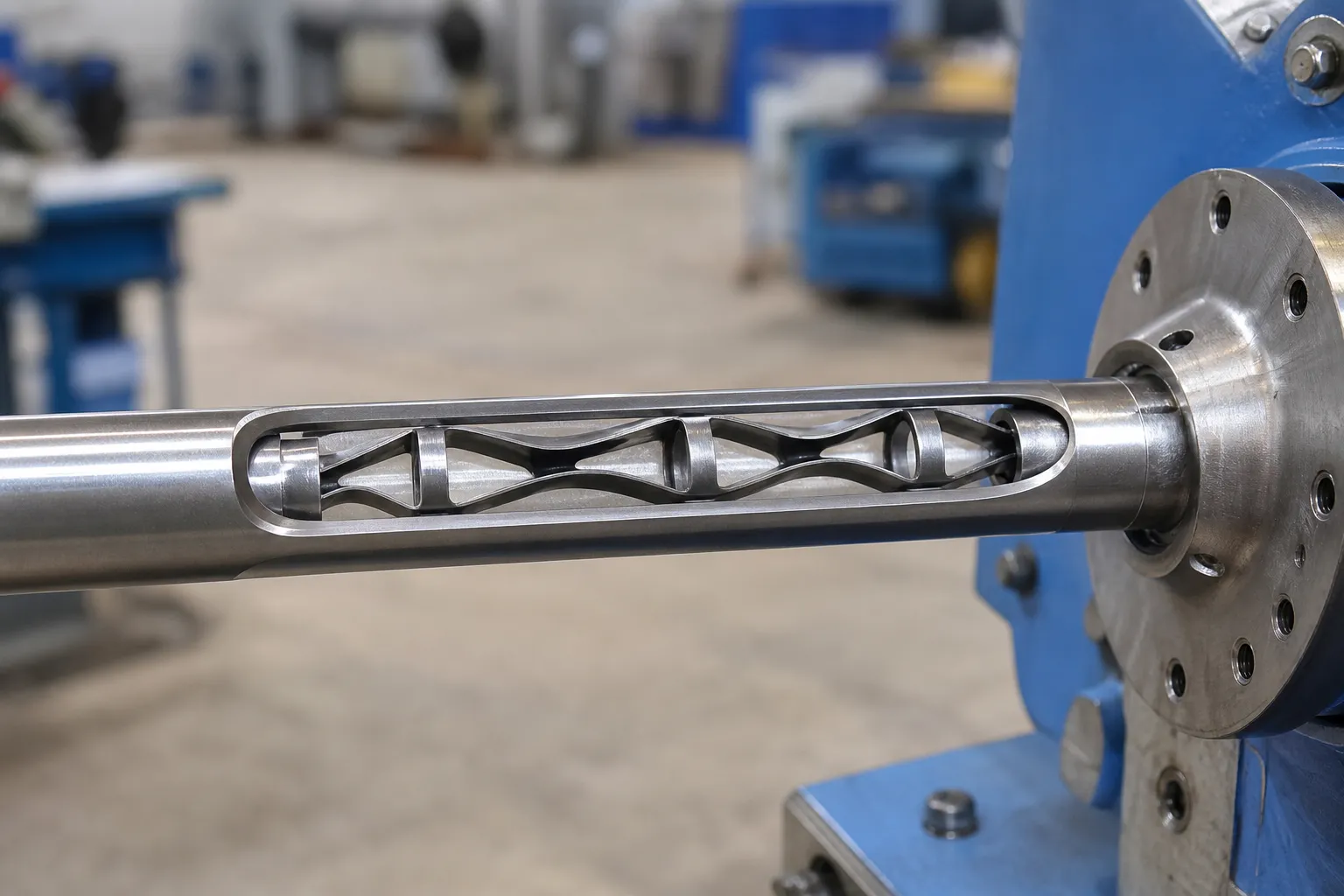
*انجینئرنگ تصور کی مثال. یہ امیدوار انجینئرنگ کے سوال کے طور پر اندرونی تعاون پیش کرتا ہے۔; یہ دعویٰ نہیں ہے کہ اندرونی ٹولنگ معیاری یا ہر ٹیوب کے لیے موزوں ہے۔*
غیر گول کھوکھلی حصوں کے لیے, see square and rectangular tube straightening. کھوکھلی گھومنے والے حصوں کے لئے, دیکھیں پتلی دیوار کے کھوکھلی شافٹ کو سیدھا کرنا.
Separate the Two Signals Before Accepting Either Reading
The two characteristics contaminate each other's measurements in specific, diagnosable ways. In a rotating single-probe trace at one station, the radial signal contains at least the local form error of the section and the offset of the section center from the rotation axis. Ovality-dominated form error appears primarily as a second harmonic — the trace repeats twice per revolution, with the ovality major axis setting the phase. A center offset appears as a first harmonic — one bump per revolution. Within a single trace the two are separable in principle, but the first harmonic itself is ambiguous: a genuine bend and a seating or chucking offset produce the same single-station signature. The discriminators live outside the single trace. Across stations, a bend changes amplitude with longitudinal position and follows the bend plane, while a seating offset keeps a constant amplitude and a phase locked to the rotation axis. That multi-station logic, together with the harmonic fingerprints of lobing and datum effects, is developed in گھومنے والی پیمائش میں گول پن بمقابلہ موڑ.
The contamination also runs the other way. A probe scanned along the tube reads the local surface, محور نہیں: a tube that is straight on its centerline but drifting in ovality orientation along its length produces a lengthwise trace that looks like bow. A practical two-scan check costs little: scan the length in one direction, then in the orthogonal direction — by rotating the tube ninety degrees against the same probe, or by using a second probe at right angles. Compare the two traces. A centerline bow decomposes into the two directions as projections of one vector: the two traces are similar in shape and same in sign, each a scaled copy of the other. Section form does the opposite: where the ovality major axis lies in the first scan direction it lies across it in the second, so a peak in one trace corresponds to a valley in the other. Traces that are same-shape-same-sign nominate a bend; traces that are opposite-sign at particular stations nominate form and wall variation. Only the first category should go to a correction decision.
Wall-thickness eccentricity adds a third layer on drawn or rolled tube: the outside surface and the bore are not concentric, so a centerline computed from outside-diameter measurements and one computed from bore measurements will not coincide. Neither is wrong; they answer different functional questions. Which one governs acceptance must follow the function of the part in its assembly — and the drawing, not whichever gauge happens to be available, defines it. Thin-wall behavior during correction has its own failure modes, میں احاطہ کرتا ہے پتلی دیوار کی ٹیوب بغیر گرے سیدھی کرنا.
کسٹمر گیج کوریلیشن پلان بنائیں
مقدمے کی سماعت میں نمائندہ نارمل اور بدترین کیس والی ٹیوبیں استعمال کرنی چاہئیں, دونوں خصوصیات کے لیے خام ریڈنگ, حمایت اور رہائی کی شرائط پر اتفاق کیا۔, دوبارہ سیٹ اپ, سطح / دیوار کی جانچ پڑتال, اور کسٹمر گیج سے موازنہ. ریکارڈ میں یہ بتانا چاہیے کہ آیا پڑھنا مشینی عمل کی قدر ہے۔, گاہک کی قبولیت کی قدر یا ایک متعلقہ نتیجہ.
استعمال کریں۔ مشین گیج بمقابلہ کسٹمر گیج کا ارتباط اور سیدھا نمونہ ٹیسٹ اور قبولیت ثبوت پیکج کی وضاحت کرنے کے لئے.
Run Two Separate Acceptance Chains, Not One
Because the definitions, supports and failure modes differ, ovality and centerline straightness each need their own chain from drawing language to signed record. Collapsing both into one generic “geometry OK” leaves every link below ambiguous:
| Chain link | Ovality chain | Centerline chain |
|---|---|---|
| Characteristic and formula | Which deviation rule, applied per station | Which span governs, and which center-finding rule feeds the path |
| حوالہ کا طریقہ | Section measurement at defined stations | Lengthwise scan or rotating trace on defined supports |
| Support and release | Free stations distinguished from supported stations | Span defined; sag and clamping effects addressed or correlated |
| Sampling | Station positions fixed by the specification, سہولت سے نہیں۔ | Station spacing short enough to resolve the shortest expected bend |
| گیج کی صلاحیت | Repeatability proven against within-part form variation | Repeatability proven against part-to-part and setup variation |
| ارتباط | Machine gauge vs customer gauge on the same sections | Machine gauge vs customer gauge on the same span and supports |
| ریکارڈ | Per-station values with rule and station identity | Path result with support span and filtering stated |
Each link is a place the chain silently breaks. An unstated formula makes two gauges' numbers incomparable. A support condition defined at the machine but not at the customer builds a systematic offset into every correlation attempt. An unspecified station set makes the verdict depend on where the operator happened to measure. And an unproven gauge capability converts measurement noise into apparent process drift, which the correction loop then chases. Validating the measurement system before trusting any of these numbers is covered in گیج آر&لائنوں کو سیدھا کرنے کے لیے R.
اکثر پوچھے گئے سوالات
کیا ٹیوب سیدھی ہو سکتی ہے لیکن گول سے باہر؟?
جی ہاں. سنٹرل لائن سیدھا پن اور بیضوی پن مختلف حالات ہیں اور الگ پیمائش کی ضرورت ہے۔. In practice the two belong in the same inspection record but under different characteristic numbers, each with its own formula, station set and gauge correlation.
کیا گول کراس سیکشن ثابت کرتا ہے کہ ٹیوب اپنی لمبائی سے سیدھی ہے۔?
نہیں. ایک ٹیوب ناپے ہوئے حصوں پر گول ہو سکتی ہے جب کہ اس کی سنٹر لائن میں کمان یا جھاڑو ہے۔. A lengthwise scan reads the surface rather than the axis, so the orthogonal two-scan comparison above is what keeps form effects out of the straightness verdict.
کیا اصلاحی عمل دونوں نتائج کی ضمانت دے سکتا ہے۔?
ورک پیس کی مخصوص توثیق کے بغیر نہیں۔. اس عمل کو ڈرائنگ کے لیے درکار ہر خصوصیت کی پیمائش اور تصدیق کرنی چاہیے۔. In particular, a process validated for bow says nothing about its effect on section form at contacts, supports and free stations — those need their own before-and-after readings.
How can we tell whether a straightness reading is contaminated by ovality?
Repeat the lengthwise scan in the orthogonal direction and compare the traces. Same shape and same sign across the two scans is the signature of a centerline bow; opposite sign at particular stations points to section form or wall variation. Rotating single-station traces add a second test: a bend changes amplitude between stations, while a seating offset does not.
Does ovality need to be measured at every cross-section?
Only the specification can answer that. What the acceptance plan must guarantee is that the station set is fixed in advance — typically including supports, clamps, ends and the neighborhoods of bend peaks — so the verdict does not depend on where an operator happened to check.

*انجینئرنگ تصور کی مثال۔*