
Ручне та автоматичне випрямлення не є ознаками якості. Будь-який маршрут може бути непридатним, коли базова точка заготовки, метод вимірювання, контактні зони, правило прийняття або процес обробки не визначено. Корисне запитання полягає в тому, які кроки потребують повторюваного контролю для певного сімейства деталей, а які етапи потребують кваліфікованого налаштування, інженерне схвалення або перевірка замовника.
Цей посібник є основою вибору, не твердження про те, що StraighteningTech надає певну конфігурацію автоматизації або що автоматизація гарантує точність, час циклу, скорочення праці або ROI. Ці результати вимагають перевіреного обсягу обладнання та репрезентативних доказів виробництва.
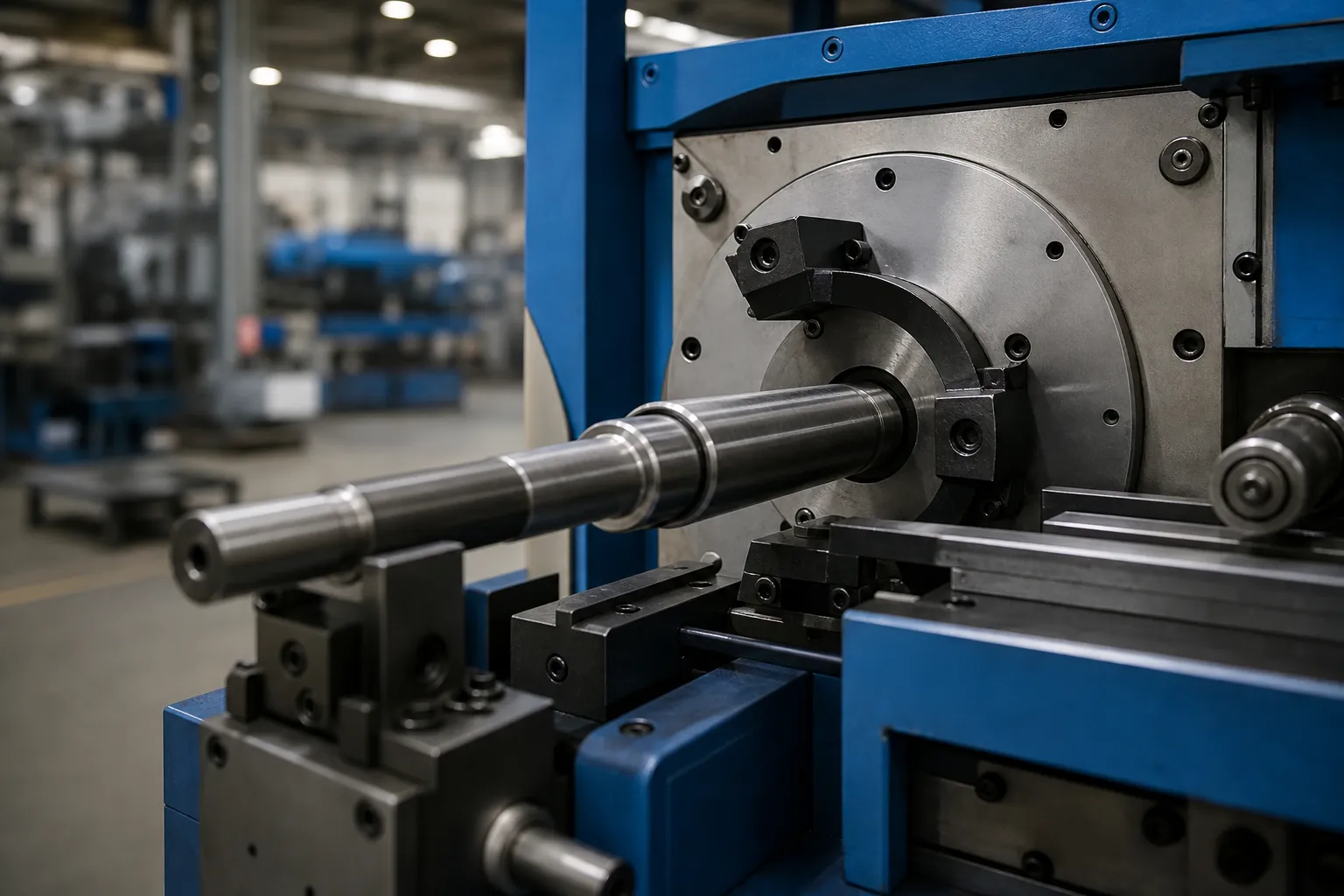
*Інженерна концепція ілюстрації. Він показує можливий контекст автоматизованої обробки, не є доказом доступної локальної конфігурації або результату виробництва.*
Визначте межу автоматизації
«Автоматично» може описувати одну або кілька різних функцій. Завантаження, ідентифікація частини, орієнтація, опорне положення, вимірювання, корекція, розвантаження, вибір рецепта, простежуваність і сортування NOK слід оцінювати окремо.
| функція | Ручний маршрут для оцінки | Автоматизований маршрут для оцінки |
|---|---|---|
| Завантаження та орієнтація | Керування оператором, підтвердження кріплення та безпечна ергономіка | Сімейна ідентифікація, контрольоване представлення та перевірка обробки |
| Вимірювання | Налаштування оператора, показання манометра та повторюваність | Контрольована послідовність, збір даних і вимірювальна кореляція |
| Виправлення | Кваліфіковане судження та поступова реакція | Цикл, керований рецептом, і порогові значення винятків |
| Зміна | Дисципліна кріплення/налаштування та перший огляд | Контроль версій, ідентичність інструменту та підтвердження першої частини |
| Розпорядження | Фізична сегрегація та задокументований огляд | Визначено PASS/NOK/переробити маршрут з повноваженнями людини |
Автоматична лінія все ще може вимагати затвердження вручну на критичному етапі. Робоча станція з ручним керуванням все ще може використовувати контрольовані датчики та відстежувані записи. Вибір має описувати реальний процес, а не використовувати широку позначку.
Почніть із змішування та приймання заготовок
Висока варіація, невизначена дата, складне поводження або часті інженерні зміни можуть зробити гнучкий ручний або напівавтоматичний маршрут під час розробки. Стабільна сім'я з повторюваним навантаженням, визначене вимірювання та підтверджена відповідь корекції можуть виправдати більшу автоматизацію. Жоден висновок не можна зробити лише з обсягу виробництва.
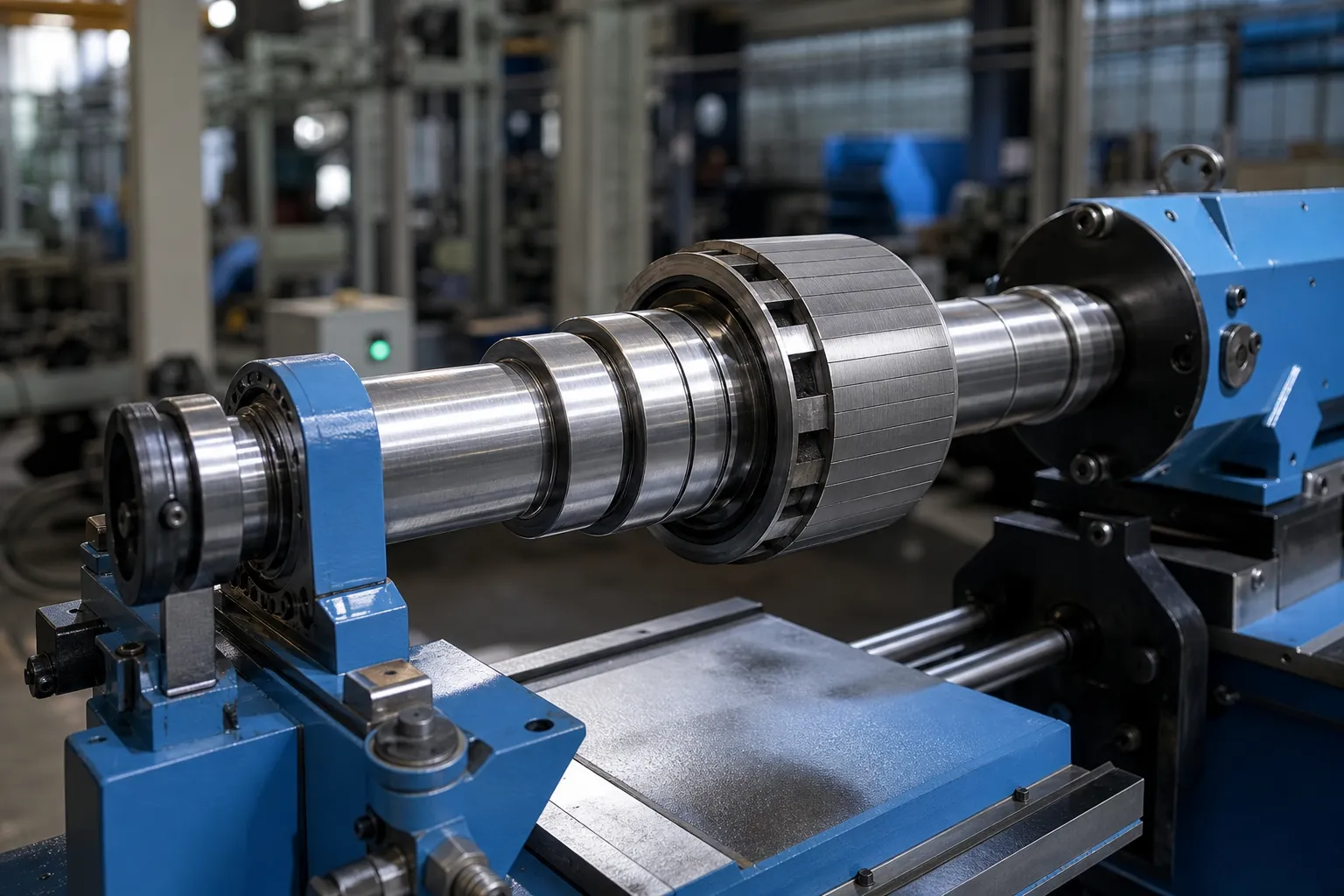
*Інженерна концепція ілюстрації. Він являє собою концепцію корекції замкнутого циклу; він не стверджує, що даний вал двигуна або функція автоматизації підтримується.*
У запиті пропозицій повинні бути вказані варіанти заготовок, стадія матеріалу/процесу, розподіл вхідних помилок, дані, охоронні зони, вимірювач клієнта, цільова суміш і обмеження обробки. використання вал, вибір випрямляча труб і профілів перед порівнянням міток автоматизації.
What Automation Actually Repeats
Strip away the robotics and an automatic straightening machine is a device for repeating a validated sequence: identify the family, seat the part, measure against a stored rule, apply a stored correction response, повторно виміряти, route. Every one of those verbs was originally written by a person — an engineer who qualified the datum, an operator who proved the correction response on samples, a quality function that approved the acceptance rule. Automation does not create that knowledge; it preserves and executes it. This framing explains both the strength and the boundary. The strength: once validated, the sequence runs identically at hour eight of a shift as at hour one, unaffected by fatigue, and every part carries its data. The boundary: everything upstream of validation — developing the correction concept for a new family, diagnosing an unfamiliar signal, deciding whether an anomaly is a setup fault or a part problem — remains engineering and skilled work, no matter how automatic the cell. A factory that automates before validating automates its confusion at line rate.
The Cost Structures Are Different, Not Just the Labels
Comparing routes on purchase price or headcount misses where each route actually spends money. The manual route spends it continuously: skilled operators take time to develop and are hard to replace, throughput varies with the person on shift, and consistency between operators is a permanent supervision task — the reproducibility component of measurement studies exists largely because of this. The automated route spends it front-loaded and in lumps: engineering effort to validate each family before the cell can run it, fixture and tooling per family, and a maintenance and calibration discipline that the cell depends on but the production schedule rarely celebrates. Changeover economics invert between the routes — cheap in skill and slow in minutes on a manual bench, fast in minutes but expensive in preparation on an automatic line. None of this makes either route cheaper in the abstract; it means the part mix, changeover frequency and available skills decide which cost structure fits. The machine cost structure discussion treats these drivers without pretending at universal payback numbers.
Порівняйте цикли вимірювання та корекції
Ручне випрямлення може покладатися на оператора для завантаження, міра, виберіть точку корекції та повторіть вимірювання. Автоматичне випрямлення може повторювати збережену послідовність. В обох випадках, кінцевий результат залежить від посадки бази, кореляція вимірювання, дозволений контакт, поступове виправлення та перевірка стану випуску.
| Питання | Чому це змінює рішення |
|---|---|
| Чи повторюється вхідна карта геометрії? | Автоматика не може компенсувати невизначений або нестабільний сигнал |
| Чи фіксуються сім'єю опори та точки корекції? | Частина з високим вмістом суміші може потребувати інженерної перевірки, а не загального рецепту |
| Чи корельований показник клієнта? | Показання машини не замінюють автоматично остаточну перевірку |
| Чи визначені винятки? | Неконтрольована повторна спроба може приховати проблему процесу |
Для границі процесу, побачити точкове випрямлення і випробування зразків випрямлення та прийняття.
Оцініть перехід, Дані та винятки
Автоматизація може бути корисною тільки при ідентичності частини, кріплення, версія рецепта, підтвердження першої частини, контролюються поля даних і виняткові маршрути. У рецензії має бути вказано, хто може змінити налаштування, як заблоковано запуск старих версій, як ідентифікується прилад, і що відбувається після вимірювання або сповіщення про сигнал процесу.
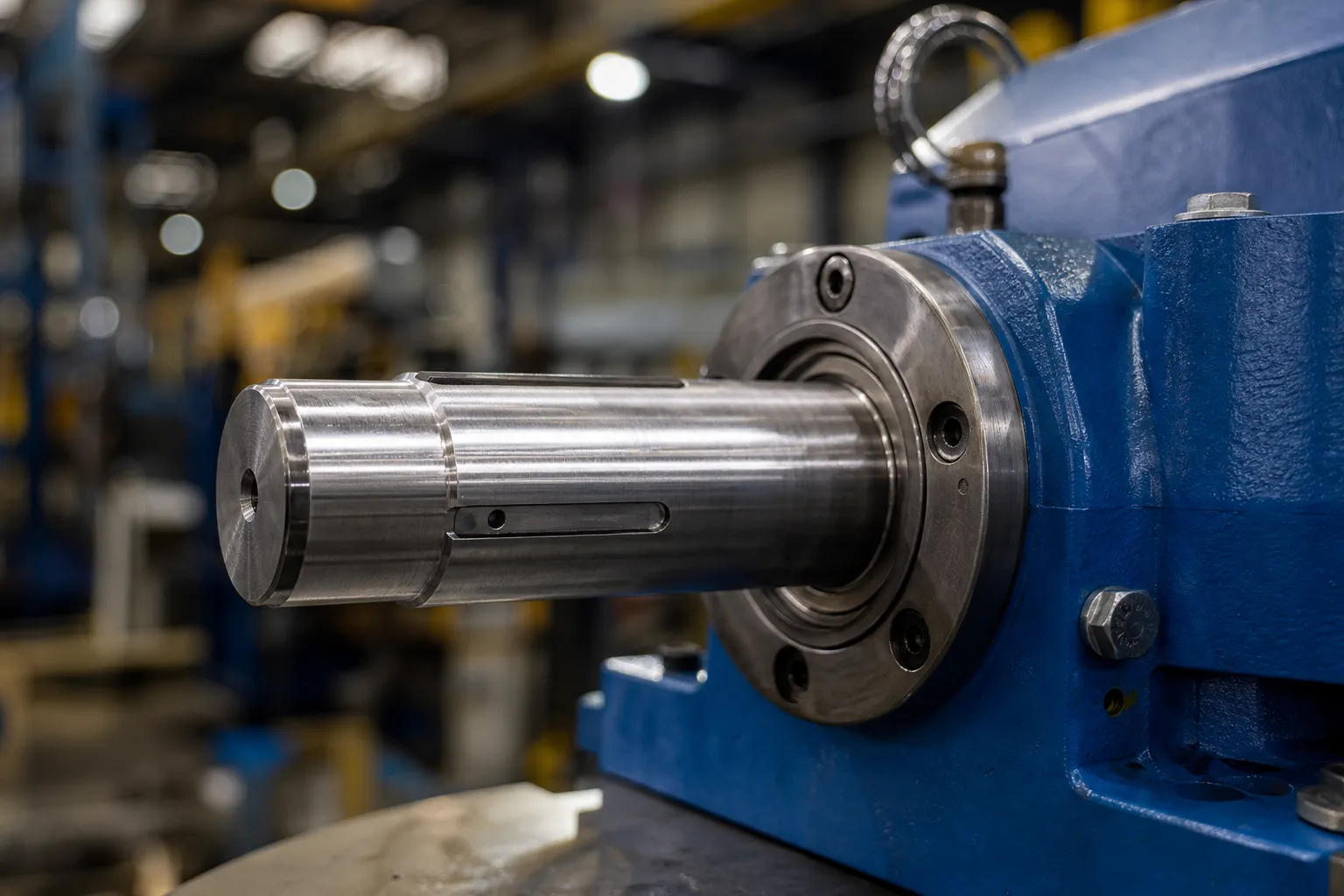
*Інженерна концепція ілюстрації. Він наголошує на перевірці стану випуску та відстежуваній утилізації, не є обіцяною функцією автоматизованої перевірки.*
The Migration Path Nobody Regrets
The manual-versus-automatic decision is rarely binary in practice, and the most common successful pattern is staged: automate the steps whose validation is complete and whose failure modes are understood, keep human hands and judgment on the steps that are not. A frequent first stage automates measurement and disposition — the machine gauges the part, the operator still loads and corrects — because measurement repeatability is usually the first bottleneck and its automation risk is low. A second stage adds automatic loading and part identification once the family presentation is stable, the domain covered for robot tending of straightening machines. Full closed-loop correction comes last, after the correction response has been validated across the incoming error distribution. Each stage is justified by the same evidence rule: a sample test on the specific step, run on representative and worst-case parts, with disposition routing demonstrated per the NOK discipline. Factories that follow this sequence buy automation where it is proven and keep flexibility where it is needed; factories that buy the last stage first spend their commissioning period discovering what they skipped.
Skills Each Route Consumes
Neither route is skill-free, and planning the wrong skill set starves the line quietly. The manual route concentrates skill in the operator: reading the error map, choosing correction points, judging incremental response — expertise that takes real time to build, lives in few people, and walks out the door with them. The automated route distributes skill across the organization: process engineers who validate families and maintain recipes, maintenance staff who can diagnose a sensor or fixture fault before it becomes scrap, and quality staff who own the correlation studies that keep the machine’s readings meaningful at acceptance. A buyer moving from manual to automatic who staffs only for operation — and not for engineering and maintenance — typically finds the cell’s recipes frozen, its correlation stale and its exceptions unowned within the first year. The automation boundary on paper should therefore be matched by a staffing plan for the skills each side of that boundary consumes.
Прийміть рішення за допомогою зразка тесту
Порівняйте маршрути-кандидати, використовуючи типові нормальні та найгірші частини. Повторюваність завантаження/налаштування запису, геометрія до і після, випущено-держ, стан поверхні, поводження, перехід, збір даних і маршрутизація винятків. Не робіть висновків про річну економію праці, пропускна спроможність або окупність статті конкурента або гіпотетичний час циклу.
FAQ
Автоматичне випрямлення завжди точніше?
немає. Точність залежить від заготовки, дані, вимірювання, відповідь на виправлення та метод прийняття. Автоматизація може покращити повторюваність лише тоді, коли ці основи перевірені.
Коли ручне випрямлення кращий вибір?
Може підійде для розробки, нестабільні або дуже мінливі частини сімейства, малооб'ємна робота, складна установка, або ситуації, коли шлях виправлення все ще кваліфікується.
Чи може ручна система мати відстежуваність?
так. Контрольована ідентифікація, вимірювальні записи, Дисципліна рецептів/пристосувань і записи про диспозицію можуть бути реалізовані незалежно від рівня автоматизації.
Is semi-automatic straightening a compromise or a strategy?
A strategy, when it is staged deliberately. Automating measurement and disposition first, loading second, and closed-loop correction last matches automation investment to validated knowledge — each stage carries a sample test, and flexibility is retained where families are still developing.
What skills does an automatic line still need?
Process engineering to validate families and control recipes, maintenance able to diagnose sensor and fixture faults, and quality ownership of the gauge correlation. Operation labor drops; engineering and maintenance skill does not — it usually rises.
Does automation reduce the number of quality decisions?
It relocates them. Routine dispositions become automatic, but the definition of the routing rules, the approval of recipes and the response to exceptions remain human decisions with named authority. The boundary is between executing decisions and making them.