
O fio de aço inoxidável fino temperado com mola é amplamente utilizado em eletrônica de precisão, consumíveis médicos, e fabricação de micro-molas. No entanto, sua resistência à tração extremamente alta e seu limite elástico representam um enorme desafio para desenrolar e endireitar. Começando pelos pontos técnicos problemáticos, este artigo fornece uma análise aprofundada das principais técnicas para endireitar fio de aço inoxidável de 0,3 mm de alta elasticidade. Exploramos as estratégias para controlar a recuperação elástica, a combinação ideal de material e posição para blocos de endireitamento, e tecnologia de corte de alta velocidade para cortes perfeitamente planos. Através de insights técnicos detalhados, demonstramos como esta máquina dedicada atinge perfeitamente um “20Operação em alta velocidade m/min” ao lado de um “tolerância estrita de ±0,25 mm/m.”
O que é fio de aço inoxidável fino temperado com mola
O fio de aço inoxidável temperado com mola é um fio de alto desempenho que passou por trefilação a frio e tratamento térmico específicos (têmpera) processos. Com um microdiâmetro de 0,3 mm, sua estrutura interna ganha um ponto de rendimento incrivelmente alto. Embora tão fino quanto um fio de cabelo humano, ele age como “memória metálica,” sendo extremamente flexível, mantendo uma forte tendência física para reverter ao seu formato original de carretel enrolado.
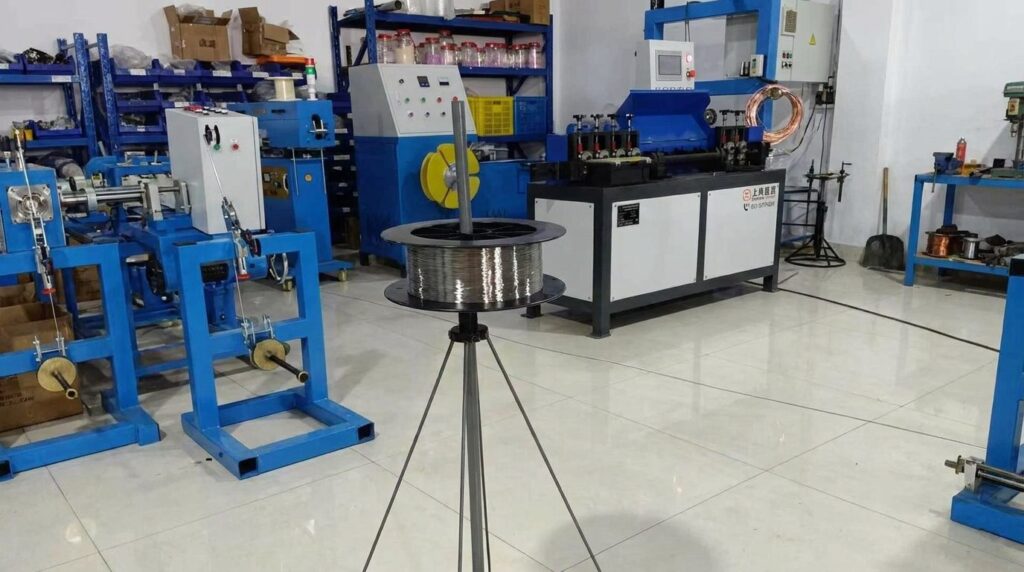
Cenários de aplicação para fio de aço inoxidável
Este fino fio de aço inoxidável é usado principalmente em campos de fabricação de microprecisão que exigem alta resistência à fadiga e à corrosão.:
- Dispositivos médicos: Como microfios-guia e núcleos de agulhas de precisão, exigindo que o fio seja absolutamente reto e sem riscos.
- Componentes eletrônicos de precisão: Usado para microcontatos ou molas de alta frequência, exigindo cortes perfeitamente planos e tolerâncias ultra-ajustadas para montagem automatizada.
Todos os cenários de aplicação têm uniforme, requisitos rigorosos de retidão e comprimento de corte. Qualquer tensão de flexão residual ou comprimento fora da tolerância fará com que as linhas de montagem automatizadas a jusante parem imediatamente.
Características Estruturais e Físicas
- Ultrafino, mas resistente: Apenas 0,3 mm de diâmetro, mas com imensa dureza e elasticidade.
- Altamente Abrasivo: Ao viajar em alta velocidade, o difícil, fio fino age como um “serra de arame,” cortando e destruindo facilmente matrizes de alisamento.
- Vibração Dinâmica: No instante do corte, alta elasticidade causa vibrações violentas no fio, comprometendo o nivelamento do corte.
Principais características do fio de aço inoxidável fino
Características principais:
- Precisão extrema de comprimento: A tolerância de comprimento deve ser rigorosamente controlada dentro de ±0,25 mm/metro.
- Cortes absolutamente planos: O momento de corte não deve produzir nenhuma flexão, rebarbas, ou bordas inclinadas.
- Alta eficiência: O processamento de fios finos geralmente envolve grandes volumes, exigindo uma velocidade de corte de 20M/min ou superior.
Parâmetros técnicos de fio de aço inoxidável fino
| Item | Faixa de parâmetros | Notas |
| Material da peça | Fio de aço inoxidável (Temperado de primavera) | Alta elasticidade, extremamente propenso a recuperação |
| Diâmetro da peça | Ø0,3mm | Fio microfino |
| Velocidade de corte | ≥ 20 M/min | Atende às necessidades de produção em massa de alto volume |
| Qualidade de corte | Absolutamente plano | Sem inclinação, sem rebarbas; garante fácil montagem |
| Tolerância de comprimento | ±0,25 mm/m | Exigência de consistência extremamente alta |
Por que o fio temperado com mola é difícil de endireitar? (Pontos principais de dor)
Ao manusear fio de aço inoxidável de alta elasticidade de 0,3 mm, equipamento de endireitamento convencional enfrenta desafios fatais:
| Ponto de dor | Problema Específico | Impacto |
| Recuperação Elástica Feroz | O fio não possui deformação plástica suficiente ao passar pelos rolos padrão, voltando instantaneamente para uma curva ao sair. | Não cumpre os padrões de retidão; completamente inutilizável para processos downstream. |
| Os blocos são facilmente cortados/desgastados | Atrito de alta velocidade de 20M/min, o fio rígido de 0,3 mm funciona como uma lâmina, esculpindo sulcos profundos em blocos de endireitamento padrão. | Vida útil extremamente curta, tempo de inatividade frequente para substituições, e falha de endireitamento. |
| Cortes irregulares & Erros de comprimento | Alta elasticidade causa tremores de alta frequência durante o corte. Tesouras padrão produzem inclinações, cortes rebarbados. | A vibração torna o comprimento de alimentação instável, tornando a tolerância de ±0,25 mm/m impossível de alcançar. |
Alisamento dedicado de alta velocidade & Processo de corte
Este equipamento completa o endireitamento e corte de fios finos de alta elasticidade através de 5 etapas totalmente automatizadas. O as operações principais são Step 02 (Endireitamento rotativo de alta velocidade) e passo 04 (Corte plano de cisalhamento servo voador).
Fluxo de processo completo
| Processo | Nome do Processo | Mecanismo Central | Velocidade | Precisão / Alvo |
| 01 | Desenrolamento de tensão constante | Rack de pagamento ativo amortecido | Sincronizado | Evita que o fio de 0,3 mm se atar ou quebrar |
| 02 | Endireitamento rotativo de alta velocidade | Mandril de alisamento de ajuste rápido | Alta rotação | Elimina completamente a tensão de flexão interna |
| 03 | Alimentação de Servo Precisão | Rolos de pressão de PU & Servo motor | 20M/min | Garante antiderrapante, alimentação de arame sem marcas |
| 04 | Corte plano com tesoura voadora | Lâminas de cisalhamento não destrutivas | Instantâneo | Tolerância ±0,25 mm/m, corte perfeitamente plano |
| 05 | Descarga automática | Calha pneumática | Contínuo | Evita que fios finos se empilhem e se enrosquem |
Principais desafios e soluções de alisamento
Desafio: Ajustando constantemente a posição e o material dos blocos de endireitamento para contra-rebote
Descrição do problema: O fio de aço inoxidável temperado com mola é imensamente elástico. Mesmo dentro da mesma bobina, a tensão interna varia ligeiramente entre os anéis externo e interno. O uso de posições fixas e blocos de endireitamento de material único não proporciona um endireitamento consistente; o fio ainda irá ricochetear e dobrar depois de sair.
Soluções:
- Matriz de bloco de alisamento multimaterial: Para contrariar o “efeito de serra” e fricção de alta frequência do fio rígido de 0,3 mm, abandonamos matrizes de ferro fundido padrão. Dependendo das características específicas do fio, nós combinamos metal duro especial (aço de tungstênio) com materiais poliméricos de alta resistência ao desgaste (como nylon especial ou cerâmica) para os blocos de endireitamento. Isto prolonga exponencialmente a vida útil e permite o ajuste direcionado da resistência ao atrito.
- Mecanismo de microajuste visual externo: Projetamos uma mudança rápida, mandril de alisamento microajustável. Os operadores não precisam desmontar as tampas de segurança da máquina. Usando mostradores de micrômetro externos enquanto a máquina está funcionando, eles podem ajustar de forma independente a profundidade de prensagem excêntrica de cada bloco de endireitamento em tempo real. Ao estabelecer uma precisão “Material & Receita de pressão,” o fio sofre uma tensão de flexão alternada durante a rotação em alta velocidade que excede apenas o seu ponto de escoamento. Isso bloqueia perfeitamente o rebote elástico, domesticando o fio teimoso em uma linha perfeitamente reta.

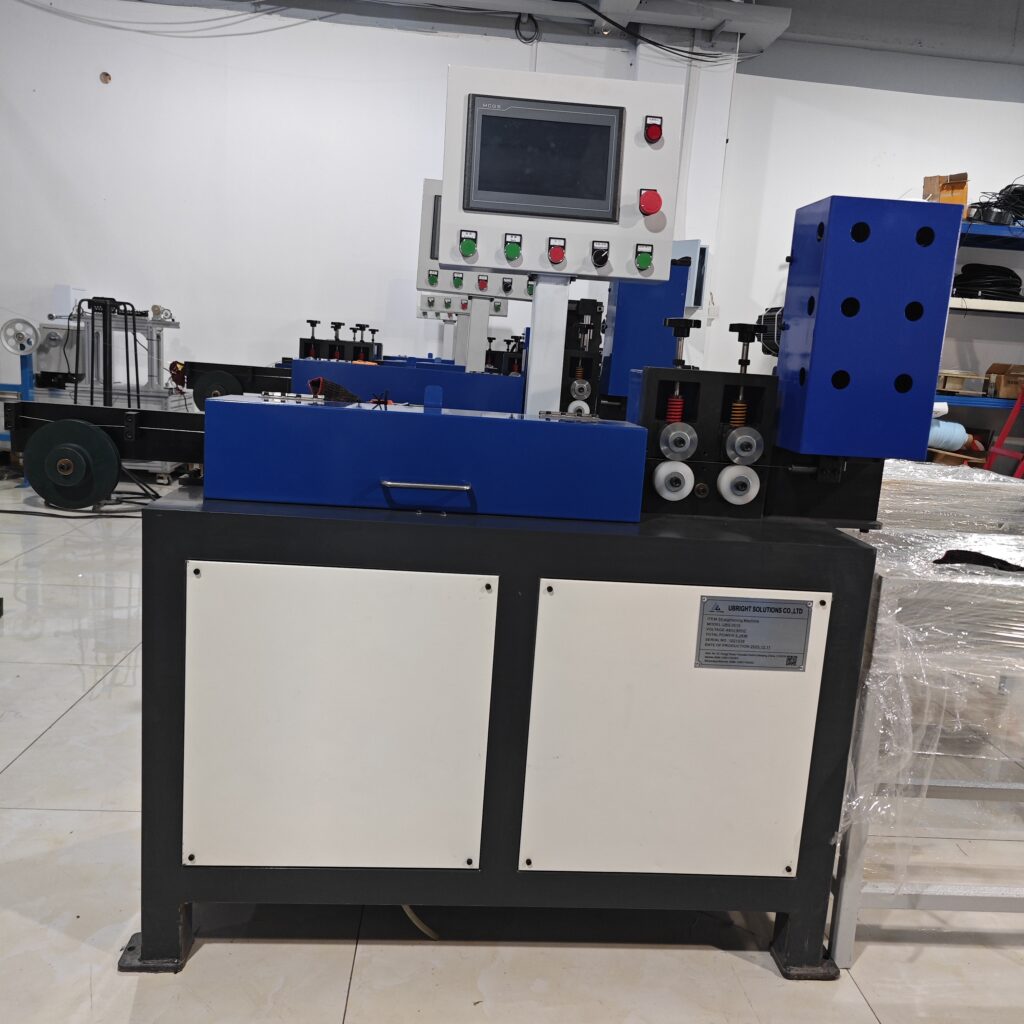
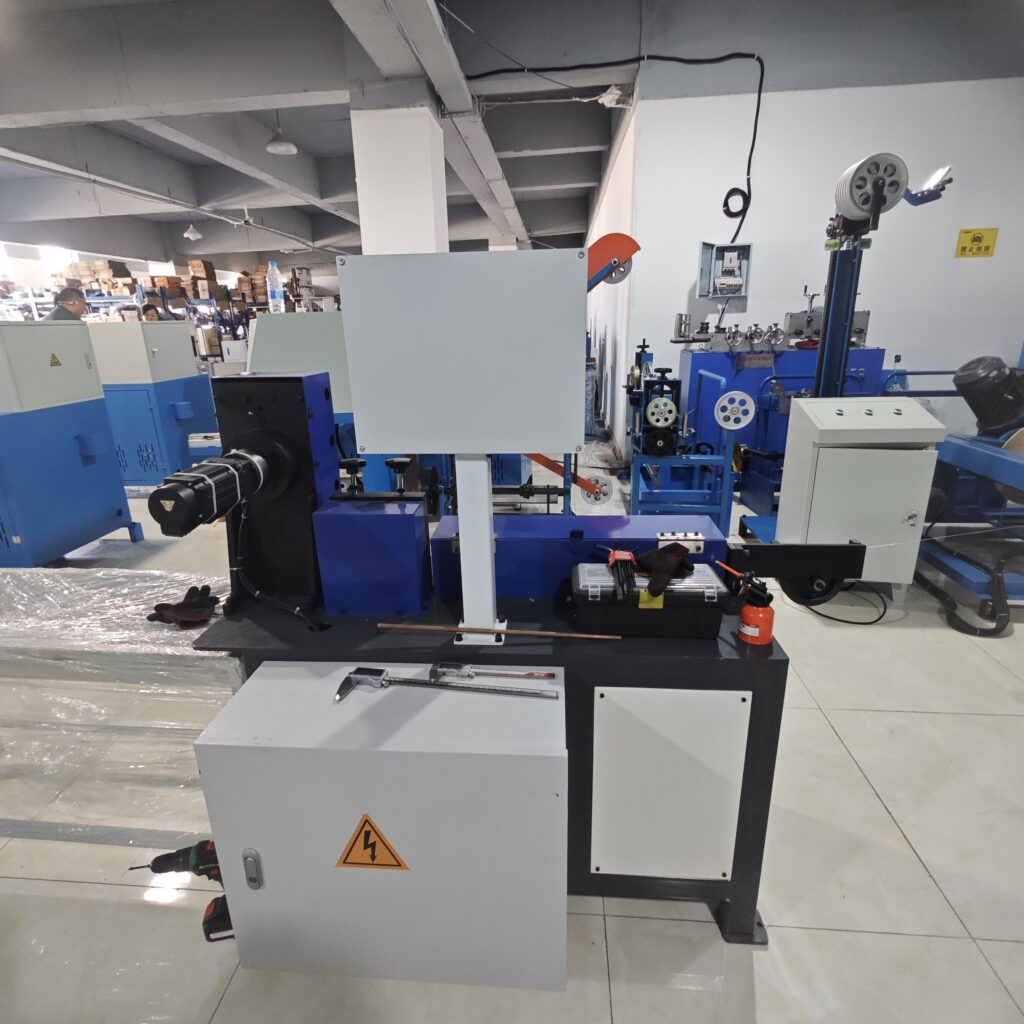
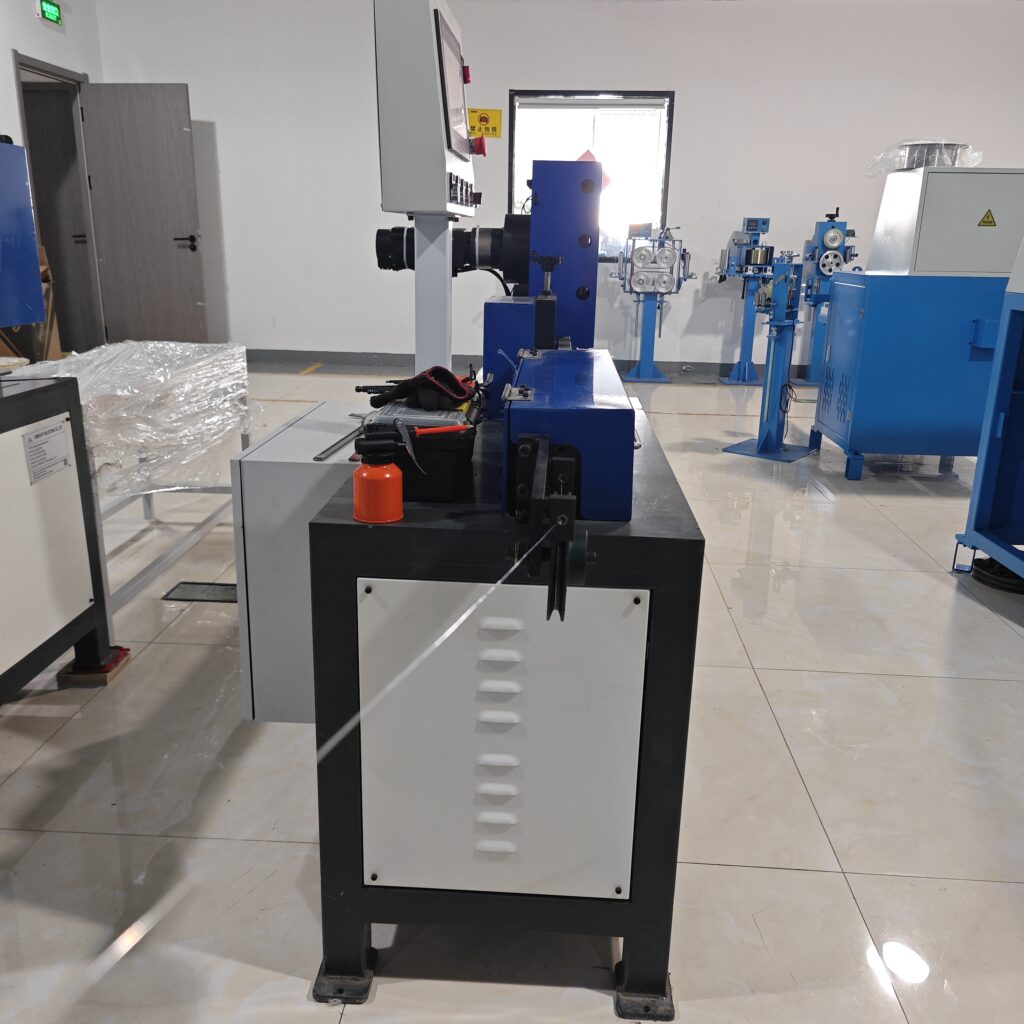
Máquina de endireitamento de cisalhamento voador UBS02
- Adota o controle do programa PLC para corte preciso com alta exatidão.
- O controle da tela sensível ao toque garante uma operação simples.
- O corte ininterrupto melhora muito a velocidade de endireitamento.
- Alisa profissionalmente os fios ultrafinos, com um tamanho mínimo de 0,2 mm.
- Maior estabilidade, melhor retidão, e risco reduzido de quebra do fio.
Desafio: Garantindo cortes planos e tolerância de ±0,25mm a uma velocidade de 20M/min
Descrição do problema: Quanto mais rápida a velocidade, maior será a vibração inercial causada pela elasticidade do fio. As máquinas de corte padrão rasgam o fio no momento do corte, deformando a extremidade de corte de 0,3 mm e fazendo com que a precisão do avanço se desvie.
Soluções:
O equipamento utiliza um comprimento de rastreamento servo de circuito totalmente fechado + tecnologia de cisalhamento voador de alta velocidade. Os rolos de alimentação de poliuretano prendem firmemente o fio para evitar escorregamento. Ao atingir o comprimento exato definido, lâminas de cisalhamento planas ultraduras personalizadas fecham e cortam em menos de 0.01 segundos. Esta batata frita, o cisalhamento instantâneo evita efetivamente qualquer tração ou deformação do fio altamente elástico, garantindo um corte absolutamente plano, mantendo de forma constante a tolerância extrema de comprimento de ±0,25 mm/m.
Caso de fabricação
Histórico do cliente
Uma empresa de manufatura especializada em núcleos de fios-guia médicos de alta qualidade e micromolas de precisão.
Desafios Técnicos
- O cliente adquiriu grandes volumes de fio de aço inoxidável temperado com mola de 0,3 mm, com extrema elasticidade.
- Usando o equipamento existente - sejam endireitadores rotativos multi-rolos ou tradicionais - o fio saiu dobrado como um “rabo de porco,” saltando de volta.
- O cliente exigia alta capacidade de produção: a velocidade de corte tinha que atingir 20M/min, sem absolutamente nenhum corte inclinado, e tolerância de comprimento estritamente limitada a ±0,25 mm/m.
Soluções
| Item | Parâmetros/Configuração |
| Nome da peça | Fio de aço inoxidável fino temperado com mola |
| Especificações | Ø0,3mm |
| Equipamento principal | Alisamento rotativo microajustável de alta velocidade & Máquina de corte |
| Configuração de bloco | Matriz composta de aço de tungstênio & Cerâmica Polímera |
| Especificações de desempenho | Velocidade 20M/min, Tolerância ±0,25 mm/m, Corte absolutamente plano |
Resultados da implementação
- Confiando nos blocos de alisamento multimateriais e no conveniente sistema de microajuste, os operadores encontraram o estado de alisamento ideal em apenas alguns minutos, superando completamente o rebote elástico do fio.
- Operando a uma velocidade máxima de 20M/min, o fio fino cortado de 0,3 mm emergiu tão reto quanto uma agulha de aço. Sob um microscópio, os cortes eram perfeitamente planos e sem rebarbas.
- A consistência da tolerância de comprimento alcançou um resultado surpreendente 99.9%, atendendo perfeitamente aos requisitos subsequentes de montagem automatizada de tubos médicos do cliente.
Resumo
Para fio fino de aço inoxidável temperado com mola de 0,3 mm com extrema elasticidade, utilizando um Máquina de endireitamento e corte de alta velocidade equipada com material compósito, blocos de alisamento microajustáveis é a escolha definitiva para conquistar o rebote elástico e garantir cortes de alta qualidade. Esta solução não só proporciona de forma estável uma capacidade de produção eficiente de 20 milhões/minuto, mas também fixa rigidamente a precisão do comprimento em ±0,25 mm/metro.
Se você estiver enfrentando desafios de processamento com materiais difíceis de endireitar, microfios de alta elasticidade, ou procurando resolver cortes irregulares e tolerâncias de comprimento instáveis, por favor Contate-nos para obter um teste de alisamento personalizado e uma solução sob medida para o seu fio.