
Baris tidak seharusnya memperlakukan setiap bacaan yang tidak lulus dengan cara yang sama. Satu bahagian mungkin mempunyai masalah persediaan, penggera pengukuran, keadaan geometri yang boleh diperbetulkan, tindak balas tiada kemajuan, isu material yang disyaki atau ketidakpatuhan yang disahkan. Tanpa laluan yang berbeza, pembetulan berulang boleh menyembunyikan masalah pengukuran, merosakkan bahagian tersebut, campurkan lot atau buat keputusan kualiti yang tidak dapat dikesan.
Artikel ini ialah rangka kerja penghalaan kualiti. Ia tidak mendakwa bahawa StraighteningTech pada masa ini membekalkan pengisihan automatik, penderia tertentu, ambang penolakan, perisian kebolehkesanan atau peraturan kerja semula yang dibenarkan. Fungsi tersebut memerlukan skop tempatan yang disahkan dan kelulusan kualiti.
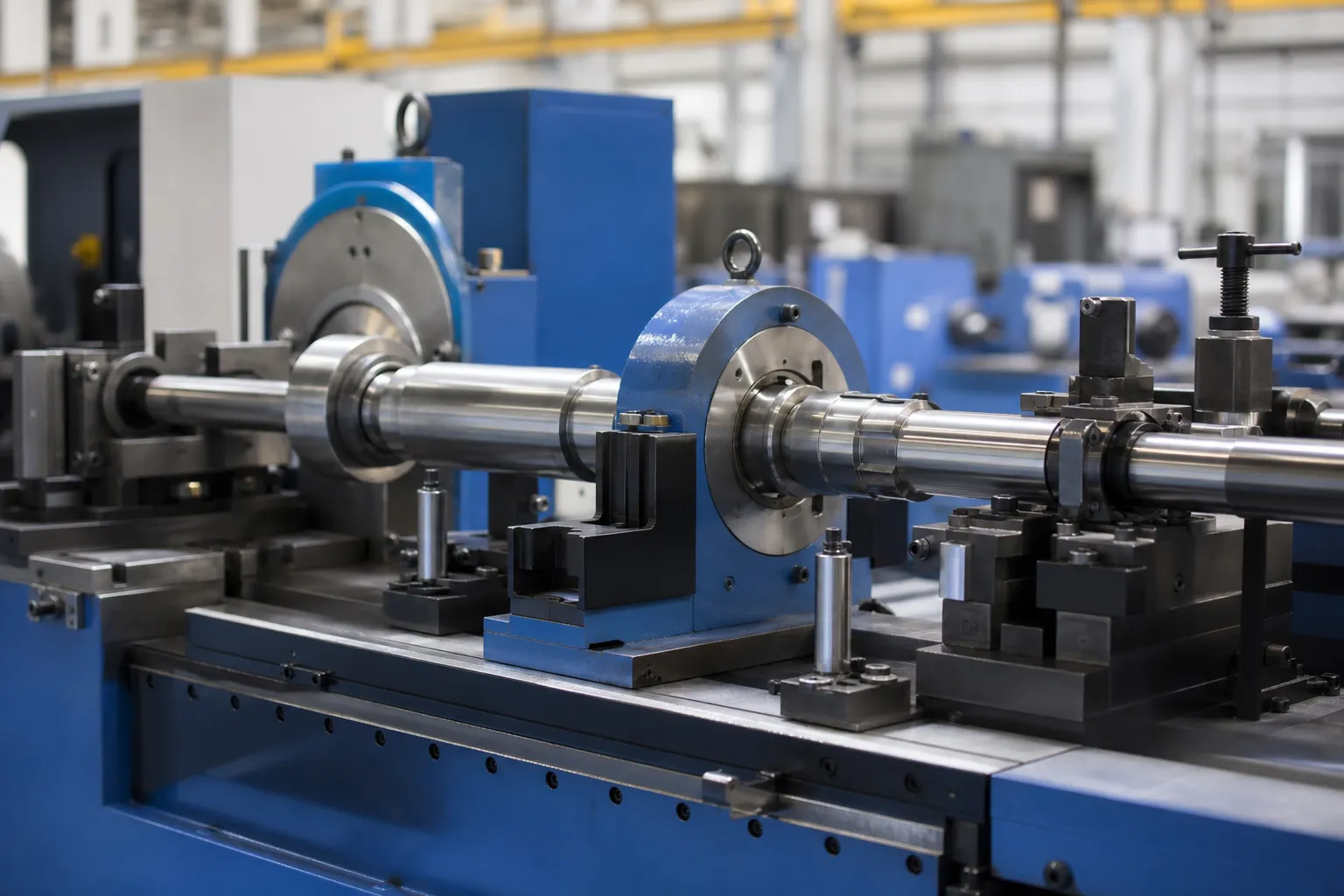
*Ilustrasi konsep kejuruteraan. Ia menunjukkan sel pengeluaran calon, bukan sistem pengisihan automatik yang dipasang atau keupayaan pengesanan kecacatan yang ditentukan.*
Tentukan Negeri Pelupusan
Sekurang-kurangnya, membezakan PAS, CUKUP, layak kerja semula, berhenti/tahan dan semakan kejuruteraan/kualiti. Takrifan mesti merujuk kepada lukisan terkawal, kaedah pengukuran, keadaan proses dan kuasa untuk melepaskan. Penggera proses bukanlah penolakan secara automatik; ia mungkin isyarat peningkatan yang memerlukan pengesahan.
| negeri | Definisi yang diperlukan |
|---|---|
| LULUS | Memenuhi keperluan negara keluaran yang dipersetujui dengan rekod yang diperlukan |
| CUKUP | Tidak memenuhi keperluan yang ditetapkan atau mempunyai ketidakakuran yang disahkan |
| Layak dikerjakan semula | Memenuhi syarat yang didokumenkan untuk percubaan lain yang diluluskan |
| Berhenti / tahan | Memerlukan persediaan, isyarat proses, kualiti atau semakan kejuruteraan sebelum diproses selanjutnya |
| Kajian semula kejuruteraan | Memerlukan keputusan terkawal di luar laluan automatik biasa |
Jauhkan Isu Persediaan Asingkan Daripada Bahagian Ketakpatuhan
Sebelum menghalakan bahagian sebagai NOK, pertimbangkan sama ada isyarat boleh terhasil daripada tempat duduk datum, variasi lekapan, keadaan sensor, sebahagian identiti, resipi yang salah atau keadaan sokongan yang tidak diluluskan. Prosedur harus menentukan pemeriksaan bersih/duduk semula/ulang yang dibenarkan dan menghalang percubaan semula tanpa had.
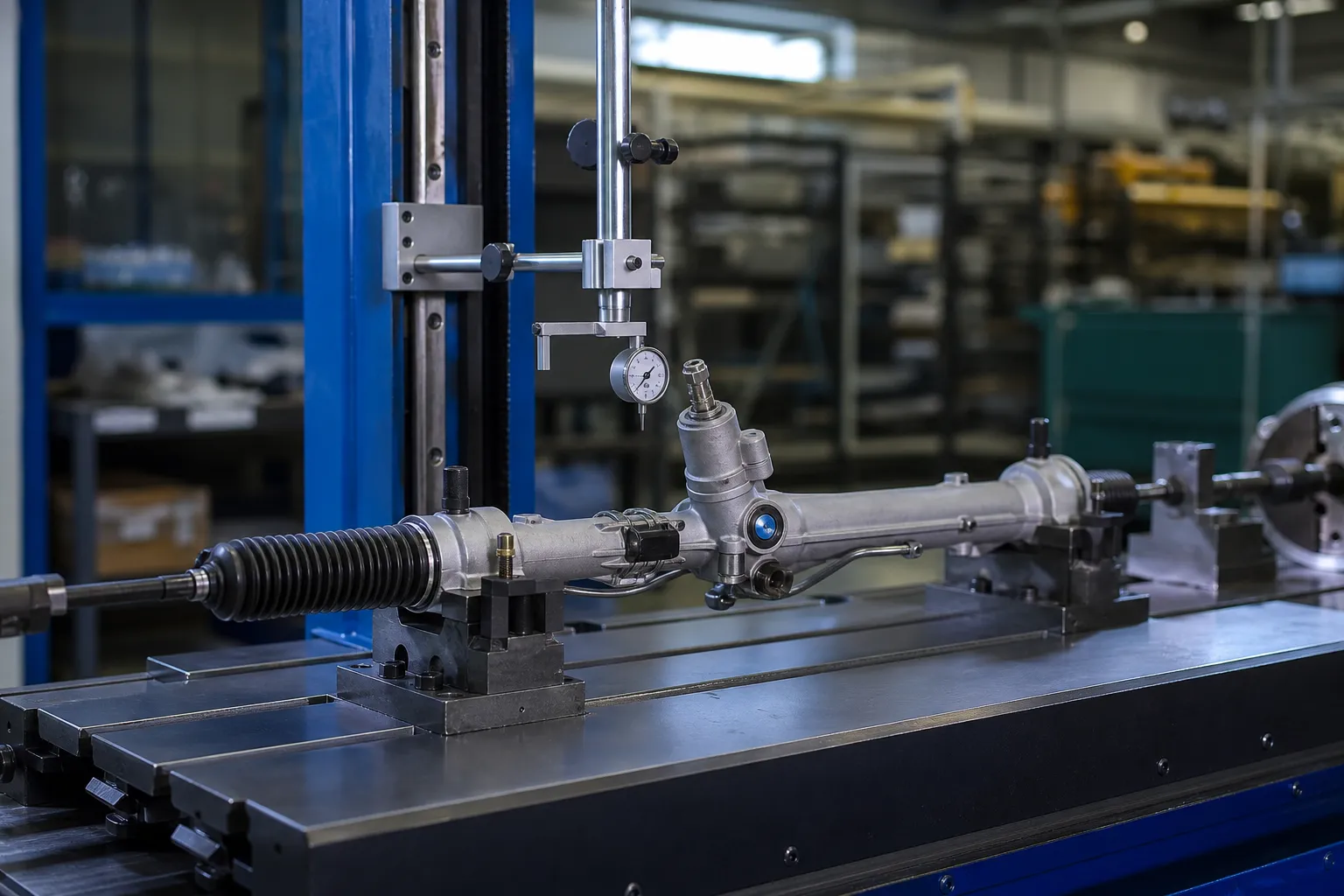
*Ilustrasi konsep kejuruteraan. Ia menggambarkan titik keputusan pengukuran, bukan bukti pengelasan automatik atau peraturan penggera tertentu.*
Lihat kebolehulangan lekapan dan tempat duduk datum dan pengesanan retak semasa meluruskan automatik untuk pemisahan antara isyarat dan punca yang disahkan.
Tetapkan Had Kerja Semula Sebelum Pembetulan Pertama
Kerja semula hendaklah laluan yang diluluskan dengan bilangan percubaan maksimum yang ditentukan, syarat hubungan/sokongan yang dibenarkan, keperluan pengukuran semula, pemeriksaan permukaan/ciri dan kuasa untuk meneruskan atau berhenti. Had itu bukan nombor universal; ia bergantung kepada bahan, peringkat proses, risiko ciri, keperluan pelanggan dan tindak balas yang disahkan. Apabila sebahagian tidak bertindak balas seperti yang diharapkan, tindakan yang sesuai boleh ditahan atau ditolak dan bukannya kekerasan tambahan.
Why Unlimited Retries Corrupt the Line
Allowing a line to re-correct a part until the gauge finally passes feels productive and quietly destroys two things. The first is the part itself: every plastic bending cycle consumes a share of the section’s low-cycle fatigue life, and the reverse-loading behavior described for reverse loading in straightening means later cycles move the material more per unit force than earlier ones did. A part that reaches tolerance on its sixth attempt is not equivalent to one that reached it on the first, even though both read PASS.
The second casualty is the line’s own information. When retries are unlimited, the gauge sees only eventual outcomes: parts that converge, slowly, under repeated force. A drifting correction setup, a worn anvil, a bad lot of stock and a genuinely struggling part family all produce the same visible symptom — more attempts per part — and none of them generates a stop condition. The retry count is one of the cheapest and most informative process signals a straightening line produces, and it only exists as data if the line is required to stop and route the part at a defined limit instead of looping.
Thinking of the Rework Limit as a Budget
A more useful mental model than “three strikes” is a budget of deformation that each part may spend. The budget is set by the material’s condition and the consequence of failure in service, and it is spent by every correction stroke — forward or reverse. A hardened safety-critical shaft and a soft structural bar may carry very different budgets, which is why no universal rework number is defensible and why the limit belongs to the part family’s validated process, reviewed by quality. The same budget concept explains a rule that otherwise looks arbitrary: a part that has consumed its budget and still fails is rejected even though one more attempt might conceivably pass, because the part that would emerge is no longer the part the drawing specifies in any meaningful sense.
Budgets also need edges. Two conditions that stop rework regardless of remaining attempts are no-progress — corrections that stop changing the geometry, indicating the process is no longer engaging the error — and overshoot oscillation, where each attempt moves the part from one side of tolerance to the other. Both are stop signals, not tuning opportunities, and both feed the integrity-review concerns that repeated plastic cycling raises.
Mengekalkan Pengasingan dan Kebolehkesanan
Setiap pelupusan mesti mengekalkan identiti bahagian/lot, versi lukisan/resipi, keadaan pengukuran, percubaan pembetulan, hasil, acara pengendali/automasi, masa, menyemak keputusan dan lokasi fizikal. Pengasingan mesti menghalang bahagian yang dipegang atau NOK daripada kembali ke aliran PASS tanpa kebenaran yang jelas.
*Ilustrasi konsep kejuruteraan. Ia menekankan pengesahan negeri yang dikeluarkan dan pelupusan yang direkodkan, bukan janji antara muka DMC/MES atau penyusun automatik.*
Designing Segregation That Cannot Be Defeated
Disposition states only work if the physical line enforces them. The failure mode is always the same: a held or NOK part re-enters the good flow during a busy shift, through an operator judgment call, a shared conveyor or an unlabeled tote. Effective segregation design follows mistake-proofing logic rather than instruction signs. Good and rejected parts take different physical paths with no shared section where a part can be redirected by hand. Hold locations lock or require an access step that itself creates a record. Labels and bins are part-specific, not generic scrap tags, so a held-for-review part cannot decay into anonymous scrap or anonymous stock. Where volume justifies it, diverters and gates make the routing decision the machine’s, not the operator’s — the automation boundary discussed in manual berbanding pelurus automatik applies to disposition as much as to correction.
The record side has the same anti-defeat requirement. A disposition that lives only in an operator’s memory, or in a spreadsheet anyone may edit, does not survive an audit or a containment event. The minimum durable record is the tuple — part identity, banyak, drawing and recipe version, keadaan pengukuran, attempt count, hasil, decision, decision-maker, time — retained long enough to answer the customer question that eventually comes: which parts from that week, from that machine, from that shift.
What the Disposition Data Buys Later
A line that routes honestly accumulates, as a by-product, the dataset that every improvement program wishes it had. Attempt-count trends flag tooling wear and setup drift while they are still cheap to fix. Lot-to-lot shifts in incoming geometry point upstream to suppliers with evidence instead of complaints. The ratio of setup-issue holds to true part nonconformances measures how much of the line’s apparent quality problem is actually its measurement and fixturing — information directly relevant to planning a tolok R&R kajian. And when a customer raises a field concern, traceability converts a week of panic into an afternoon of records. None of that value survives a culture of retry-until-pass; all of it is the natural dividend of the routing discipline described here.
Bina Laluan Pengesahan dan Peningkatan
- mengenal pasti bahagian tersebut, banyak, lukisan dan resipi;
- mengesahkan persediaan ukuran/datum dalam semakan yang diluluskan;
- menangkap bacaan, keadaan proses dan sebarang amaran;
- gunakan hanya laluan kerja semula yang dibenarkan apabila kelayakan disahkan;
- melepaskan dan mengukur semula di bawah syarat yang dipersetujui;
- laluan LULUS, CUKUP, mengadakan atau semakan kejuruteraan;
- mengekalkan kebolehkesanan dan pengasingan fizikal;
- gunakan corak berulang untuk mencetuskan proses atau semakan kualiti.
Untuk seni bina bukti yang diperlukan, lihat ujian sampel meluruskan dan penerimaan dan Gage R&R untuk meluruskan garisan.
Pintu Tiada Kemajuan dan Had Pembetulan
Frasa yang tepat had pembetulan meluruskan tiada gerbang kemajuan tercemar secara perubatan dalam SERP, so the canonical no-progress logic lives on the NOK sorting and rework-limit page. Define maximum correction cycles, force/stroke ceilings and mandatory stop/sort actions before production release.
Soalan Lazim
Adakah NOK selalu bermaksud sekerap?
Tidak. Keadaan NOK boleh memerlukan pengesahan, kerja semula terkawal, semakan kejuruteraan atau penolakan akhir bergantung pada laluan kualiti yang diluluskan.
Bolehkah satu baris cuba semula sehingga bacaan berlalu?
Tidak. Kerja semula memerlukan had percubaan maksimum dan kuasa kualiti yang ditetapkan. Percubaan semula tanpa had boleh menutup masalah proses atau ukuran.
Adakah artikel ini bermakna baris mempunyai pengisihan automatik?
Tidak. Ia adalah rangka kerja penghalaan. Pengisihan sebenar, kebolehkesanan dan fungsi antara muka memerlukan pengesahan berasingan.
Why does the attempt count matter more than the final reading?
Because the final reading describes where the part ended, while the attempt count describes what it cost to get there. Two parts reading identical PASS values are not equivalent if one took a single correction and the other took a full budget of repeated cycles. The attempt count is also the line’s earliest drift alarm — a setup, tooling or material change usually shows up as more attempts per part long before it shows up as rejects.
Should rework limits differ between part families?
ya. The limit is a deformation budget set by material condition, feature risk and service consequence, so a hardened safety-critical shaft and a soft structural bar justify different numbers. The limit belongs to each family’s validated process with quality approval, not to the line as a single setting.
What is the minimum physical segregation a small line needs?
Separate paths or lockable, labeled, part-specific containers for PASS, hold and NOK — arranged so a held part cannot return to the good flow without a recorded, authorized step. The design principle is that doing the wrong thing must require effort, not just discipline. Escalate to machine-controlled diverters when volume or staffing makes human routing unreliable.
Sorting decisions are also capacity decisions – yang perbandingan manual vs automatik dan Sarung ROI untuk meluruskan automatik both price the NOK stream a manual line tends to hide.