
Meluruskan selalunya melibatkan lenturan bahan ke arah yang berkaitan dengan sejarah ubah bentuk sebelumnya. Kesan Bauschinger ialah konsep gelagat bahan yang digunakan untuk menerangkan bagaimana ubah bentuk plastik sebelum ini boleh mengubah tingkah laku menghasilkan di bawah pemuatan terbalik. Ia membantu menjelaskan sebab satu peraturan pembetulan generik mungkin tidak dipindahkan antara keadaan material, membentuk sejarah atau lot.
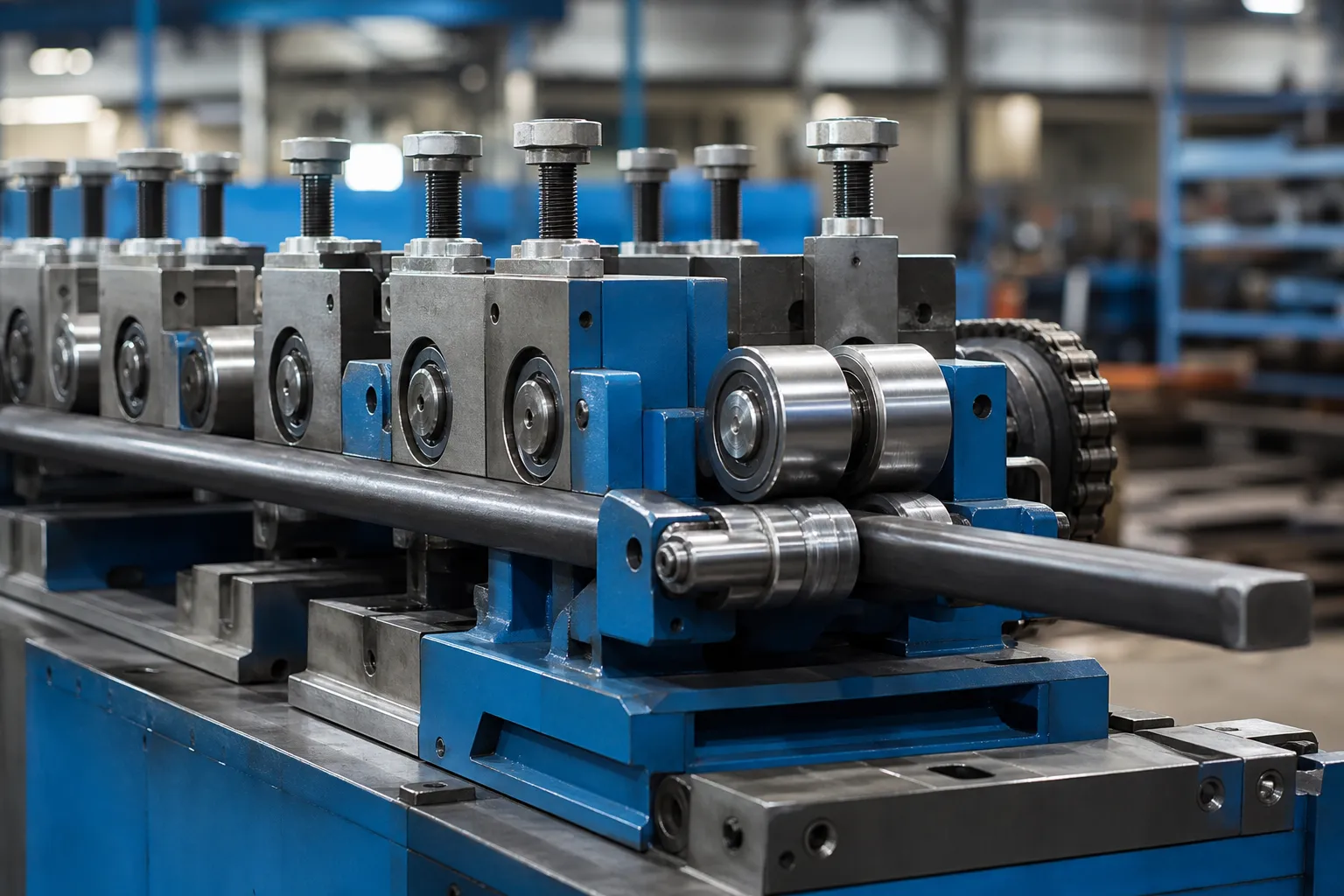
*Ilustrasi konsep kejuruteraan. Ia bukan ujian material, model tekanan atau hasil pelurusan yang disahkan.*
What the Effect Physically Is
Secara ringkasnya: a metal that has been plastically bent one way yields more easily when it is then bent the other way. On a stress–strain curve, a bar pulled past yield, unloaded, and then loaded in compression reaches its new yield point at a lower magnitude than the original tensile yield. The microstructural reason is that plastic deformation leaves the crystal lattice populated with dislocations arranged to resist further deformation in the loading direction; when the load reverses, that same arrangement assists slip in the opposite direction, so reverse yielding begins early. The effect is strongest right after the first reversal and saturates after a few cycles, and it is more pronounced in softer, lower-carbon conditions than in heavily hardened ones.
Two consequences matter for straightening. Pertama, the material’s force–deflection response is asymmetric with respect to the sign of bending: the same press stroke moving a bend in one direction produces a different permanent set than the identical stroke applied against it. Kedua, every unload leaves a locked-in micro-residual stress state, so the “same” part is never quite the same material twice once correction has begun. Both consequences push toward the same process discipline — few, planned, well-aimed correction strokes instead of many small reversing ones.
What This Means for a Correction Stroke
Straightening control commonly assumes a repeatable relationship between applied correction and resulting movement — the basis of springback compensation practice. Reverse-loading history threatens exactly that repeatability. Consider the classic over-correct-and-press-back sequence: the first stroke plastically bends the section, the second stroke bends it back. Because the material yields earlier in the reverse direction, the second stroke needs less force to move the part the same amount, and a control routine calibrated on the first stroke’s response will overshoot. Each additional reversal compounds the drift while accumulating low-cycle fatigue damage in the section, which is the mechanism that connects careless correction sequences to the cracking risks discussed for meluruskan dan retak yang berlebihan.
The practical rules that follow are qualitative but firm. Plan the correction so that each location is plastically worked in one predominant direction, not ping-ponged. Tetapkan had kerja semula sebelum pukulan pertama — bilangan percubaan pembetulan yang mungkin diterima oleh bahagian — dan kuatkuasakannya melalui NOK sorting dan disiplin had kerja semula. Dan apabila proses telah hanyut sehingga ralat nominal yang sama kini memerlukan lebih banyak atau lebih sedikit pukulan daripada yang dilakukan pada kelayakan, menganggap perubahan itu sebagai isyarat penting untuk menyiasat, bukan sebagai tombol untuk menyesuaikan diri.
Mengapa Pemuatan Terbalik Penting
Satu bahagian mungkin mengalami ubah bentuk terkumpul semasa bergolek, melukis, membentuk, rawatan haba, pemesinan, pengangkutan atau langkah pembetulan sebelumnya. Apabila proses meluruskan menggunakan lenturan terbalik, tindak balas boleh bergantung pada sejarah itu serta keadaan bahan dan geometri semasa. Inilah sebabnya mengapa peta selekoh sahaja tidak mewujudkan tetingkap pembetulan yang selamat.
| Faktor | Soalan percubaan |
|---|---|
| Gred dan keadaan bahan | Adakah syarat yang berkenaan didokumenkan, tidak diandaikan? |
| Sebelum membentuk/melukis | Bolehkah sejarah ubah bentuk berbeza antara lot? |
| Peringkat rawatan haba | Adakah pembetulan dibenarkan pada peringkat ini? |
| Bahagian/geometri | Adakah kekakuan berbeza-beza di sepanjang bahagian? |
| Ciri permukaan/fungsi | Adakah terdapat kekangan sentuhan atau risiko retak? |
| Kerja semula sebelumnya | Adakah pemuatan terbalik telah berlaku? |
Gunakannya sebagai Konsep Perancangan Percubaan
Konsep ini harus membawa kepada rekod yang lebih baik, bukan tuntutan yang tidak disokong. Catat keadaan masuk, bahan/banyak, peringkat pembuatan, peta awal, urutan pembetulan, ukuran yang dikeluarkan, pemerhatian permukaan dan status kerja semula. Tukar satu faktor terkawal pada satu masa semasa pembangunan dan jangan ekstrapolasi daripada spesimen mudah kepada keluarga bahagian yang berbeza.
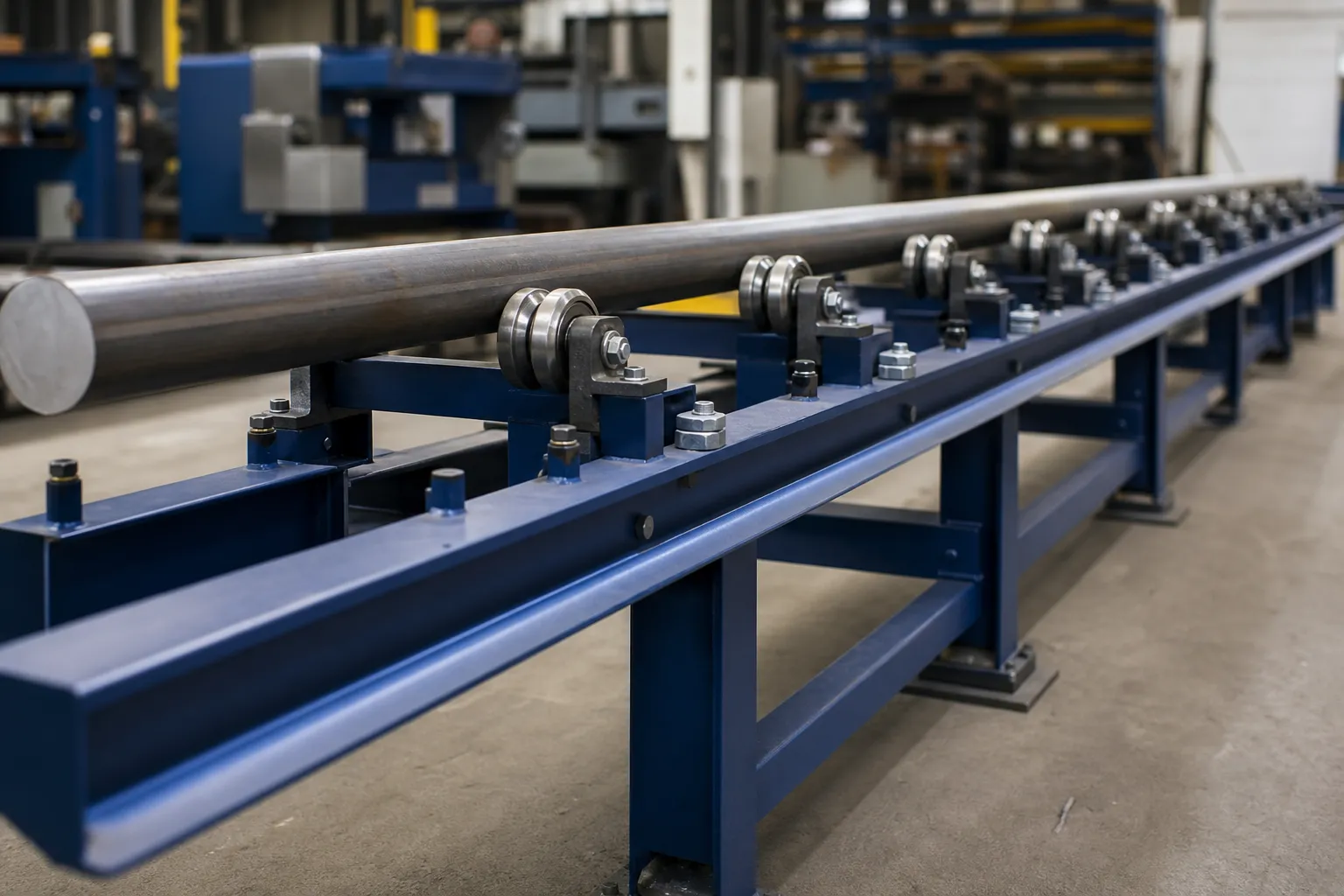
*Ilustrasi konsep kejuruteraan. Sokongan, hubungan dan tingkah laku material memerlukan semakan kejuruteraan bahagian khusus.*
Elakkan daripada memanggil hasil carian "Bauschinger-controlled" melainkan kajian bahan/proses yang layak mentakrifkan dengan tepat maksudnya. Istilah ini tidak menggantikan keperluan lukisan, sijil bahan, penilaian patah tulang atau kelulusan pelanggan.
Tempat Sejarah Pemuatan Bersembunyi di Bahagian Nyata
Sensitiviti pemuatan terbalik tidak memerlukan operasi meluruskan sebelumnya — kebanyakan bahagian tiba dengan sejarah yang telah ditulis ke dalamnya. Bar dan wayar membawa ubah bentuk arah daripada bergolek dan melukis, jadi tindak balas lentur mereka berbeza dengan orientasi berbanding arah kilang. Heat-treated parts carry quench distortion plus the residual stress field of the treatment, and any straightening performed at the heat treater counts as prior history for the correction performed later — the staging questions covered under meluruskan selepas rawatan haba. Long slender parts accumulate transport and clamping bends, and a part that has already been through one rework loop at a supplier arrives pre-cycled. Even within one purchased lot, different bar lengths can come from different mill heats with different histories, which is why a correction setup that works on the first pieces of a lot can misbehave on the last.
The countermeasure is informational, not mechanical: capture material and lot identity, the manufacturing stage, and any prior correction record alongside the incoming geometry map. That data costs almost nothing at receiving and is the difference between a drift investigation that takes an afternoon and one that cannot be closed at all.
Reading the Effect in Production Data
Because the effect cannot be seen on the part, it announces itself through patterns in the process data. The signals to watch for are structural rather than numeric: the number of correction strokes needed for the same incoming error creeping upward or downward over a run; parts that oscillate around nominal across alternating strokes instead of converging; released measurements that flip to the opposite side of the tolerance band after correction sequences that historically landed centered; and lot-to-lot differences in correction behavior with no change in machine setup. None of these patterns is proof of reverse-yield behavior on its own — each has measurement and fixture mimics, which is why the datum and gauge checks come first — but together they justify pulling a sample set aside for a controlled material-and-history review rather than continuing to adjust the machine.
Asingkan Gelagat Bahan Daripada Ralat Pengukuran
Keputusan yang dikeluarkan yang tidak dijangka boleh datang daripada tindak balas material, tetapi juga dari tempat duduk datum, pematuhan lekapan, sokongan/kes, korelasi tolok atau peta ralat yang tidak lengkap. Semak faktor ini sebelum menetapkan punca kepada tingkah laku hasil terbalik. Lihat kebolehulangan lekapan dan tempat duduk datum dan ketidakpastian pengukuran dalam pemeriksaan kelurusan.
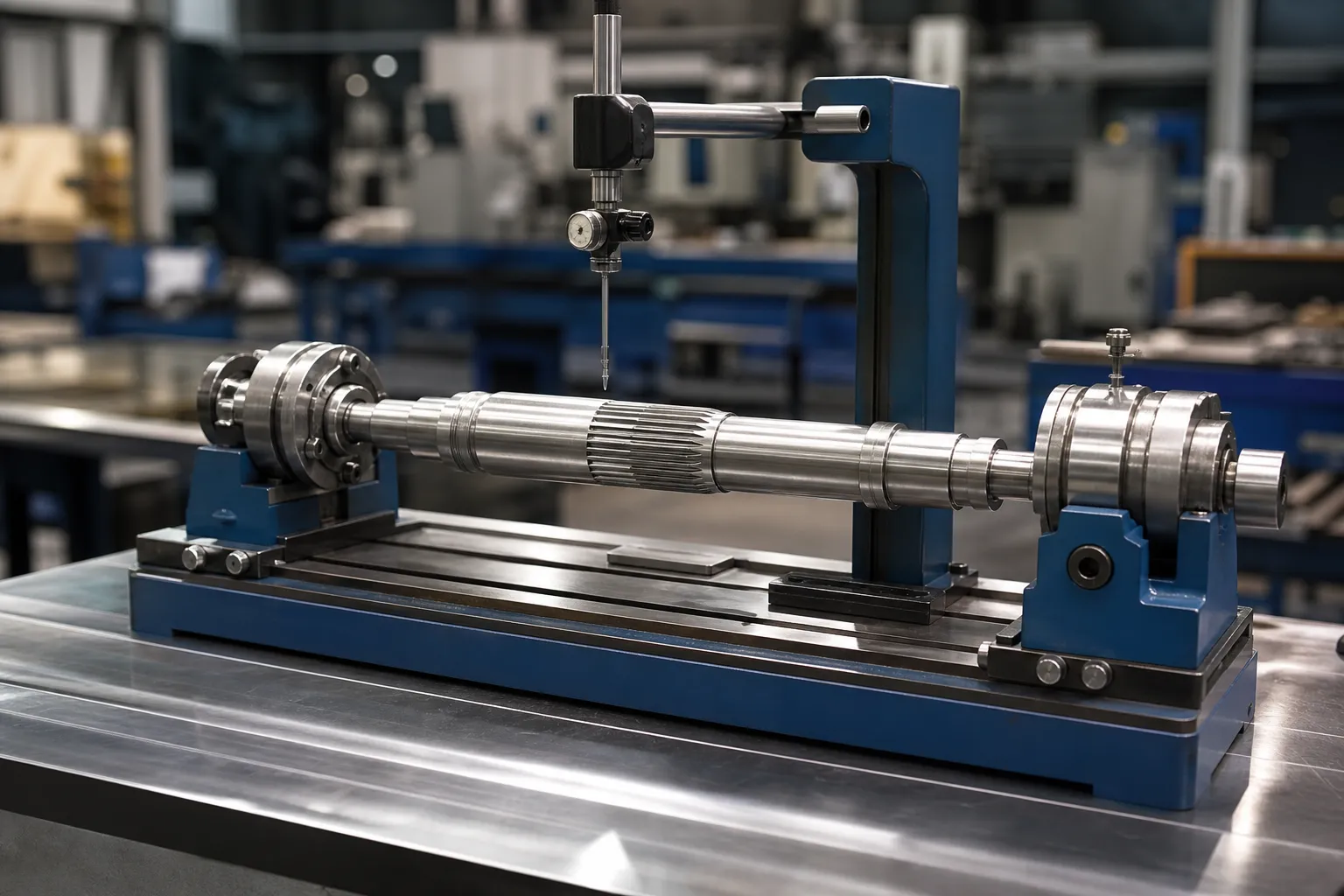
*Ilustrasi konsep kejuruteraan. Kaedah pengukuran keadaan keluaran yang diluluskan menentukan keputusan yang boleh dilaporkan.*
Bukti Diperlukan Sebelum Proses Tuntutan
Menyediakan lukisan/semakan, spesifikasi dan keadaan bahan, sejarah pembuatan, peringkat rawatan haba, rekod pembetulan/kerja semula sebelum ini, geometri masuk, sekatan permukaan, kaedah pengukuran yang diterima dan sampel yang mewakili. guna meluruskan selepas rawatan haba untuk menjelaskan kawalan pentas dan ujian sampel meluruskan dan penerimaan untuk merancang percubaan. Kemudian hubungi StraighteningTech untuk perbincangan.
Pengesahan Diperlukan Sebelum Tuntutan Sistem
Any material-behavior claim needs a defined material and process scope, rujukan yang ditentukur, representative heat-treated samples, and traceable measurement data. Keupayaan mesin generik bukan hasil yang disahkan untuk topik ini.
Soalan Lazim
Does the Bauschinger effect make straightening impossible for previously bent parts?
Tidak. It makes the response history-dependent rather than fixed. Processes handle it by planning corrections that work each location predominantly in one direction, limiting the number of correction cycles per part, and validating the correction rule on representative parts that carry the same history as production.
Why does pressing a bend back often overshoot?
Because the reverse stroke meets a material that yields at a lower stress than the forward stroke did. A force or depth calibrated on the forward response therefore over-delivers in reverse. The remedy is a separate, smaller correction rule for reverse strokes, or better, an error-map strategy that avoids reversing the same location repeatedly.
Can a correction setup be transferred to a new material lot unchanged?
Only with evidence. Different mill heats can carry different deformation histories and conditions, so the first pieces of each new lot should be treated as a confirmation sample: if correction behavior matches the qualified baseline, continue; if it shifts, requalify before running. This is standard practice for managing the springback variation discussed for springback variation between batches.
Sumber StraighteningTech Berkaitan
Lihat bagaimana pelurus aci automatik berfungsi, ujian sampel meluruskan dan penerimaan dan kelurusan aci lwn runout lwn TIR untuk sempadan kawalan generik yang digunakan sebelum sebarang tuntutan keupayaan pada Kesan Bauschinger dalam Meluruskan.