
Il raddrizzamento spesso comporta la piegatura di un materiale in una direzione correlata alla sua precedente storia di deformazione. L'effetto Bauschinger è un concetto di comportamento del materiale utilizzato per descrivere come la precedente deformazione plastica può modificare il comportamento di snervamento sotto carico inverso. Aiuta a spiegare perché una singola regola di correzione generica potrebbe non essere trasferibile tra stati materiali, formare storie o lotti.
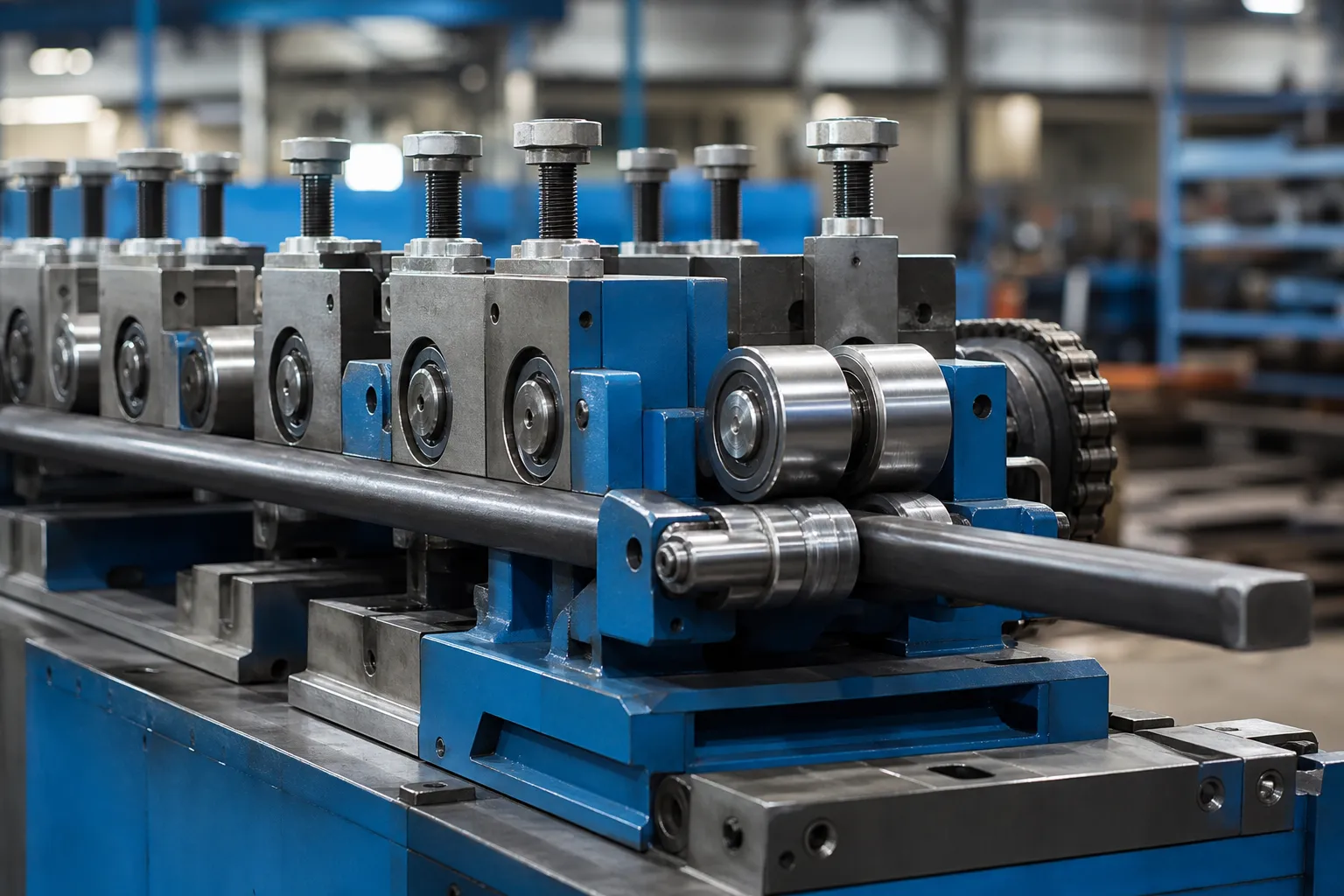
*Illustrazione del concetto di ingegneria. Non è un test materiale, modello di stress o risultato del raddrizzamento verificato.*
What the Effect Physically Is
In parole povere: a metal that has been plastically bent one way yields more easily when it is then bent the other way. On a stress–strain curve, a bar pulled past yield, unloaded, and then loaded in compression reaches its new yield point at a lower magnitude than the original tensile yield. The microstructural reason is that plastic deformation leaves the crystal lattice populated with dislocations arranged to resist further deformation in the loading direction; when the load reverses, that same arrangement assists slip in the opposite direction, so reverse yielding begins early. The effect is strongest right after the first reversal and saturates after a few cycles, and it is more pronounced in softer, lower-carbon conditions than in heavily hardened ones.
Two consequences matter for straightening. Primo, the material’s force–deflection response is asymmetric with respect to the sign of bending: the same press stroke moving a bend in one direction produces a different permanent set than the identical stroke applied against it. Secondo, every unload leaves a locked-in micro-residual stress state, so the “Stesso” part is never quite the same material twice once correction has begun. Both consequences push toward the same process discipline — few, planned, well-aimed correction strokes instead of many small reversing ones.
What This Means for a Correction Stroke
Straightening control commonly assumes a repeatable relationship between applied correction and resulting movement — the basis of springback compensation practice. Reverse-loading history threatens exactly that repeatability. Consider the classic over-correct-and-press-back sequence: the first stroke plastically bends the section, the second stroke bends it back. Because the material yields earlier in the reverse direction, the second stroke needs less force to move the part the same amount, and a control routine calibrated on the first stroke’s response will overshoot. Each additional reversal compounds the drift while accumulating low-cycle fatigue damage in the section, which is the mechanism that connects careless correction sequences to the cracking risks discussed for stiramento eccessivo e screpolature.
The practical rules that follow are qualitative but firm. Plan the correction so that each location is plastically worked in one predominant direction, not ping-ponged. Set the rework limit before the first stroke — the number of correction attempts a part may receive — and enforce it through the NOK sorting and rework-limit discipline. And when a process has drifted so that the same nominal error now needs visibly more or fewer strokes than it did at qualification, treat the change as a material signal to investigate, not as a knob to tune away.
Perché è importante il caricamento inverso
A part may have accumulated deformation during rolling, disegno, formando, trattamento termico, lavorazione, transport or a prior correction step. When a straightening process applies reverse bending, the response can depend on that history as well as the current material condition and geometry. This is why a bend map alone does not establish a safe correction window.
| Factor | Trial question |
|---|---|
| Material grade and condition | Is the applicable condition documented, non scontato? |
| Prior forming/drawing | Could the deformation history differ between lots? |
| Heat-treatment stage | Is correction allowed at this stage? |
| Section/geometry | Does stiffness vary along the part? |
| Surface/functional features | Are there contact or crack-risk constraints? |
| Previous rework | Has reverse loading already occurred? |
Use It as a Trial-Planning Concept
The concept should lead to better records, not unsupported claims. Registra la condizione in entrata, materiale/lotto, fase di produzione, mappa iniziale, sequenza di correzione, misura rilasciata, osservazione della superficie e stato di rilavorazione. Modificare un fattore controllato alla volta durante lo sviluppo e non estrapolare da un campione semplice a una famiglia di parti diversa.
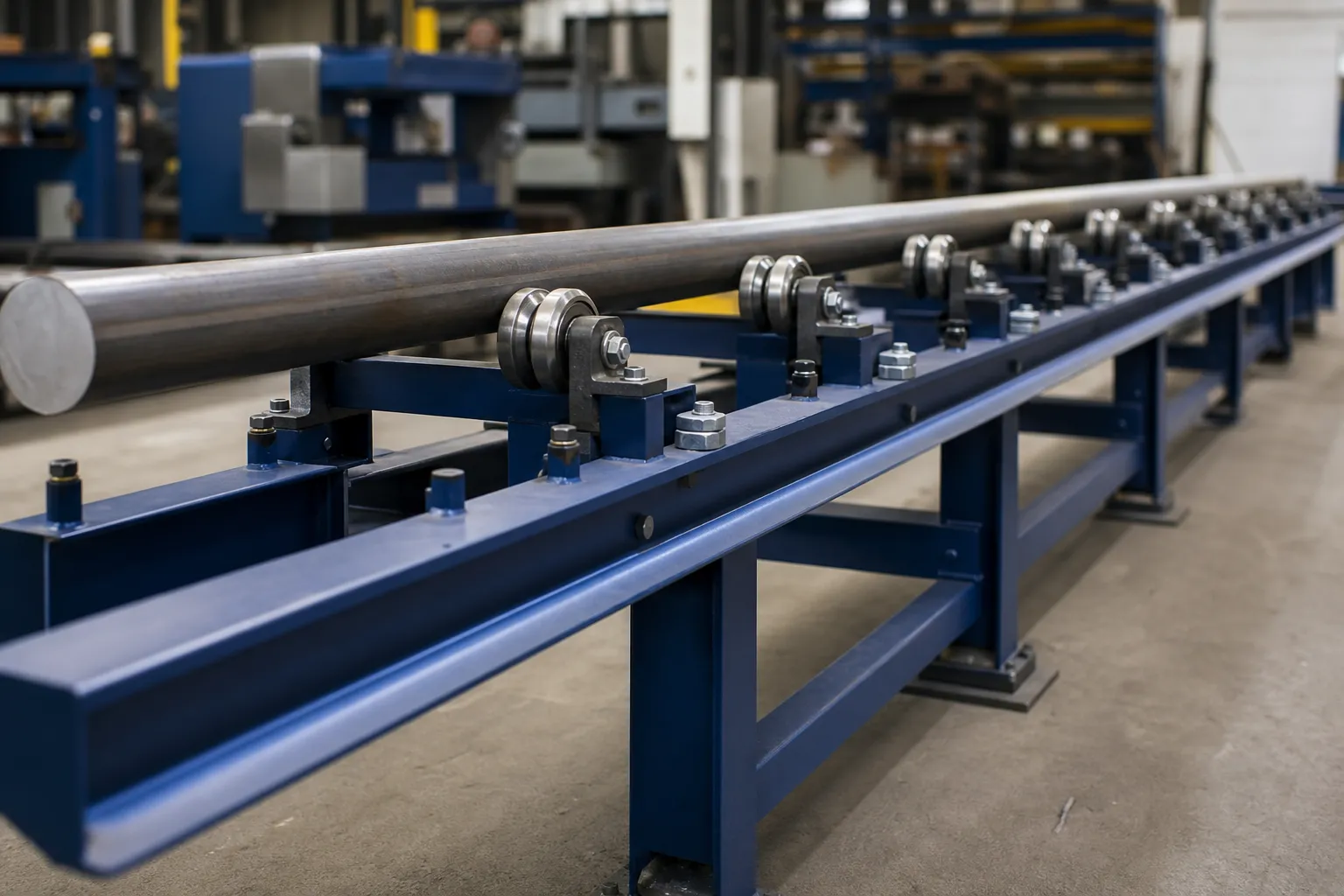
*Illustrazione del concetto di ingegneria. Supporto, il contatto e il comportamento del materiale richiedono una revisione tecnica specifica della parte.*
Evitare di definire un risultato “controllato da Bauschinger” a meno che uno studio qualificato sui materiali/processi non definisca esattamente cosa significa. Il termine non sostituisce un obbligo di disegno, certificato del materiale, valutazione della frattura o approvazione del cliente.
Where Loading History Hides in Real Parts
Reverse-loading sensitivity does not require a previous straightening operation — most parts arrive with a history already written into them. Bars and wire carry directional deformation from rolling and drawing, so their bend response differs with orientation relative to the mill direction. Heat-treated parts carry quench distortion plus the residual stress field of the treatment, and any straightening performed at the heat treater counts as prior history for the correction performed later — the staging questions covered under stiratura dopo il trattamento termico. Long slender parts accumulate transport and clamping bends, and a part that has already been through one rework loop at a supplier arrives pre-cycled. Even within one purchased lot, different bar lengths can come from different mill heats with different histories, which is why a correction setup that works on the first pieces of a lot can misbehave on the last.
The countermeasure is informational, not mechanical: capture material and lot identity, the manufacturing stage, and any prior correction record alongside the incoming geometry map. That data costs almost nothing at receiving and is the difference between a drift investigation that takes an afternoon and one that cannot be closed at all.
Reading the Effect in Production Data
Because the effect cannot be seen on the part, it announces itself through patterns in the process data. The signals to watch for are structural rather than numeric: the number of correction strokes needed for the same incoming error creeping upward or downward over a run; parts that oscillate around nominal across alternating strokes instead of converging; released measurements that flip to the opposite side of the tolerance band after correction sequences that historically landed centered; and lot-to-lot differences in correction behavior with no change in machine setup. None of these patterns is proof of reverse-yield behavior on its own — each has measurement and fixture mimics, which is why the datum and gauge checks come first — but together they justify pulling a sample set aside for a controlled material-and-history review rather than continuing to adjust the machine.
Separare il comportamento del materiale dall'errore di misurazione
Un risultato rilasciato inaspettato può derivare da una risposta materiale, ma anche dalla sede di riferimento, conformità degli apparecchi, supporto/caso, correlazione del calibro o una mappa degli errori incompleta. Controllare questi fattori prima di attribuire la causa al comportamento di rendimento inverso. Vedere ripetibilità dell'attrezzatura e posizionamento dei datum E incertezza di misura nel controllo della rettilineità.
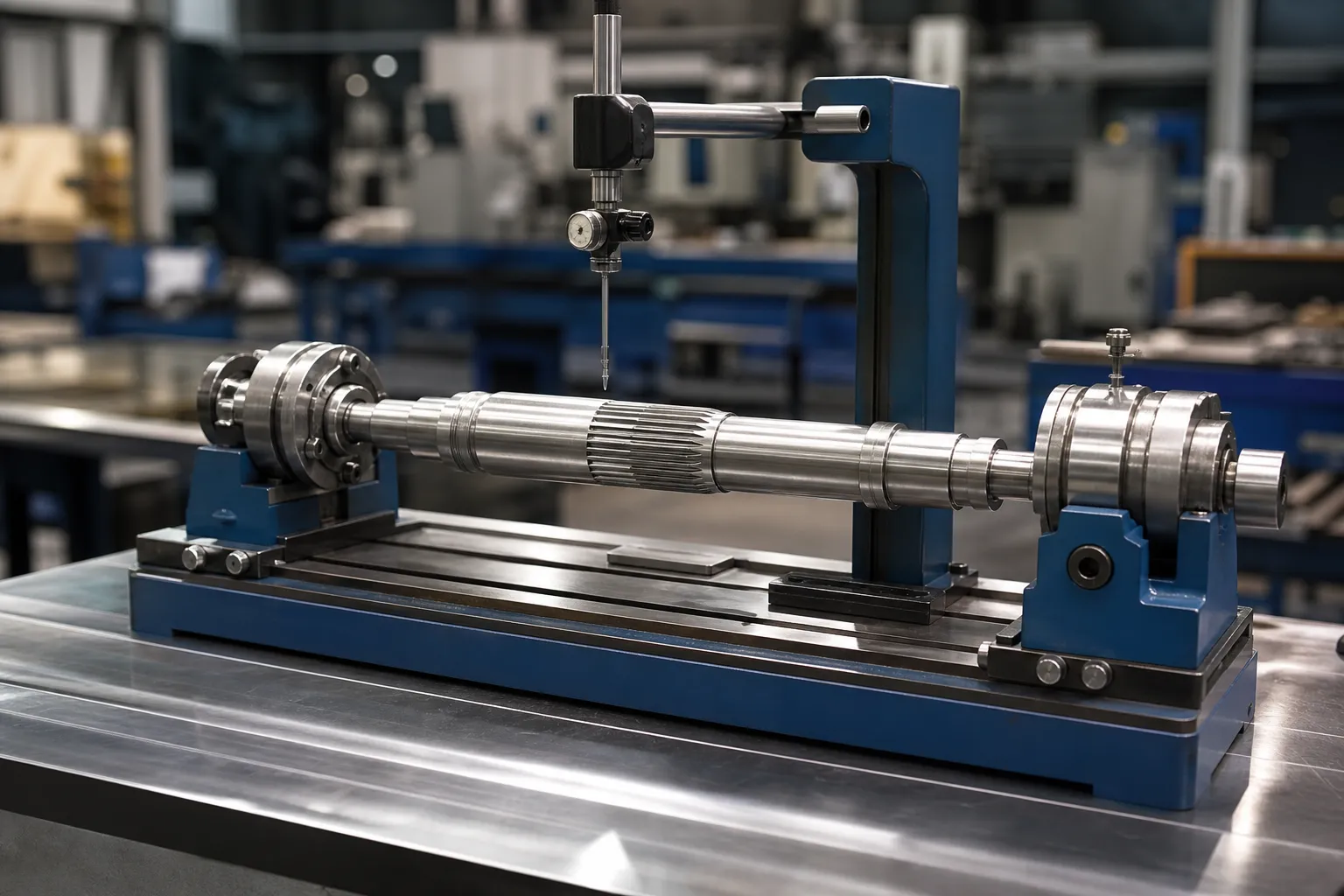
*Illustrazione del concetto di ingegneria. Il metodo di misurazione approvato allo stato di rilascio determina il risultato da riportare.*
Prove necessarie prima delle rivendicazioni processuali
Fornire disegno/revisione, specifiche e condizioni del materiale, storia manifatturiera, fase di trattamento termico, registrazioni di correzioni/rilavorazioni precedenti, geometria in arrivo, restrizioni di superficie, metodo di misurazione accettato e campioni rappresentativi. Utilizzo stiratura dopo il trattamento termico per chiarire i controlli di scena e prova e accettazione del campione di raddrizzatura per pianificare le prove. Poi contattare StraighteningTech per la discussione.
Convalida richiesta prima di una richiesta di sistema
Any material-behavior claim needs a defined material and process scope, riferimenti calibrati, representative heat-treated samples, and traceable measurement data. A generic machine capability is not a verified result for this topic.
Domande frequenti
Does the Bauschinger effect make straightening impossible for previously bent parts?
NO. It makes the response history-dependent rather than fixed. Processes handle it by planning corrections that work each location predominantly in one direction, limiting the number of correction cycles per part, and validating the correction rule on representative parts that carry the same history as production.
Why does pressing a bend back often overshoot?
Because the reverse stroke meets a material that yields at a lower stress than the forward stroke did. A force or depth calibrated on the forward response therefore over-delivers in reverse. The remedy is a separate, smaller correction rule for reverse strokes, or better, an error-map strategy that avoids reversing the same location repeatedly.
Can a correction setup be transferred to a new material lot unchanged?
Only with evidence. Different mill heats can carry different deformation histories and conditions, so the first pieces of each new lot should be treated as a confirmation sample: if correction behavior matches the qualified baseline, continue; if it shifts, requalify before running. This is standard practice for managing the springback variation discussed for springback variation between batches.
Risorse StraighteningTech correlate
Vedere come funziona il raddrizzamento automatico dell'albero, prova e accettazione del campione di raddrizzatura E rettilineità dell'albero vs eccentricità vs TIR per i confini di controllo generici che si applicano prima di qualsiasi rivendicazione di capacità Effetto Bauschinger nella stiratura.