
Desizyon pou modènize oswa ranplase yon machin redresman ta dwe baze sou prèv, not on the machine's age alone. Yon platfòm mekanik ki pi gran ka toujou apwopriye pou yon amelyorasyon vize; yon machin plus ka toujou yon pòv anfòm si mezi li, sekirite, manyen oswa achitekti done pa ka sipòte pyès aktyèl la ak egzijans akseptasyon. The decision must also separate a machine condition finding from the availability of a supplier's retrofit service.
Gid sa a se yon kad achtè net. Li pa fè reklamasyon ke StraighteningTech ofri retrofits, konvèsyon, pyès rezèv, kontwole amelyorasyon oswa yon repons sèvis espesifik. Dimansyon sa yo dwe konfime separeman.

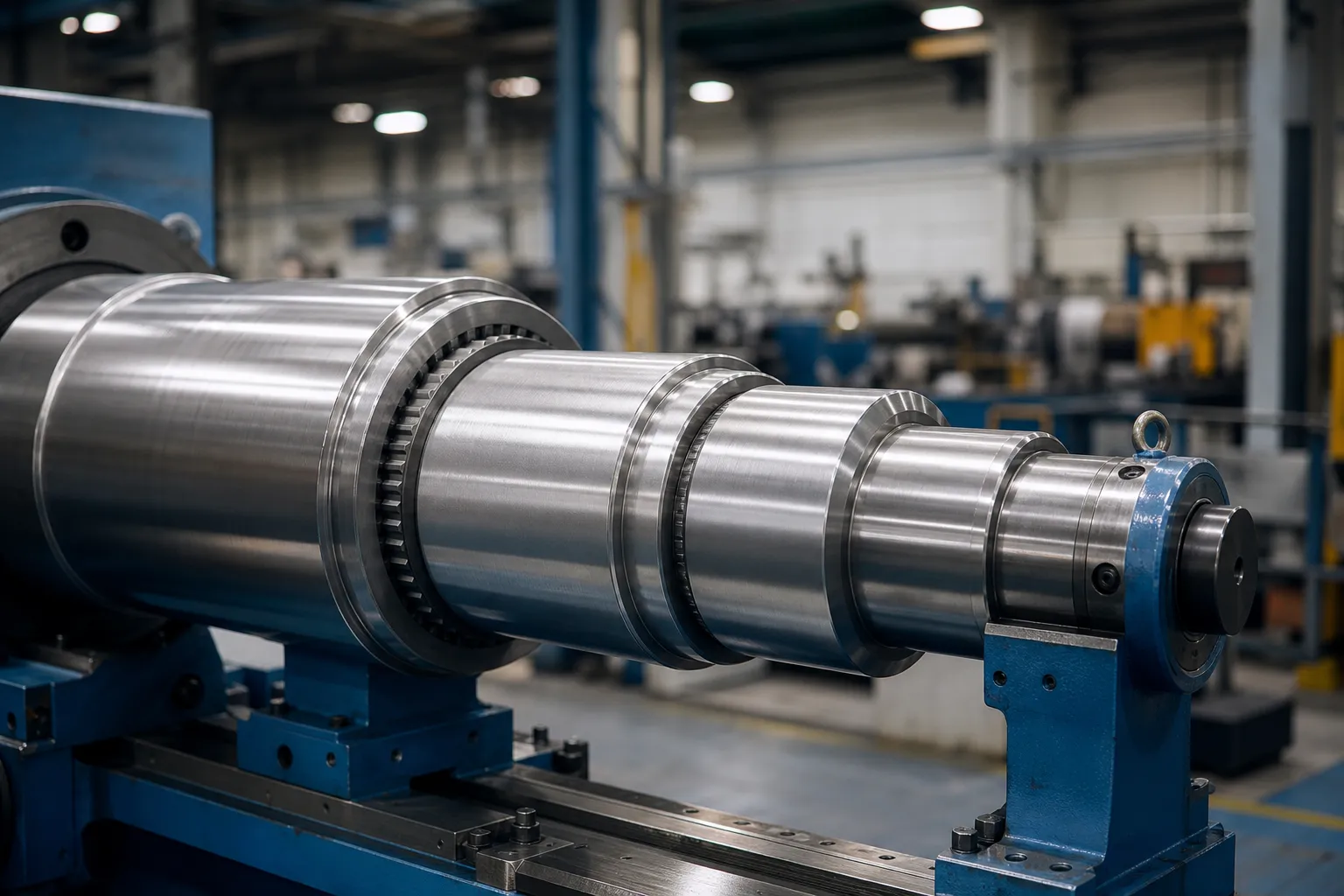
*Jeni konsèp ilistrasyon. Li montre yon achitekti selil kandida, pa yon evalyasyon yon machin ki egziste deja oswa yon pwomès ke yon amelyorasyon disponib.*
Kòmanse ak pyès aktyèl la ak egzijans akseptasyon
Anvan enspekte machin nan, friz fanmi pyès travay aktyèl ak planifye, dat desen yo, karakteristik jeyometri, metòd mezi, zòn kontak pwoteje, melanj pwodwi, manyen bezwen yo, atant trasabilite ak obligasyon sekirite. Yon modènizasyon ki prezève move achitekti pwosesis la pa pral rezoud yon dezakò kapasite.
Sèvi ak arbr, seleksyon tib ak pwofil straightener defini pwosesis sib la anvan konpare opsyon.
Evalye mekanik, Kondisyon sekirite ak zouti
Yon evalyasyon ta dwe dokimante kondisyon ankadreman, gid, sipò, woulèt oswa interfaces pou laprès, enstalasyon, veye, kontwòl, kondisyon elektrik, sèvis ak disponiblite pati enpòtan yo. Li ta dwe idantifye tou sa ki pa ka verifye san yon enspeksyon kalifye.
| Zòn evalyasyon | Kesyon chanjman | Kesyon ranplasman |
|---|---|---|
| Estrikti mekanik | Èske li san danje sipòte chemen fòs sib la ak pyès travay la? | Èske yon nouvo achitekti nesesè pou pwosesis la? |
| Zouti ak sipò | Èske enstalasyon/zon kontak yo ka valide pou fanmi sib la? | Èske nouvo solisyon an bezwen travay diferan? |
| Sekirite | Èske yo ka verifye fonksyon gad yo ak sekirite yo? | Èske devwa sib la mande pou yon achitekti sekirite diferan? |
| rezèv ak antretyen | Èske konpozan kritik yo ka sipòte pou lavi a gen entansyon? | Èske obsolesans kreye risk operasyonèl akseptab? |
When a Retrofit Is Defensible — and When It Is Not
A retrofit earns consideration when four conditions hold at once: the mechanical structure is demonstrably sound for the target force path; the target workpiece families stay within the load and geometry envelope the structure was built for; the measurement architecture — sensors, datum repetition, settings handling — can either be added or correlated to the reference method; and a supplier has confirmed in writing the scope that will actually be performed. Lose any one of the four and the retrofit discussion is spending engineering time on a route that cannot close.
The clearest non-starters are architectural. When the product mix is moving toward a different correction architecture — a different force path, a different support concept, a different measurement principle than the frame and tooling can carry — no component-level upgrade changes that. The same applies when obsolescence has reached the safety layer: guarding and safety functions built around withdrawn components are a revalidation project of their own, and stacking that on top of a process upgrade rarely survives an honest risk review. Finalman, when frame condition cannot be verified without a qualified inspection, the retrofit quote is priced against unknowns — commission the inspection first, or treat the machine's remaining life as unproven.
Evalye mezi ak kontwòl konpatibilite
Desizyon an modènize se pa sèlman sou ranplase yon kontwolè. Machin nan dwe mezire karakteristik ki kòrèk la sou done ki kòrèk la, repete kondisyon sipò / pwezante ki nesesè yo, jere anviwònman oswa resèt kote ki enpòtan, anrejistre done ki nesesè yo ak eksepsyon wout yo san danje.
*Jeni konsèp ilistrasyon. Li dekri yon revizyon seleksyon sib-pwosesis, se pa yon evalyasyon ke yon machin ki egziste deja ka modènize nan chak achitekti kandida.*

*Jeni konsèp ilistrasyon. Li mete aksan sou bezwen pou verifye jeyometri apre lage; li pa endike ke nenpòt machin ki egziste deja ka konvèti nan yon sistèm bouk fèmen.*
Revize korelasyon kalib, kondisyon Capteur, entegrite done yo, kontwòl aksè, jesyon chanjman ak relasyon ki genyen ant valè mezire ak metòd referans kliyan an. Yon nouvo ekran pa pou kont li etabli yon bouk koreksyon valab.
A Five-Gate Verification Path
The decision becomes tractable when it is run as a sequence of gates, each with a defined pass condition and a defined action when it fails. Lòd la enpòtan: every later gate is cheaper to evaluate once the earlier ones have closed.
Gate 1 — Requirement
Pase: workpiece families, revizyon desen, dat la, characteristics and the customer acceptance method are frozen in writing. Fail action: stop. Neither a retrofit nor a replacement can be specified against a moving target, and any quote received at this stage is a guess.
Gate 2 — Mechanical
Pase: documented evidence that frame, gid, supports and force path carry the target family — including the findings that require a qualified inspection. Fail action: ranplase, repurpose the machine to a lighter family, or close the gap with the inspection before any further spending.
Gate 3 — Measurement
Pase: the machine measures the specified characteristic on the specified datum, repeats the support and positioning condition, manages settings or recipes where relevant, and can be correlated to the customer gauge. Fail action: scope the measurement retrofit explicitly as its own engineering and validation package, or route the decision to replacement.
Gate 4 — Demonstration
Pase: the proposed configuration is demonstrated on representative parts through to released-state results and customer-gauge correlation. Fail action: treat the proposal as unproven. A retrofit that cannot be demonstrated before commitment is a bet placed with production as the stake.
Gate 5 — Economics
Pase: both routes are compared on total evaluated cost — engineering, enstalasyon, D', revalidasyon, fòmasyon, spares for the intended life, contingency for failure — using the buyer's own baseline. Fail action: if the comparison cannot be made honestly, the deciding factor is risk posture, not price, and that is a management decision to make explicitly.
Konpare D', Risk ak revalidasyon
Tou de wout yo bezwen yon plan pou jeni, enstalasyon, revizyon sekirite, komisyonin, echantiyon tès, fòmasyon operatè ak dokiman. Yon konparezon ta dwe gen ladann fennèt D' gen anpil chans, ekspoze pyès rezèv, enpak chanjman, efò kalifikasyon, enprevi pwodiksyon ak pri a nan yon rezilta san siksè. Do not use an average payback or “faster ROI” claim without the buyer's own baseline data.
Cost Items Both Quotes Must State
Most retrofit-versus-replace comparisons fail not on the numbers but on what the numbers omit. The table lists the items a comparable pair of quotes has to carry:
| Cost item | Where it hides in retrofit quotes | Where it hides in replacement quotes |
|---|---|---|
| Engineering and qualification | Marked “included” with no validation scope | Assumed to be in the machine price with no FAT/SAT scope |
| Installation and downtime | Scheduled around production informally | Window underestimated where foundations or utilities change |
| Safety review and commissioning | Omitted when controls are touched | Bundled invisibly into startup support |
| Gauge correlation study | Postponed until after startup | Postponed until after startup |
| Operator training | Limited to the new component | Limited to the first shift |
| Documentation and traceability update | Legacy records not migrated | Templates delivered without the buyer's data model |
| Spares for the intended life | Old-platform parts assumed available | First-generation components on a new platform |
| Production contingency during ramp | Coverage during validation runs undefined | Coverage during the learning curve undefined |
| Cost of an unsuccessful outcome | Rarely defined at all | Rarely defined at all |
| Existing machine disposal or residual value | Ignored | Ignored |
Two of these deserve emphasis because they are almost always missing: the correlation study and the cost of failure. Without a gauge correlation there is no common acceptance language between the machine and the customer, and every later dispute is unresolvable. Without a defined failure outcome — re-run, external processing, scrap allowance, rollback — the comparison silently assigns zero cost to the riskier route.
Fè Egzanp Validasyon Pòtay Desizyon an
Wout pi pito a ta dwe demontre pwosesis sib la ak pati reprezantan: syèj done, repetibilite mezi, repons koreksyon, rezilta eta lage, kondisyon sifas yo, manyen, routage eksepsyon ak korelasyon kliyan-kalib. Si prèv la pa ka fèmen san danje sou platfòm ki deja egziste a, ranplasman oswa yon achitekti pwosesis diferan ka wout ki pi defann.
Pou estrikti nan validation, wè redresman echantiyon tès ak akseptasyon and machine gauge versus customer gauge correlation.
Risks a Retrofit Trial Must Retire
A retrofit validation is not a demonstration that the machine moves; it is the retirement of specific failure modes, each with its own test:
- Correction-response risk — springback drifting with material state or batch. Test with representative parts from more than one material lot, recording the stroke-versus-result relationship; how that relationship moves between lots is the process's real signature. The underlying mechanism is covered in efè Bauschinger nan redresman.
- Released-state risk — in-machine readings diverging from final geometry once the part is released. Test by independent remeasurement after release, on supports defined in the acceptance plan. The distinction is developed in chaje vs lage mezi dwat.
- Setup-repeatability risk — the corrected result depending on who sets up the part. Test by repeating full setups with the datum deliberately reseated, comparing results before any capability claim. The statistical framing is in gage R&R pou redresman liy yo.
- Exception-routing risk — a rejected or mid-cycle-interrupted part following an undefined path. Test by injecting faults deliberately, including an interrupted cycle, and verifying what happens to the part in the machine and how the event is recorded. Disposition rules for rejected parts are covered in NOK klasman ak retravay limit.
Red Flags in Any Proposal
- No representative-part demonstration is offered, or one is promised only after commitment.
- ROI or payback is asserted without asking for the buyer's own baseline data.
- The scope is written in conditional language — “can be considered”, “possible upgrade” — leaving the binding scope undefined.
- A controller or screen upgrade is presented as proof of straightening capability.
- No failure path is defined: nothing about what happens if the agreed result is not met.
Kesyon pou Poze Anvan yon Pwopozisyon Renovasyon oswa Ranplasman
- Ki fanmi pyès travay ak revizyon desen defini kondisyon an?
- Ki mezi ak metòd akseptasyon dwe solisyon an korelasyon ak?
- Ki mekanik, sekirite, Kontwòl ak konklizyon pyès rezèv yo dokimante?
- What configuration changes are actually within the supplier's confirmed service scope?
- Ki echantiyon validation, kalib dosye ak kritè lage pral deside siksè?
- Kisa k ap pase si platfòm ki deja egziste a pa ka satisfè rezilta yo te dakò a?
FAQ
Èske yon modènizasyon toujou pi bon mache pase ranplasman?
Non. Pri depann sou kondisyon, dimansyon, sekirite, obsolesans, validation, D 'ak pwosesis la sib. It must be evaluated with the buyer's own data. The defensible comparison is total evaluated cost — engineering, D', revalidasyon, spares over the intended life and a priced failure path — not the number on the upgrade quote.
Èske yon ajou kontwolè pwouve kapasite redresman?
Non. Mezi, done, zouti, sipò, repons koreksyon ak akseptasyon toujou mande pou validation. What a controller changes is data handling and interface; the characteristic and the correction response still have to be demonstrated on parts, which is what Gates 3 epi 4 above are for.
Èske atik sa a vle di StraighteningTech ofri sèvis modernisation?
Non. Disponibilite ak dimansyon sèvis yo dwe konfime separeman anvan nenpòt angajman komèsyal yo. The five-gate path above works the same way regardless of which supplier or route is eventually selected.
What should we do if a retrofit cannot be demonstrated with our parts before commitment?
Treat the demonstration gate as failed. Either phase the commitment so that a paid engineering study on your parts precedes the full scope, route the work to a proven process in the interim, or move the decision to replacement. What should not happen is accepting the retrofit on price while carrying the full validation risk in production.