
Redresman tren gid asansè se yon pwosesis jeyometri etap fabrikasyon. Li diferan de aliman enstale ray nan yon hoistway. Yon wout pwodiksyon dwe kontwole seksyon tren an, figi referans, longè, banza, bale lateral, tòde, kondisyon sifas ak interfaces pou D', enspeksyon ak anbalaj.
Gid sa a se yon kad jeni ki baze sou pyès travay. Li pa fè reklamasyon ke StraighteningTech kounye a okipe yon pwofil tren an patikilye, longè, to pwodiksyon oswa tolerans akseptasyon. Pwen sa yo mande pou yon revizyon desen, ray reprezantan, akò mezi ak yon pwosesis echantiyon valide.
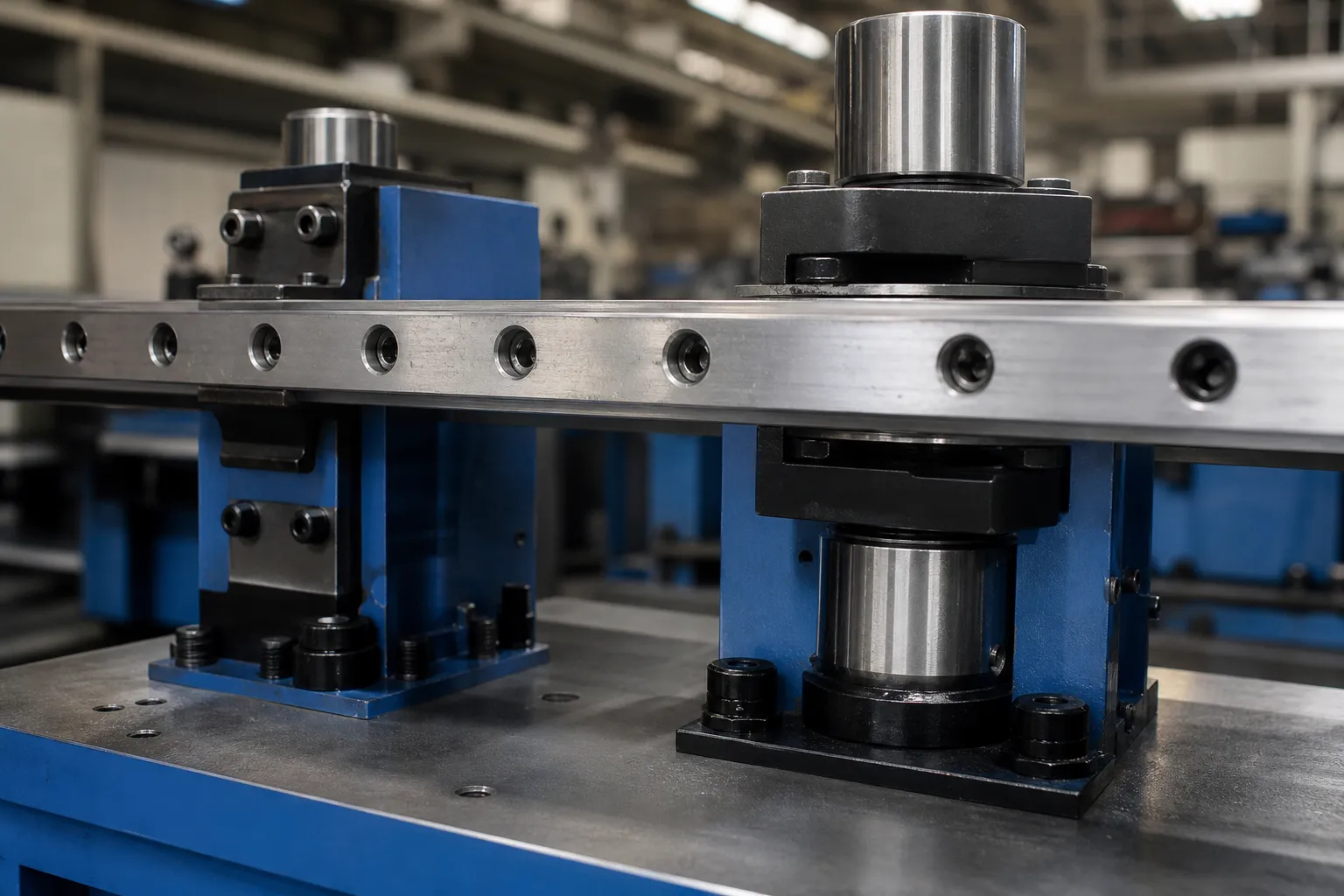
*Jeni konsèp ilistrasyon. Li dekri yon kandida etap fabrikasyon pwosesis tren, pa yon sèvis aliyman asansè ki enstale oswa yon dosye machin livrezon.*
Separe fabrikasyon dwat soti nan aliyman enstalasyon
Rezilta rechèch pou machin tren gid asansè gen ladan straighteners dedye, liy pwodiksyon gid-ray ak kesyon enstalasyon yo. Kesyon fabrikasyon an se si wi ou non tren livrezon an satisfè egzijans jeyometrik kontwole apre yo fin retire tout fòs koreksyon yo.. Aliyman enstalasyon konsène bilding lan, parantèz, jwenti ak sondaj jaden. Yo bezwen sistèm mezi separe epi yo pa ta dwe konbine nan yon sèl deklarasyon akseptasyon.
| Dimansyon | Tipik pwoblèm kontwole | Pa ranplase |
|---|---|---|
| Manifakti tren | Jeyometri seksyon, banza longitudinal, bale lateral, tòde ak kondisyon sifas yo | Yon chèk pwolonje oswa espas tren |
| Pwodiksyon-liy entegrasyon | Manje, redresman, koupe, D', enspeksyon ak anbalaj koòdone | Yon pwomès ke chak konfigirasyon liy yo apwovizyone |
| Enstalasyon Hoistway | Parantèz, aliyman jwenti ak vètikal nan bilding lan | Yon rezilta redresman faktori |
Estrikti mache a sipòte separasyon sa a: Senbo prezante ekipman redresman gid-ray dedye pandan y ap Co-effort prezante dimansyon liy pwodiksyon gid-ray.. A useful site architecture keeps the workpiece solution separate from an elevator guide rail production-line buying guide.
Sijè ki gen rapò ak jeyometri fabrikasyon yo enkli lineyè gid ray redresman epi redresman ray tren. Yo mande pwòp seksyon yo, revizyon done ak pwosesis; pa ni yon ranplasan pou yon kalifikasyon tren asansè.
Defini seksyon tren an, Kat done ak erè
"Rail straightness" se enkonplè jiskaske seksyon an, figi referans, span longè ak kondisyon mezi yo deklare. Yon T ki gen fòm oswa lòt pwofil asimetri ka montre vètikal banza, bale lateral ak tòde an menm tan. Yon modèl sipò kapab tou kreye jeyometri aparan si tren an sag anba pwòp mas li oswa repoze enkonsistan.
Revizyon jeni an ta dwe friz:
- desen tren, pwofil variant, longè ak etap fabrikasyon an;
- figi done yo, zòn sipò otorize ak zòn kosmetik oswa fonksyonèl pwoteje;
- karakteristik akseptasyon pou chak avyon ak metòd yo itilize pou kalkile li;
- si wi ou non tòde kontwole, ki jan oryantasyon endis, ak fason yo trete varyasyon seksyon entansyonèl;
- distribisyon erè fèk ap rantre, kondisyon manyen ak kalib referans oswa aparèy enspeksyon an;
- D', koupe, rantre nan, anbalaj ak interfaces en ki ka re-entwodui deformation.

*Jeni konsèp ilistrasyon. Li montre yon posib apwòch mezi tout longè; pozisyon aktyèl detèktè yo, span ak dam dwe valide pou fanmi tren an.*
Where Rail Distortion Comes From
A guide rail accumulates its geometry story long before it reaches a straightening station. Rolling leaves residual stress through the section, unevenly distributed between the head and the web of the profile; cooling on the mill bed adds its own field. Straightening performed at the mill counts as history — a rail that was rotary-straightened upstream arrives with its deformation budget partially spent and its response to further correction altered, the reverse-loading behavior covered for efè Bauschinger. Cutting to length releases constraint at the ends, which is why end geometry often differs from mid-length behavior. Machining the guide faces removes surface material and lets buried stresses relax asymmetrically. And handling writes the final chapter: a long rail lifted at the wrong points, or stored standing under its own weight, collects bends that no upstream process intended. Each source predicts its own signature — where peaks sit, whether sweep or twist dominates — and reading that signature from the incoming map is what turns correction from generic pressing into a planned route.
The T-Section’s Mechanical Personality
An asymmetric rail section is not a round bar with corners. Its stiffness differs by direction — bending about one axis of the profile meets much more resistance than about the other — so vertical bow and lateral sweep are not two readings of one problem but two different mechanical responses, each with its own correction economics. The open profile is also torsion-sensitive: modest twist about the longitudinal axis displaces the guide faces at the ends in opposite directions, which is why a rail can measure acceptably for bow at every station and still present a twisted functional surface to the car shoes. And the guide faces themselves are the functional product: they are where contact is both mechanically necessary for measurement reference and cosmetically or functionally restricted, the tension that makes surface-protection tooling practice and conservative contact-zone choice — as the section above demands — inseparable from the geometry plan. The same asymmetry-first logic governs the structural profiles discussed for I-beam and H-beam straightening.
Mezire Bow, Bale ak tòde kòm siyal diferan
Yon ray ka gade dwat nan yon gade men echwe nan yon lòt. Pwosesis la ta dwe kat estasyon yo te dakò ak direksyon yo anvan koreksyon. Vètikal banza, bale lateral ak tòde ta dwe estoke kòm karakteristik diferan, pa konbine nan yon valè "pliye" jenerik.
| Karakteristik | Kesyon mezi | Konsekans Jeni |
|---|---|---|
| Vètikal banza | Ki plan datum ak span defini rezilta a? | Detèmine direksyon sipò ak koreksyon |
| Bale lateral | Èske entènèt la oswa figi gid referans toujou? | Ka bezwen yon oryantasyon koreksyon diferan |
| Tòde | Ki figi etabli oryantasyon angilè? | Pa ka dedwi nan yon sèl sond lineyè |
| Fixture/sag siyal | Èske yon reseat oswa chanje modèl sipò chanje lekti a? | Egzije revizyon konfigirasyon anvan koreksyon |
Long-pati sipò zafè. Yon kat mezi ki chanje lè sipò yo deplase se poko yon kat koreksyon serye. Se poutèt sa, gid la ta dwe distenge konpòtman gratis-eta ak kondisyon sipò kontwole itilize pa desen an ak enspeksyon kliyan an.
Chwazi Zòn kontak ak koreksyon yon fason konsèvatif
Kandida koreksyon ka enplike kontwole pwen peze, woule redresman oswa yon lòt metòd seksyon espesifik. Chwa a depann sou jeyometri tren an, kondisyon materyèl, modèl erè, zòn kontak aksesib ak revizyon risk sifas yo. Yon sekans koreksyon pwen pou yon arbr wonn pa kapab tou senpleman kopye sou yon ray asimetri.
Anvan yon jijman, defini sipò yo apwouve, chemen reyaksyon, pwen chaj yo, materyèl kontak pwoteksyon, kontwòl oryantasyon ak tantativ maksimòm koreksyon. Pa aplike fòs sou yon sifas sèlman paske li aksesib. Fè fas gid machin, figi referans, karakteristik koneksyon ak zòn kosmetik yo ka mande pou pwoteksyon oswa yo ka entèdi kòm pwen kontak.
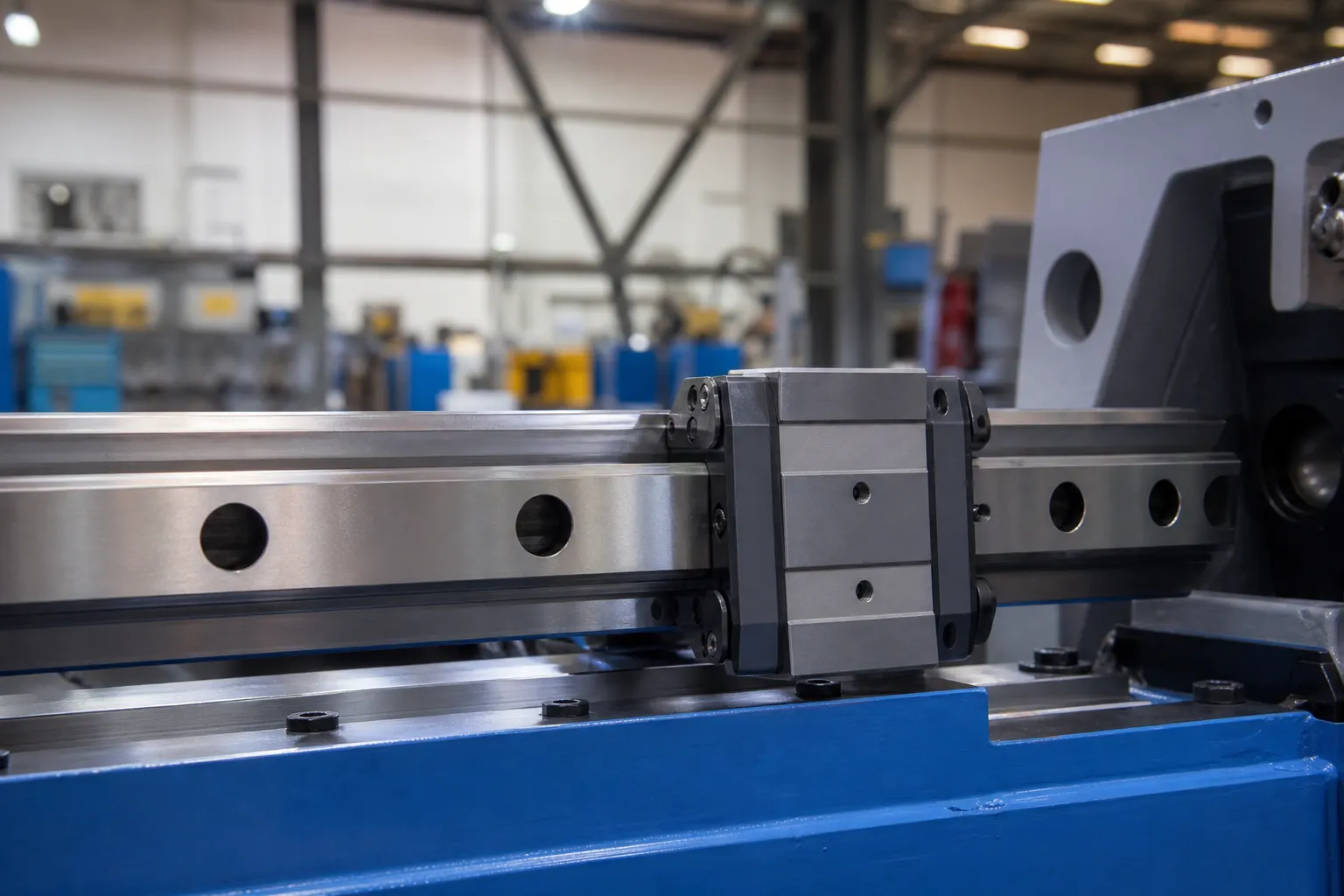
*Jeni konsèp ilistrasyon. Li distenge yon posib pwoblèm angilè-koreksyon soti nan òdinè peze vètikal; li pa pwouve ke yon ray oswa yon machin espesifik sipòte koreksyon torsion.*
Sèvi ak yon bouk Mezire–Kòrèk–Lage–Remezire
Desizyon final akseptasyon an dwe baze sou tren ki lage a. Yon lekti tanporè pandan y ap tren an kenbe pa zouti oswa anba fòs koreksyon pa pwouve jeyometri final la.
- idantifye fanmi tren an, revizyon desen ak etap fabrikasyon;
- enspekte pou domaj, move pwofil, kondisyon sifas ki pa apwouve oswa deformation andeyò dimansyon;
- chaje pati a nan oryantasyon apwouve a epi verifye chèz sipò;
- pran vètikal la, kat erè lateral ak angilè plan akseptasyon an egzije;
- chwazi plan koreksyon ki pèmèt yo epi pwoteje tout zòn ki pa gen kontak;
- aplike koreksyon incrémentielle nan limit apwouve a;
- lage fòs ak kontrent nèt;
- remezire, dispozisyon dosye ak wout ray pa gen okenn pwogrè nan revizyon jeni.
Bati echantiyon tès la alantou kalib kliyan an
The sample plan should compare the machine method with the customer's controlled reference method. Li ta dwe gen ladan ray tipik ak pi move ka fèk ap rantre, repete chèk konfigirasyon yo, lekti eta yo pibliye, enspeksyon sifas yo, trasabilite ak yon wout defini pou ray ki bezwen repete koreksyon oswa ki pa reponn.
| Atik akseptasyon | Prèv ki nesesè anvan yon reklamasyon pwodiksyon an |
|---|---|
| Bow, bale ak tòde | Lekti anvan/apre kri ki gen rapò ak desen ak span |
| Repetibilite aparèy | Reseat etid ak sipò-kondisyon dosye |
| Pwoteksyon sifas yo | Apwouve kritè enspeksyon ak foto oswa rapò |
| Manyen ak liy koòdone | Transfè ki kalifye, oryantasyon ak revizyon sekirite |
| Debi ak automatisation | Kwonometre, valide kouri pou fanmi tren yo te dakò |
Enfòmasyon ki nesesè pou yon revizyon redresman tren gid asansè
Bay desen tren kontwole ak varyant seksyon, longè, materyèl ak etap fabrikasyon, done jeyometri k ap vini yo, done ak metòd akseptasyon, zòn sipò ak kontak pèmèt, kondisyon sifas yo, sib pwodiksyon an, manyen kontrent ak ray reprezantan. Lè sa a, StraighteningTech ka revize mezi kandida yo, sipò ak koreksyon achitekti epi defini prèv echantiyon tès ki nesesè anvan yo pwopoze yon konfigirasyon machin.
FAQ
Èske sa se yon gid enstalasyon-aliyman asansè?
Non. Paj sa a kouvri jeyometri fabrikasyon faktori. Aliyman Hoistway, parantèz ak enstalasyon jaden mande pou yon dimansyon separe.
Èske yon sèl estasyon koreksyon kontwole banza ak tòde?
Pa otomatikman. Bow, bale lateral ak tòde mande pou done defini separeman, tras mezi ak validation koreksyon.
Èske yo ka aksepte yon tren pandan li sere?
Non. Akseptasyon dwe swiv kondisyon yo te dakò nan eta lage. Blocage ka maske springback oswa sag.
Èske yon seksyon, longè oswa tan sik yo dwe espesifye nan atik sa a?
Non. Valè sa yo mande pou yon fanmi tren verifye, kapasite machin, revizyon zouti ak tès echantiyon reprezantan.
Why does the same rail profile distort differently across lots?
Because mill rolling conditions, cooling bed position, upstream straightening history and storage all vary lot to lot, and each writes a different residual-stress pattern into the section. The practical response is per-lot incoming mapping rather than a single inherited correction recipe.
Is point pressing or roll straightening better for guide rails?
Neither is a default. Point pressing suits discrete, mapped peaks on an asymmetric section with defined contact zones; roll methods suit continuous correction of compatible sections at volume. The boundary between the routes — and the sample-test evidence each demands — follows the peze kont redresman roulo konparezon, applied with the rail’s protected faces in view.
How does twist show up when only linear probes are used?
As opposing displacement of the same face at opposite ends — a reading pattern that looks like contradictory bows from a single probe track. Confirming twist needs orientation-aware measurement on defined faces at multiple stations, which is why the error map stores bow, sweep and twist as separate characteristics rather than one combined value.
Moving from manual elevator guide rail correction toward automation? La straightener selection guide for shafts, tib ak pwofil ak la redresman machin FAT lis verifikasyon se pwochen etap natirèl yo.