
Dans l'industrie de la fabrication de fixations, le pliage de longs boulons après un traitement thermique est un problème universel. Traditionnel “martelage manuel” est non seulement inefficace, mais ne parvient pas non plus à garantir une précision constante. Cet article partage une expertise Solution automatisée de redressage des boulons: démontrant comment l'automatisation a aidé un client indien à passer d'un “8-manuel de la personne” à un “une personne, multi-machine” modèle de production tout en atteignant constamment une rectitude à moins de 0,1 mm.
Qu'est-ce que le boulon ?
Les boulons sont des éléments de fixation fondamentaux pour les machines, construction, et l'industrie automobile. La pièce typique pour cette solution est un boulon long à haute résistance: 15mm diamètre, 340mm longueur.
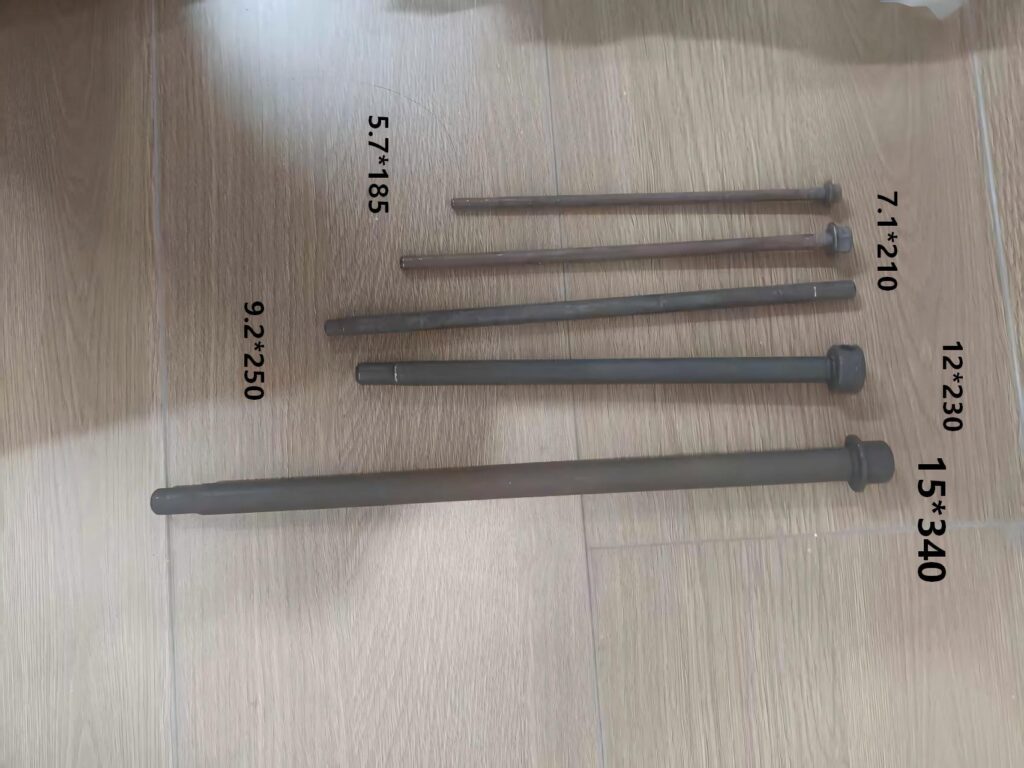
Caractéristiques structurelles et défis
- Rapport L/D élevé: La longueur de 340 mm rend le boulon très sensible à une courbure initiale de 0,5 mm. – 1.5mm après traitement thermique.
- Exigences de précision: Alors que le client exigeait une rectitude inférieure à 0,2 mm, cette solution permet d'obtenir systématiquement moins de 0,1 mm.
- Exigences de protection: Le processus de redressage doit garantir aucun dommage à la précision du filetage et à la qualité de la surface..
Pourquoi le redressage des boulons doit s'éloigner de “Martelage manuel”
Processus traditionnel vs. Solution automatisée
| Point douloureux | Martelage manuel / Presse manuelle | Solution de lissage automatisée |
| Exigence de main d'œuvre | 8 Ouvriers (rotation des équipes) | 1 Opérateur pour 4 Machines |
| Rectitude | 0.2mm – 0.5mm (instable) | ≤ 0,1 mm (extrêmement stable) |
| Temps de cycle | 120 – 180 secondes / morceau | 10 – 15 secondes / morceau |
| Coût global | Exode massif de ressources financières et de main d’œuvre | Coûts de main d’œuvre réduits de plus 90% |
Flux de processus de redressage automatisé des boulons
Cette solution couvre un processus entièrement automatisé en boucle fermée, de l'alimentation au tri., garantir que chaque boulon répond à des exigences de livraison de haut niveau.
Descriptions des processus de base
- Alimentation automatique: Les boulons pliés sont automatiquement introduits depuis une trémie dans la station de redressage sans intervention humaine.
- Mesure dynamique: Des capteurs de haute précision scannent la pièce en rotation en temps réel, capturer avec précision le point de courbure maximum sur toute la longueur.
- Pressage des servos: Le système intelligent calcule automatiquement le retour élastique en fonction du matériau (acier au carbone/acier allié), et le servo vérin applique une pression précise pour une correction en un seul passage.
- Tri automatique: Les boulons qualifiés passent à l'étape suivante, tandis que les pièces non conformes sont automatiquement isolées, assurer un 100% taux de rendement.
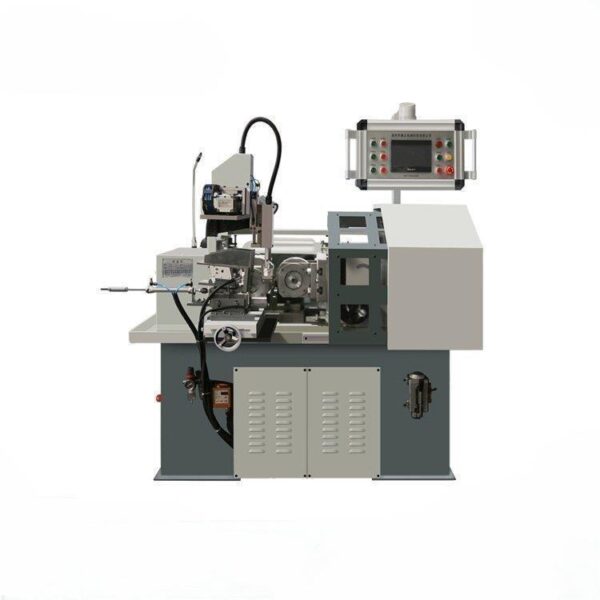
Machine à redresser les boulons UBJ-80
Ce lisseur est idéal pour les pièces finies traitées thermiquement (par ex., composants de machines d'estampage/de bureau, pièces auto/moto, outils, vis) et des barres (acier, cuivre, aluminium, acier inoxydable, alliage de titane) de 60 à 600 mm de longueur & Diamètre φ3–φ25 mm. Il améliore à la fois la précision et la qualité du produit.
Défis et solutions du redressement de base
Défi 1: Atteindre le “1 Opérateur pour 4 Machines” Révolution d'efficacité
Description du problème: Les usines indiennes traditionnelles de fixation s’appuient sur une main-d’œuvre bon marché, ce qui conduit au chaos de la gestion et à de faibles taux de rendement.
Solution:
Notre solution met en œuvre automatisation complète en boucle fermée. La logique de fonctionnement est extrêmement simple, avec des recettes intégrées pour diverses spécifications de boulons. Un travailleur standard n'a besoin que de remplir la trémie périodiquement; le reste : mesure, redressage, et inspection - est géré automatiquement par la machine. Cela résout les pénuries de main-d'œuvre et élimine les pertes de précision causées par la fatigue..
Défi 2: Garantir une cohérence avec une précision de 0,1 mm
Description du problème: Lorsqu'un boulon est soumis à des coups de marteau, la répartition des contraintes internes devient inégale, conduisant souvent à une correction excessive dans des zones localisées.
Solution:
La solution utilise un système de servocommande entièrement paramétré. Contrairement au vague jugement humain, les capteurs détectent la courbe axiale du boulon avec une précision au micron. Grâce à des algorithmes d'asservissement en plusieurs étapes, le système surmonte avec précision le retour élastique des aciers S45C ou alliés, verrouillant la rectitude finale à moins de 0,1 mm.
Cas de fabrication: Le quatrième choix du client indien
Contexte du client
Un fournisseur indien bien connu de fixations fournissant des composants pour les marques mondiales de machines de construction.
Résultats de la mise en œuvre
- Répéter les commandes: Basé sur la performance exceptionnelle des trois premières unités, le client a récemment acheté son 4la machine.
- Réduction massive des coûts: Actuellement, un seul opérateur gère tout 4 machines, augmentant l'efficacité de la production de plus de 10 fois.
- Référentiel de qualité: Rectitude des boulons améliorée de 0,2 mm à moins de 0,1 mm, aider le client à obtenir davantage de contrats internationaux haut de gamme.
FAQ
- Q: Will the straightening ram damage the bolt threads?
- Non. We have designed non-contact, cushioned protection molds specifically for bolt straightening. The press blocks match the bolt’s curvature perfectly, ensuring even force distribution and avoiding surface indentations.
- Q: Can the equipment integrate into our factory’s MES system?
- Oui. Our control system features standard data interfaces to record and export real-time straightening data for every bolt, meeting modern traceability requirements.
Résumé
For fastener factories pursuing high efficiency and quality, an Solution automatisée de redressage des boulons is the essential path to increased competitiveness. Whether it is to cut labor costs by 90% or to achieve 0.1mm delivery precision, automation technology provides the most stable return on investment.
If you are facing labor management issues or precision bottlenecks, feel free to Contactez-nous pour une proposition technique personnalisée.