
Beslutningen om at eftermontere eller udskifte en glattemaskine bør være baseret på beviser, not on the machine's age alone. En ældre mekanisk platform kan stadig være egnet til en målrettet opgradering; en nyere maskine kan stadig være en dårlig pasform, hvis dens måling, sikkerhed, håndtering eller dataarkitektur kan ikke understøtte det aktuelle emne- og acceptkrav. The decision must also separate a machine condition finding from the availability of a supplier's retrofit service.
Denne guide er en neutral køberramme. Det hævder ikke, at StraighteningTech tilbyder eftermontering, konverteringer, reservedele, kontrollerer opgraderinger eller et specifikt servicesvar. Disse omfang skal bekræftes separat.

*Engineering koncept illustration. Det viser en kandidatcellearkitektur, ikke en vurdering af en eksisterende maskine eller et løfte om, at en opgradering er tilgængelig.*
Start med det aktuelle emne og acceptkrav
Før du inspicerer maskinen, fryse de nuværende og planlagte emnefamilier, tegningsdatoer, geometriske egenskaber, målemetode, beskyttede kontaktzoner, produktmix, håndteringsbehov, sporbarhedsforventninger og sikkerhedsforpligtelser. En eftermontering, der bevarer den forkerte procesarkitektur, vil ikke løse et kapacitetsmismatch.
Bruge aksel, valg af rør og profil glattejern at definere målprocessen før sammenligning af muligheder.
Vurder Mekanisk, Sikkerhed og værktøjstilstand
En vurdering skal dokumentere rammebetingelser, guider, støtter, ruller eller pressegrænseflader, inventar, bevogtning, kontroller, elektrisk tilstand, servicevenlighed og tilgængeligheden af kritiske dele. Det bør også identificere, hvad der ikke kan verificeres uden en kvalificeret inspektion.
| Vurderingsområde | Retrofit spørgsmål | Udskiftningsspørgsmål |
|---|---|---|
| Mekanisk struktur | Kan den sikkert understøtte målkraftbanen og arbejdsemnet? | Er der brug for en ny arkitektur til processen? |
| Værktøj og understøtninger | Kan armaturer/kontaktzoner valideres for målfamilien? | Har den nye løsning brug for anderledes arbejdshold? |
| Sikkerhed | Kan påkrævede vagt- og sikkerhedsfunktioner verificeres? | Kræver målopgaven en anden sikkerhedsarkitektur? |
| Reservedele og vedligeholdelse | Er kritiske komponenter, der kan understøttes i den tilsigtede levetid? | Er forældelse skaber uacceptabel operationel risiko? |
When a Retrofit Is Defensible — and When It Is Not
A retrofit earns consideration when four conditions hold at once: the mechanical structure is demonstrably sound for the target force path; the target workpiece families stay within the load and geometry envelope the structure was built for; the measurement architecture — sensors, datum repetition, settings handling — can either be added or correlated to the reference method; and a supplier has confirmed in writing the scope that will actually be performed. Lose any one of the four and the retrofit discussion is spending engineering time on a route that cannot close.
The clearest non-starters are architectural. When the product mix is moving toward a different correction architecture — a different force path, a different support concept, a different measurement principle than the frame and tooling can carry — no component-level upgrade changes that. The same applies when obsolescence has reached the safety layer: guarding and safety functions built around withdrawn components are a revalidation project of their own, and stacking that on top of a process upgrade rarely survives an honest risk review. Endelig, when frame condition cannot be verified without a qualified inspection, the retrofit quote is priced against unknowns — commission the inspection first, or treat the machine's remaining life as unproven.
Evaluer måle- og kontrolkompatibilitet
Eftermonteringsbeslutningen handler ikke kun om at udskifte en controller. Maskinen skal måle den korrekte karakteristik på det korrekte henføringspunkt, gentag den nødvendige støtte/positioneringstilstand, administrere indstillinger eller opskrifter, hvor det er relevant, registrere nødvendige data og rute undtagelser sikkert.
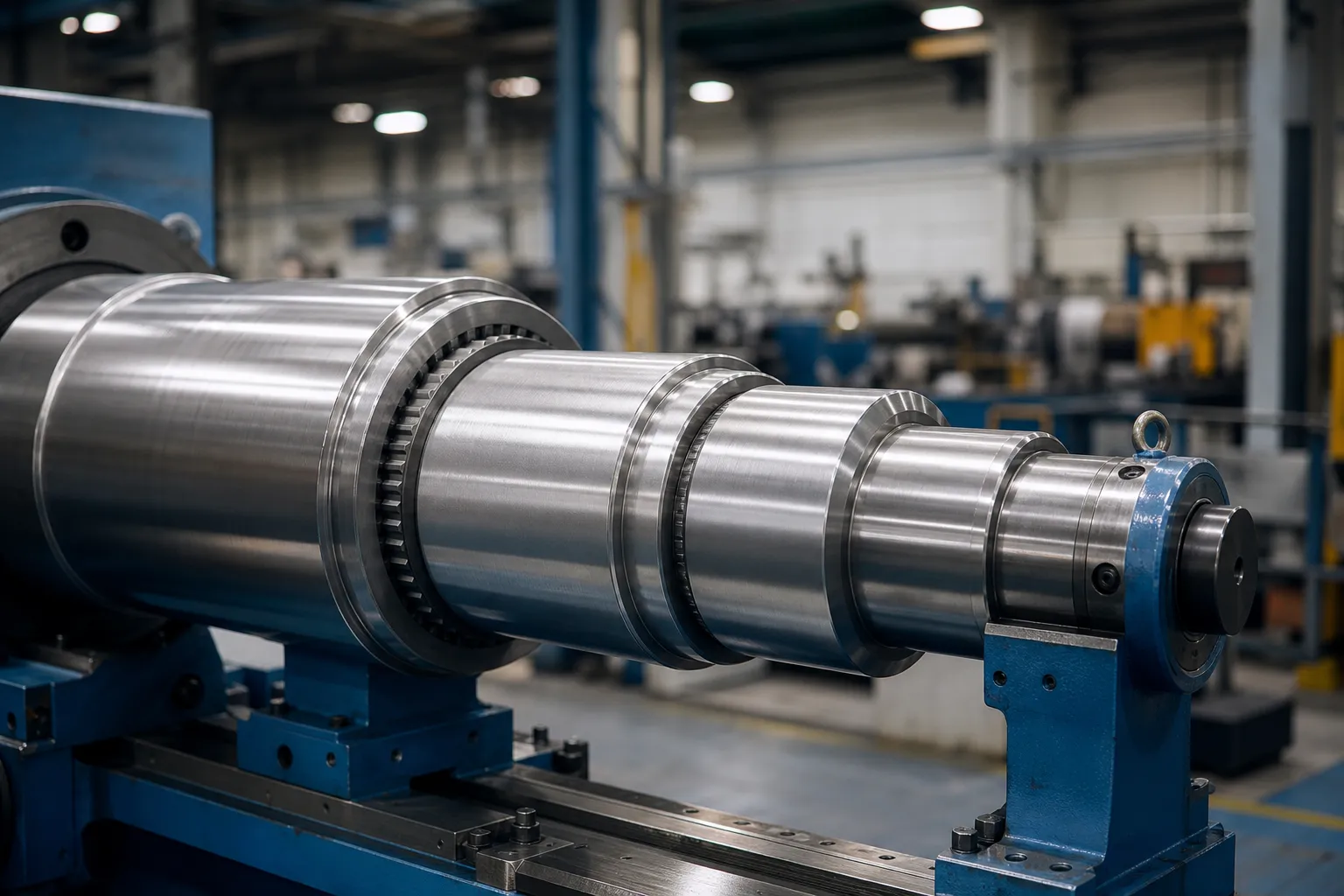
*Engineering koncept illustration. Den viser en målprocesudvælgelsesgennemgang, ikke en vurdering af, at en eksisterende maskine kan opgraderes til hver kandidatarkitektur.*

*Engineering koncept illustration. Det understreger behovet for at verificere geometrien efter frigivelse; det står ikke, at enhver eksisterende maskine kan konverteres til et lukket kredsløb.*
Gennemgå måler korrelation, sensorens tilstand, dataintegritet, adgangskontrol, forandringsledelse og forholdet mellem målte værdier og kundereferencemetoden. En ny skærm etablerer ikke i sig selv en gyldig korrektionsløkke.
A Five-Gate Verification Path
The decision becomes tractable when it is run as a sequence of gates, each with a defined pass condition and a defined action when it fails. Rækkefølgen betyder noget: every later gate is cheaper to evaluate once the earlier ones have closed.
Port 1 — Requirement
Passere: workpiece families, tegningsrevisioner, datoen, characteristics and the customer acceptance method are frozen in writing. Fail action: stop. Neither a retrofit nor a replacement can be specified against a moving target, and any quote received at this stage is a guess.
Port 2 — Mechanical
Passere: documented evidence that frame, guider, supports and force path carry the target family — including the findings that require a qualified inspection. Fail action: erstatte, repurpose the machine to a lighter family, or close the gap with the inspection before any further spending.
Port 3 — Measurement
Passere: the machine measures the specified characteristic on the specified datum, repeats the support and positioning condition, manages settings or recipes where relevant, and can be correlated to the customer gauge. Fail action: scope the measurement retrofit explicitly as its own engineering and validation package, or route the decision to replacement.
Port 4 — Demonstration
Passere: the proposed configuration is demonstrated on representative parts through to released-state results and customer-gauge correlation. Fail action: treat the proposal as unproven. A retrofit that cannot be demonstrated before commitment is a bet placed with production as the stake.
Port 5 — Economics
Passere: both routes are compared on total evaluated cost — engineering, installation, downtime, genvalidering, uddannelse, spares for the intended life, contingency for failure — using the buyer's own baseline. Fail action: if the comparison cannot be made honestly, the deciding factor is risk posture, not price, and that is a management decision to make explicitly.
Sammenlign nedetid, Risiko og revalidering
Begge ruter har brug for en plan for teknik, installation, sikkerhedsgennemgang, idriftsættelse, prøve test, operatøruddannelse og dokumentation. En sammenligning bør omfatte sandsynlige nedetidsvinduer, eksponering af reservedele, overgangseffekt, kvalifikationsindsats, production contingency and the cost of an unsuccessful outcome. Do not use an average payback or “faster ROI” claim without the buyer's own baseline data.
Cost Items Both Quotes Must State
Most retrofit-versus-replace comparisons fail not on the numbers but on what the numbers omit. The table lists the items a comparable pair of quotes has to carry:
| Cost item | Where it hides in retrofit quotes | Where it hides in replacement quotes |
|---|---|---|
| Engineering and qualification | Marked “included” with no validation scope | Assumed to be in the machine price with no FAT/SAT scope |
| Installation and downtime | Scheduled around production informally | Window underestimated where foundations or utilities change |
| Safety review and commissioning | Omitted when controls are touched | Bundled invisibly into startup support |
| Gauge correlation study | Postponed until after startup | Postponed until after startup |
| Operator training | Limited to the new component | Limited to the first shift |
| Documentation and traceability update | Legacy records not migrated | Templates delivered without the buyer's data model |
| Spares for the intended life | Old-platform parts assumed available | First-generation components on a new platform |
| Production contingency during ramp | Coverage during validation runs undefined | Coverage during the learning curve undefined |
| Cost of an unsuccessful outcome | Rarely defined at all | Rarely defined at all |
| Existing machine disposal or residual value | Ignored | Ignored |
Two of these deserve emphasis because they are almost always missing: the correlation study and the cost of failure. Without a gauge correlation there is no common acceptance language between the machine and the customer, and every later dispute is unresolvable. Without a defined failure outcome — re-run, external processing, scrap allowance, rollback — the comparison silently assigns zero cost to the riskier route.
Make Sample Validation the Decision Gate
The preferred route should demonstrate the target process with representative parts: datum siddeplads, måling repeterbarhed, correction response, released-state result, overflade tilstand, håndtering, exception routing and customer-gauge correlation. If the evidence cannot be closed safely on the existing platform, replacement or a different process architecture may be the more defensible route.
For the validation structure, se udretning prøve test og accept and machine gauge versus customer gauge correlation.
Risks a Retrofit Trial Must Retire
A retrofit validation is not a demonstration that the machine moves; it is the retirement of specific failure modes, each with its own test:
- Correction-response risk — springback drifting with material state or batch. Test with representative parts from more than one material lot, recording the stroke-versus-result relationship; how that relationship moves between lots is the process's real signature. The underlying mechanism is covered in Bauschinger-effekten ved glatning.
- Released-state risk — in-machine readings diverging from final geometry once the part is released. Test by independent remeasurement after release, on supports defined in the acceptance plan. The distinction is developed in måling af belastet vs frigivet rethed.
- Setup-repeatability risk — the corrected result depending on who sets up the part. Test by repeating full setups with the datum deliberately reseated, comparing results before any capability claim. The statistical framing is in gage R&R for at rette linjer.
- Exception-routing risk — a rejected or mid-cycle-interrupted part following an undefined path. Test by injecting faults deliberately, including an interrupted cycle, and verifying what happens to the part in the machine and how the event is recorded. Disposition rules for rejected parts are covered in NOK sorting and rework limits.
Red Flags in Any Proposal
- No representative-part demonstration is offered, or one is promised only after commitment.
- ROI or payback is asserted without asking for the buyer's own baseline data.
- The scope is written in conditional language — “can be considered”, “possible upgrade” — leaving the binding scope undefined.
- A controller or screen upgrade is presented as proof of straightening capability.
- No failure path is defined: nothing about what happens if the agreed result is not met.
Questions to Ask Before a Retrofit or Replacement Proposal
- Which workpiece family and drawing revision define the requirement?
- Which measurement and acceptance method must the solution correlate with?
- Which mechanical, sikkerhed, control and spare-part findings are documented?
- What configuration changes are actually within the supplier's confirmed service scope?
- Hvilke valideringsprøver, måleposter og udgivelseskriterier vil afgøre succes?
- Hvad sker der, hvis den eksisterende platform ikke kan opfylde det aftalte resultat?
FAQ
Er en eftermontering altid billigere end udskiftning?
Ingen. Omkostningerne afhænger af tilstanden, omfang, sikkerhed, forældelse, validering, nedetid og målprocessen. It must be evaluated with the buyer's own data. The defensible comparison is total evaluated cost — engineering, downtime, genvalidering, spares over the intended life and a priced failure path — not the number on the upgrade quote.
Kan en controller-opgradering bevise en glatteevne?
Ingen. Måling, datum, værktøj, støtte, korrektionssvar og accept kræver stadig validering. What a controller changes is data handling and interface; the characteristic and the correction response still have to be demonstrated on parts, which is what Gates 3 og 4 above are for.
Betyder denne artikel, at StraighteningTech tilbyder eftermonteringsservice?
Ingen. Servicetilgængelighed og omfang skal bekræftes separat før enhver kommerciel forpligtelse. The five-gate path above works the same way regardless of which supplier or route is eventually selected.
What should we do if a retrofit cannot be demonstrated with our parts before commitment?
Treat the demonstration gate as failed. Either phase the commitment so that a paid engineering study on your parts precedes the full scope, route the work to a proven process in the interim, or move the decision to replacement. What should not happen is accepting the retrofit on price while carrying the full validation risk in production.