
Retning involverer ofte bøjning af et materiale i en retning, der er relateret til dets tidligere deformationshistorie. Bauschinger-effekten er et materiale-adfærdsbegreb, der bruges til at beskrive, hvordan tidligere plastisk deformation kan ændre efterladningsadfærd under omvendt belastning. Det hjælper med at forklare, hvorfor en enkelt generisk korrektionsregel muligvis ikke overføres mellem materielle tilstande, danne historier eller partier.
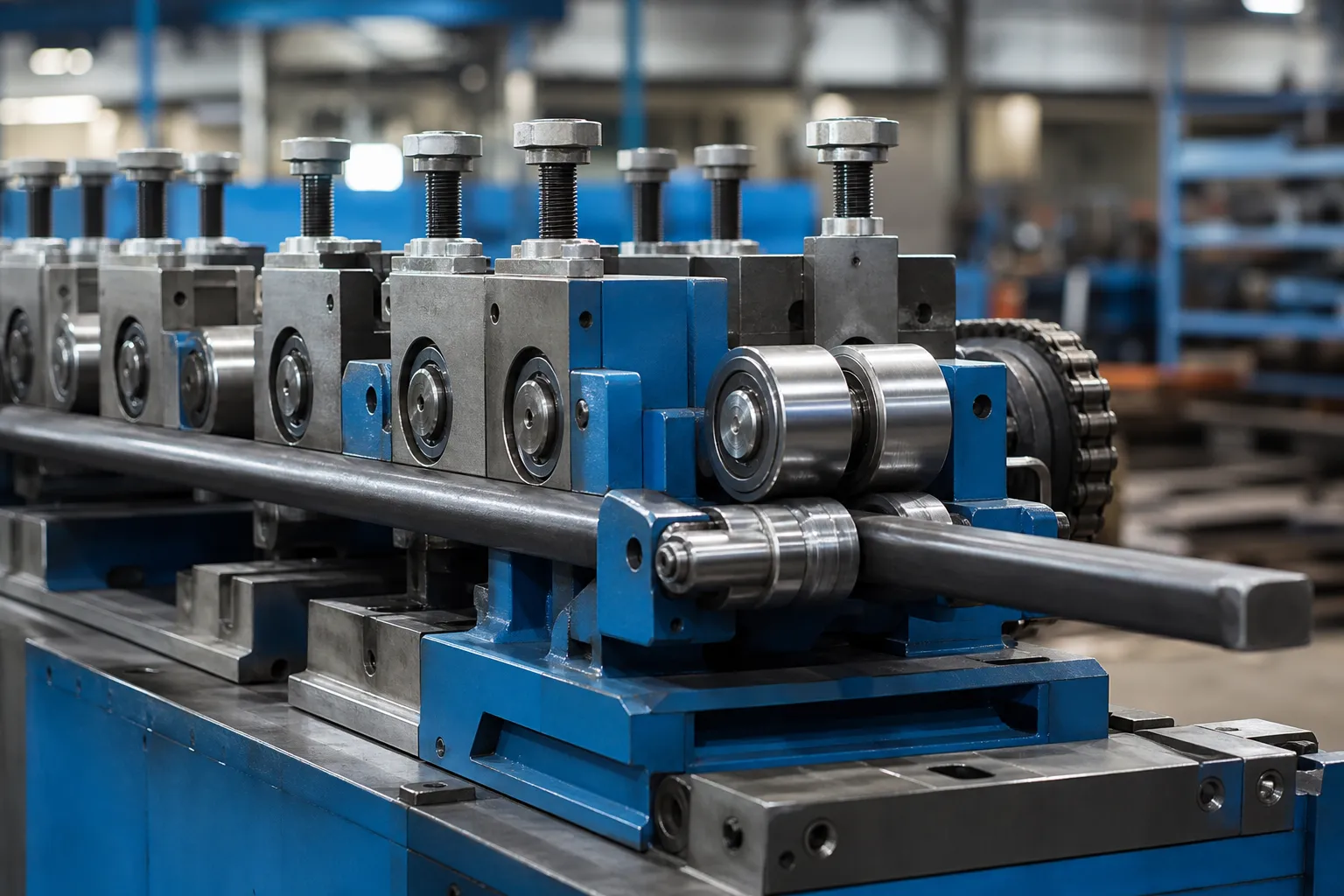
*Engineering koncept illustration. Det er ikke en materialetest, stressmodel eller verificeret opretningsresultat.*
What the Effect Physically Is
I klare vendinger: a metal that has been plastically bent one way yields more easily when it is then bent the other way. On a stress–strain curve, a bar pulled past yield, unloaded, and then loaded in compression reaches its new yield point at a lower magnitude than the original tensile yield. The microstructural reason is that plastic deformation leaves the crystal lattice populated with dislocations arranged to resist further deformation in the loading direction; when the load reverses, that same arrangement assists slip in the opposite direction, so reverse yielding begins early. The effect is strongest right after the first reversal and saturates after a few cycles, and it is more pronounced in softer, lower-carbon conditions than in heavily hardened ones.
Two consequences matter for straightening. Først, the material’s force–deflection response is asymmetric with respect to the sign of bending: the same press stroke moving a bend in one direction produces a different permanent set than the identical stroke applied against it. Anden, every unload leaves a locked-in micro-residual stress state, so the “samme” part is never quite the same material twice once correction has begun. Both consequences push toward the same process discipline — few, planned, well-aimed correction strokes instead of many small reversing ones.
What This Means for a Correction Stroke
Straightening control commonly assumes a repeatable relationship between applied correction and resulting movement — the basis of springback compensation practice. Reverse-loading history threatens exactly that repeatability. Consider the classic over-correct-and-press-back sequence: the first stroke plastically bends the section, the second stroke bends it back. Because the material yields earlier in the reverse direction, the second stroke needs less force to move the part the same amount, and a control routine calibrated on the first stroke’s response will overshoot. Each additional reversal compounds the drift while accumulating low-cycle fatigue damage in the section, which is the mechanism that connects careless correction sequences to the cracking risks discussed for overopretning og revner.
The practical rules that follow are qualitative but firm. Plan the correction so that each location is plastically worked in one predominant direction, not ping-ponged. Set the rework limit before the first stroke — the number of correction attempts a part may receive — and enforce it through the NOK sorting and rework-limit discipline. And when a process has drifted so that the same nominal error now needs visibly more or fewer strokes than it did at qualification, treat the change as a material signal to investigate, not as a knob to tune away.
Hvorfor omvendt læsning betyder noget
En del kan have akkumuleret deformation under rulning, tegning, dannelse, varmebehandling, bearbejdning, transport eller et forudgående korrektionstrin. Når en opretningsproces anvender omvendt bøjning, svaret kan afhænge af denne historie såvel som den aktuelle materielle tilstand og geometri. Dette er grunden til, at et kurvekort ikke alene etablerer et sikkert korrektionsvindue.
| Faktor | Prøvespørgsmål |
|---|---|
| Materialekvalitet og tilstand | Er den gældende tilstand dokumenteret, ikke antaget? |
| Forudgående formning/tegning | Kan deformationshistorien variere mellem partierne? |
| Varmebehandlingsstadiet | Er rettelse tilladt på dette tidspunkt? |
| Snit/geometri | Varierer stivheden langs delen? |
| Overflade/funktionelle funktioner | Er der kontakt- eller crack-risiko begrænsninger? |
| Tidligere omarbejde | Har omvendt indlæsning allerede fundet sted? |
Brug det som et prøveplanlægningskoncept
Konceptet skal føre til bedre registreringer, ikke uunderbyggede påstande. Registrer indgående tilstand, materiale/parti, fremstillingsfasen, indledende kort, korrektionssekvens, frigivet måling, overfladeobservation og omarbejdningsstatus. Skift én kontrolleret faktor ad gangen under udviklingen og ekstrapolér ikke fra en nem prøve til en anden delfamilie.
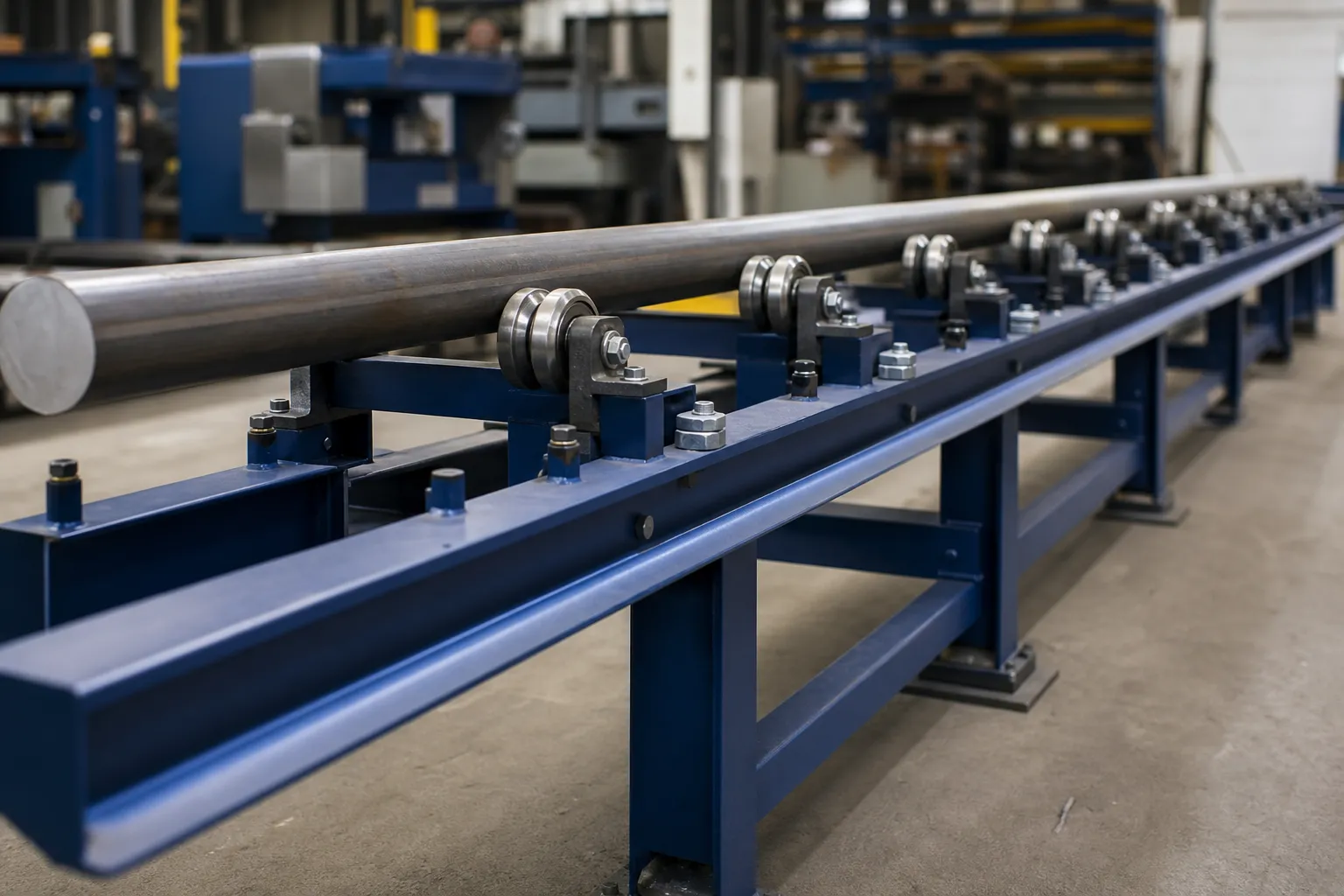
*Engineering koncept illustration. Støtte, kontakt- og materialeadfærd kræver delspecifik ingeniørgennemgang.*
Undgå at kalde et resultat "Bauschinger-kontrolleret", medmindre en kvalificeret materiale-/procesundersøgelse definerer præcis, hvad det betyder. Udtrykket erstatter ikke et tegningskrav, materialecertifikat, brudvurdering eller kundegodkendelse.
Where Loading History Hides in Real Parts
Reverse-loading sensitivity does not require a previous straightening operation — most parts arrive with a history already written into them. Bars and wire carry directional deformation from rolling and drawing, so their bend response differs with orientation relative to the mill direction. Heat-treated parts carry quench distortion plus the residual stress field of the treatment, and any straightening performed at the heat treater counts as prior history for the correction performed later — the staging questions covered under glatning efter varmebehandling. Long slender parts accumulate transport and clamping bends, and a part that has already been through one rework loop at a supplier arrives pre-cycled. Even within one purchased lot, different bar lengths can come from different mill heats with different histories, which is why a correction setup that works on the first pieces of a lot can misbehave on the last.
The countermeasure is informational, not mechanical: capture material and lot identity, the manufacturing stage, and any prior correction record alongside the incoming geometry map. That data costs almost nothing at receiving and is the difference between a drift investigation that takes an afternoon and one that cannot be closed at all.
Reading the Effect in Production Data
Because the effect cannot be seen on the part, it announces itself through patterns in the process data. The signals to watch for are structural rather than numeric: the number of correction strokes needed for the same incoming error creeping upward or downward over a run; parts that oscillate around nominal across alternating strokes instead of converging; released measurements that flip to the opposite side of the tolerance band after correction sequences that historically landed centered; and lot-to-lot differences in correction behavior with no change in machine setup. None of these patterns is proof of reverse-yield behavior on its own — each has measurement and fixture mimics, which is why the datum and gauge checks come first — but together they justify pulling a sample set aside for a controlled material-and-history review rather than continuing to adjust the machine.
Adskil materialeadfærd fra målefejl
Et uventet frigivet resultat kan komme fra materialerespons, men også fra datum siddepladser, overensstemmelse med armaturet, support/sag, gauge korrelation eller et ufuldstændigt fejlkort. Tjek disse faktorer, før du tildeler årsagen til omvendt udbytteadfærd. Se armaturets repeterbarhed og datum-sæde og måleusikkerhed ved rethedsinspektion.
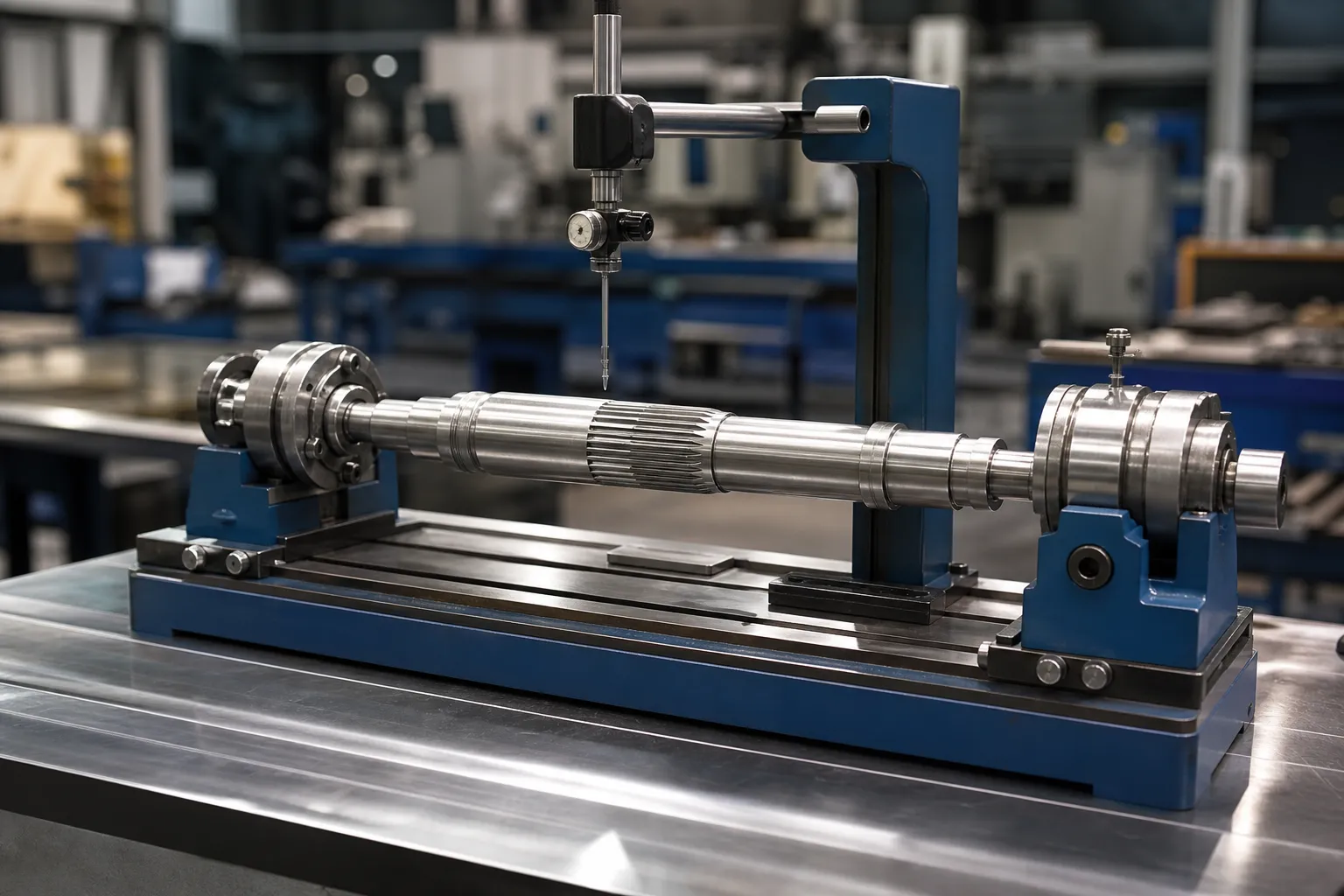
*Engineering koncept illustration. Den godkendte målemetode for frigivet tilstand bestemmer det rapporterbare resultat.*
Bevis påkrævet før proceskrav
Giv tegning/revision, materialespecifikation og tilstand, fremstillingshistorie, varmebehandlingsstadiet, tidligere rettelses-/omarbejdningsposter, indkommende geometri, overfladebegrænsninger, accepteret målemetode og repræsentative prøver. Bruge glatning efter varmebehandling at afklare scenekontrol og udretning prøve test og accept at planlægge forsøg. Så kontakt StraighteningTech til diskussion.
Nødvendig validering før et systemkrav
Any material-behavior claim needs a defined material and process scope, kalibrerede referencer, representative heat-treated samples, and traceable measurement data. En generisk maskinkapacitet er ikke et verificeret resultat for dette emne.
FAQ
Does the Bauschinger effect make straightening impossible for previously bent parts?
Ingen. It makes the response history-dependent rather than fixed. Processes handle it by planning corrections that work each location predominantly in one direction, limiting the number of correction cycles per part, and validating the correction rule on representative parts that carry the same history as production.
Why does pressing a bend back often overshoot?
Because the reverse stroke meets a material that yields at a lower stress than the forward stroke did. A force or depth calibrated on the forward response therefore over-delivers in reverse. The remedy is a separate, smaller correction rule for reverse strokes, or better, an error-map strategy that avoids reversing the same location repeatedly.
Can a correction setup be transferred to a new material lot unchanged?
Only with evidence. Different mill heats can carry different deformation histories and conditions, so the first pieces of each new lot should be treated as a confirmation sample: if correction behavior matches the qualified baseline, continue; if it shifts, requalify before running. This is standard practice for managing the springback variation discussed for springback variation between batches.
Relaterede StraighteningTech-ressourcer
Se hvordan automatisk akselretning fungerer, udretning prøve test og accept og akslens rethed vs runout vs TIR for generiske kontrolgrænser, der gælder før ethvert kapacitetskrav på Bauschinger-effekt ved opretning.