
Rovnání často zahrnuje ohýbání materiálu ve směru souvisejícím s jeho předchozí historií deformace. Bauschingerův jev je koncept chování materiálu používaný k popisu toho, jak předchozí plastická deformace může změnit poddajné chování při zpětném zatížení.. Pomáhá vysvětlit, proč se jediné obecné opravné pravidlo nemusí přenášet mezi hmotnými stavy, vytváření historie nebo losů.
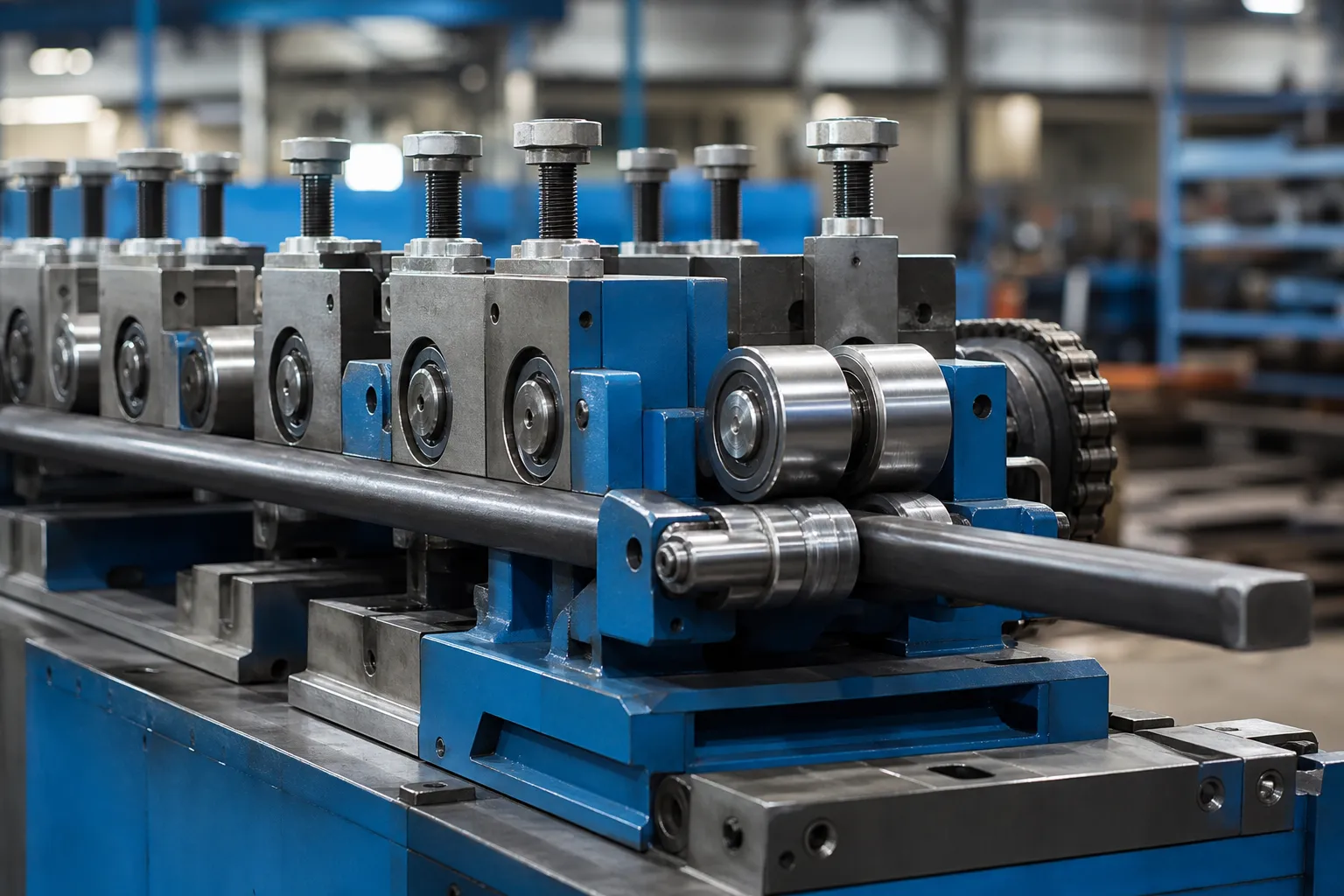
*Inženýrský koncept ilustrace. Není to zkouška materiálu, stresový model nebo ověřený výsledek rovnání.*
What the Effect Physically Is
Jednoduše řečeno: a metal that has been plastically bent one way yields more easily when it is then bent the other way. On a stress–strain curve, a bar pulled past yield, unloaded, and then loaded in compression reaches its new yield point at a lower magnitude than the original tensile yield. The microstructural reason is that plastic deformation leaves the crystal lattice populated with dislocations arranged to resist further deformation in the loading direction; when the load reverses, that same arrangement assists slip in the opposite direction, so reverse yielding begins early. The effect is strongest right after the first reversal and saturates after a few cycles, and it is more pronounced in softer, lower-carbon conditions than in heavily hardened ones.
Two consequences matter for straightening. První, the material’s force–deflection response is asymmetric with respect to the sign of bending: the same press stroke moving a bend in one direction produces a different permanent set than the identical stroke applied against it. Druhý, every unload leaves a locked-in micro-residual stress state, so the “same” part is never quite the same material twice once correction has begun. Both consequences push toward the same process discipline — few, planned, well-aimed correction strokes instead of many small reversing ones.
What This Means for a Correction Stroke
Straightening control commonly assumes a repeatable relationship between applied correction and resulting movement — the basis of springback compensation practice. Reverse-loading history threatens exactly that repeatability. Consider the classic over-correct-and-press-back sequence: the first stroke plastically bends the section, the second stroke bends it back. Because the material yields earlier in the reverse direction, the second stroke needs less force to move the part the same amount, and a control routine calibrated on the first stroke’s response will overshoot. Each additional reversal compounds the drift while accumulating low-cycle fatigue damage in the section, which is the mechanism that connects careless correction sequences to the cracking risks discussed for nadměrné narovnávání a praskání.
The practical rules that follow are qualitative but firm. Plan the correction so that each location is plastically worked in one predominant direction, not ping-ponged. Set the rework limit before the first stroke — the number of correction attempts a part may receive — and enforce it through the NOK sorting and rework-limit discipline. And when a process has drifted so that the same nominal error now needs visibly more or fewer strokes than it did at qualification, treat the change as a material signal to investigate, not as a knob to tune away.
Proč je zpětné načítání důležité
Díl může mít akumulovanou deformaci během válcování, výkres, formování, tepelné zpracování, obrábění, transport nebo předchozí korekční krok. Když proces rovnání aplikuje zpětné ohýbání, odezva může záviset na této historii i na aktuálním stavu materiálu a geometrii. To je důvod, proč samotná mapa ohybu nevytváří bezpečné korekční okno.
| Faktor | Zkušební otázka |
|---|---|
| Stupeň a stav materiálu | Je příslušný stav zdokumentován, nepředpokládá se? |
| Předchozí tvarování/kreslení | Může se historie deformace mezi šaržemi lišit?? |
| Stupeň tepelného zpracování | Je v této fázi povolena oprava? |
| Řez/geometrie | Mění se tuhost podél součásti? |
| Povrchové/funkční vlastnosti | Existují omezení kontaktu nebo rizika prasklin? |
| Předchozí přepracování | Již došlo k opačnému načítání? |
Použijte jej jako koncept zkušebního plánování
Koncepce by měla vést k lepší evidenci, ne nepodložená tvrzení. Zaznamenejte stav příchozích, materiál/šarže, výrobní fázi, počáteční mapa, korekční sekvence, uvolněné měření, pozorování povrchu a stav přepracování. Během vývoje měňte vždy jeden řízený faktor a neprovádějte extrapolaci ze snadného vzorku na jinou rodinu součástí.
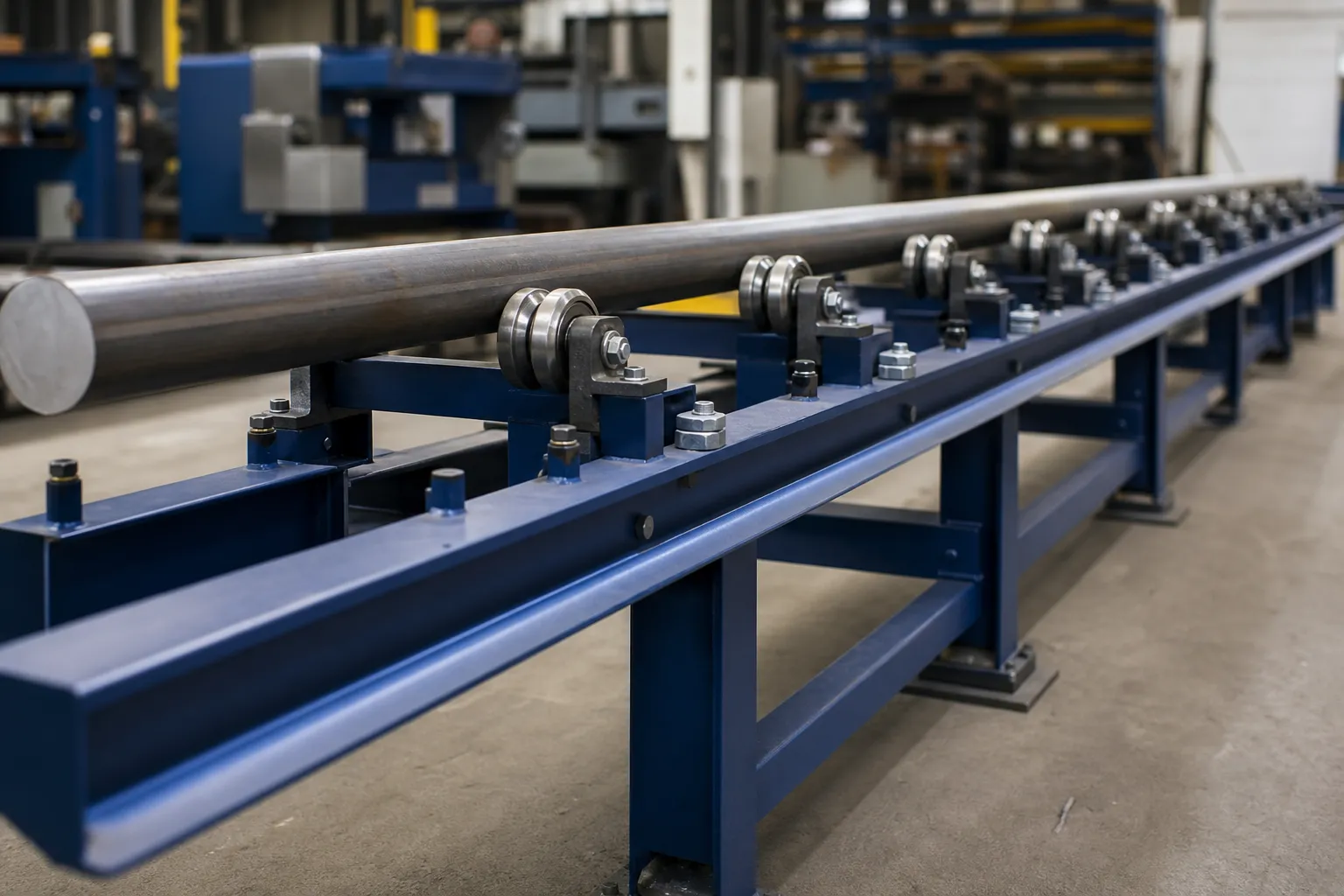
*Inženýrský koncept ilustrace. Podpora, kontakt a chování materiálu vyžadují technickou kontrolu konkrétní součásti.*
Vyhněte se tomu, aby byl výsledek nazýván „Bauschinger-controlled“, pokud kvalifikovaná studie materiálu/procesu přesně nedefinuje, co to znamená. Termín nenahrazuje požadavek na výkres, materiálový certifikát, posouzení zlomenin nebo schválení zákazníkem.
Where Loading History Hides in Real Parts
Reverse-loading sensitivity does not require a previous straightening operation — most parts arrive with a history already written into them. Bars and wire carry directional deformation from rolling and drawing, so their bend response differs with orientation relative to the mill direction. Heat-treated parts carry quench distortion plus the residual stress field of the treatment, and any straightening performed at the heat treater counts as prior history for the correction performed later — the staging questions covered under rovnání po tepelném zpracování. Long slender parts accumulate transport and clamping bends, and a part that has already been through one rework loop at a supplier arrives pre-cycled. Even within one purchased lot, different bar lengths can come from different mill heats with different histories, which is why a correction setup that works on the first pieces of a lot can misbehave on the last.
The countermeasure is informational, not mechanical: capture material and lot identity, the manufacturing stage, and any prior correction record alongside the incoming geometry map. That data costs almost nothing at receiving and is the difference between a drift investigation that takes an afternoon and one that cannot be closed at all.
Reading the Effect in Production Data
Because the effect cannot be seen on the part, it announces itself through patterns in the process data. The signals to watch for are structural rather than numeric: the number of correction strokes needed for the same incoming error creeping upward or downward over a run; parts that oscillate around nominal across alternating strokes instead of converging; released measurements that flip to the opposite side of the tolerance band after correction sequences that historically landed centered; and lot-to-lot differences in correction behavior with no change in machine setup. None of these patterns is proof of reverse-yield behavior on its own — each has measurement and fixture mimics, which is why the datum and gauge checks come first — but together they justify pulling a sample set aside for a controlled material-and-history review rather than continuing to adjust the machine.
Oddělte chování materiálu od chyby měření
Neočekávaný uvolněný výsledek může pocházet z materiální odezvy, ale také ze základny, soulad s přípravkem, podpora/případ, korelace měřidla nebo neúplná mapa chyb. Než přiřadíte příčinu zpětnému výnosu, zkontrolujte tyto faktory. Vidět opakovatelnost upnutí a usazení základny a nejistota měření při kontrole přímosti.
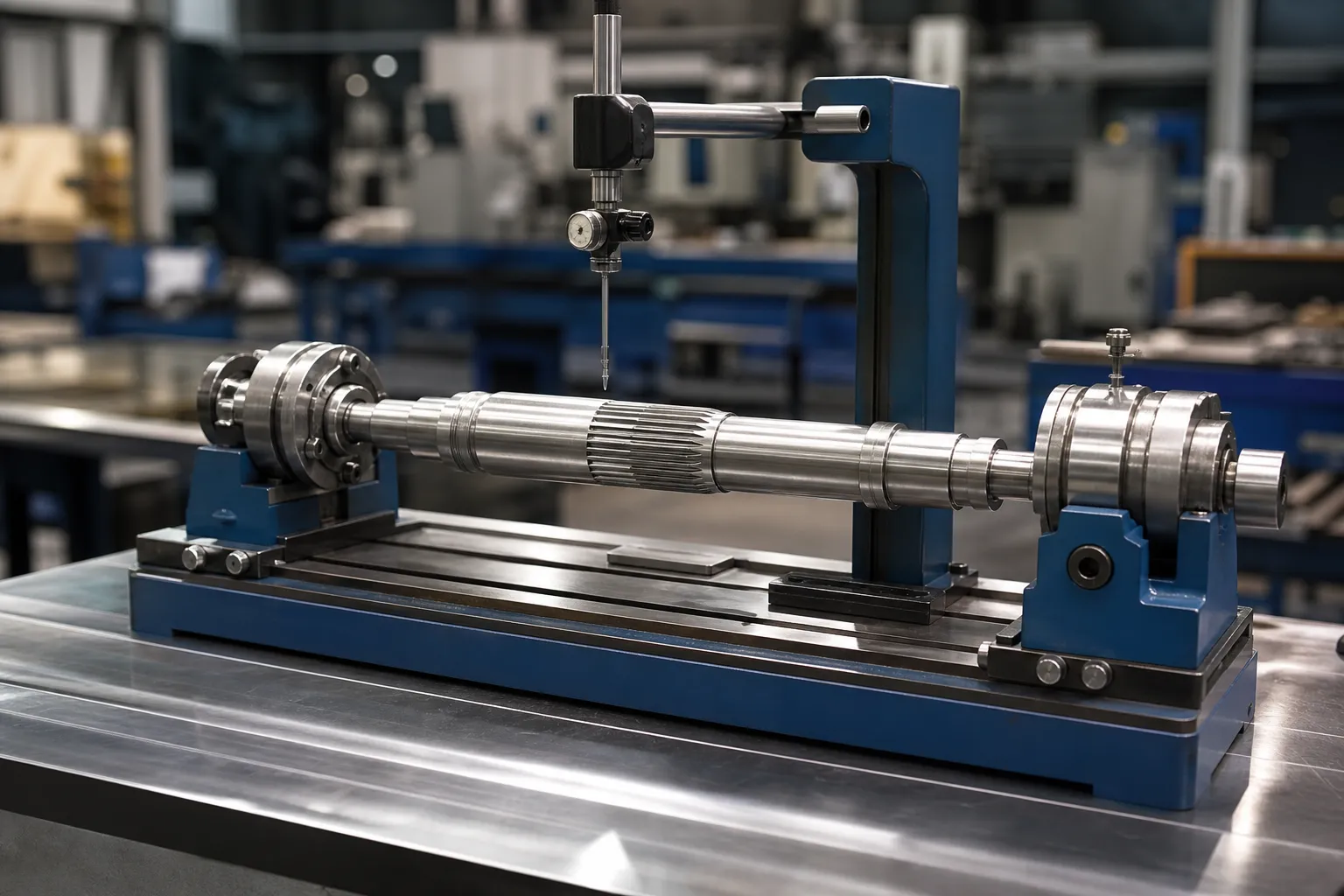
*Inženýrský koncept ilustrace. Oznamovatelný výsledek určuje schválená metoda měření uvolněného stavu.*
Důkazy potřebné před zpracováním nároků
Poskytněte výkres/revizi, specifikace materiálu a stav, historie výroby, etapa tepelného zpracování, předchozí záznamy o opravách/přepracování, příchozí geometrie, omezení povrchu, uznávaná metoda měření a reprezentativní vzorky. Použití rovnání po tepelném zpracování k objasnění ovládání jeviště a zkouška rovnání vzorku a přejímka plánovat zkoušky. Pak kontaktujte StraighteningTech k diskusi.
Požadované ověření před reklamací systému
Any material-behavior claim needs a defined material and process scope, kalibrované reference, representative heat-treated samples, and traceable measurement data. A generic machine capability is not a verified result for this topic.
FAQ
Does the Bauschinger effect make straightening impossible for previously bent parts?
Žádný. It makes the response history-dependent rather than fixed. Processes handle it by planning corrections that work each location predominantly in one direction, limiting the number of correction cycles per part, and validating the correction rule on representative parts that carry the same history as production.
Why does pressing a bend back often overshoot?
Because the reverse stroke meets a material that yields at a lower stress than the forward stroke did. A force or depth calibrated on the forward response therefore over-delivers in reverse. The remedy is a separate, smaller correction rule for reverse strokes, or better, an error-map strategy that avoids reversing the same location repeatedly.
Can a correction setup be transferred to a new material lot unchanged?
Only with evidence. Different mill heats can carry different deformation histories and conditions, so the first pieces of each new lot should be treated as a confirmation sample: if correction behavior matches the qualified baseline, continue; if it shifts, requalify before running. This is standard practice for managing the springback variation discussed for springback variation between batches.
Související zdroje StraighteningTech
Vidět jak funguje automatické rovnání hřídele, zkouška rovnání vzorku a přejímka a přímost hřídele vs házení vs TIR pro obecné ovládací hranice, které platí před jakýmkoli nárokem na způsobilost Bauschingerův efekt při narovnávání.