
Ravnanje pogosto vključuje upogibanje materiala v smeri, ki je povezana z njegovo predhodno zgodovino deformacije. Bauschingerjev učinek je koncept vedenja materiala, ki se uporablja za opisovanje, kako lahko predhodna plastična deformacija spremeni obnašanje popuščanja pri obratni obremenitvi. Pomaga razložiti, zakaj se posamezno generično pravilo popravka morda ne prenaša med materialnimi stanji, oblikovanje zgodovin ali sklopov.
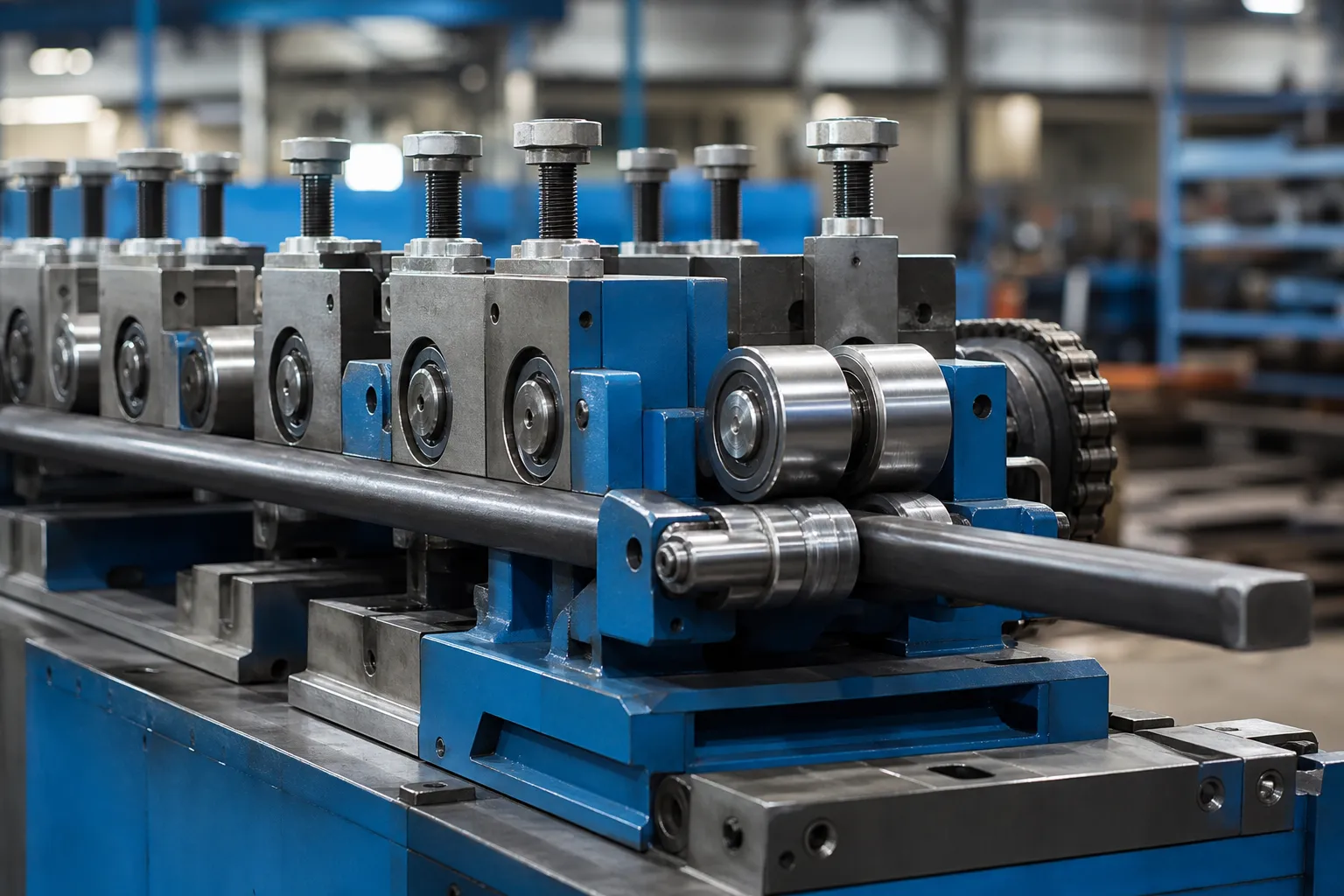
*Ilustracija inženirskega koncepta. Ne gre za materialni test, napetostni model ali preverjen rezultat ravnanja.*
What the Effect Physically Is
Povedano preprosto: a metal that has been plastically bent one way yields more easily when it is then bent the other way. On a stress–strain curve, a bar pulled past yield, unloaded, and then loaded in compression reaches its new yield point at a lower magnitude than the original tensile yield. The microstructural reason is that plastic deformation leaves the crystal lattice populated with dislocations arranged to resist further deformation in the loading direction; when the load reverses, that same arrangement assists slip in the opposite direction, so reverse yielding begins early. The effect is strongest right after the first reversal and saturates after a few cycles, and it is more pronounced in softer, lower-carbon conditions than in heavily hardened ones.
Two consequences matter for straightening. najprej, the material’s force–deflection response is asymmetric with respect to the sign of bending: the same press stroke moving a bend in one direction produces a different permanent set than the identical stroke applied against it. drugič, every unload leaves a locked-in micro-residual stress state, so the “enako” part is never quite the same material twice once correction has begun. Both consequences push toward the same process discipline — few, planned, well-aimed correction strokes instead of many small reversing ones.
What This Means for a Correction Stroke
Straightening control commonly assumes a repeatable relationship between applied correction and resulting movement — the basis of springback compensation practice. Reverse-loading history threatens exactly that repeatability. Consider the classic over-correct-and-press-back sequence: the first stroke plastically bends the section, the second stroke bends it back. Because the material yields earlier in the reverse direction, the second stroke needs less force to move the part the same amount, and a control routine calibrated on the first stroke’s response will overshoot. Each additional reversal compounds the drift while accumulating low-cycle fatigue damage in the section, which is the mechanism that connects careless correction sequences to the cracking risks discussed for prekomerno ravnanje in pokanje.
The practical rules that follow are qualitative but firm. Plan the correction so that each location is plastically worked in one predominant direction, not ping-ponged. Set the rework limit before the first stroke — the number of correction attempts a part may receive — and enforce it through the NOK sorting and rework-limit discipline. And when a process has drifted so that the same nominal error now needs visibly more or fewer strokes than it did at qualification, treat the change as a material signal to investigate, not as a knob to tune away.
Zakaj je povratno nalaganje pomembno
Del se je morda deformiral med valjanjem, risanje, oblikovanje, toplotna obdelava, strojna obdelava, transport ali predhodni korak popravka. Pri postopku ravnanja se uporablja obratno upogibanje, odziv je lahko odvisen od te zgodovine, pa tudi od trenutnega materialnega stanja in geometrije. Zato sama karta upogiba ne vzpostavi varnega korekcijskega okna.
| Faktor | Preizkusno vprašanje |
|---|---|
| Vrsta materiala in stanje | Ali je veljavni pogoj dokumentiran, ni domnevno? |
| Predhodno oblikovanje/risanje | Ali se lahko zgodovina deformacij razlikuje med serijami? |
| Stopnja toplotne obdelave | Ali je na tej stopnji dovoljen popravek? |
| Prerez/geometrija | Ali se togost spreminja vzdolž dela? |
| Površinske/funkcionalne lastnosti | Ali obstajajo omejitve glede tveganja stika ali razpok? |
| Prejšnja predelava | Ali je že prišlo do povratnega nalaganja? |
Uporabite ga kot koncept načrtovanja poskusov
Koncept bi moral voditi k boljšim evidencam, ne nepodprte trditve. Zabeležite dohodno stanje, material/lot, stopnja izdelave, začetni zemljevid, zaporedje popravkov, sproščeno merjenje, opazovanje površine in stanje predelave. Med razvojem spreminjajte enega nadzorovanega faktorja naenkrat in ne ekstrapolirajte z enostavnega vzorca na drugo družino delov.
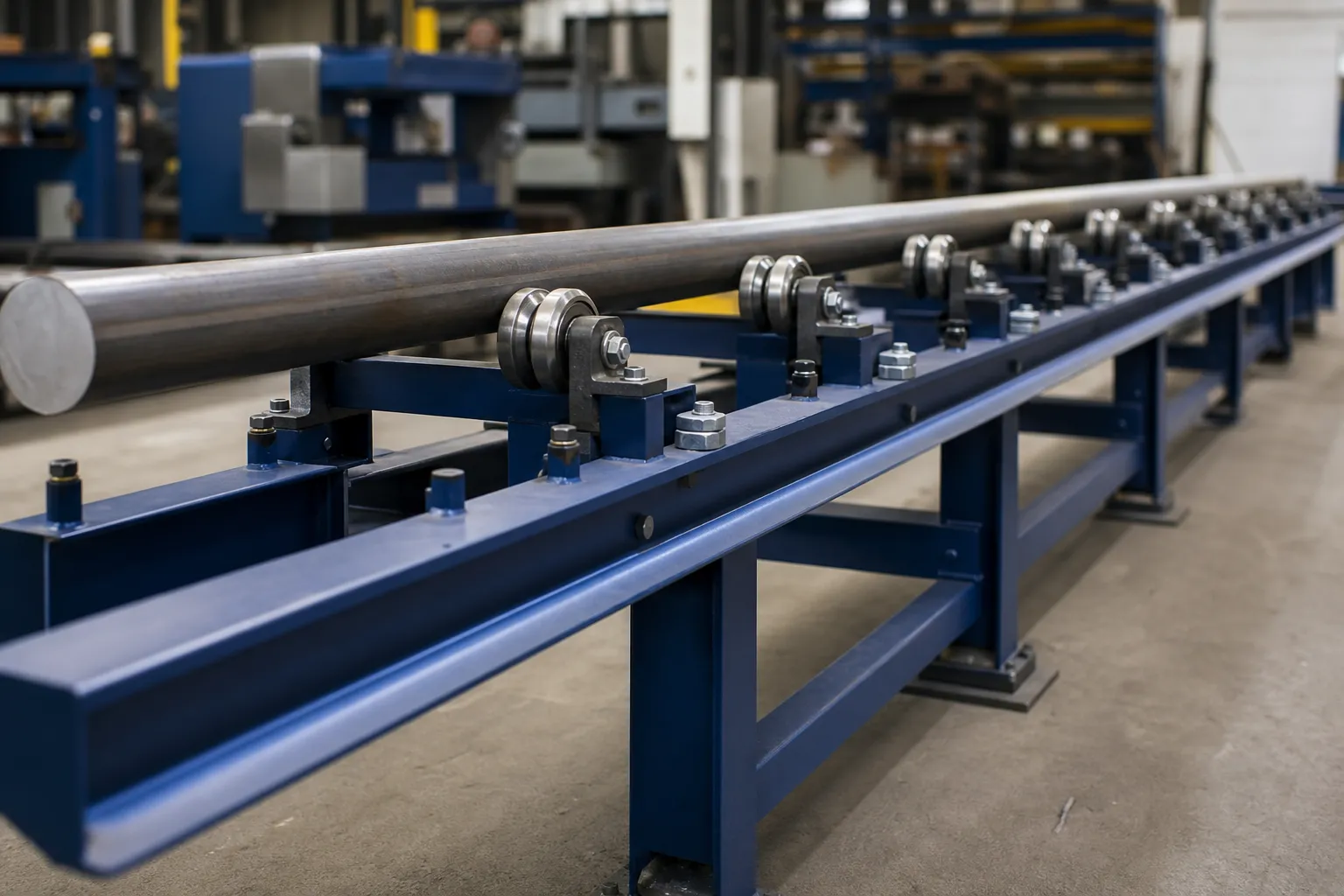
*Ilustracija inženirskega koncepta. Podpora, stik in obnašanje materiala zahtevata tehnični pregled posameznega dela.*
Izogibajte se temu, da bi rezultat imenovali "Bauschinger-nadzorovan", razen če kvalificirana študija materiala/procesa natančno opredeli, kaj to pomeni. Izraz ne nadomešča zahteve po risbi, potrdilo o materialu, ocena zloma ali odobritev stranke.
Where Loading History Hides in Real Parts
Reverse-loading sensitivity does not require a previous straightening operation — most parts arrive with a history already written into them. Bars and wire carry directional deformation from rolling and drawing, so their bend response differs with orientation relative to the mill direction. Heat-treated parts carry quench distortion plus the residual stress field of the treatment, and any straightening performed at the heat treater counts as prior history for the correction performed later — the staging questions covered under ravnanje po toplotni obdelavi. Long slender parts accumulate transport and clamping bends, and a part that has already been through one rework loop at a supplier arrives pre-cycled. Even within one purchased lot, different bar lengths can come from different mill heats with different histories, which is why a correction setup that works on the first pieces of a lot can misbehave on the last.
The countermeasure is informational, not mechanical: capture material and lot identity, the manufacturing stage, and any prior correction record alongside the incoming geometry map. That data costs almost nothing at receiving and is the difference between a drift investigation that takes an afternoon and one that cannot be closed at all.
Reading the Effect in Production Data
Because the effect cannot be seen on the part, it announces itself through patterns in the process data. The signals to watch for are structural rather than numeric: the number of correction strokes needed for the same incoming error creeping upward or downward over a run; parts that oscillate around nominal across alternating strokes instead of converging; released measurements that flip to the opposite side of the tolerance band after correction sequences that historically landed centered; and lot-to-lot differences in correction behavior with no change in machine setup. None of these patterns is proof of reverse-yield behavior on its own — each has measurement and fixture mimics, which is why the datum and gauge checks come first — but together they justify pulling a sample set aside for a controlled material-and-history review rather than continuing to adjust the machine.
Ločite obnašanje materiala od merilne napake
Nepričakovan izpuščen rezultat lahko izhaja iz materialnega odziva, ampak tudi iz referenčnega položaja, skladnost napeljave, podpora/primer, korelacija merilnika ali nepopolna karta napak. Preverite te dejavnike, preden vzrok pripišete vedenju povratnega donosa. glej ponovljivost vpenjala in nastavitev referenčne točke in merilna negotovost pri pregledu naravnosti.
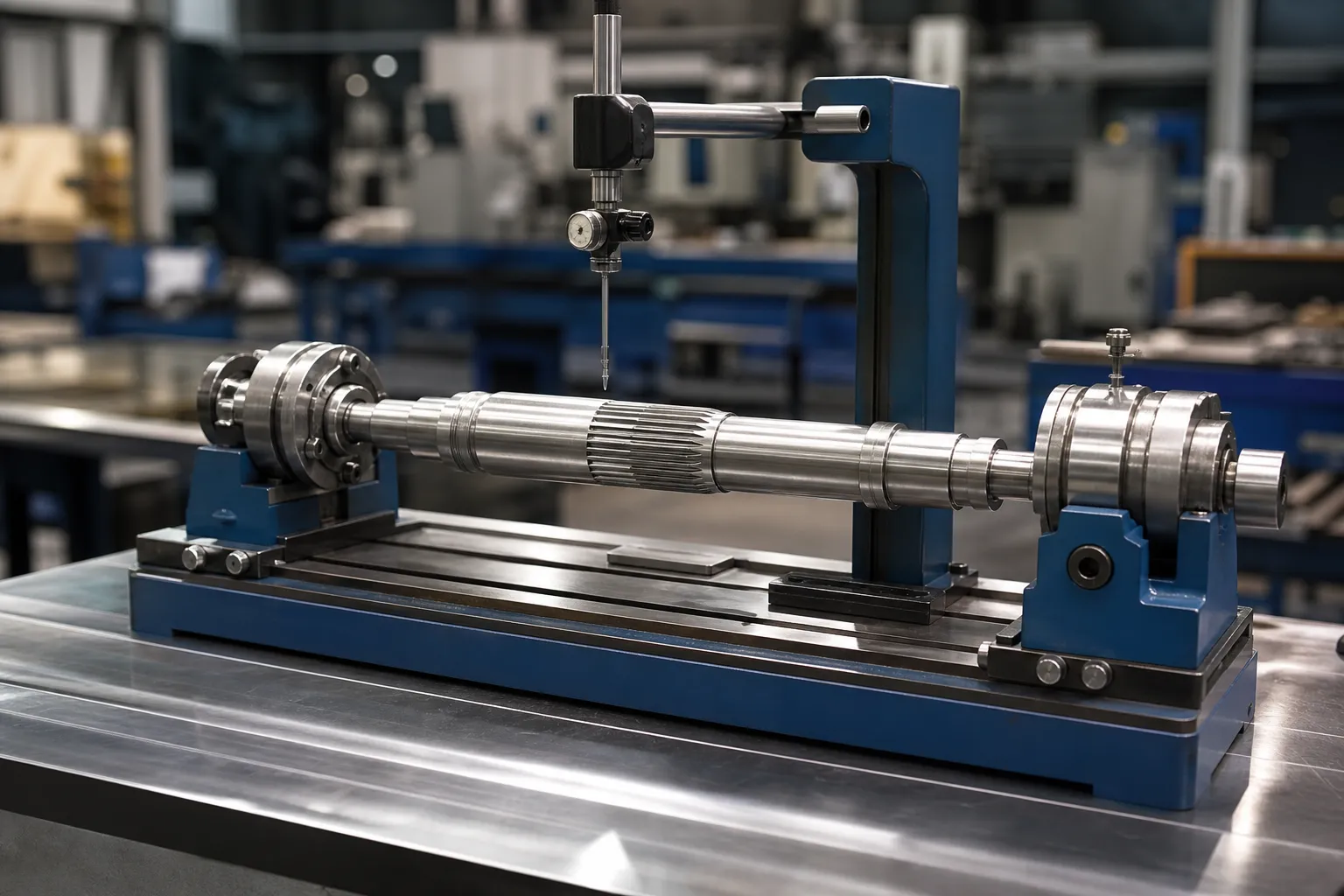
*Ilustracija inženirskega koncepta. Odobrena merilna metoda sproščenega stanja določa rezultat, o katerem se poroča.*
Dokazi, potrebni pred obdelavo zahtevkov
Zagotovite risbo/revizijo, specifikacija in stanje materiala, zgodovino izdelave, stopnja toplotne obdelave, zapise o predhodnem popravku/predelavi, vhodna geometrija, površinske omejitve, sprejeta merilna metoda in reprezentativni vzorci. Uporaba ravnanje po toplotni obdelavi razjasniti odrske kontrole in preskus vzorca ravnanja in prevzem za načrtovanje poskusov. Potem kontaktirajte StraighteningTech za razpravo.
Zahtevana validacija pred sistemskim zahtevkom
Any material-behavior claim needs a defined material and process scope, kalibrirane reference, representative heat-treated samples, and traceable measurement data. A generic machine capability is not a verified result for this topic.
pogosta vprašanja
Does the Bauschinger effect make straightening impossible for previously bent parts?
št. It makes the response history-dependent rather than fixed. Processes handle it by planning corrections that work each location predominantly in one direction, limiting the number of correction cycles per part, and validating the correction rule on representative parts that carry the same history as production.
Why does pressing a bend back often overshoot?
Because the reverse stroke meets a material that yields at a lower stress than the forward stroke did. A force or depth calibrated on the forward response therefore over-delivers in reverse. The remedy is a separate, smaller correction rule for reverse strokes, or better, an error-map strategy that avoids reversing the same location repeatedly.
Can a correction setup be transferred to a new material lot unchanged?
Only with evidence. Different mill heats can carry different deformation histories and conditions, so the first pieces of each new lot should be treated as a confirmation sample: if correction behavior matches the qualified baseline, continue; if it shifts, requalify before running. This is standard practice for managing the springback variation discussed for springback variation between batches.
Sorodni viri StraighteningTech
glej kako deluje samodejno ravnanje gredi, preskus vzorca ravnanja in prevzem in ravnost gredi v primerjavi z iztekom v primerjavi s TIR za splošne nadzorne meje, ki veljajo pred kakršno koli zahtevo po zmogljivosti Bauschingerjev učinek pri ravnanju.