
Uma linha não deve tratar todas as leituras não aprovadas da mesma maneira. Uma peça pode ter um problema de configuração, um alarme de medição, uma condição de geometria corrigível, uma resposta sem progresso, um problema material suspeito ou uma não conformidade confirmada. Sem rotas distintas, correção repetida pode ocultar um problema de medição, danificar a peça, misturar lotes ou criar uma decisão de qualidade não rastreável.
Este artigo é uma estrutura de roteamento de qualidade. Ela não afirma que a StraighteningTech atualmente fornece classificação automática, sensores específicos, limites de rejeição, software de rastreabilidade ou regras de retrabalho autorizado. Essas funções exigem escopo local verificado e aprovação de qualidade.
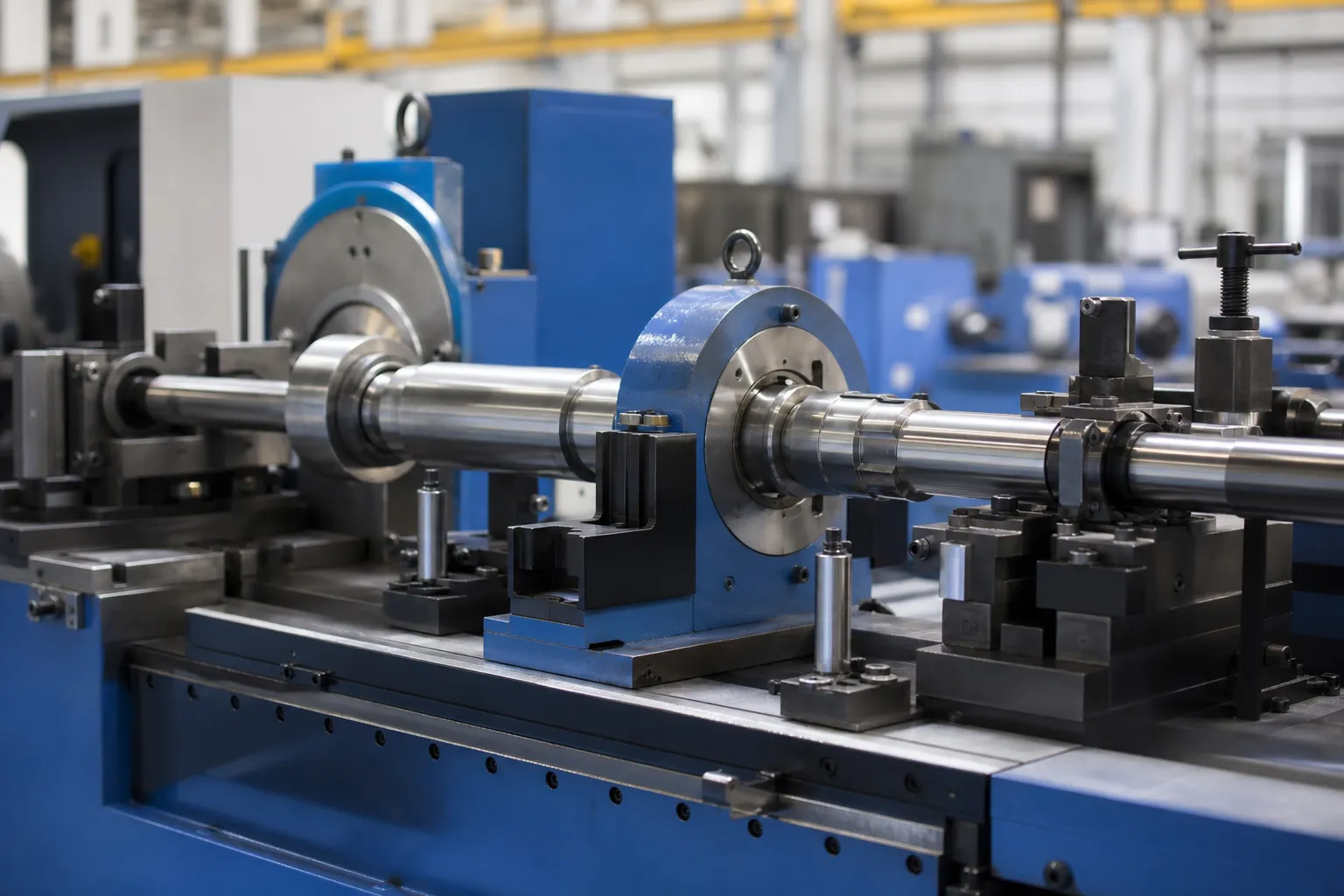
*Ilustração do conceito de engenharia. Mostra uma célula de produção candidata, não é um sistema de classificação automática instalado ou uma capacidade definida de detecção de defeitos.*
Definir os estados de disposição
No mínimo, distinguir PASSAR, SUFICIENTE, elegível para retrabalho, parada/retenção e revisão de engenharia/qualidade. As definições devem fazer referência ao desenho controlado, método de medição, condição do processo e autoridade para liberar. Um alarme de processo não é automaticamente uma rejeição; pode ser um sinal de escalada que requer verificação.
| Estado | Definição necessária |
|---|---|
| PASSAR | Atende ao requisito de estado de liberação acordado com os registros exigidos |
| SUFICIENTE | Não atende ao requisito definido ou tem uma não conformidade confirmada |
| Elegível para retrabalho | Atende às condições documentadas para outra tentativa aprovada |
| Parar / segurar | Requer configuração, sinal de processo, revisão de qualidade ou engenharia antes de processamento adicional |
| Revisão de engenharia | Precisa de uma decisão controlada fora da rota automática normal |
Mantenha os problemas de configuração separados da não conformidade das peças
Antes de rotear uma peça como NOK, considere se o sinal pode resultar do assentamento de referência, variação de fixação, condição do sensor, identidade da parte, receita errada ou estado de suporte não aprovado. O procedimento deve definir as verificações permitidas de limpeza/reinstalação/repetição e evitar tentativas ilimitadas.
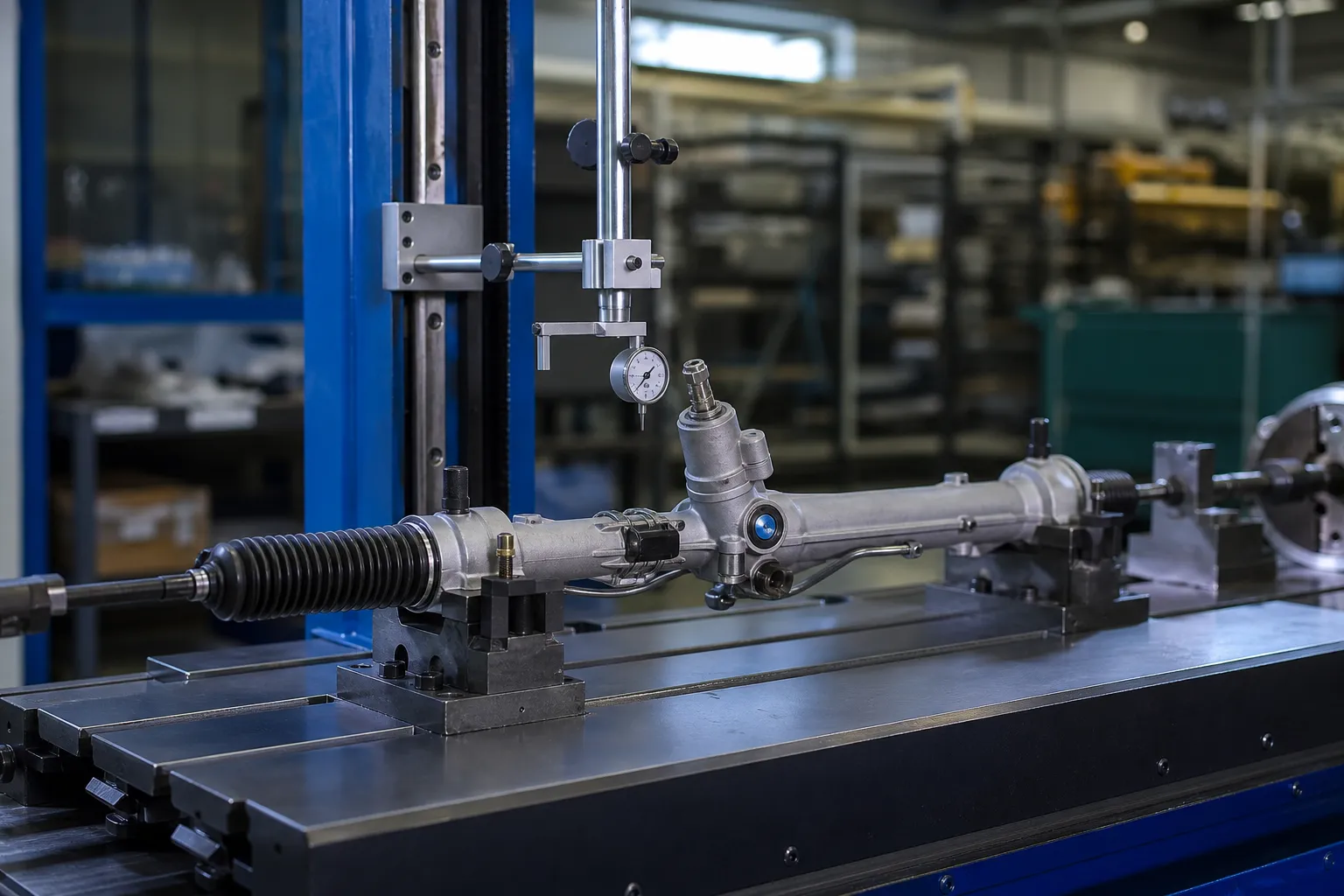
*Ilustração do conceito de engenharia. Ele representa um ponto de decisão de medição, não é prova de uma classificação automática ou de uma regra de alarme específica.*
Ver repetibilidade do dispositivo e assento de referência e detecção de rachaduras durante o endireitamento automático para a separação entre um sinal e sua causa verificada.
Defina um limite de retrabalho antes da primeira correção
O retrabalho deve ser uma rota aprovada com um número máximo de tentativas definido, condições de contato/suporte permitidas, exigência de remensuração, verificações de superfície/recursos e autoridade para continuar ou parar. O limite não é um número universal; depende do material, estágio do processo, risco de recurso, requisitos do cliente e resposta validada. Quando uma parte não responde conforme o esperado, a ação apropriada pode ser suspensa ou rejeitada, em vez de força adicional.
Why Unlimited Retries Corrupt the Line
Allowing a line to re-correct a part until the gauge finally passes feels productive and quietly destroys two things. The first is the part itself: every plastic bending cycle consumes a share of the section’s low-cycle fatigue life, and the reverse-loading behavior described for reverse loading in straightening means later cycles move the material more per unit force than earlier ones did. A part that reaches tolerance on its sixth attempt is not equivalent to one that reached it on the first, even though both read PASS.
The second casualty is the line’s own information. When retries are unlimited, the gauge sees only eventual outcomes: parts that converge, slowly, under repeated force. A drifting correction setup, a worn anvil, a bad lot of stock and a genuinely struggling part family all produce the same visible symptom — more attempts per part — and none of them generates a stop condition. The retry count is one of the cheapest and most informative process signals a straightening line produces, and it only exists as data if the line is required to stop and route the part at a defined limit instead of looping.
Thinking of the Rework Limit as a Budget
A more useful mental model than “three strikes” is a budget of deformation that each part may spend. The budget is set by the material’s condition and the consequence of failure in service, and it is spent by every correction stroke — forward or reverse. A hardened safety-critical shaft and a soft structural bar may carry very different budgets, which is why no universal rework number is defensible and why the limit belongs to the part family’s validated process, reviewed by quality. The same budget concept explains a rule that otherwise looks arbitrary: a part that has consumed its budget and still fails is rejected even though one more attempt might conceivably pass, because the part that would emerge is no longer the part the drawing specifies in any meaningful sense.
Budgets also need edges. Two conditions that stop rework regardless of remaining attempts are no-progress — corrections that stop changing the geometry, indicating the process is no longer engaging the error — and overshoot oscillation, where each attempt moves the part from one side of tolerance to the other. Both are stop signals, not tuning opportunities, and both feed the integrity-review concerns that repeated plastic cycling raises.
Mantenha o isolamento e a rastreabilidade
Cada disposição deve preservar a identidade da peça/lote, versão desenho/receita, condição de medição, tentativas de correção, resultado, evento de operador/automação, tempo, revisar a decisão e a localização física. O isolamento deve impedir que uma parte retida ou NOK retorne ao fluxo PASS sem autorização explícita.
*Ilustração do conceito de engenharia. Enfatiza a verificação do estado liberado e a disposição registrada, não é uma promessa de uma interface DMC/MES ou classificador automático.*
Designing Segregation That Cannot Be Defeated
Disposition states only work if the physical line enforces them. The failure mode is always the same: a held or NOK part re-enters the good flow during a busy shift, through an operator judgment call, a shared conveyor or an unlabeled tote. Effective segregation design follows mistake-proofing logic rather than instruction signs. Good and rejected parts take different physical paths with no shared section where a part can be redirected by hand. Hold locations lock or require an access step that itself creates a record. Labels and bins are part-specific, not generic scrap tags, so a held-for-review part cannot decay into anonymous scrap or anonymous stock. Where volume justifies it, diverters and gates make the routing decision the machine’s, not the operator’s — the automation boundary discussed in manual versus automatic straightening applies to disposition as much as to correction.
The record side has the same anti-defeat requirement. A disposition that lives only in an operator’s memory, or in a spreadsheet anyone may edit, does not survive an audit or a containment event. The minimum durable record is the tuple — part identity, muito, drawing and recipe version, condição de medição, attempt count, resultado, decision, decision-maker, time — retained long enough to answer the customer question that eventually comes: which parts from that week, from that machine, from that shift.
What the Disposition Data Buys Later
A line that routes honestly accumulates, as a by-product, the dataset that every improvement program wishes it had. Attempt-count trends flag tooling wear and setup drift while they are still cheap to fix. Lot-to-lot shifts in incoming geometry point upstream to suppliers with evidence instead of complaints. The ratio of setup-issue holds to true part nonconformances measures how much of the line’s apparent quality problem is actually its measurement and fixturing — information directly relevant to planning a medidor R&Estudo R. And when a customer raises a field concern, traceability converts a week of panic into an afternoon of records. None of that value survives a culture of retry-until-pass; all of it is the natural dividend of the routing discipline described here.
Crie uma rota de verificação e escalonamento
- identificar a parte, muito, desenho e receita;
- verificar a configuração de medição/dados dentro das verificações aprovadas;
- capturar a leitura, estado do processo e qualquer alerta;
- aplicar apenas a rota de retrabalho permitida quando a elegibilidade for confirmada;
- liberar e medir novamente sob a condição acordada;
- rota PASSAR, SUFICIENTE, espera ou revisão de engenharia;
- manter a rastreabilidade e a segregação física;
- usar padrões recorrentes para acionar processo ou revisão de qualidade.
Para a arquitetura de evidências necessária, ver endireitando teste de amostra e aceitação e Medidor R&R para endireitar linhas.
Portões sem progresso e com limite de correção
A frase exata limite de correção de endireitamento sem portão de progresso está medicamente poluído em SERP, portanto, a lógica canônica sem progresso reside na página de classificação NOK e limite de retrabalho. Definir ciclos máximos de correção, force/stroke ceilings and mandatory stop/sort actions before production release.
Perguntas frequentes
NOK sempre significa sucata?
Não. Um estado NOK pode exigir verificação, retrabalho controlado, revisão de engenharia ou rejeição final dependendo da rota de qualidade aprovada.
Uma linha pode tentar novamente até que a leitura seja aprovada?
Não. O retrabalho precisa de um limite máximo de tentativas definido e autoridade de qualidade. Novas tentativas ilimitadas podem mascarar um problema de processo ou medição.
Este artigo significa que a linha tem classificação automática?
Não. É uma estrutura de roteamento. Classificação real, rastreabilidade e funções de interface exigem verificação separada.
Why does the attempt count matter more than the final reading?
Because the final reading describes where the part ended, while the attempt count describes what it cost to get there. Two parts reading identical PASS values are not equivalent if one took a single correction and the other took a full budget of repeated cycles. The attempt count is also the line’s earliest drift alarm — a setup, tooling or material change usually shows up as more attempts per part long before it shows up as rejects.
Should rework limits differ between part families?
Sim. The limit is a deformation budget set by material condition, feature risk and service consequence, so a hardened safety-critical shaft and a soft structural bar justify different numbers. The limit belongs to each family’s validated process with quality approval, not to the line as a single setting.
What is the minimum physical segregation a small line needs?
Separate paths or lockable, labeled, part-specific containers for PASS, hold and NOK — arranged so a held part cannot return to the good flow without a recorded, authorized step. The design principle is that doing the wrong thing must require effort, not just discipline. Escalate to machine-controlled diverters when volume or staffing makes human routing unreliable.
Sorting decisions are also capacity decisions – o comparação manual vs automática e o Caso ROI para endireitamento automático both price the NOK stream a manual line tends to hide.