
Het selecteren van een stijltang moet beginnen met de vereiste geometrie en acceptatiemethode, niet met een machinelabel. Een schacht, een dunwandige buis en een asymmetrisch profiel kunnen er allemaal gebogen uitzien, maar ze kunnen verschillende datums vereisen, meetsporen, ondersteunt, contactzones en correctiemethoden. Een machinevergelijking die deze verschillen negeert, kan een aantrekkelijke offerte opleveren zonder een verdedigbaar voorbeeldtestplan.
Deze gids is een kopers- en engineeringframework. Het beweert niet dat StraighteningTech elk machinetype aanbiedt, werkstukomhulsel, nauwkeurigheid, kracht, automatiseringsniveau of lijninterface. Voor een definitieve configuratie is de tekening nodig, monsters, inspectiemethode en gevalideerd bekwaamheidsbewijs.

*Techniek concept illustratie. Het toont een beslissingsproces van werkstuk tot methode, geen productcatalogus of bewijs dat elke route beschikbaar is.*
Begin met het vereiste kenmerk en datum
De eerste vraag is wat moet worden aanvaard: rechtheid van de middellijn, uitloop, TIR, coaxiale relatie, boog, zijdelingse zwaai, twist, ovaliteit, staat van de muur of een ander gecontroleerd kenmerk. Deze termen zijn niet uitwisselbaar. De tekening moet de referentie identificeren, voorwaarde ondersteunen, meetbereik, oriëntatie en beslissingsregel voor vrijgegeven toestanden.
| Werkstukfamilie | Typisch selectieprobleem | Ga er niet van uit |
|---|---|---|
| Schacht | Functionele as, dagboekdatum, uitloopkaart en lokale sectiewijzigingen | Elke as kan dezelfde point-press-reeks gebruiken |
| Buis | Middellijn, ovaliteit, integriteit van de muur en instortingsrisico | Een externe meting bewijst dat de boring/muur acceptabel is |
| Profiel / spoor | Boog, vegen, twist, asymmetrisch gedeelte en gezichtsbescherming | Een rollenopstelling met ronde staven past op een profiel |
Voor meetterminologie, beginnen met rechtheid van de as, uitloop en TIR En ovaliteit van de buis versus rechtheid van de middellijn.
Breng de fout in kaart voordat u de methode kiest
Een initiële geometriekaart identificeert of de afwijking globaal is, lokaal, één vlak, meerdere vliegtuigen, hoekig, sectiegerelateerd of veroorzaakt door een steun-/bevestigingssignaal. Het moet worden vastgelegd met het voorgestelde datum en worden gecontroleerd door middel van een nieuwe plaatsing of een overeengekomen herhalingsmethode. Een meting onder onstabiele ondersteuningscondities is geen betrouwbaar correctiedoel.
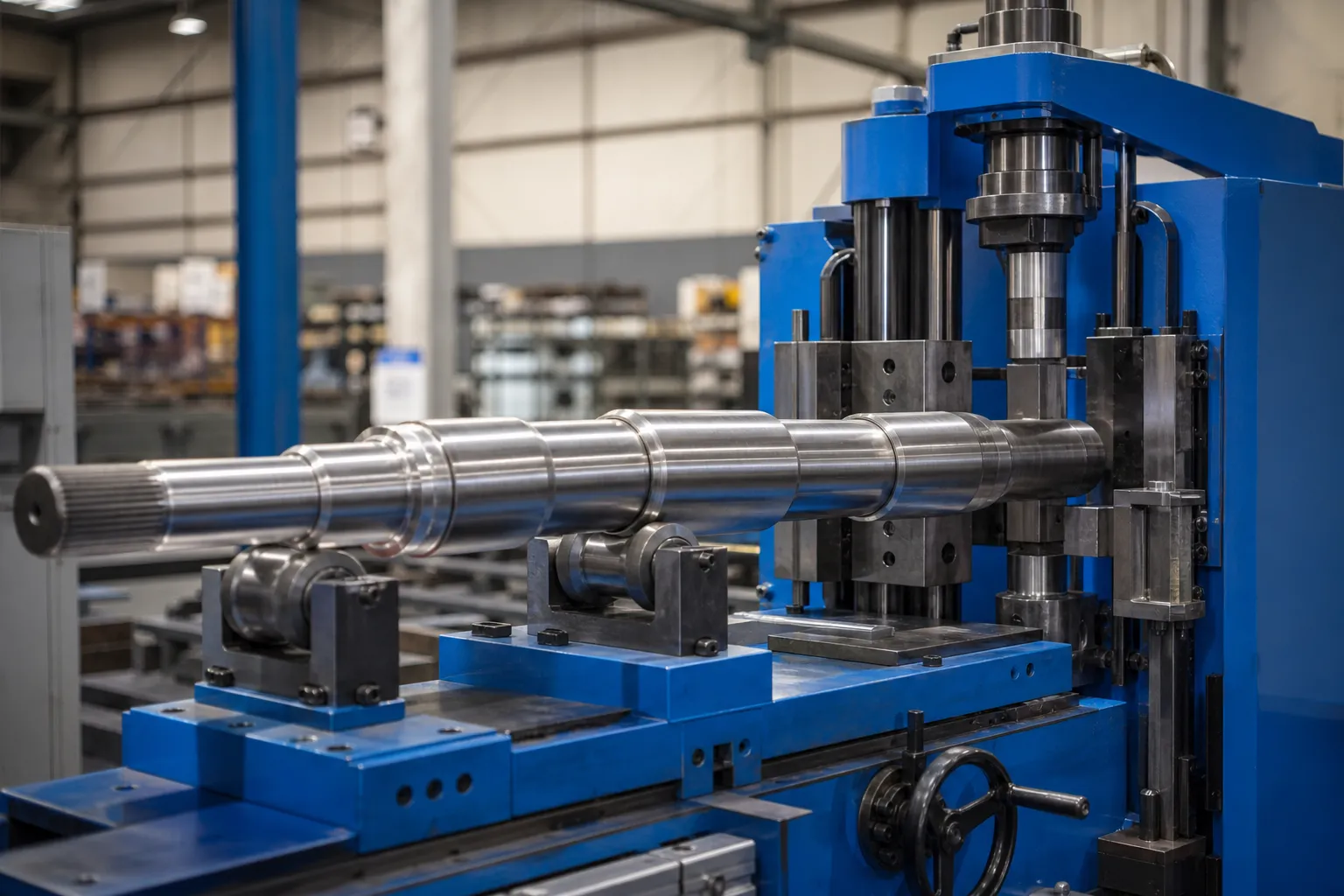
*Techniek concept illustratie. Het toont een kandidaat-meet- en correctiecel; werkelijke sensoren, ondersteunt, krachtpad en automatisering vereisen werkstukspecifieke validatie.*
Het specificatiepakket dat nauwkeurige offertes krijgt
De kwaliteit van de offertes die een koper ontvangt, bepaalt de kwaliteit van het verzonden specificatiepakket, en het pakket is klein genoeg om op de juiste manier in elkaar te zetten. De artikelen zijn: de tekening met de genoemde gecontroleerde eigenschap en het geïdentificeerde referentiepunt – niet alleen een tolerantiegetal dat vrij is van een referentie; het materiaal en de procesfase ervan, omdat een gehard onderdeel en een uitgegloeid onderdeel verschillende correctieproblemen zijn met dezelfde geometrie; de binnenkomende foutverdeling van echte onderdelen, omdat een machine die geschikt is voor zachte bogen niet plotseling het slechtste deel van het jaar aankan; de acceptatiemethode zoals de klant deze uitvoert, inclusief ondersteuningsvoorwaarde en regel van vrijgegeven toestand; de beschermde zones en oppervlakteklassen; de productiemix en de omschakelingsfrequentie; en representatieve monsters die de leverancier daadwerkelijk kan testen. Kopers die dit verzenden, ontvangen gedifferentieerde technische antwoorden. Kopers die een diameter en een doelnauwkeurigheid doorgeven, ontvangen een retourrondje in de brochure – en ontdekken bij de inbedrijfstelling de kloof tussen beide, wat de duurste plek is om het gesprek te voeren.
Maatvoering kracht, Beroerte en envelop zonder te veel te kopen
Drie machineafmetingen bepalen de meeste maatbeslissingen, en elk wordt bepaald door de fysica van het werkstuk in plaats van door ambitie. De correctiekracht volgt uit de sectiemodulus van de stijfste onderdeelfamilie en de vloeigrens ervan: voldoende kracht om het slechtste gedeelte plastisch te buigen, met een werkmarge, zodat de machine niet permanent aan het plafond zit – maar met kracht die verder gaat dan de behoefte van het gezin, kun je niets anders kopen dan een zwaardere, stijver, duurdere machine die aan de kleine kant van het bereik ook grover kan zijn in besturing. Slag en daglicht volgen uit de diameters van de onderdeelfamilie, de gereedschapshoogten en het handlingconcept. Werkbereik en laadhoogte volgen uit de lengte en massa van het onderdeel, omdat het veilig ondersteunen van een lang onderdeel tot de taak van de machine behoort, geen bijzaak. Het klassieke falen van overkopen is het specificeren van een hypothetisch gigantisch onderdeel dat nooit werkelijkheid wordt en vervolgens een gezin runnen dat de machine nauwelijks registreert; het falen van onderaankoop is het aanpassen aan het gemiddelde deel en het bereiken van het slechtste lot zonder speelruimte. Beide worden op dezelfde manier vermeden: de voorbeeldtest over het werkelijke gezin, op zijn eigenlijk slechtst, voordat de configuratie wordt bevroren – dezelfde bewijsregel die van toepassing is op de automatisering grens.
Evalueer de contact- en sectie-integriteit
De kandidaat-machine moet een goedgekeurd reactiepad creëren zonder beschermde functies te beschadigen. Bekijk toegankelijke ondersteuningszones, toegestane correctiepunten, oppervlakte-/coatingvereisten, lengte- en massabehandeling, sectieovergangen, wanddikte, conditie van de boring, naadoriëntatie en stroomafwaartse bewerkingen.
| Selectie invoer | Waarom het ertoe doet |
|---|---|
| Contact- en contactloze zones | Bepaalt of een ondersteunings- of correctieroute überhaupt is toegestaan |
| Sectiestijfheid en wandconditie | Verandert de respons en het risico op lokale schade |
| Distributie van inkomende fouten | Definieert of een lokale of continue methode kan worden geëvalueerd |
| Productiefase | Bepaalt oppervlakte-/toeslagbeperkingen en de volgende procesinterface |
| Productiemix | Heeft invloed op de omschakeling, Receptcontrole en verwerkingsvalidatie |
Vergelijk kandidaatroutes voorwaardelijk
Puntdrukken kan worden geëvalueerd wanneer een discrete geometriekaart wordt gebruikt, ondersteuningspad en goedgekeurde correctiepunten bestaan. Roller- of continu rechttrekken kan worden beoordeeld op compatibiliteit, voldoende consistente secties. Strek, torsie of gespecialiseerde routes kunnen alleen kandidaten zijn als het werkstuk, vastklemmen, materiaal- en validatievereisten ondersteunen deze. Geen enkele methode is een standaardgarantie.
Zien pers versus roller rechttrekken voor de methodegrens en punt-druk rechttrekken voor een lokaal correctiekader met gesloten lus.
Waar selecties fout gaan
Mislukte selecties clusteren zich in herkenbare patronen, en ze een naam geven is goedkoper dan er één te leven. Kiezen op machinelabel: kopen van een “as richter” voor een asvormig onderdeel waarvan het referentiepunt, sectieovergangen en acceptatiemethode vereisen eigenlijk iets anders: het label beschrijft de brochure, niet de pasvorm. Nauwkeurigheid van een tabel accepteren: een gepubliceerd nauwkeurigheidscijfer is een machineattribuut onder de aangegeven omstandigheden; het geleverde resultaat op uw gezin, uw meters en uw inkomende distributie worden vastgesteld door de steekproeftest, niets anders. Het uitzonderingspad vergeten: de machine wordt geselecteerd op de manier waarop deze met goede onderdelen omgaat, terwijl het productiesucces ook afhangt van de manier waarop het detecteert, routes en registreert de slechte - de GENOEG routeringsdiscipline verdient een regel in de specificatie, geen ontdekking tijdens het opvoeren. Acceptatie blijft ongedefinieerd: twee partijen kunnen een getal delen en het oneens zijn over de betekenis ervan, tenzij aan de steunvoorwaarde wordt voldaan, meter en vrijgegeven-statusregel worden opgeschreven, daarom is de FAT-framework bevriest deze invoer voordat u gaat testen. En het negeren van de omschakeling: in een high-mix winkel, de route die op papier voor één gezin wint, kan het jaar verliezen door de insteltijd, validatielast van het eerste artikel en receptcontrole voor velen.
Omschakelingseconomie in een high-mixwinkel
Voor winkels die veel deelfamilies in kleine percelen runnen, omschakelgedrag verdient evaluatie als eersteklas selectiecriterium, naast geometrie en kracht. De vragen zijn concreet. Wat fysiek verandert tussen gezinnen – ondersteunt, pers gereedschap, sensorposities - en hoe wordt elke verandering geïdentificeerd, zodat een oude opstelling niet geruisloos op een nieuw onderdeel kan draaien? Hoe lang duurt een gevalideerde omschakeling?, en wie het uitvoert? Welke herkwalificatie vraagt het kwaliteitssysteem na een omschakeling?: een eerste artikelcontrole, een herplaatsingsverificatie, of een vollediger monster? Machines die voor deze mix zijn ontworpen, beantwoorden deze met geïdentificeerde gereedschappen, Receptbeheer en begeleide omschakelingssequenties; machines die zijn ontworpen voor eengezinsgezinnen met een hoog volume, beantwoorden deze met technische uren. Geen van beide antwoorden is fout, maar de koper moet weten welke hij koopt voordat het tweede gezin bij de kade arriveert, en de eerlijke plaats om de omschakeling te testen is tijdens de acceptatietest, waar een gezinswisseling onder getuige kan worden gedemonstreerd en getimed.
Definieer de automatiseringsgrens
“Automatisch” moet worden ontleed in laden, identificatie, oriëntatie, meting, correctie, afhandeling, receptuurbeheer, traceerbaarheid en uitzonderingsrouting. Een systeem kan sommige stappen automatiseren terwijl handmatige armaturen behouden blijven, technische goedkeuring of klantmeterverificatie. Gebruik geen automatiseringslabel als proxy voor de doorvoer, nauwkeurigheid of arbeidsbesparing.
*Techniek concept illustratie. Het benadrukt de verificatie van vrijgegeven onderdelen; het is geen klantacceptatierapport of een gegarandeerd prestatieresultaat.*
Maak van de monstertest de selectiepoort
De selectie moet worden afgesloten met representatieve normale en worst-case monsters, een gecontroleerde tekening, overeengekomen datum/maat, ruwe voor-en-na metingen, hermeting van de vrijgegeven toestand, oppervlakte-/sectiecontroles, maximale correctiepogingslimieten en een gedefinieerde NOK-route. Elke beloofde nauwkeurigheid, cyclus tijd, afhandelingssnelheid of automatiseringsbereik hoort pas nadat dat bewijs compleet is.
Gebruik rechttrekken monstertest en acceptatie om de proef te structureren, FAT- en SAT-bewijs.
Informatie die nodig is voor een beoordeling van de keuze van een stijltang
Geef de werkstuktekening en varianten door, materiaal- en productiefase, lengte/sectie/muurinformatie, binnenkomende geometriegegevens, functioneel gegeven, beschermde zones, referentie meetmethode, productie doel, verwerkingsbeperkingen en representatieve monsters. StraighteningTech kan vervolgens de kandidaatmeting beoordelen, ondersteunings- en correctiearchitectuur en identificeer het benodigde bewijs voordat een machineconfiguratie wordt voorgesteld.
Veelgestelde vragen
Kan men schachten machinaal verwerken?, buizen en profielen?
Eventueel voor een gedefinieerd en gevalideerd werkstukbereik, maar niet omdat ze alle drie ‘rechttrekken’ worden genoemd. Het gegeven, sectie en contactroute moeten worden herzien.
Is een snellere machine automatisch de betere keuze?
Nee. Doorvoer heeft pas waarde na geometrie, oppervlak, meting en uitzonderingsafhandeling voldoen aan de afgesproken acceptatiemethode.
Kan een productpagina een voorbeeldtest vervangen??
Nee. Productbeschrijvingen vormen een categorie; een representatieve steekproeftest stelt vast of een specifieke werkstukfamilie kan worden geaccepteerd.
Hoe weet ik of een machine te groot is voor mijn onderdelen??
Wanneer het gezin consequent de onderkant van de kracht- en bereikschaal van de machine bezet. Een machine met een grote marge boven de behoefte van het zwaarste gezin is zwaarder, grover in controle aan de kleine kant, en duurder dan een configuratie met de juiste maat – en de correctieprecisie van het gezin kan daaronder lijden. De oplossing is het dimensioneren van de daadwerkelijke sectiemodulus en de inkomende fout in het slechtste geval, geverifieerd door monstertest.
Hoe de omschakeling eruit zou moeten zien in de acceptatietest?
Een getuige van een gezinswissel: oud gereedschap eruit, nieuwe tooling in en geïdentificeerd, recept geselecteerd onder versiebeheer, eerste artikeldeel gemeten en gedispositioneerd, waarbij de verstreken tijd en elke verificatiestap worden geregistreerd. Als de omschakeling van belang is voor de economie van de winkel, het hoort thuis in de FAT-scope en niet in een mondelinge toezegging.
Is de gepubliceerde nauwkeurigheid van een stijltang wat mijn onderdelen zullen bereiken?
Dit is wat de machine bereikt onder de aangegeven referentieomstandigheden. Wat uw onderdelen bereiken, hangt af van hun geometrie, materiële staat, inkomende fout, uw meters en uw acceptatiemethode. De brug tussen de twee is de steekproeftest op representatieve en slechtste onderdelen – het enige bewijs dat een specificatie omzet in een verdedigbare verwachting.