
Stiprinājumu ražošanas nozarē, locīšana garās skrūvēs pēc termiskās apstrādes ir universāls sāpju punkts. Tradicionāls “manuāla kalšana” ir ne tikai neefektīva, bet arī negarantē konsekventu precizitāti. Šis raksts dalās ar specializētu Automatizēts skrūvju taisnošanas risinājums: demonstrating a reported client case in which automation took an 8-person manual line to one operator supervising four machines, with straightness held within 0.1 mm on the client’s acceptance records.
What is the Bolt?
Skrūves ir mašīnas pamatu stiprinājumi, celtniecība, un automobiļu rūpniecībā. Šī risinājuma tipiskā sagatave ir augstas stiprības garā skrūve: 15mm diametrs, 340mm garums.
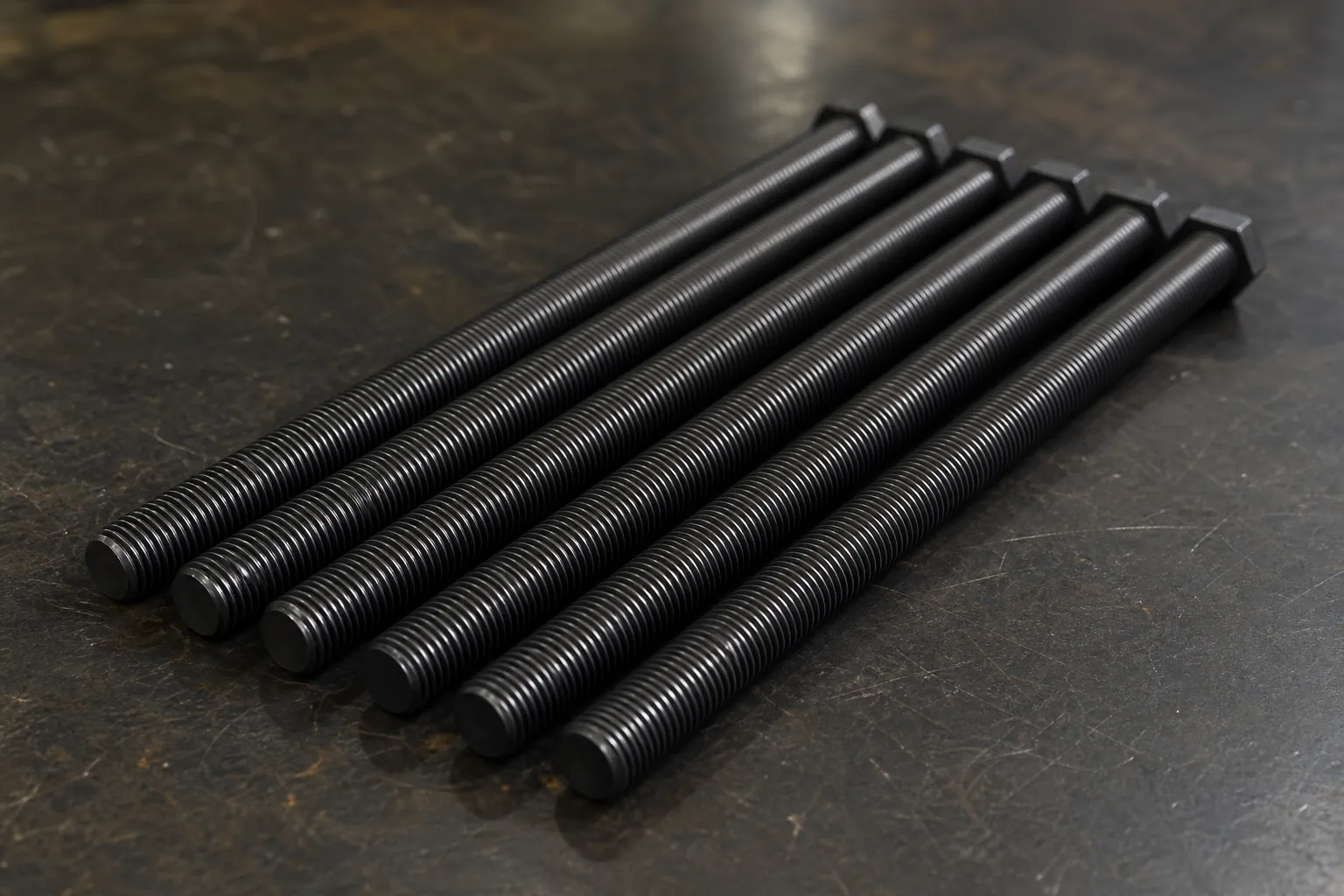
Strukturālās iezīmes un izaicinājumi
- Augsta L/D attiecība: 340 mm garums padara skrūvi ļoti jutīgu pret sākotnējo 0,5 mm izliekumu – 1.5mm pēc termiskās apstrādes.
- Precizitātes prasības: The client required straightness within 0.2 mm; the case acceptance records were held under 0.1 mm.
- Aizsardzības prasības: Iztaisnošanas procesam jānodrošina, lai vītnes precizitāte un virsmas kvalitāte nebūtu bojāta.
Why Heat Treatment Bends Long Bolts in the First Place
Understanding the distortion source is what makes a correction process defensible instead of decorative. During quenching, a long fastener cools unevenly: the section cools at different rates depending on orientation in the basket or fixture, agitation contact, and local mass differences between the plain shank, the threaded length and the head. Each cooling path wants to contract by a different amount, and the resulting locked-in stresses bend the part when it relaxes. The effect scales with length — which is why short bolts leave heat treatment usable while long ones of the same grade systematically arrive bent. Thread rolling and machining before treatment add their own stress history, and any straightening performed at the heat treater counts as prior deformation for everything done afterward.
Two practical consequences follow. Pirmkārt, incoming inspection on long heat-treated bolts is not optional paperwork — the bend magnitude and pattern arriving at the straightening station determine both the correction plan and any supplier conversation, and the interaction of prior deformation with correction response is the reason reverse-loading behavior matters, as covered under Baušingera efekts iztaisnošanas procesā. Otrkārt, process decisions upstream — how parts are racked or basketed through quench, whether stress relief is applied — change the distribution the straightening station sees, and are usually the cheapest place to reduce total correction work.
Reading the Bend Before Correcting It
Long fasteners arrive with a small vocabulary of bend patterns, and naming the pattern is the first step of an efficient correction loop. A single-arc bow — one gentle curve, maximum near the middle — is the most common heat-treatment signature and the most straightforward to correct with supports positioned around the peak. An S-shaped double bend has two opposite peaks, usually reflecting two constraint points during quench, and demands two coordinated corrections rather than one big press at the largest reading. A local kink near the head or the thread runout concentrates distortion where section stiffness changes, and behaves differently from a distributed bow. Beidzot, twist about the axis occasionally accompanies bending on parts with asymmetric features. Each pattern requires its own measurement map and correction sequence, which is why an automatic station that scans the full length and builds the map before pressing — rather than chasing the single worst reading — converges in fewer strokes. The measuring-and-correcting loop behind this is described for automatic shaft straightening generally, and for the long-bolt family specifically in the automātisks garo skrūvju taisnošanas process.
Kāpēc skrūvju iztaisnošanas sistēmai ir jāatsakās no “Manuāla kalšana”
Tradicionālais process vs. Automatizēts risinājums
The figures below are this client’s reported baseline and post-commissioning values, not a universal benchmark for every fastener line.
| Sāpju punkts | Manuāla kalšana / Manuāli nospiediet | Automatizēts iztaisnošanas risinājums |
| Darbaspēka prasība | 8 workers per shift (manual baseline, reported case) | 1 operators priekš 4 mašīnas (reported case) |
| Taisnīgums | 0.2 – 0.5 mm spread (reported manual baseline) | ≤ 0,1 mm (client acceptance records) |
| Cikla laiks | 120 – 180 s/gab (reported manual baseline) | 10 – 15 s/gab (reported case) |
| Kopējās izmaksas | High labor cost per corrected part | Manpower reduced from 8 operators to 1 supervising 4 mašīnas (reported case) |
Automatizēta skrūvju taisnošanas procesa plūsma
Šis risinājums aptver pilnu slēgta cikla automatizētu procesu no padeves līdz šķirošanai, nodrošinot, ka katra skrūve atbilst augsta standarta piegādes prasībām.
Pamatprocesu apraksti
- Automātiskā barošana: Liektās skrūves tiek automātiski ievadītas no tvertnes iztaisnošanas stacijā bez cilvēka iejaukšanās.
- Dinamiskā mērīšana: Augstas precizitātes sensori reāllaikā skenē rotējošo sagatavi, precīzi fiksējot maksimālo lieces punktu visā garumā.
- Servo presēšana: Viedā sistēma automātiski aprēķina atsperu, pamatojoties uz materiālu (oglekļa tērauds/leģētais tērauds), un servo cilindrs pieliek precīzu spiedienu vienas piegājiena korekcijai.
- Automātiskā šķirošana: Kvalificētās skrūves pāriet uz nākamo posmu, while non-conforming parts are automatically isolated before they leave the machine.

UBJ-80 skrūvju taisnošanas mašīna
Šis taisnotājs ir ideāli piemērots termiski apstrādātām gatavām detaļām (piem., štancēšanas/biroja iekārtu sastāvdaļas, auto/motociklu daļas, instrumenti, skrūves) un bāri (tērauda, varš, alumīnija, nerūsējošais tērauds, titāna sakausējums) 60-600 mm garumā & φ3–φ25mm diametrs. Tas palielina gan precizitāti, gan produkta kvalitāti.
Galvenās iztaisnošanas problēmas un risinājumi
Izaicinājums 1: Manning and the Reported “1 Operators priekš 4 Mašīnas” Case
Problēmas apraksts: Manual hammering and press correction depend on operator skill, stamina and shift discipline, so manning levels stay high and results vary from operator to operator.
Risinājums:
Mūsu risinājums tiek īstenots pilna slēgta cikla automatizācija. Darbības loģika ir ārkārtīgi vienkārša, ar iebūvētām receptēm dažādām skrūvju specifikācijām. Standarta strādniekam tikai periodiski jāuzpilda tvertne; pārējais — mērīšana, iztaisnošana, un pārbaude — mašīna to apstrādā automātiski. Tas atrisina darbaspēka trūkumu un novērš noguruma radītos precizitātes kritumus.
Izaicinājums 2: Garantēta konsistence ar precizitāti 0,1 mm
Problēmas apraksts: Kad skrūve tiek pakļauta āmura sitieniem, iekšējais sprieguma sadalījums kļūst nevienmērīgs, bieži noved pie pārmērīgas korekcijas lokalizētajās zonās.
Risinājums:
Risinājums izmanto a pilnībā parametrizēta servo vadības sistēma. Atšķirībā no neskaidra cilvēka sprieduma, sensori nosaka skrūves aksiālo līkni ar mikronu līmeņa precizitāti. Izmantojot daudzpakāpju servo algoritmus, sistēma precīzi pārvar S45C vai leģēto tēraudu elastīgo atsperu, locking final straightness within the 0.1 mm window achieved on this client’s qualified recipe.
How Thread and Head Zones Are Protected During Correction
Thread protection is a contact-zone engineering problem, and the principles are the same ones that govern surface-protection tooling across straightening applications. The correction force and the reaction forces both need somewhere to live, and on a long bolt the plain shank is the region designed to carry load, while the threaded length and the under-head fillet are the regions most easily damaged. A protection concept therefore has three parts: place supports on the shank at controlled span positions around the bend peak; direct press contact onto the shank through tooling that conforms to the section instead of touching thread crests; and keep every edge that could contact the workpiece generously radiused so load spreads instead of concentrating. Cleanliness belongs in the same sentence — debris trapped between press tooling and a thread flank is a scratch generator, and on plated or coated bolts the coating class defines how much contact the finish can tolerate at all.
The validation side is equally concrete. A thread-protection claim is proven by inspection agreed before the trial — thread gauges still running, flank condition reviewed under the method the quality function specifies — together with the released-state straightness result, on representative parts, after repeat setups. Protection and geometry are accepted together or not at all.
What an Acceptance Criteria Package Should Contain
A bolt straightening process is only as good as the acceptance definition it answers to, and a complete one answers five questions in writing. What characteristic governs — straightness of the axis, measured how: on centers, on supports, rotējošs, in what condition, since a reading under restraint is not a released result, per ielādēts pret atbrīvoto mērījumu praksi. What the limit is, and where it applies — full length or specified spans. What else must survive the process — thread fit, virsmas apdare, pārklājums, head markings. How conformity is sampled — every part through an automatic gauge, or a sampling plan with defined reaction to a failure. And what happens to nonconforming parts — rework limits, segregation and disposition authority, following the NOK šķirošanas un pārstrādes limita ietvars. Buyers comparing straightening suppliers are well advised to ask for exactly this package; the ability to produce it says more about a supplier than any single machine specification.
Ražošanas korpuss: Indijas klienta ceturtā izvēle
Klienta fons
Labi pazīstams Indijas stiprinājumu piegādātājs, kas nodrošina sastāvdaļas globāliem celtniecības tehnikas zīmoliem.
Īstenošanas rezultāti
- Atkārtoti pasūtījumi: Pamatojoties uz pirmo trīs vienību izcilo sniegumu, klients nesen iegādājās to 4th mašīna.
- Operator Consolidation: The client reported one operator managing all 4 machines after commissioning, with a substantial increase in output per operator.
- Kvalitātes etalons: The client’s records report straightness moving from 0.2 mm down to under 0.1 mm after commissioning.
FAQ
- J: Vai iztaisnošanas cilindrs nesabojās skrūvju vītnes?
- Nē. Mēs esam projektējuši bezkontakta, polsterētas aizsardzības veidnes īpaši skrūvju iztaisnošanai. Preses bloki lieliski atbilst skrūves izliekumam, nodrošinot vienmērīgu spēka sadalījumu un izvairoties no virsmas iespiedumiem.
- J: Vai aprīkojums var integrēties mūsu rūpnīcas MES sistēmā?
- Jā. Mūsu vadības sistēmai ir standarta datu saskarnes, lai reģistrētu un eksportētu reāllaika iztaisnošanas datus par katru skrūvi, atbilst mūsdienu izsekojamības prasībām.
Additional Process Questions
Why do bolts from the same heat-treatment lot arrive with different bend patterns?
Because each part’s position in the basket or rack gave it a different cooling path. Quench distortion is sensitive to orientation, local mass and agitation contact, so even identical bolts leave treatment with different locked-in stress patterns. Mapping incoming parts rather than assuming a uniform error is the practical answer, and it is why scanning-based stations build a per-part correction plan.
How many correction passes does a long bolt need?
It depends on the pattern, not a fixed number. A single-arc bow typically converges in one planned press; an S-bend needs two coordinated corrections; local kinks near section changes respond differently again. The governing rule is a rework limit set before production — parts that stop responding are routed to review, not pressed repeatedly, because each additional plastic cycle consumes fatigue life and changes the material’s response.
Should straightening come before or after thread rolling?
The route belongs to the fastener process engineer, but the trade-off is explicit: correcting before thread rolling lets subsequent operations work from a straight blank, while correcting after heat treatment with finished threads demands the contact-zone protection described above. Whichever route is chosen, the acceptance package must define what state the straightness limit applies to, and the correction validation must be run on parts carrying that state.
Kopsavilkums
Stiprinājumu rūpnīcām, kas tiecas pēc augstas efektivitātes un kvalitātes, an Automatizēts skrūvju taisnošanas risinājums ir būtisks ceļš uz konkurētspējas palielināšanu. Whether the target is lower manning or 0.1 mm delivery precision, the figures in this article are one client’s reported case; your own results depend on the bolt family, incoming distortion and acceptance definition.
Moving from manual bolt correction toward automation? The manuālā un automātiskā atlases loģika un ROI futrālis automātiskai iztaisnošanai ir dabiski nākamie soļi.
Ja jūs saskaraties ar darbaspēka pārvaldības problēmām vai precizitātes vājajām vietām, jūtieties brīvi Sazinies ar mums lai saņemtu pielāgotu tehnisko piedāvājumu.