
गन ड्रिल और डीप-होल ड्रिल स्ट्रेटनिंग एक विशेष विनिर्माण-चरण की समस्या है. एक ड्रिल कोई सादा गोल शाफ्ट नहीं है: टांग, बांसुरी, सिर काटना, शीतलक सुविधाएँ, गर्मी-उपचार की स्थिति और बाद में पीसने या फिर से पीसने के संचालन में प्रत्येक परिवर्तन हो सकता है जहां उपकरण का समर्थन किया जा सकता है, मापा और ठीक किया गया. एक प्रक्रिया जो उपकरण को केवल सीधा दिखाती है, फिर भी संरक्षित सुविधा को नुकसान पहुंचा सकती है या ऐसे डेटाम का उपयोग कर सकती है जो कार्यात्मक निरीक्षण का प्रतिनिधित्व नहीं करता है.
यह आलेख एक नमूना-परीक्षण रूपरेखा प्रदान करता है, यह कोई वादा नहीं है कि स्ट्रेटनिंगटेक हर ड्रिल ज्यामिति या आकार का समर्थन करता है. अंतिम प्रक्रिया ड्राइंग पर निर्भर करती है, प्रतिनिधि उपकरण, भौतिक अवस्था, permitted contact zones and the customer's released-state inspection method.
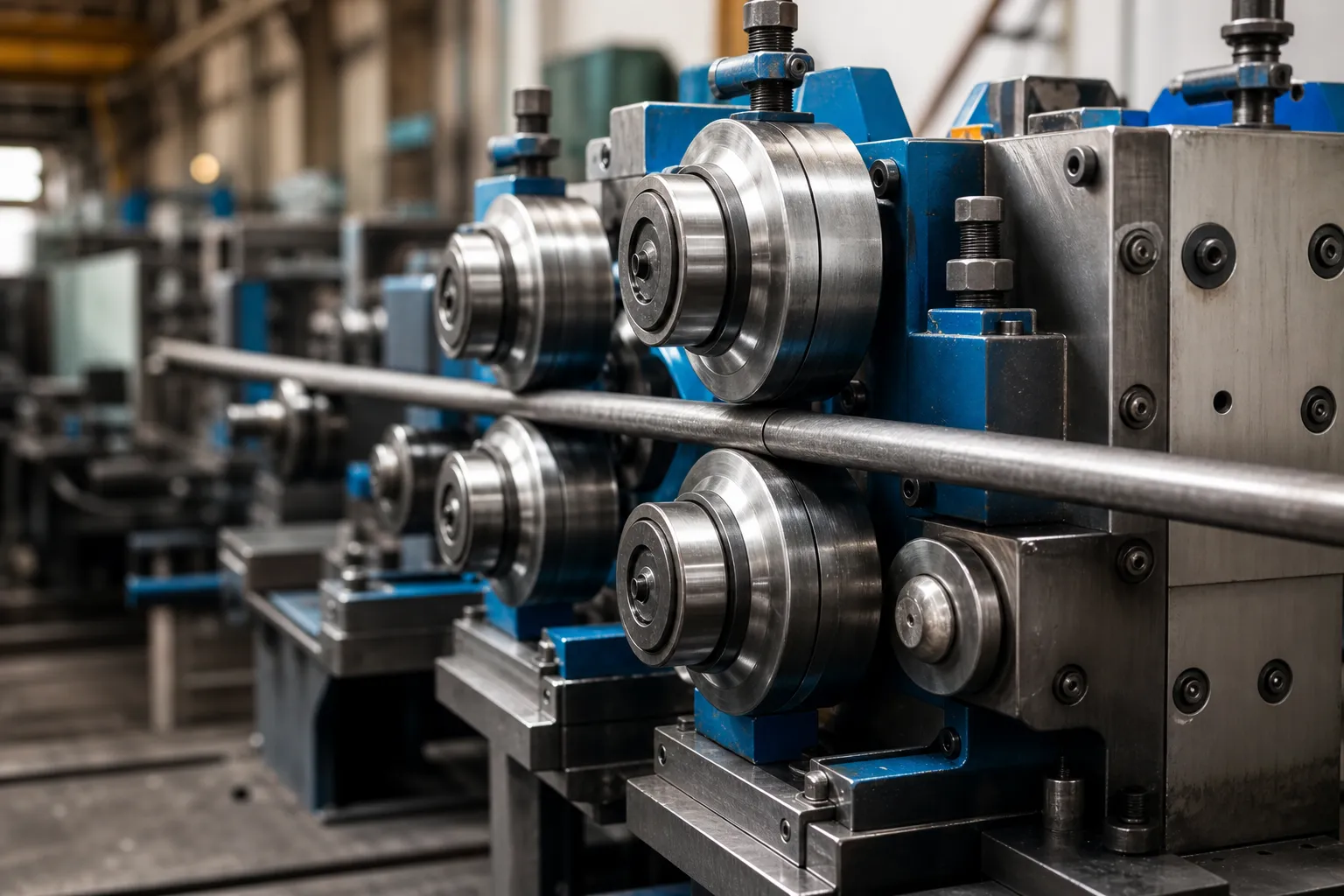
*इंजीनियरिंग अवधारणा चित्रण. यह उम्मीदवार के लॉन्ग-टूल सुधार संदर्भ को दर्शाता है; यह ग्राहक मशीन का रिकॉर्ड या गारंटीशुदा ड्रिल परिणाम का प्रमाण नहीं है।*
टूल परिवार को परिभाषित करें और समान दिखने वाले इरादों को हटा दें
सटीक क्वेरी एक विशेषज्ञ डीप-होल-ड्रिल स्ट्रेटनिंग परिणाम उत्पन्न करती है, बल्कि ड्रिलिंग-मशीन भी, पुनः पीसना, गन-बैरल और सामान्य हाइड्रोलिक-स्ट्रेटनर परिणाम. वे अलग-अलग इरादे हैं. यहां का दायरा एक विनिर्माण-चरण गन ड्रिल या डीप-होल ड्रिल है जिसकी ज्यामिति का मूल्यांकन उसके अगले अनुमोदित ऑपरेशन से पहले किया जाना चाहिए.
| शामिल करना | बहिष्कृत करें |
|---|---|
| नियंत्रित ड्रिल परिवार का सीधापन या अपवाह मूल्यांकन | डीप-होल ड्रिलिंग मशीन का चयन |
| टांग, अभ्यर्थी सुधार परीक्षण के दौरान बांसुरी और सिर की सुरक्षा | पुनः पीसना, तेज़ करने या बोर बनाने की सेवा |
| नमूना-आधारित डेटाम और जारी निरीक्षण योजना | बंदूक की नाल, कंक्रीट ड्रिल और मेडिकल-ड्रिल दावे |
लेख मौजूदा से लिंक होना चाहिए drilling tools straightening scope but not silently treat that broad hub as proof that every gun drill is already covered.
Trace Distortion to the Manufacturing Stage
Tool geometry can be affected by raw-material condition, मशीनिंग, flute formation, उष्मा उपचार, surface finishing, handling or an earlier correction attempt. The timing changes the permitted contact strategy. A blank that will receive later grinding may be reviewed differently from a finished drill with protected cutting features.
एक परीक्षण से पहले, identify the controlled tool drawing, सामग्री और ताप-उपचार स्थिति, length and changing diameter, shank/end geometry, flute/head features, current manufacturing stage, incoming deviation map and next process. Do not copy competitor dimensions, number of axes, बल, cycle time or automation claims into a local specification.
Why Deep-Hole Tools Distort the Way They Do
A gun drill earns its distortion. The raw drill rod is already extremely slender — length-to-diameter ratios that would embarrass a transmission shaft — and then the manufacturing route removes material asymmetrically: fluting or milling a chip channel along one side, cutting the driver flat, adding the head with its cutting geometry and coolant passage. Every one of those operations removes constraint from where it was and leaves residual stress where machining worked the material. Heat treatment then adds its signature on the now-asymmetric section, and deep-hole drilling the coolant bore through the core disturbs the stress balance a second time. The finished tool is a precision instrument carrying several overlaid distortion fields. Understanding this stack is practical, not academic: it predicts that bends concentrate near section transitions — head to flute, flute to shank — that the same tool design can distort differently across lots, and that a correction process which treats the tool as a plain bar will both measure and press in the wrong places. The staging logic and its interaction with correction are the same covered for गर्मी उपचार के बाद सीधा करना, applied to a section that never had symmetry to begin with.
The Asymmetry Problem: Fluted Sections Are Not Shafts
On the fluted length, the cross-section is an open profile with a neutral axis displaced away from the geometric center — the material web and the chip channel do not balance. Two engineering consequences follow. Stiffness becomes directional: the section bends more easily in the plane of the flute than perpendicular to it, so the same correction stroke delivered at the same force produces different movement depending on the tool’s clocking — the correction plan must therefore be orientation-aware, not just position-aware. And measurement on the flute reads a surface that is spiraling: a probe tracking the OD of a fluted tool sees the flute pass as an interruption, and the residual OD between flutes follows a helix, so naive readings mix the helix geometry into the axis map. The disciplined answers are angular masking — read only in defined rotational windows between flutes — and separating the shank, where the section is solid and behaves classically, from the fluted length, where every number needs its context. The same interrupted-surface caution applies to the rock-drill and heavy-tool families covered under heat-treated drill rod straightening.
Choose a Functional Datum and Measurement Map
सीधा, radial runout and cutting-head relationship are not interchangeable. The customer drawing must state which characteristic controls acceptance and how the tool is supported or rotated. A shank can be a candidate reference only if it matches the required functional axis and its condition is controlled.
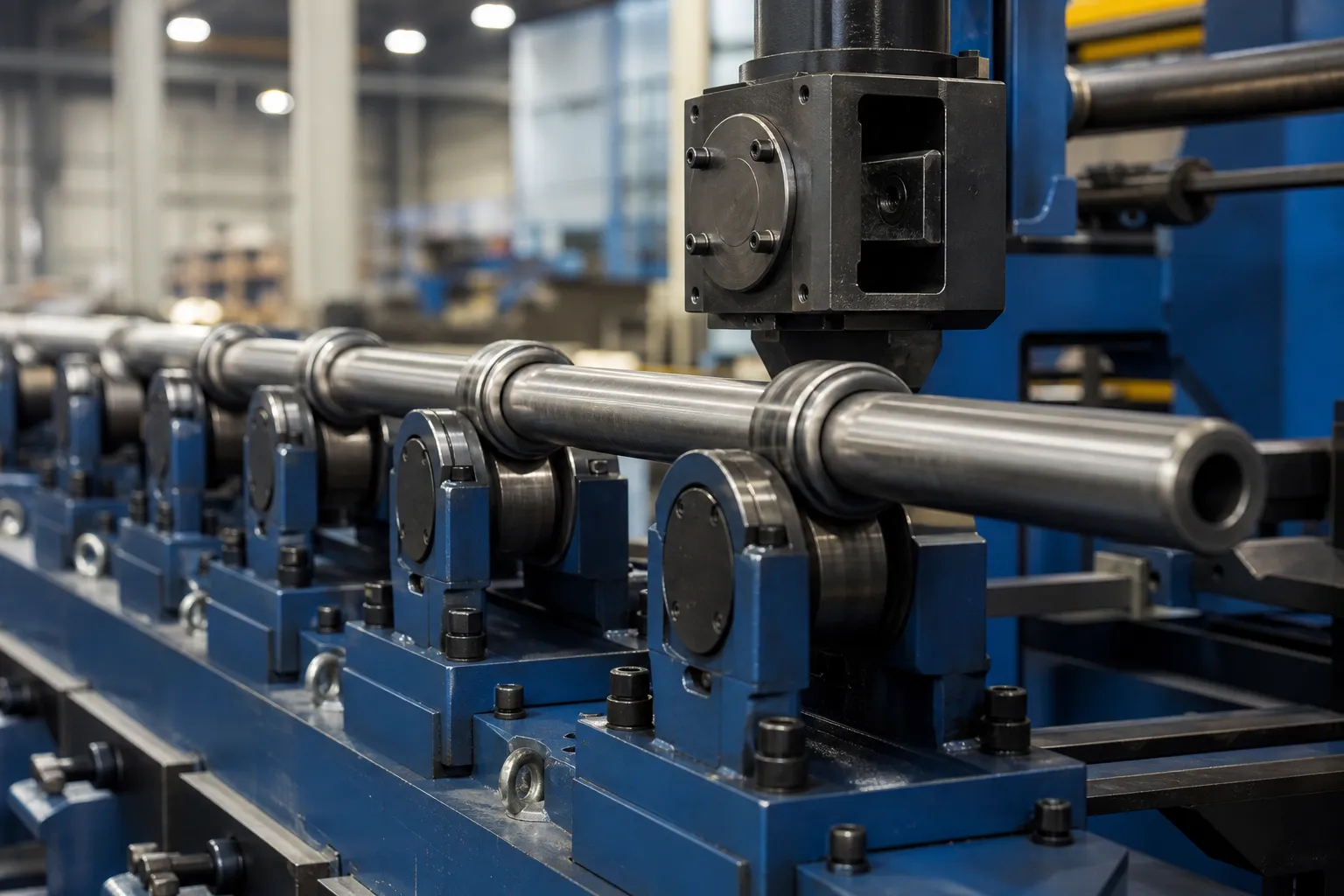
*इंजीनियरिंग अवधारणा चित्रण. It emphasizes that long slender tools need support planning; exact station count and sensing method must be validated from the drill family.*
The measurement review should record approved reference features, अक्षीय स्टेशन, rotation method if used, probe contact conditions, angular masks for flutes or holes, support locations and the released condition used for final acceptance. A local feature or unsupported span can otherwise be mistaken for a whole-tool bend.
Protect the Shank, बांसुरी और सिर काटना
समर्थन और सुधार स्थानों को ज्यामिति मानचित्र और संरक्षित-क्षेत्र समीक्षा से अनुमोदित किया जाना चाहिए. बांसुरी, किनारों को काटना, शीतलक छिद्र, लेपित क्षेत्र और अनुभाग में स्थानीय परिवर्तन संपर्क जोखिम और भ्रामक माप दोनों पैदा कर सकते हैं. एक सुलभ सतह स्वचालित रूप से एक स्वीकार्य लोड बिंदु नहीं है.
| जोन | इंजीनियरिंग प्रश्न |
|---|---|
| टांग | क्या यह कार्यात्मक आधार स्थापित करता है और प्रस्तावित समर्थन को सहन करता है? |
| बांसुरी | संपर्क की जांच या समर्थन कर सकते हैं, बाधित-सतह सिग्नल और अंकन से बच सकते हैं? |
| सिर काटना | क्या संपर्क निषिद्ध है क्योंकि यह किनारे की ज्यामिति या उसके बाद की फिनिशिंग को प्रभावित कर सकता है? |
| पतला विस्तार | क्या समर्थन रिक्ति शिथिलता को स्पष्ट सुधार लक्ष्य बनने से रोकती है? |
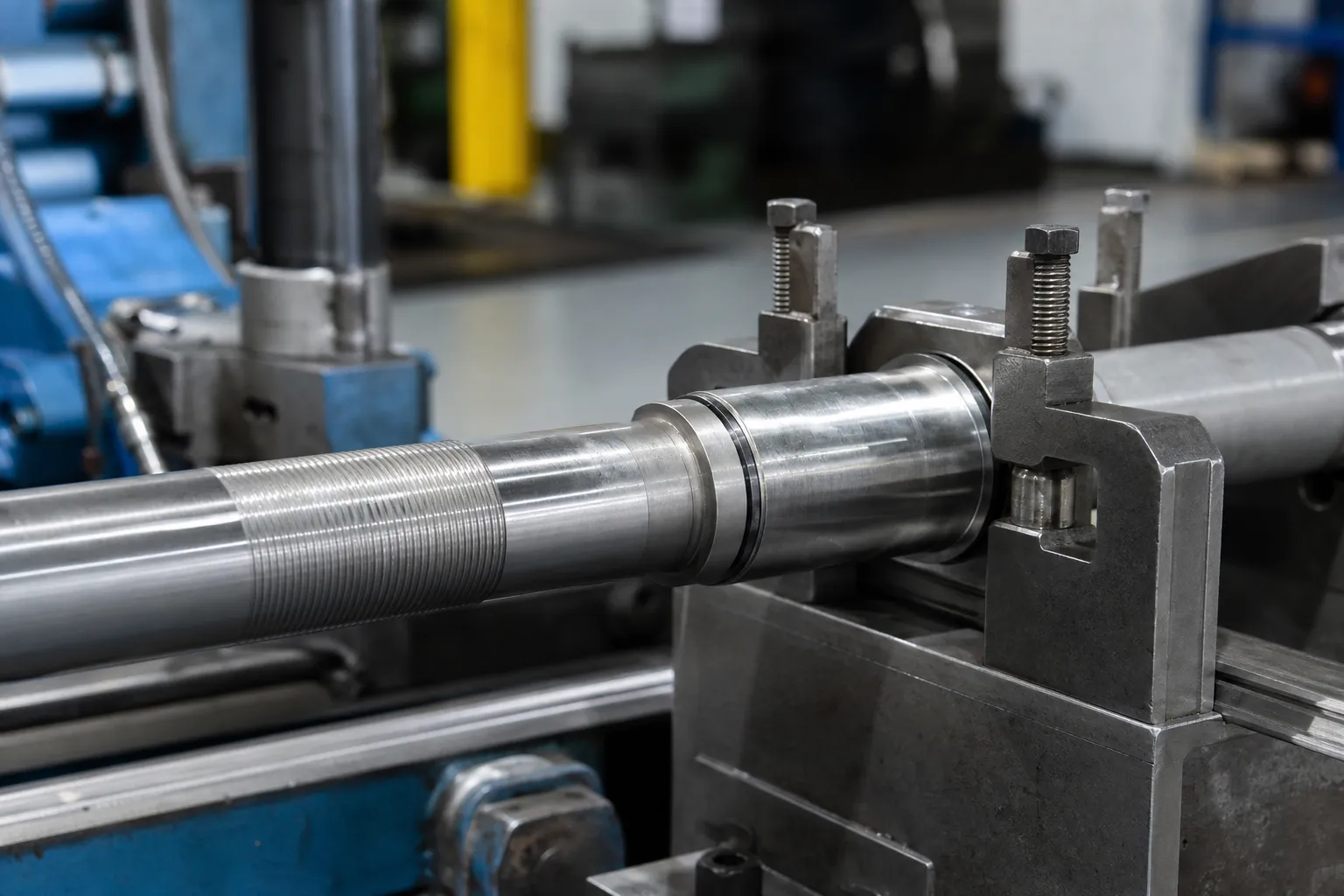
*इंजीनियरिंग अवधारणा चित्रण. यह एक वृद्धिशील सुधार अवधारणा को दर्शाता है, स्वीकृत दबाव नहीं, आघात, स्थिरता या उत्पादन नुस्खा.*
Where Straightening Sits in the Tool’s Process Route
The same tool asks a different straightening question depending on where it stands in its route. A blank or semi-finished rod, heading into grinding, offers contact freedom — surfaces that will be removed anyway tolerate correction marks that a finished tool cannot — and its acceptance question is whether the grinding allowance can clean up the corrected geometry. A finished drill, flutes cut and edges prepared, inverts every priority: protected zones dominate, corrections must land on the plain spans, and the acceptance question is functional runout on the customer’s own inspection. A reground tool arrives with its straightness history already spent once and its dimensions changed from nominal, so the correction recipe it ran under as a new tool no longer describes it — the rework rules and deformation budget from the rework-limit framework apply with full force. Freezing the manufacturing stage in the trial record, as the framework above requires, is what keeps these three conversations from blurring into one expensive misunderstanding.
Handling Interrupted Surfaces in the Measurement
Practical measurement plans for fluted tools converge on a small set of techniques, each with a cost. Angular masking — sampling only in the windows between flute passes — keeps the probe on continuous material at the price of fewer readings per revolution and a defined rotational reference to keep the windows aligned between stations. Shank-based mapping — measuring the solid sections precisely and interpolating across the fluted span — gives clean numbers at the ends but assumes the fluted length behaves smoothly between them, an assumption the distortion physics occasionally betrays near the head. Feature-aware fixturing — supporting on the land between flutes with conformal tooling — preserves the tool’s attitude but makes support condition part of the measurement definition, to be held identical between the machine and any verification station, per the datum discipline in चरणबद्ध शाफ़्ट माप डेटाम चयन. Whichever combination a process adopts, the rule that decides its credibility is unchanged: reseat and repeat, and treat any peak that fails the reseat check as a hypothesis rather than a correction target.
एक वृद्धिशील का प्रयोग करें, जारी-राज्य सुधार लूप
- अनुमोदित ड्रिल परिवार का सत्यापन करें, विनिर्माण चरण और आने वाली स्थिति;
- क्षति के लिए निरीक्षण करें, दायरे से बाहर विकृति या निषिद्ध सतह की स्थिति;
- डेटाम और सपोर्ट सेटअप स्थापित और सत्यापित करें;
- सुधार से पहले सहमत ज्यामिति को मैप करें;
- केवल स्वीकृत समर्थन और सुधार बिंदु चुनें;
- नमूना-परीक्षण सीमा के भीतर वृद्धिशील सुधार लागू करें;
- उपकरण और संयम को पूरी तरह से छोड़ दें;
- पुनः मापें और रिकार्ड करें ठीक है, NOK या इंजीनियरिंग-समीक्षा स्वभाव.
अंतिम निर्णय रिहाई के बाद होना चाहिए. जब कोई उपकरण क्लैंप किया जाता है या बल के अधीन होता है तो रीडिंग को अंतिम सीधेपन या रनआउट के रूप में प्रस्तुत नहीं किया जा सकता है.
प्रतिनिधि उपकरणों के इर्द-गिर्द स्वीकार्यता बनाएँ
नमूना पैकेज में सामान्य और सबसे खराब स्थिति वाली आने वाली ड्रिल शामिल होनी चाहिए, नियंत्रित ड्राइंग, संदर्भ गेज, माप सहसंबंध, संरक्षित-सतह निरीक्षण और एक स्पष्ट प्रगति न होने की सीमा. जहां दरार या सामग्री-अखंडता संबंधी चिंताएं लागू होती हैं, औपचारिक एनडीटी एक अलग प्रक्रिया बनी हुई है जब तक कि जिम्मेदार विधि निर्दिष्ट और योग्य न हो; सुधार निगरानी स्वचालित रूप से इसे प्रतिस्थापित नहीं करती है.
व्यापक स्वीकृति वर्कफ़्लो के लिए, देखना नमूना परीक्षण और स्वीकृति को सीधा करना और शाफ़्ट सीधापन, रनआउट और टीआईआर.
गन ड्रिल स्ट्रेटनिंग समीक्षा के लिए आवश्यक जानकारी
नियंत्रित ड्राइंग प्रदान करें, उपकरण प्रकार, सामग्री और ताप-उपचार स्थिति, विनिर्माण चरण, टांग/बांसुरी/सिर विवरण, प्रतिनिधि सामान्य और मुड़े हुए नमूने, आने वाला ज्यामिति डेटा, संरक्षित-संपर्क आवश्यकताएँ, संदर्भ निरीक्षण विधि और उत्पादन लक्ष्य. स्ट्रेटनिंगटेक फिर उम्मीदवार के डेटा की समीक्षा कर सकता है, सहायता, नमूना-परीक्षण योजना प्रस्तावित करने से पहले माप और सुधार वास्तुकला.
अक्सर पूछे जाने वाले प्रश्न
क्या गन-ड्रिल को सीधा करना गन-ड्रिलिंग मशीन के समान है??
नहीं. एक बंदूक-ड्रिलिंग मशीन एक बोर बनाती है. यह आलेख विनिर्माण के दौरान उपकरण की नियंत्रित ज्यामिति समीक्षा को संबोधित करता है.
क्या बांसुरी का उपयोग सामान्य माप सतह के रूप में किया जा सकता है??
सुविधा-जागरूक पद्धति के बिना नहीं. बाधित ज्यामिति गलत जांच संकेत बना सकती है और एक संरक्षित क्षेत्र हो सकता है.
क्या लेख से सटीकता या चक्र समय की गारंटी दी जा सकती है?
नहीं. दोनों को मान्य नमूनों की आवश्यकता है, सहमत डेटाम और निरीक्षण विधि, और एक सत्यापित मशीन-और-टूलिंग कॉन्फ़िगरेशन.
Why do gun drills bend near the head and the flute runout?
Because stiffness changes abruptly at those transitions and the manufacturing route removed material asymmetrically around them. Stresses from fluting, heat treatment and the coolant bore concentrate where the section changes, so the correction map usually shows its peaks near the head-to-flute and flute-to-shank boundaries rather than at mid-length.
Does flute direction affect the correction plan?
हाँ. A fluted section bends more easily in the flute plane than across it, so the same press stroke moves the tool differently depending on clocking. Correction plans for fluted tools are orientation-aware: the press point, direction and tool rotation are specified together, not independently.
Should a blank be straightened before or after flute milling?
The route decision belongs to the tool process engineer, but the trade is explicit: straightening the solid blank is contact-friendly and geometrically simple, yet fluting and heat treatment afterward can distort it again; straightening the fluted, heat-treated tool faces protected zones and interrupted measurement but corrects the geometry the finished tool actually carries. Whichever stage is chosen, the acceptance definition and correction validation must be run on tools in that state.
Comparing suppliers for gun drill and deep-hole drill straightening? ले लो selection guide for shaft, tube and profile work तुम्हारे साथ, और विवेक-जाँच मूल्य निर्धारण के विरुद्ध straightening machine cost breakdown.