
El enderezamiento a menudo implica doblar un material en una dirección relacionada con su historial de deformación anterior.. El efecto Bauschinger es un concepto de comportamiento del material que se utiliza para describir cómo la deformación plástica previa puede cambiar el comportamiento elástico bajo carga inversa.. Ayuda a explicar por qué una única regla de corrección genérica puede no transferirse entre estados materiales., formando historias o lotes.
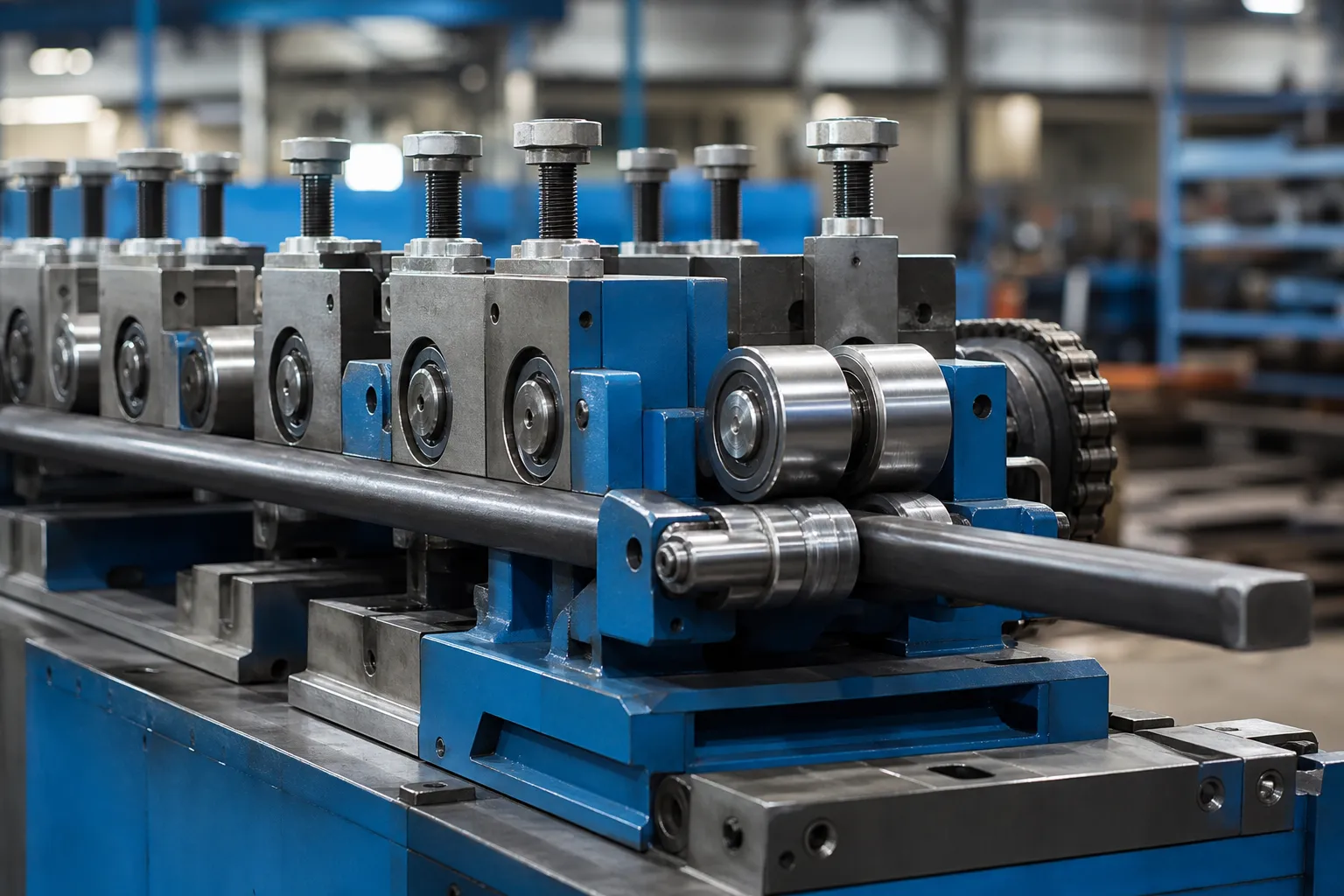
*Ilustración del concepto de ingeniería. No es una prueba material, modelo de estrés o resultado de alisado verificado.*
What the Effect Physically Is
En términos sencillos: a metal that has been plastically bent one way yields more easily when it is then bent the other way. On a stress–strain curve, a bar pulled past yield, unloaded, and then loaded in compression reaches its new yield point at a lower magnitude than the original tensile yield. The microstructural reason is that plastic deformation leaves the crystal lattice populated with dislocations arranged to resist further deformation in the loading direction; when the load reverses, that same arrangement assists slip in the opposite direction, so reverse yielding begins early. The effect is strongest right after the first reversal and saturates after a few cycles, and it is more pronounced in softer, lower-carbon conditions than in heavily hardened ones.
Two consequences matter for straightening. Primero, the material’s force–deflection response is asymmetric with respect to the sign of bending: the same press stroke moving a bend in one direction produces a different permanent set than the identical stroke applied against it. Segundo, every unload leaves a locked-in micro-residual stress state, so the “same” part is never quite the same material twice once correction has begun. Both consequences push toward the same process discipline — few, planned, well-aimed correction strokes instead of many small reversing ones.
What This Means for a Correction Stroke
Straightening control commonly assumes a repeatable relationship between applied correction and resulting movement — the basis of springback compensation practice. Reverse-loading history threatens exactly that repeatability. Consider the classic over-correct-and-press-back sequence: the first stroke plastically bends the section, the second stroke bends it back. Because the material yields earlier in the reverse direction, the second stroke needs less force to move the part the same amount, and a control routine calibrated on the first stroke’s response will overshoot. Each additional reversal compounds the drift while accumulating low-cycle fatigue damage in the section, which is the mechanism that connects careless correction sequences to the cracking risks discussed for enderezamiento excesivo y agrietamiento.
The practical rules that follow are qualitative but firm. Plan the correction so that each location is plastically worked in one predominant direction, not ping-ponged. Set the rework limit before the first stroke — the number of correction attempts a part may receive — and enforce it through the NOK sorting and rework-limit discipline. And when a process has drifted so that the same nominal error now needs visibly more or fewer strokes than it did at qualification, treat the change as a material signal to investigate, not as a knob to tune away.
Por qué es importante la carga inversa
Es posible que una pieza haya acumulado deformación durante el laminado., dibujo, formando, tratamiento térmico, mecanizado, transporte o un paso previo de corrección. Cuando un proceso de enderezamiento aplica flexión inversa, la respuesta puede depender de esa historia, así como de la condición material y la geometría actuales.. Esta es la razón por la que un mapa de curvas por sí solo no establece una ventana de corrección segura.
| Factor | pregunta de prueba |
|---|---|
| Grado y condición del material | ¿Está documentada la condición aplicable?, no asumido? |
| Formación/dibujo previo | ¿Podría la historia de deformación diferir entre lotes?? |
| Etapa de tratamiento térmico | ¿Se permite la corrección en esta etapa?? |
| Sección/geometría | ¿La rigidez varía a lo largo de la pieza?? |
| Características superficiales/funcionales | ¿Existen limitaciones de contacto o riesgo de crack?? |
| Retrabajo anterior | ¿Ya se ha producido la carga inversa?? |
Úselo como concepto de planificación de pruebas
El concepto debería conducir a mejores registros., afirmaciones no sin fundamento. Registrar condición entrante, material/lote, etapa de fabricación, mapa inicial, secuencia de corrección, medida liberada, estado de observación y retrabajo de la superficie. Cambie un factor controlado a la vez durante el desarrollo y no extrapole de un espécimen fácil a una familia de piezas diferente..
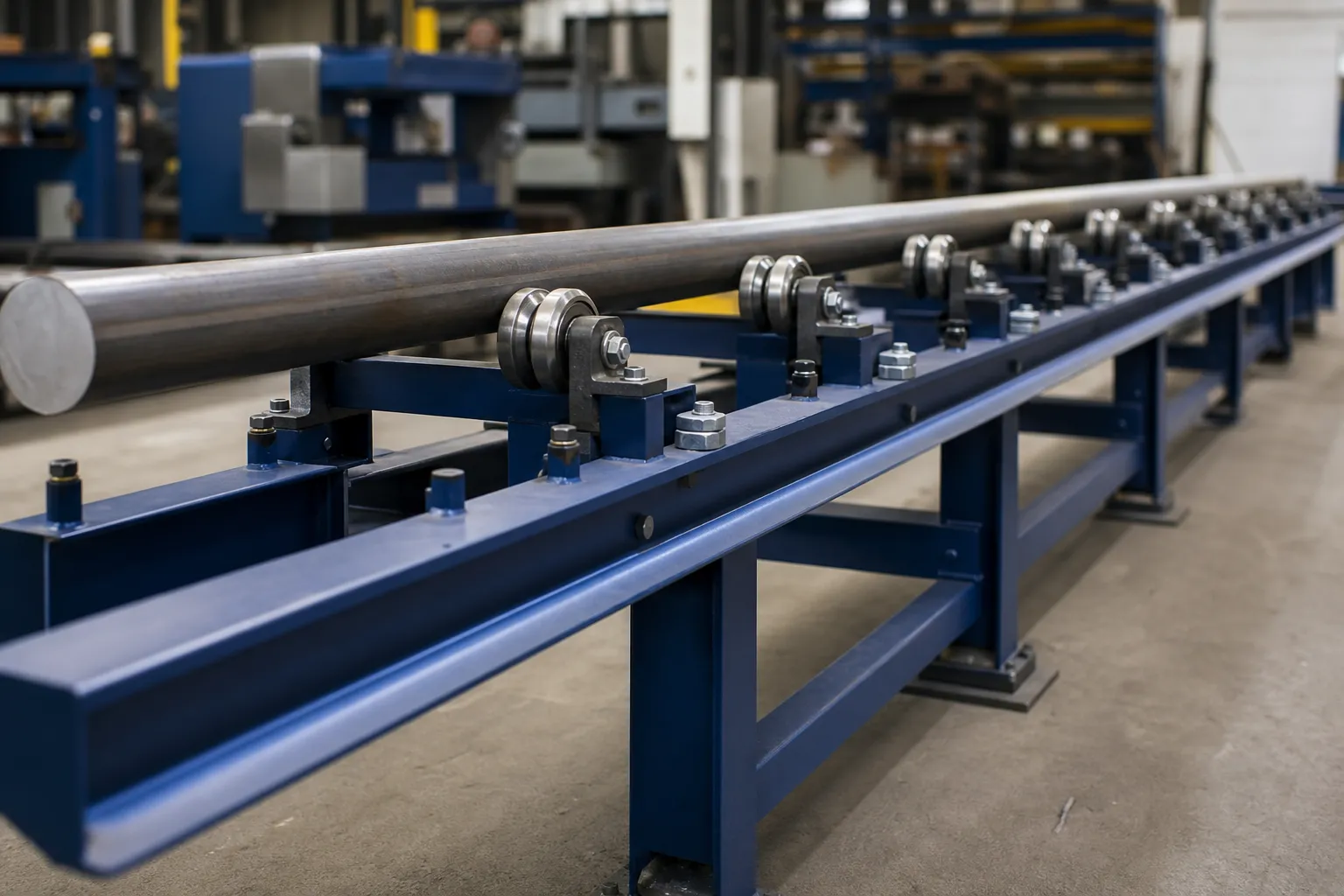
*Ilustración del concepto de ingeniería. Apoyo, El contacto y el comportamiento del material requieren una revisión de ingeniería específica de la pieza.*
Evite llamar a un resultado “controlado por Bauschinger” a menos que un estudio calificado de material/proceso defina exactamente lo que eso significa.. El término no reemplaza un requisito de dibujo., certificado de materiales, evaluación de fractura o aprobación del cliente.
Where Loading History Hides in Real Parts
Reverse-loading sensitivity does not require a previous straightening operation — most parts arrive with a history already written into them. Bars and wire carry directional deformation from rolling and drawing, so their bend response differs with orientation relative to the mill direction. Heat-treated parts carry quench distortion plus the residual stress field of the treatment, and any straightening performed at the heat treater counts as prior history for the correction performed later — the staging questions covered under alisado después del tratamiento térmico. Long slender parts accumulate transport and clamping bends, and a part that has already been through one rework loop at a supplier arrives pre-cycled. Even within one purchased lot, different bar lengths can come from different mill heats with different histories, which is why a correction setup that works on the first pieces of a lot can misbehave on the last.
The countermeasure is informational, not mechanical: capture material and lot identity, the manufacturing stage, and any prior correction record alongside the incoming geometry map. Esos datos no cuestan casi nada al recibirlos y son la diferencia entre una investigación de deriva que lleva una tarde y una que no se puede cerrar en absoluto..
Leer el efecto en los datos de producción
Porque el efecto no se puede ver por parte, se anuncia a través de patrones en los datos del proceso. Las señales a tener en cuenta son estructurales más que numéricas: el número de golpes de corrección necesarios para que el mismo error entrante se deslice hacia arriba o hacia abajo durante una ejecución; Piezas que oscilan alrededor del valor nominal a través de trazos alternos en lugar de converger.; mediciones publicadas que giran al lado opuesto de la banda de tolerancia después de secuencias de corrección que históricamente aterrizaban centradas; y diferencias entre lotes en el comportamiento de corrección sin cambios en la configuración de la máquina. None of these patterns is proof of reverse-yield behavior on its own — each has measurement and fixture mimics, which is why the datum and gauge checks come first — but together they justify pulling a sample set aside for a controlled material-and-history review rather than continuing to adjust the machine.
Separe el comportamiento del material del error de medición
Un resultado inesperado puede provenir de una respuesta material., sino también del asiento de referencia, cumplimiento de accesorios, soporte/caso, correlación de calibre o un mapa de error incompleto. Verifique estos factores antes de asignar la causa al comportamiento de rendimiento inverso. Ver repetibilidad del dispositivo y asiento de referencia y incertidumbre de medición en la inspección de rectitud.
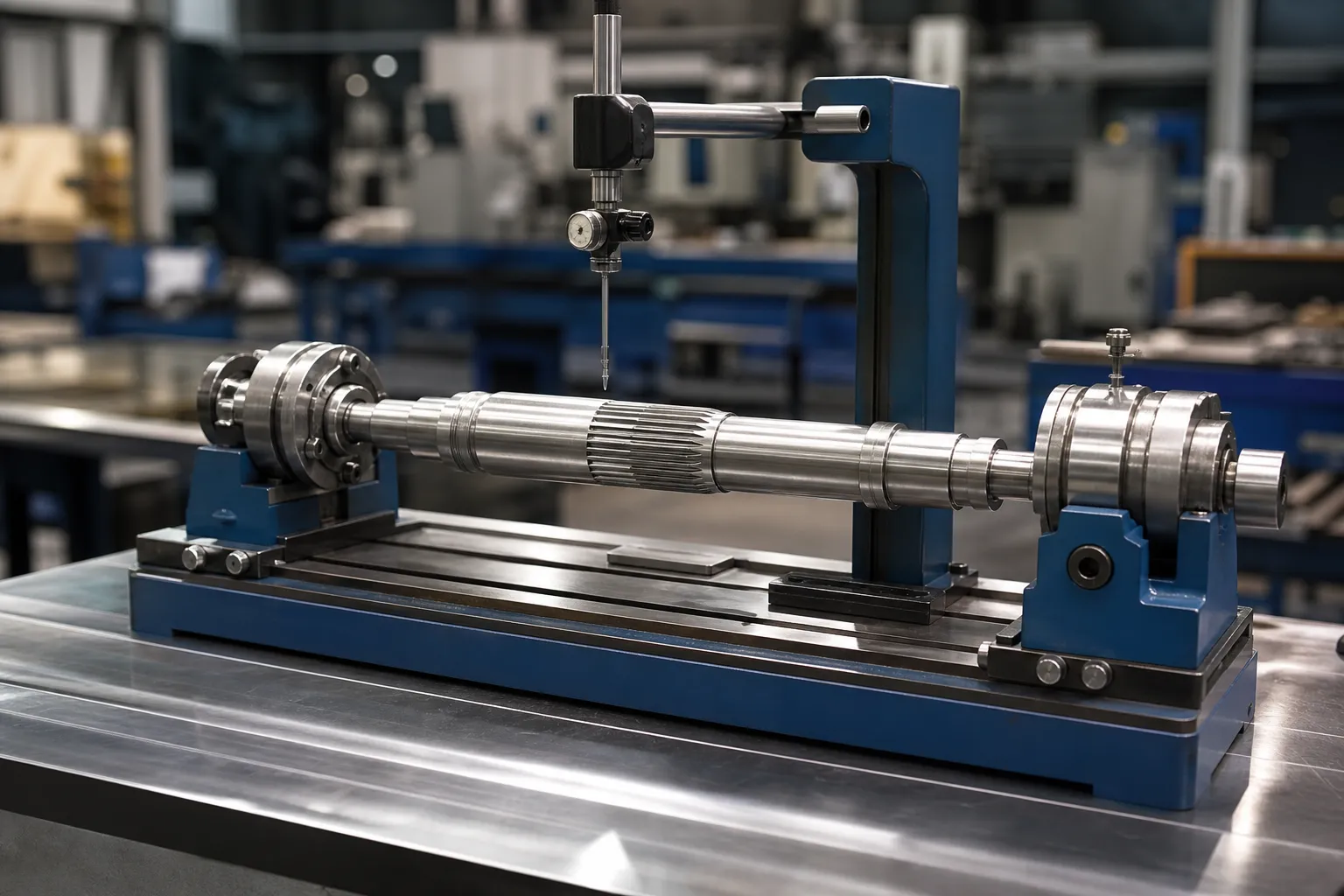
*Ilustración del concepto de ingeniería. El método de medición aprobado en estado liberado determina el resultado reportable.*
Evidencia necesaria antes de procesar las reclamaciones
Proporcionar dibujo/revisión, especificación y condición del material, historia de fabricación, etapa de tratamiento térmico, registros de corrección/retrabajo previos, geometría entrante, restricciones de superficie, Método de medición aceptado y muestras representativas.. Usar alisado después del tratamiento térmico para aclarar los controles de escenario y Prueba y aceptación de muestras de enderezamiento. planificar ensayos. Entonces contacta con StraighteningTech para discusión.
Validación requerida antes de un reclamo del sistema
Any material-behavior claim needs a defined material and process scope, referencias calibradas, representative heat-treated samples, and traceable measurement data. A generic machine capability is not a verified result for this topic.
Preguntas frecuentes
Does the Bauschinger effect make straightening impossible for previously bent parts?
No. It makes the response history-dependent rather than fixed. Processes handle it by planning corrections that work each location predominantly in one direction, limiting the number of correction cycles per part, and validating the correction rule on representative parts that carry the same history as production.
Why does pressing a bend back often overshoot?
Because the reverse stroke meets a material that yields at a lower stress than the forward stroke did. A force or depth calibrated on the forward response therefore over-delivers in reverse. The remedy is a separate, smaller correction rule for reverse strokes, or better, an error-map strategy that avoids reversing the same location repeatedly.
Can a correction setup be transferred to a new material lot unchanged?
Only with evidence. Different mill heats can carry different deformation histories and conditions, so the first pieces of each new lot should be treated as a confirmation sample: si el comportamiento de corrección coincide con la línea base calificada, continuar; si cambia, recalificar antes de correr. Esta es una práctica estándar para manejar la variación del springback discutida para variación del springback entre lotes.
Recursos técnicos relacionados con el alisado
Ver cómo funciona el enderezamiento automático del eje, Prueba y aceptación de muestras de enderezamiento. y rectitud del eje vs descentramiento vs TIR para límites de control genéricos que se aplican antes de cualquier reclamo de capacidad sobre Efecto Bauschinger en el Alisado.