
Το ίσιωμα του τρυπανιού με πιστόλι και του τρυπανιού βαθιάς οπής είναι ένα εξειδικευμένο πρόβλημα στο στάδιο της κατασκευής. Ένα τρυπάνι δεν είναι ένας απλός στρογγυλός άξονας: το στέλεχος, φλάουτο, κεφαλή κοπής, χαρακτηριστικά ψυκτικού υγρού, Η κατάσταση της θερμικής επεξεργασίας και οι μεταγενέστερες εργασίες λείανσης ή επαναλείανσης μπορούν να αλλάξουν το σημείο που μπορεί να στηριχθεί το εργαλείο, μετρήθηκε και διορθώθηκε. Μια διαδικασία που κάνει το εργαλείο να φαίνεται μόνο ευθεία μπορεί ακόμα να βλάψει ένα προστατευμένο χαρακτηριστικό ή να χρησιμοποιήσει ένα δεδομένο που δεν αντιπροσωπεύει λειτουργική επιθεώρηση.
Αυτό το άρθρο παρέχει ένα πλαίσιο δοκιμής δείγματος, δεν αποτελεί υπόσχεση ότι το StraighteningTech υποστηρίζει κάθε γεωμετρία ή μέγεθος τρυπανιού. Η τελική διαδικασία εξαρτάται από το σχέδιο, αντιπροσωπευτικά εργαλεία, υλική κατάσταση, permitted contact zones and the customer's released-state inspection method.
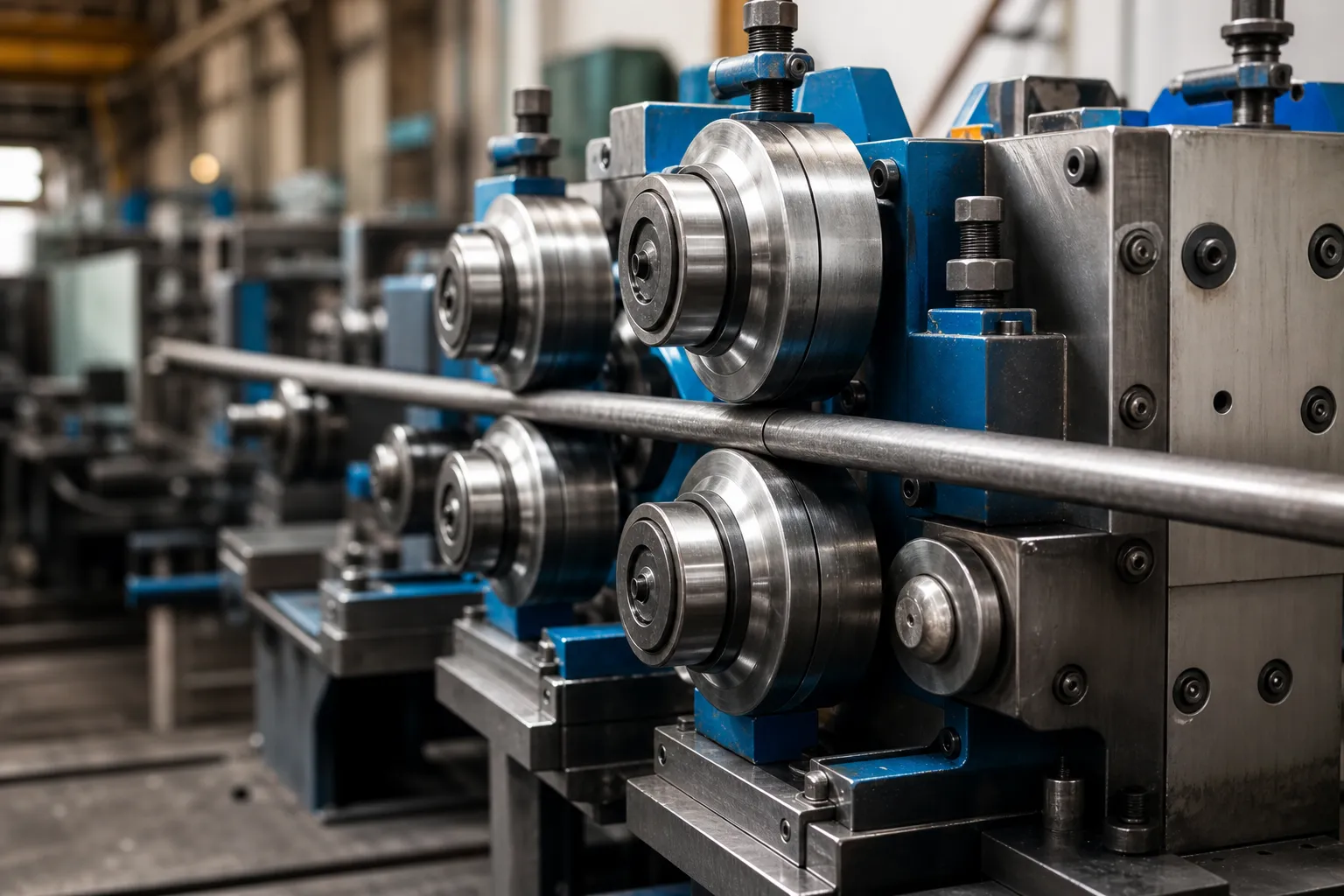
*Μηχανική έννοια εικονογράφηση. Δείχνει ένα πλαίσιο διόρθωσης μακροπρόθεσμου εργαλείου υποψηφίου; δεν είναι αρχείο μηχανής πελάτη ή απόδειξη εγγυημένου αποτελέσματος ασκήσεων.*
Ορίστε την Οικογένεια εργαλείων και εξαιρέστε τις όμοιες προθέσεις
Το ακριβές ερώτημα παράγει ένα ειδικό αποτέλεσμα ισιώματος με τρυπάνι βαθιάς οπής, αλλά και γεώτρηση-μηχανή, εκ νέου άλεσμα, αποτελέσματα όπλου-κάννης και γενικά υδραυλικά-ισιωτικά. Αυτές είναι ξεχωριστές προθέσεις. Το πεδίο εφαρμογής εδώ είναι ένα τρυπάνι όπλου στο στάδιο της κατασκευής ή τρυπάνι βαθιάς οπής του οποίου η γεωμετρία πρέπει να αξιολογηθεί πριν από την επόμενη εγκεκριμένη λειτουργία του.
| Συμπεριλαμβάνω | Αποκλείω |
|---|---|
| Αξιολόγηση ευθυγράμμισης ή εξάντλησης μιας οικογένειας ελεγχόμενων τρυπανιών | Επιλογή μηχανής διάτρησης βαθιάς οπής |
| Γάμπα, προστασία φλάουτου και κεφαλής κατά τη διάρκεια μιας δοκιμής διόρθωσης υποψηφίου | Επανάλεσμα, υπηρεσία ακονίσματος ή κατασκευής οπών |
| Στοιχεία βάσει δειγμάτων και δημοσιευμένος σχεδιασμός επιθεώρησης | Κάνη όπλου, ισχυρισμοί για τρυπάνι σκυροδέματος και ιατρικό τρυπάνι |
Το άρθρο θα πρέπει να συνδέεται με το υπάρχον Εργαλεία διάτρησης πεδίο ισιώματος αλλά μην αντιμετωπίζετε σιωπηλά αυτή την ευρεία πλήμνη ως απόδειξη ότι κάθε τρυπάνι είναι ήδη καλυμμένο.
Ανίχνευση παραμόρφωσης στο στάδιο της παραγωγής
Η γεωμετρία του εργαλείου μπορεί να επηρεαστεί από την κατάσταση της πρώτης ύλης, μηχανική κατεργασία, σχηματισμός φλάουτου, κατεργασία με θερμοκρασία, φινίρισμα επιφάνειας, χειρισμό ή προηγούμενη προσπάθεια διόρθωσης. Ο χρονισμός αλλάζει την επιτρεπόμενη στρατηγική επαφής. Ένα τυφλό που θα λείψει αργότερα μπορεί να αναθεωρηθεί διαφορετικά από ένα τελειωμένο τρυπάνι με προστατευμένα χαρακτηριστικά κοπής.
Πριν από μια δίκη, προσδιορίστε το σχέδιο του ελεγχόμενου εργαλείου, κατάσταση υλικού και θερμικής επεξεργασίας, μήκος και μεταβαλλόμενη διάμετρος, γεωμετρία κορμού/άκρου, χαρακτηριστικά φλάουτου/κεφαλιού, τρέχον στάδιο παραγωγής, εισερχόμενος χάρτης απόκλισης και επόμενη διαδικασία. Μην αντιγράφετε διαστάσεις ανταγωνιστή, αριθμός αξόνων, δύναμη, αξιώσεις χρόνου κύκλου ή αυτοματισμού σε μια τοπική προδιαγραφή.
Why Deep-Hole Tools Distort the Way They Do
A gun drill earns its distortion. The raw drill rod is already extremely slender — length-to-diameter ratios that would embarrass a transmission shaft — and then the manufacturing route removes material asymmetrically: fluting or milling a chip channel along one side, cutting the driver flat, adding the head with its cutting geometry and coolant passage. Every one of those operations removes constraint from where it was and leaves residual stress where machining worked the material. Heat treatment then adds its signature on the now-asymmetric section, and deep-hole drilling the coolant bore through the core disturbs the stress balance a second time. The finished tool is a precision instrument carrying several overlaid distortion fields. Understanding this stack is practical, not academic: it predicts that bends concentrate near section transitions — head to flute, flute to shank — that the same tool design can distort differently across lots, and that a correction process which treats the tool as a plain bar will both measure and press in the wrong places. The staging logic and its interaction with correction are the same covered for ίσιωμα μετά από θερμική επεξεργασία, applied to a section that never had symmetry to begin with.
The Asymmetry Problem: Fluted Sections Are Not Shafts
On the fluted length, the cross-section is an open profile with a neutral axis displaced away from the geometric center — the material web and the chip channel do not balance. Two engineering consequences follow. Stiffness becomes directional: the section bends more easily in the plane of the flute than perpendicular to it, so the same correction stroke delivered at the same force produces different movement depending on the tool’s clocking — the correction plan must therefore be orientation-aware, not just position-aware. And measurement on the flute reads a surface that is spiraling: a probe tracking the OD of a fluted tool sees the flute pass as an interruption, and the residual OD between flutes follows a helix, so naive readings mix the helix geometry into the axis map. The disciplined answers are angular masking — read only in defined rotational windows between flutes — and separating the shank, where the section is solid and behaves classically, from the fluted length, where every number needs its context. The same interrupted-surface caution applies to the rock-drill and heavy-tool families covered under heat-treated drill rod straightening.
Επιλέξτε ένα λειτουργικό σημείο αναφοράς και χάρτη μέτρησης
Ευθύτητα, Η ακτινική εκροή και η σχέση κεφαλής κοπής δεν είναι εναλλάξιμα. Το σχέδιο πελάτη πρέπει να αναφέρει ποιο χαρακτηριστικό ελέγχει την αποδοχή και πώς υποστηρίζεται ή περιστρέφεται το εργαλείο. Ένα στέλεχος μπορεί να είναι υποψήφια αναφορά μόνο εάν ταιριάζει με τον απαιτούμενο λειτουργικό άξονα και η κατάστασή του ελέγχεται.
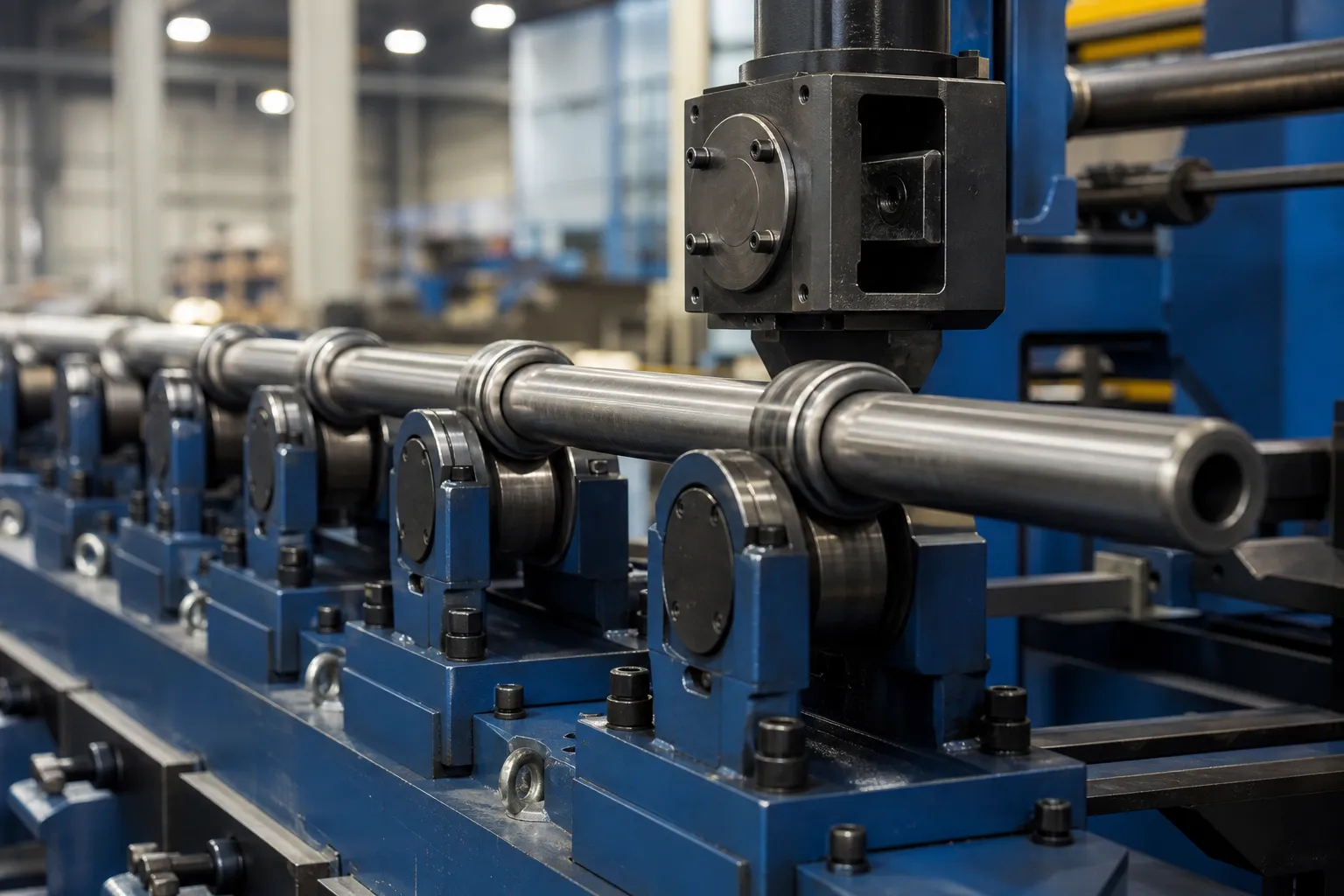
*Μηχανική έννοια εικονογράφηση. Τονίζει ότι τα μακριά λεπτά εργαλεία χρειάζονται σχεδιασμό υποστήριξης; Η ακριβής μέτρηση σταθμών και η μέθοδος ανίχνευσης πρέπει να επικυρωθούν από την οικογένεια των τρυπανιών.*
Η ανασκόπηση της μέτρησης θα πρέπει να καταγράφει εγκεκριμένα χαρακτηριστικά αναφοράς, αξονικούς σταθμούς, μέθοδος περιστροφής εάν χρησιμοποιείται, συνθήκες επαφής ανιχνευτή, γωνιακές μάσκες για φλάουτα ή τρύπες, τοποθεσίες υποστήριξης και η κατάσταση απελευθέρωσης που χρησιμοποιείται για την τελική αποδοχή. Διαφορετικά, ένα τοπικό χαρακτηριστικό ή ένα μη υποστηριζόμενο εύρος μπορεί να εκληφθεί εσφαλμένα ως κάμψη ολόκληρου του εργαλείου.
Προστατέψτε το Στέλεχος, Flute and Cutting Head
Support and correction locations must be approved from the geometry map and protected-zone review. Flutes, cutting edges, τρύπες ψυκτικού υγρού, coated zones and local changes in section can create both contact risk and misleading measurement. An accessible surface is not automatically an acceptable load point.
| Ζώνη | Engineering question |
|---|---|
| Γάμπα | Does it establish the functional datum and tolerate the proposed support? |
| Flute | Can probe or support contact avoid interrupted-surface signal and marking? |
| Κεφαλή κοπής | Is contact prohibited because it can affect edge geometry or subsequent finishing? |
| Slender span | Does support spacing prevent sag from becoming an apparent correction target? |
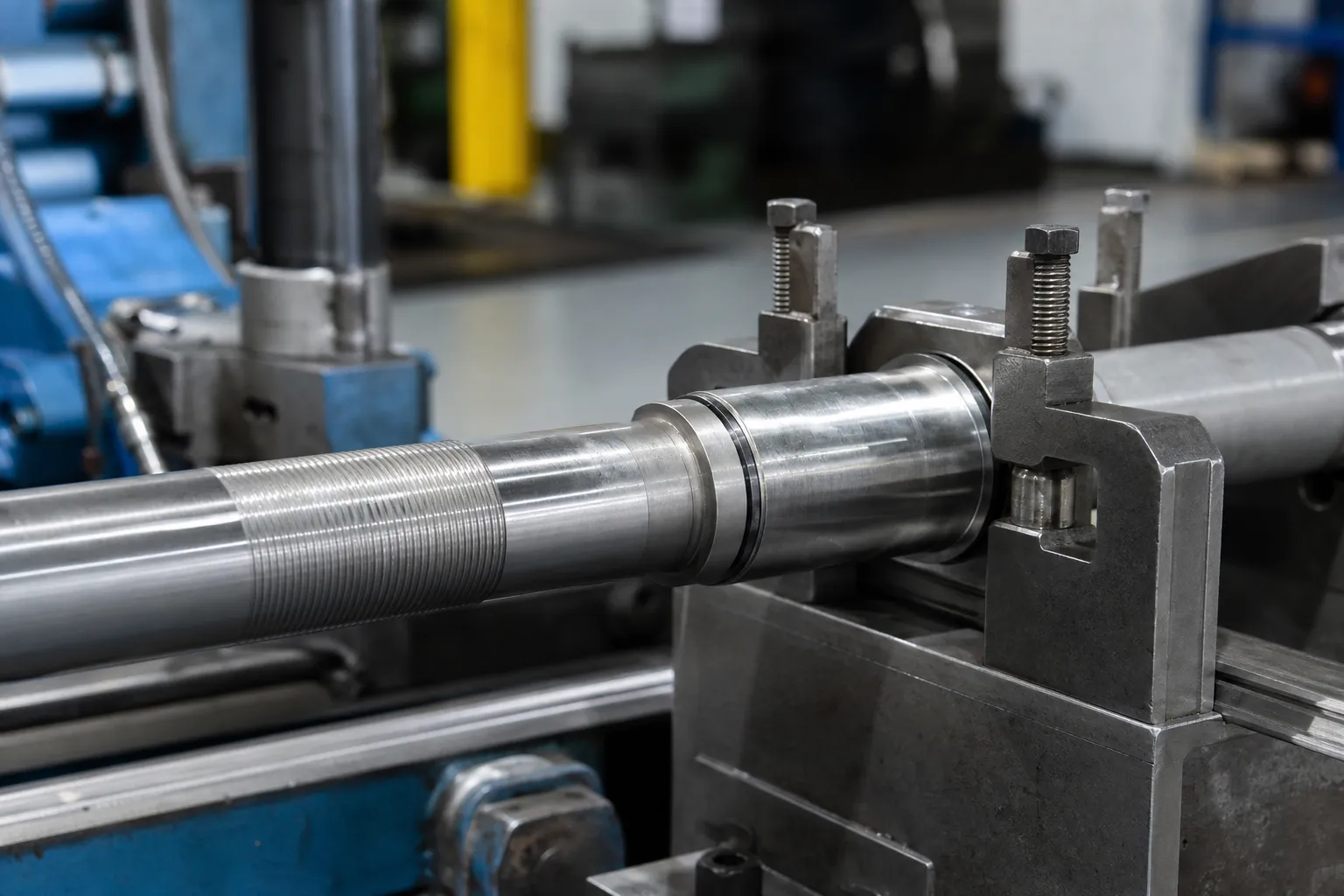
*Μηχανική έννοια εικονογράφηση. Δείχνει μια έννοια σταδιακής διόρθωσης, not an approved pressure, κτύπημα, fixture or production recipe.*
Where Straightening Sits in the Tool’s Process Route
The same tool asks a different straightening question depending on where it stands in its route. A blank or semi-finished rod, heading into grinding, offers contact freedom — surfaces that will be removed anyway tolerate correction marks that a finished tool cannot — and its acceptance question is whether the grinding allowance can clean up the corrected geometry. A finished drill, flutes cut and edges prepared, inverts every priority: protected zones dominate, corrections must land on the plain spans, and the acceptance question is functional runout on the customer’s own inspection. A reground tool arrives with its straightness history already spent once and its dimensions changed from nominal, so the correction recipe it ran under as a new tool no longer describes it — the rework rules and deformation budget from the rework-limit framework apply with full force. Freezing the manufacturing stage in the trial record, as the framework above requires, is what keeps these three conversations from blurring into one expensive misunderstanding.
Handling Interrupted Surfaces in the Measurement
Practical measurement plans for fluted tools converge on a small set of techniques, each with a cost. Angular masking — sampling only in the windows between flute passes — keeps the probe on continuous material at the price of fewer readings per revolution and a defined rotational reference to keep the windows aligned between stations. Shank-based mapping — measuring the solid sections precisely and interpolating across the fluted span — gives clean numbers at the ends but assumes the fluted length behaves smoothly between them, an assumption the distortion physics occasionally betrays near the head. Feature-aware fixturing — supporting on the land between flutes with conformal tooling — preserves the tool’s attitude but makes support condition part of the measurement definition, to be held identical between the machine and any verification station, per the datum discipline in Επιλογή βάσης μέτρησης βαθμιδωτού άξονα. Whichever combination a process adopts, the rule that decides its credibility is unchanged: reseat and repeat, and treat any peak that fails the reseat check as a hypothesis rather than a correction target.
Use an Incremental, Released-State Correction Loop
- επαληθεύστε την εγκεκριμένη οικογένεια τρυπανιών, στάδιο κατασκευής και κατάσταση εισόδου;
- επιθεωρήστε για ζημιές, παραμόρφωση εκτός πεδίου ή απαγορευμένη κατάσταση επιφάνειας;
- καθιερώστε και επαληθεύστε τη ρύθμιση δεδομένων και υποστήριξης;
- χαρτογραφήστε τη συμφωνημένη γεωμετρία πριν από τη διόρθωση;
- επιλέξτε μόνο εγκεκριμένα στηρίγματα και σημεία διόρθωσης;
- εφαρμόστε μια σταδιακή διόρθωση εντός του ορίου δειγματοληψίας;
- απελευθερώστε πλήρως το εργαλείο και συγκράτηση;
- μετρήστε ξανά και καταγράψτε ΟΚ, ΝΟΚ ή διάταξη μηχανικής-αναθεώρησης.
Η τελική απόφαση πρέπει να ακολουθήσει την απελευθέρωση. Μια ένδειξη ενώ ένα εργαλείο είναι σφιγμένο ή υπό πίεση δεν μπορεί να παρουσιαστεί ως τελική ευθύτητα ή εξάντληση.
Δημιουργία αποδοχής γύρω από αντιπροσωπευτικά εργαλεία
Το πακέτο δείγματος θα πρέπει να περιλαμβάνει τα κανονικά και στη χειρότερη περίπτωση εισερχόμενα τρυπάνια, το ελεγχόμενο σχέδιο, μετρητή αναφοράς, συσχέτιση μέτρησης, επιθεώρηση προστατευμένης επιφάνειας και ρητό όριο μη προόδου. Όπου ισχύουν ζητήματα ρωγμής ή ακεραιότητας υλικού, Το επίσημο NDT παραμένει ξεχωριστή διαδικασία, εκτός εάν καθοριστεί και πιστοποιηθεί η υπεύθυνη μέθοδος; Η παρακολούθηση διόρθωσης δεν την αντικαθιστά αυτόματα.
Για την ευρύτερη ροή εργασιών αποδοχής, βλέπω δοκιμή και αποδοχή δειγμάτων ευθυγράμμισης και ευθύτητα άξονα, τρέχοντας και TIR.
Πληροφορίες που απαιτούνται για μια ανασκόπηση ισιώματος τρυπανιού πιστολιού
Δώστε το ελεγχόμενο σχέδιο, τύπο εργαλείου, κατάσταση υλικού και θερμικής επεξεργασίας, στάδιο κατασκευής, λεπτομέρεια κορμού/φλάουτου/κεφαλιού, αντιπροσωπευτικά κανονικά και λυγισμένα δείγματα, εισερχόμενα γεωμετρικά δεδομένα, απαιτήσεις προστατευμένης επαφής, μέθοδος επιθεώρησης αναφοράς και στόχος παραγωγής. Το StraighteningTech μπορεί στη συνέχεια να αναθεωρήσει τα δεδομένα υποψηφίου, υποστήριξη, αρχιτεκτονική μέτρησης και διόρθωσης πριν από την πρόταση ενός σχεδίου δειγματοληψίας-δοκιμών.
FAQ
Το ίσιωμα του τρυπανιού είναι το ίδιο με το μηχάνημα διάτρησης πιστολιού?
Οχι. Μια μηχανή διάτρησης όπλου κάνει μια οπή. Αυτό το άρθρο αναφέρεται σε μια ελεγχόμενη γεωμετρία του ίδιου του εργαλείου κατά την κατασκευή.
Μπορεί ένα φλάουτο να χρησιμοποιηθεί ως επιφάνεια γενικής μέτρησης?
Όχι χωρίς μια μέθοδο με επίγνωση των χαρακτηριστικών. Η διακεκομμένη γεωμετρία μπορεί να δημιουργήσει ψευδή σήματα ανιχνευτή και μπορεί να είναι προστατευμένη ζώνη.
Μπορεί να διασφαλιστεί η ακρίβεια ή ο χρόνος κύκλου από το άρθρο?
Οχι. Και τα δύο απαιτούν επικυρωμένα δείγματα, το συμφωνημένο δεδομένο και τη μέθοδο επιθεώρησης, και μια επαληθευμένη διαμόρφωση μηχανημάτων και εργαλείων.
Why do gun drills bend near the head and the flute runout?
Because stiffness changes abruptly at those transitions and the manufacturing route removed material asymmetrically around them. Stresses from fluting, heat treatment and the coolant bore concentrate where the section changes, so the correction map usually shows its peaks near the head-to-flute and flute-to-shank boundaries rather than at mid-length.
Does flute direction affect the correction plan?
Ναί. A fluted section bends more easily in the flute plane than across it, so the same press stroke moves the tool differently depending on clocking. Correction plans for fluted tools are orientation-aware: the press point, direction and tool rotation are specified together, not independently.
Should a blank be straightened before or after flute milling?
The route decision belongs to the tool process engineer, but the trade is explicit: straightening the solid blank is contact-friendly and geometrically simple, yet fluting and heat treatment afterward can distort it again; straightening the fluted, heat-treated tool faces protected zones and interrupted measurement but corrects the geometry the finished tool actually carries. Whichever stage is chosen, the acceptance definition and correction validation must be run on tools in that state.
Comparing suppliers for gun drill and deep-hole drill straightening? Take the selection guide for shaft, tube and profile work with you, and sanity-check pricing against the straightening machine cost breakdown.