
Dwattye nan yon etajè volan otomobil dirèkteman detèmine santi a, presizyon, ak kontwòl bri nan sistèm volan yon machin. Kòmanse nan prensip teknik yo, atik sa a bay yon analiz apwofondi sou pwen kle teknik yo nan redresman etajè volan S45C., ki gen ladan: abòde gwo defi deformation inisyal yo (2.5-3mm), reyalize segondè presizyon TIR (0.1mm) kontwòl, Difikilte mezi pou pyès dan yo, epi redresman otomatik estrateji. Atravè done teknik detaye ak yon ka manifakti aktyèl, nou demontre pèfòmans eksepsyonèl pwosesis otomatik redresman laprès la, ede ou rezoud difikilte konplèks yo nan redresman konpozan arbr dantle.
Ki sa ki se yon etajè volan otomobil?
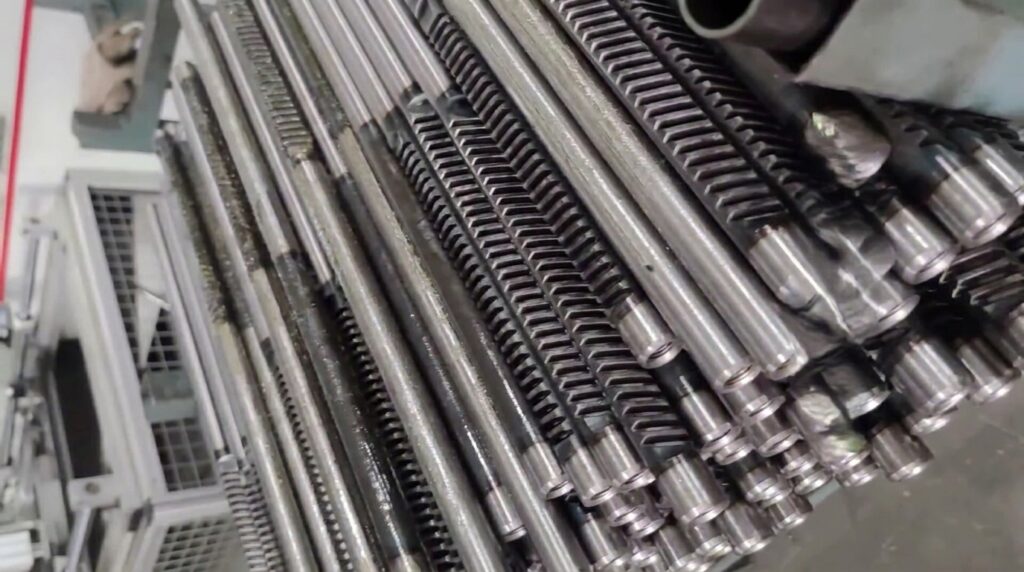
Yon etajè volan otomobil se eleman debaz transmisyon nan yon sistèm volan etajè-ak-pignon., prensipalman itilize konvèti mouvman an wotasyon nan volan an nan mouvman an lineyè nan wou yo.. Tou depan de konsepsyon machin nan, dyamèt komen varye ant 23mm ak 30mm, ak longè varye ant 400mm ak 750mm.
Senaryo aplikasyon pou etajè volan
Manto volan yo pwensipalman itilize nan sistèm volan otomobil. Tou depan de kote aplikasyon an espesifik ak kondisyon fonksyonèl, gen kondisyon diferansye:
- Volan machin pasaje (EPS): Kondisyon ekstrèmman wo pou NVH (Bri, Vibration, ak Severite). TIR dwat la dwe estrikteman kontwole nan 0.1mm pou elimine obligatwa volan ak bri nòmal..
- Volan Veyikil Komèsyal/Off-Road: Andire imans rezistans volan, mande materyèl (tankou S45C) posede dite sifas ekstrèmman wo ak severite nwayo apre redi endiksyon wo-frekans.
Tout senaryo aplikasyon yo gen kondisyon strik pou dwat nan etajè volan an, paske yon etajè bese ap mennen nan flit sele lwil oliv, pòv Kovèti pou may, ak gwo danje sekirite volan.
Karakteristik estriktirèl
Etajè volan otomobil yo gen karakteristik estriktirèl sa yo:
- Mwatye-dan, Mwatye-Arbr Estrikti: Yon bout machin ak yon pwofil dan presizyon (longè dan 250mm a 300mm), pandan ke rès la se yon arbr lis.
- Kondisyon materyèl: Tipikman te fè nan S45C (mwayen kabòn asye), ofri ekselan pwopriyete mekanik konplè.
- Gwo Distorsion Tretman Chalè: Apre segondè-frekans sifas redi sou seksyon an dantle ak arbr, lage estrès masiv tipikman lakòz yon gwo koube inisyal (Antre Bend) nan 2.5mm a 3.0mm.
Karakteristik kle nan etajè volan
Karakteristik kle yo:
- High-Precision redresman: Sipòte yon egzijans trè wo presizyon nan TIR ≤0.1mm.
- Koreksyon masiv deformation: Kapab jere viraj inisyal masiv jiska 2.5mm – 3.0mm.
- Ki pa destriktif nan dan: Estrikti dan delika a dwe absoliman pwoteje kont domaj pandan tout pwosesis redresman an.
Etajè volan paramèt teknik
| Atik | Paramèt Range | Nòt |
| Dyamèt etajè | Ø23mm – Ø30mm | – |
| Longè etajè | 400mm – 750mm | – |
| Longè dan | 250mm – 300mm | Trè difisil pou mezire ak peze |
| Antre Bend | 2.5mm – 3.0mm | Masif deformation apre-chalè tretman |
| Precision Sòti(TIR) | ≤0.1mm | Objektif ekstrèm dwat |
| Materyèl | S45C | Diferan pwopriyete elastik prentan-tounen |
Poukisa otomatik redresman pou laprès pi pito pou etajè dan?
Pwen Doulè Pwosesis Konvansyonèl yo
Lè etajè volan yo sibi redresman manyèl tradisyonèl oswa milti-woulo apre tretman chalè, yo fè fas a defi sa yo:
| Pwen Doulè | Pwoblèm Espesifik | Enpak |
| Mezi inexactitude sou dan | Sond estanda sote sovaj lè yap bale atravè seksyon dan 250-300mm.. | Pa kapab detèmine vre bend wo pwen an; sistèm mal jije. |
| Masif Inisyal Bend | Redi segondè-frekans lakòz gwo bese jiska 2.5-3mm. | Manyèl redresman trè dousman ak tandans fè bouyon twòp koube. |
| Multi-woulo domaje dan | Estrès kontinyèl altène nan sistèm milti-woulo pral kraze dan yo Kovèti pou presizyon. | Depafini Kovèti pou may, dirèkteman dechèpiye pyès chè a. |
Otomatik laprès redresman avantaj
Adrese pwen doulè ki anwo yo, la Otomatik Press redresman machin bay yon solisyon devwe ak revolisyonè:
| Konparezon dimansyon | Manyèl redresman | Otomatik Press redresman | Amelyorasyon |
| Presizyon (TIR) | ~0.15mm | ≤0.1mm | Toujou satisfè objektif sere |
| Efikasite | 2-3 minit/moso | 20-30 segonn / moso | Miltipliye efikasite pwodiksyon an |
| Pousantaj Defo | 5-8% (Kraze dan) | <0.5% | Bouyon prèske zewo |
| Konpetans operatè | Mèt Teknisyen | Operatè estanda / San ekipe | Masif redwi pri travay |
Avantaj debaz yo:
- Presizyon pwen-a-pwen: Sèvi ak yon belye idwolik oswa servo byen kontwole pou peze entèdi sou pwen wo Bend la., smartly evite zòn dan an asire zewo dan domaj.
- Algoritm filtraj entelijan: Lojisyèl yo ekipe ak algoritm eksklizif pou filtre bri ki soti nan twou vid ki genyen nan dan yo ak sifas ki plat, avèk presizyon rekonstwi vrè koub aks santral la.
- S45C Spring-back Modèl: Bati-an prentan-tounen koub pou asye S45C. Menm lè fè fas a yon koube masiv 3mm, li imedyatman kalkile egzak konjesyon serebral anba ki nesesè yo.
Pwosesis redresman etajè volan
Seksyon sa a esplike 7 pwosesis debaz yo pou konplete workflow manifakti etajè volan an. La pwosesis debaz se 05 Otomatik Press redresman, ki se kritik pou asire final centerless fanm k'ap pile bon jan kalite ak presizyon asanble.
Etajè volan redresman pwosesis konplè koule
| Pwosesis | Non Pwosesis la | Ekipman | Tan | Presizyon |
| 01 | Koupe & Vire ki graj | CNC Thorne | 40s | Kite alokasyon pou fini |
| 02 | Fraisage etajè | Dedye etajè Miller | 60s | Asire anplasman ak pwofil |
| 03 | Perçage & Tape | Sant D' | 30s | – |
| 04 | Endiksyon redi | Chofaj segondè-frekans | 20s | Jenere 2.5-3mm pliye |
| 05 | Otomatik redresman | Peze Straightener | 20-30s | TIR ≤0.1mm |
| 06 | Manje san sant | Centerless moulen | 30s | Asire tolerans OD |
| 07 | Final Enspeksyon | CMM / Kalib dedye | 20s | – |
Etajè volan redresman Pwosesis Deskripsyon:
Etap 5 Otomatik Press redresman
Objektif Pwosesis: Pou jisteman dwat etajè volan ki genyen yon masiv 2.5mm-3.0mm koube endiksyon-di desann nan yon TIR strik nan ≤0.1mm, bay yon vid parfe kalifye pou fanm k'ap pile san sant ki vin apre.
Prensip Pwosesis: Materyo a sipòte pa sant oswa V-blòk ak vire otomatikman. Detèktè jwenn done runout an tan reyèl nan arbr a lis ak dèyè etajè a. Sistèm kontwòl la sèvi ak algorithm propriétaires pou filtre entèferans done ki te koze pa jeyometri plat/dantle., identifier vre pwen wo nan pliye axial la. Lè sa a, belye mouton an aplike yon presi, lokalize laprès ranvèse ki baze sou pwopriyete prentan-tounen nan S45C.

Pwen kle yo:
- Manyen Gwo Range & Mikwo Precision: Sistèm mezi a dwe an menm tan rekonèt yon gwo defleksyon inisyal 3mm epi finalman kontwole konjesyon serebral la nan yon tolerans mikwo 0.1mm..
- Seleksyon Pwen Smart Press: Pwen peze machin nan dwe entèdi evite pwofil dan frajil la, tipikman vize do a plat / wonn oswa seksyon yo arbr lis.
- Oto-Chaje Entegrasyon: Yon etajè solid S45C (Dyamèt 30mm, Longè jiska 750mm) se trè lou. Li se tipikman entegre ak yon robo portique pou manyen materyèl konplètman san ekipe.
Estanda Kalite:
- Lekti Endikatè Total (TIR) ≤0.1mm atravè tout longè a.
- Absoliman pa gen okenn endentasyon oswa mikwo-fant sou dan yo ak sifas arbr yo.
Nwayo redresman defi ak solisyon
Difikilte 1: Masif Deformation Inisyal Apre Redi (2.5mm – 3mm)
Deskripsyon pwoblèm:
- Paske etajè a gen dan sou yon sèl bò (koup transvèsal trè asimetri), liberasyon an estrès tèmik pandan wo-frekans redi se trè inegal, inevitableman sa ki lakòz pyès materyo a defòme byen wo jiska 3mm.
- Yon konjesyon serebral laprès masiv yon sèl sou yon machin tradisyonèl ka lakòz twòp koube oswa menm akrochaj.
Solisyon:
- Itilize yon Algorithm apwoksimasyon milti-etap. Olye pou yo eseye yon “touye yon sèl-grèv”, sistèm nan sèvi ak yon konjesyon serebral pi gwo byen vit diminye pliye a anba 0.5mm, ki te swiv pa mikwo-kou pou koreksyon ultim presizyon.
- Enkòpore yon aprantisaj machin ak fonksyon konpansasyon ki otomatikman anrejistre koyefisyan sezon prentan an nan pakèt espesifik S45C., vin pi egzat ak chak moso.
Difikilte 2: Distòsyon Capteur nan Zòn Dan (250-300mm)
Deskripsyon pwoblèm:
- Lè sond mezi a bale sou dan yo wotasyon, li repete tonbe nan twou vid ki genyen yo, kreye yon gwo dente, koub mezi ki pa lizib. Machin nan echwe pou idantifye vrè koube axial la.
Solisyon:
- Mizajou lojisyèl entwodwi Teknoloji Filtrage Anvlòp, èkstraksyon sèlman done yo runout soti nan krèt dan yo anfòm yon koub lis.
- Adaptasyon pyès ki nan konpitè: Estratejikman evite dan yo, detèktè yo dirije yo mezire kontinyèl la “plat/wonn tounen” nan etajè a, kidonk akeri vre, done runout san entèferans.
Ka redresman
Background Kliyan
Yon gwo Nivo 1 founisè sistèm volan otomobil nan pwovens Lazi, bay EPS (Volan elektrik pouvwa) asanble pou mak otomobil ki renome globalman.
Defi teknik
- Kliyan an prezante yon nouvo liy pwodiksyon etajè volan otomatik ak espesifikasyon: Dyamèt 23-30mm, Longè 400-750mm, Longè dan 250-300mm, Materyèl S45C.
- Pyès yo pòs-redi te gen yon pliye opinyon kòm gwo kòm 2.5mm a 3.0mm.
- Kliyan an estrikteman mande yon pèsistans yap ogmante jiska straightness de TIR ≤ 0.1mm ak tan sik trè vit, ki eritaj machin semi-otomatik yo konplètman echwe pou pou reyalize.
Solisyon
| Atik | Paramèt/Konfigirasyon |
| Non pyès travay la | Etajè volan otomobil |
| Espesifikasyon | Ø23-30mm × L400-750mm |
| Materyèl | S45C (Mwayen Kabòn Steel) |
| Ekipman debaz | Heavy-Duty Otomatik Press Straightener (ak algorithm filtraj kwa-seksyon) |
| Antre Bend | 2.5 – 3.0 mm |
| Sib Precision | TIR ≤ 0.1 mm |
Rezilta aplikasyon
- Precision fèmen nan: Apre komisyonin, malgre ekstrèm 3mm deformation inisyal la, machin nan stab kontwole TIR final la nan liy strik 0.1mm wouj la.
- Entèferans Mezi Elimine: Algorithm filtraj kwa-seksyon pwopriyetè a konplètman rezoud pwen doulè endistri a nan mezi kòrèk sou etajè dan..
- Entegrasyon otomatik san pwoblèm: Travay parfe ak robo portique liy pwodiksyon an, li te reyalize yon koule materyèl san ekipe ki soti dirèkteman nan machin nan redi segondè-frekans nan straightener la.
Temwayaj Kliyan
“Algoritm ekipman ou yo eksepsyonèl! Nan tan lontan an, operatè nou yo te plede san rete ak pati dantle koube pa 3mm, soufri gwo pousantaj bouyon. Kounye a, machin otomatik redresman sa a aji kòm si li gen je-eskive dan yo frajil pandan y ap bloke presizyon nan entèdi nan 0.1mm., bay garanti ki pi solid pou bon jan kalite asanble EPS nou yo.”
Etajè Direction Kesyon Komen yo
Q1: Dèyè etajè volan an souvan gen yon sifas ki plat. Ki jan machin nan mezire li avèk presizyon?
Manto volan tipikman gen yon ki pa estanda “plat, wonn, ak dantle” koup transvèsal. Sistèm redresman nou an te devlope algoritm konpansasyon espesifik pou pwofil iregilye sa yo. Lè sond la bale atravè do plat la, sistèm nan otomatikman soustraksyon diferans nan wotè jeyometrik, èkstraksyon sèlman vrè devyasyon axial ki te koze pa pliye materyo a.
Q2: Avèk yon koube opinyon nan 3mm, pral etajè a S45C kraze pandan redresman laprès?
Malgre ke sifas la nan S45C (mwayen kabòn asye) sibi wo-frekans redi, nwayo li kenbe ekselan severite. Belye mouton idwolik / servo nou yo pa itilize Stamping enpak destriktif; pito, yo aplike yon vitès-kontwole, ekstrizyon fleksib. Paske sistèm nan kalkile kou egzak la matche pwen sede materyèl la, risk pou yo kraze se nòmalman inexistant pou viraj nan 3mm.
Q3: Poukisa yo pa ka itilize machin redresman milti woulo liv pou pyès dantle sa yo?
Multi-woulo redresman itilize woulèt anwo ak pi ba dekale pou kontinyèlman woule ak pliye materyo a repete.. Pou yon etajè volan ak yon pwofil dan presizyon 250-300mm, fòs la imans ak kontinyèl kraze nan woulèt yo ta dirèkteman detwi dan yo oswa pwovoke mikwo-fant sou krèt yo., rann li konplètman initil pou meshing Kovèti pou. Se poutèt sa, yon straightener laprès-kalite aplike vize, presyon pwen-a-pwen se absoliman sèlman chwa ki an sekirite.